Barbara Vine - The Blood Doctor
Здесь есть возможность читать онлайн «Barbara Vine - The Blood Doctor» весь текст электронной книги совершенно бесплатно (целиком полную версию без сокращений). В некоторых случаях можно слушать аудио, скачать через торрент в формате fb2 и присутствует краткое содержание. Год выпуска: 2003, Издательство: Vintage, Жанр: Современная проза, на английском языке. Описание произведения, (предисловие) а так же отзывы посетителей доступны на портале библиотеки ЛибКат.
- Название:The Blood Doctor
- Автор:
- Издательство:Vintage
- Жанр:
- Год:2003
- ISBN:нет данных
- Рейтинг книги:4 / 5. Голосов: 1
-
Избранное:Добавить в избранное
- Отзывы:
-
Ваша оценка:
The Blood Doctor: краткое содержание, описание и аннотация
Предлагаем к чтению аннотацию, описание, краткое содержание или предисловие (зависит от того, что написал сам автор книги «The Blood Doctor»). Если вы не нашли необходимую информацию о книге — напишите в комментариях, мы постараемся отыскать её.
Barbara Vine (a.k.a. Ruth Rendell) deftly weaves this story of an eminent Victorian with a modern yarn about the embattled biographer, who is watching the House of Lords prepare to annul membership for hereditary peers and thus strip him of his position. Themes of fate and family snake throughout this teasing psychological suspense, a typically chilling tale from a master of the genre.
From Publishers Weekly
This rich, labyrinthine book by Vine (aka Ruth Rendell) concerns a "mystery in history," like her 1998 novel, The Chimney Sweeper's Boy. Martin Nanther-biographer and member of the House of Lords-discovers some blighted roots on his family tree while researching the life of his great-great-grandfather, Henry, an expert on hemophilia and physician to Queen Victoria. Martin contacts long-lost relatives who help him uncover some puzzling events in Henry's life. Was Henry a dour workaholic or something much more sinister? Vine can make century-old tragedy come alive. Still, the decades lapsed between Martin's and Henry's circles create added emotional distance, and, because they are all at least 50 years dead, we never meet Henry or his cohorts except through diaries and letters. Martin's own life-his wife's infertility and troubles with a son from his first marriage-is interesting yet sometimes intrudes on the more intriguing Victorian saga. Vine uses her own experience as a peer to give readers an insider's look into the House of Lords, at the dukes snoozing in the library between votes and eating strawberries on the terrace fronting the Thames. Some minor characters are especially vivid, like Martin's elderly cousin Veronica, who belts back gin while stonewalling about the family skeletons all but dancing through her living room. Readers may guess Henry's game before Vine is ready to reveal it, but this doesn't detract from this novel peopled by characters at once repellant and compelling.
From Library Journal
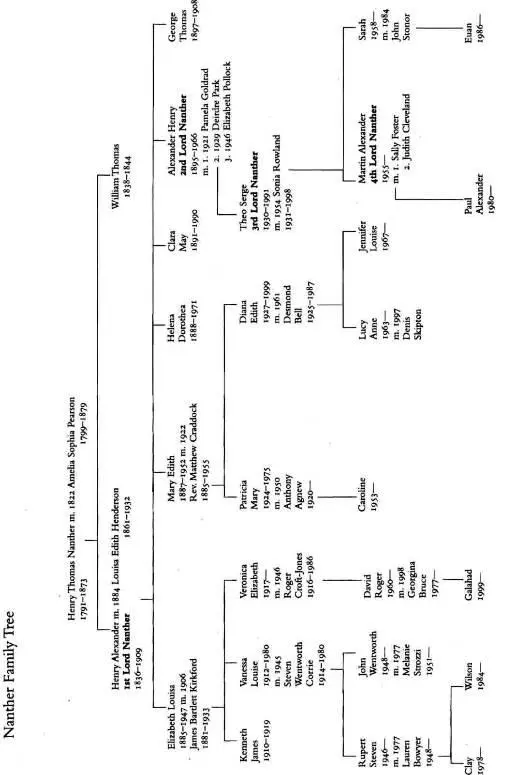
In her tenth novel writing as Barbara Vine, Ruth Rendell offers a novel of suspense based in 19th-century England and centering on deceit, murder, and various other family skeletons. Martin Nanther, the fourth Lord Nanther, has a comfortable life in present-day London as a Hereditary Peer in the House of Lords and as a historical biographer. He chooses as his most recent subject his own great-grandfather, the first Lord Nanther, physician to the royal family (Victoria and Albert) and an early noted researcher into the cause and transmission of hemophilia. The reader is taken through the family history as Martin painstakingly uncovers some not so savory bits of his own family's past. The story is dense with characters, and the author provides family trees of the two principal families, for which any reader will be eternally grateful. The story lacks the usual page-turner suspense of the Rendell/Vine novels but makes up for that with unusually detailed glimpses into Victorian life and the inner workings of the House of Parliament, which American readers will find particularly intriguing. Recommended for all public libraries. Caroline Mann, Univ. of Portland, OR
The Blood Doctor — читать онлайн бесплатно полную книгу (весь текст) целиком
Ниже представлен текст книги, разбитый по страницам. Система сохранения места последней прочитанной страницы, позволяет с удобством читать онлайн бесплатно книгу «The Blood Doctor», без необходимости каждый раз заново искать на чём Вы остановились. Поставьте закладку, и сможете в любой момент перейти на страницу, на которой закончили чтение.
Интервал:
Закладка:
Two sons eventually arrived for Henry and Edith, so his fears of impotence were groundless. All Henry’s children looked like him and both boys, if Edith’s family photograph is anything to go by, were clones of their father. Edith’s features disappeared somewhere in the complexity of genetic inheritance. Only her large, beautiful and myopic eyes were replicated in some of her descendants. Both my father’s aunts, the maiden aunts, had fine eyes and both had worn glasses from their early youth. I’ve no way of knowing what Mary Dawson looked like, but she too must have passed on whatever genes she had of Henry’s facial appearance to her children.
His first son Alexander was born in 1895, when his mother was thirty-four and his father fifty-nine. The diary entry for 27 February, the day after the birth, reads only: ‘I have a son.’ Henry noted his arrival not much more fulsomely in the notebook. The baby, christened Alexander Henry, was three months old when Henry wrote in the notebook:
My son, like most infants, is obstreperous, noisy, greedy and apparently ill-tempered, always either in tears or asleep. Nurse has been instructed to keep him out of earshot. Were all things equal and were I able to manage our lives prudently and wisely, were I without these painful needs and desperate ambitions, I might settle for the status quo . But I thank Providence too that I was wrong when I felt my vitality diminished. It was no more than that I was tired and had been overworking. HM makes great demands on me. I am sent for to Osborne, to Balmoral, and these are not summonses to which one returns a refusal.
Providence has reared its head again. But what is the status quo ? Obviously some family situation. From time to time Henry’s typical reticence finds its way into Alternative Henry as well as the diary. It very likely only means that while he considers his family complete, Edith wants more children. Or is there something I know nothing about? A legacy promised from someone or other to a second son? That would just about cover ‘painful needs and desperate ambitions’. The only wealthy member of the family was Dorothea Vincent and she had daughters of her own. There was never anything in Jude’s suggestion that Edith might inherit her money. But was there a settlement somewhere that only devolved on a second male child? Obviously I must find out.
Something else interesting, which I hadn’t noticed but Jude pointed out, is that, with the exception of the Queen and her daughters, no woman is ever mentioned in these essays, not just Edith. Not Olivia, not Eleanor and not Jimmy. One supposes that Henry considered ‘bad’ women beneath his notice and ‘good’ women of insufficient interest to merit a mention. Which category was Olivia Batho Raven now in? In 1896 she ran away from her husband to join a lover, leaving her three small children behind. Henry must have known, it would have soon become common knowledge. In the light of what I know of Henry, it’s needless to say he doesn’t mention it in either the diaries or the notebook.
Undoubtedly it’s true that Queen Victoria made great demands upon him, though one wonders why in the early nineties she required his presence so often. Haemophilia was by now his speciality but at that period there were no haemophiliacs in the royal family in England, though several abroad, of course. Carriers there were Princess Beatrice herself and her daughter Ena; the Queen’s granddaughters, the Princess Irene of Hesse and her sister Alix, mother of the ill-fated Tsarevich, and Princess Alice, Leopold’s daughter. Henry had claimed to detect her heredity in Princess Beatrice’s appearance but modern medicine would call this impossible, so any ideas that he might have been able to recognize ‘carrier-ship’ in Irene and Alix on their visits to their grandmother, or in the baby Ena, must be nonsense. Nor would he have passed on his belief to the Queen. It was a subject she’d have refused to discuss. In any case, beyond the largely ineffective plugging of wounds, application of ice and horrific cauterizations, there was nothing approaching alleviation, let alone cure.
The answer probably is that Victoria liked his company, liked having him there. Tall, handsome, very masculine men had always attracted her. She was fond of discussing ailments (not haemophilia) and may have spent many pleasant hours in her seaside retreat talking about rheumatism and her failing eyesight. By 1893 this had become acute. She could hardly read at all and asked her correspondents to write ‘in as black ink as you can’. These health problems were not in Henry’s specialization, but he was a doctor of medicine and would understand. If she trusted her chief physician Sir James Reid always to tell her the truth and not that which might be more palatable, perhaps she also enjoyed Henry’s courtly optimism. He had another talent the Queen would have valued. Like Sir James, he spoke German. Many connections of the royal family, from small princedoms and Grand Duchies visiting Osborne or some other royal residence, had only limited English. Henry could have talked to them in their native tongue if they needed medical advice during their stay.
At any rate, she took the extraordinary step in 1896 of ennobling him.
It seems strange to us today, the violent opposition which existed in the nineteenth century against conferring peerages upon worthy commoners. In 1856 the Queen had tried to make a judge, Sir James Parke, into Lord Wensleydale, but the Committee for Privileges considered the proposed life peerage contrary to usage. (Life peerages had been given before, despite the belief of those who think this first happened in 1958.) The committee decided that Lord Wensleydale’s letters patent did not entitle him to a seat in the House of Lords and that was that.
Things gradually began to change. With the changeover in England from an agricultural to a manufacturing society, industrialists began to be regarded as of greater worth. Sir Arthur Guinness, the brewer, was ennobled under Disraeli and in 1892 the scientist Lord Kelvin was sent to the Upper House, followed three years later by the first of many newspaper proprietors, Lord Glenesk. The poet Tennyson was the first literary figure to receive a peerage. Still, Henry’s elevation was unusual for its time. A year later Sir Joseph Lister became the second doctor to be ennobled.
In the Queen’s Birthday Honours of 20 May 1896, Henry was invited to accept a barony. No doubt he agreed to this with alacrity and, in a visit to Garter King of Arms at the College of Arms, would have chosen his title and his armorial bearings. Of this, in the diary, he writes only: ‘Her Majesty has graciously bestowed upon me, her humble servant, a barony.’ He never had his coat of arms framed and hung. It still remains curled up in its long red-leather box. I wonder why. From the photographs I’ve seen he’d had all his other certificates and diplomas framed and hung up on the study walls. Surely none of these equalled in his estimation his coat of arms, beautifully executed, hand-painted and lettered in gorgeous colours. For the time in which he lived, it would have cost him a lot, yet he kept it in its box, hidden from all eyes.
Soon afterwards he’d have received his Writ of Summons. Written in feudal language and in use since the fourteenth century, it’s still in use today, though it’s been considerably shortened and simplified. Henry’s read like this:
Victoria, by the Grace of God of the United Kingdom and Ireland Queen, Defender of the Faith: To our right trusty and well-beloved Henry Alexander Nanther, of Godby in Our county of Yorkshire, Chevalier, greeting. Whereas for certain arduous and urgent affairs concerning Us, the state and defence of our said United Kingdom and the Church, we did lately, with the advice and consent of Our Council ordain Our present Parliament to be holden at Our City of Westminster on the eleventh day of August in the sixtieth year of Our reign, which Parliament hath been from that time by several adjournments and prorogations, adjourned, prorogued and continued to and until the twenty-fourth day of March now next ensuing, at Our city aforesaid, to be then there holden; We strictly enjoining command you upon the faith and allegiance by which you are bound to Us, that considering the difficulty of the said affairs and dangers impending (waiving all excuses) you be personally present at our aforesaid Parliament with Us and with the Prelates, Nobles, Peers of Our said Kingdom to treat and give your counsel upon the affairs aforesaid. And this as you regard Us and Our honour and safety and defence of the said Kingdom and Church and despatch of the said affairs in nowise do you omit.
Читать дальшеИнтервал:
Закладка:
Похожие книги на «The Blood Doctor»
Представляем Вашему вниманию похожие книги на «The Blood Doctor» списком для выбора. Мы отобрали схожую по названию и смыслу литературу в надежде предоставить читателям больше вариантов отыскать новые, интересные, ещё непрочитанные произведения.







Обсуждение, отзывы о книге «The Blood Doctor» и просто собственные мнения читателей. Оставьте ваши комментарии, напишите, что Вы думаете о произведении, его смысле или главных героях. Укажите что конкретно понравилось, а что нет, и почему Вы так считаете.