Barbara Vine - The Blood Doctor
Здесь есть возможность читать онлайн «Barbara Vine - The Blood Doctor» весь текст электронной книги совершенно бесплатно (целиком полную версию без сокращений). В некоторых случаях можно слушать аудио, скачать через торрент в формате fb2 и присутствует краткое содержание. Год выпуска: 2003, Издательство: Vintage, Жанр: Современная проза, на английском языке. Описание произведения, (предисловие) а так же отзывы посетителей доступны на портале библиотеки ЛибКат.
- Название:The Blood Doctor
- Автор:
- Издательство:Vintage
- Жанр:
- Год:2003
- ISBN:нет данных
- Рейтинг книги:4 / 5. Голосов: 1
-
Избранное:Добавить в избранное
- Отзывы:
-
Ваша оценка:
The Blood Doctor: краткое содержание, описание и аннотация
Предлагаем к чтению аннотацию, описание, краткое содержание или предисловие (зависит от того, что написал сам автор книги «The Blood Doctor»). Если вы не нашли необходимую информацию о книге — напишите в комментариях, мы постараемся отыскать её.
Barbara Vine (a.k.a. Ruth Rendell) deftly weaves this story of an eminent Victorian with a modern yarn about the embattled biographer, who is watching the House of Lords prepare to annul membership for hereditary peers and thus strip him of his position. Themes of fate and family snake throughout this teasing psychological suspense, a typically chilling tale from a master of the genre.
From Publishers Weekly
This rich, labyrinthine book by Vine (aka Ruth Rendell) concerns a "mystery in history," like her 1998 novel, The Chimney Sweeper's Boy. Martin Nanther-biographer and member of the House of Lords-discovers some blighted roots on his family tree while researching the life of his great-great-grandfather, Henry, an expert on hemophilia and physician to Queen Victoria. Martin contacts long-lost relatives who help him uncover some puzzling events in Henry's life. Was Henry a dour workaholic or something much more sinister? Vine can make century-old tragedy come alive. Still, the decades lapsed between Martin's and Henry's circles create added emotional distance, and, because they are all at least 50 years dead, we never meet Henry or his cohorts except through diaries and letters. Martin's own life-his wife's infertility and troubles with a son from his first marriage-is interesting yet sometimes intrudes on the more intriguing Victorian saga. Vine uses her own experience as a peer to give readers an insider's look into the House of Lords, at the dukes snoozing in the library between votes and eating strawberries on the terrace fronting the Thames. Some minor characters are especially vivid, like Martin's elderly cousin Veronica, who belts back gin while stonewalling about the family skeletons all but dancing through her living room. Readers may guess Henry's game before Vine is ready to reveal it, but this doesn't detract from this novel peopled by characters at once repellant and compelling.
From Library Journal
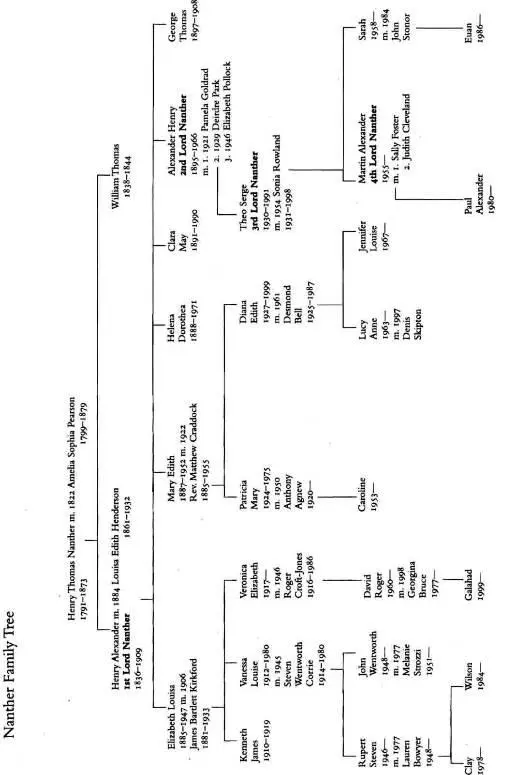
In her tenth novel writing as Barbara Vine, Ruth Rendell offers a novel of suspense based in 19th-century England and centering on deceit, murder, and various other family skeletons. Martin Nanther, the fourth Lord Nanther, has a comfortable life in present-day London as a Hereditary Peer in the House of Lords and as a historical biographer. He chooses as his most recent subject his own great-grandfather, the first Lord Nanther, physician to the royal family (Victoria and Albert) and an early noted researcher into the cause and transmission of hemophilia. The reader is taken through the family history as Martin painstakingly uncovers some not so savory bits of his own family's past. The story is dense with characters, and the author provides family trees of the two principal families, for which any reader will be eternally grateful. The story lacks the usual page-turner suspense of the Rendell/Vine novels but makes up for that with unusually detailed glimpses into Victorian life and the inner workings of the House of Parliament, which American readers will find particularly intriguing. Recommended for all public libraries. Caroline Mann, Univ. of Portland, OR
The Blood Doctor — читать онлайн бесплатно полную книгу (весь текст) целиком
Ниже представлен текст книги, разбитый по страницам. Система сохранения места последней прочитанной страницы, позволяет с удобством читать онлайн бесплатно книгу «The Blood Doctor», без необходимости каждый раз заново искать на чём Вы остановились. Поставьте закладку, и сможете в любой момент перейти на страницу, на которой закончили чтение.
Интервал:
Закладка:
I hadn’t thought about it but now it casts a faint chill over me. Surely not, I say, with more optimism than I feel. We’ll still be able to come and eat and drink – won’t we? Not on your nelly, says Lachlan. And if we want to see someone in here we’ll have to wait inside the Peers’ Entrance and ask the doorkeeper to let someone know we’re here. ‘We’ll be told to clear our desks and hand in our computers and take our name cards off our coat pegs because this is the end, my boy. The Twilight of the Gods. I’m sure I don’t know what our great-grandpapa would have said.’
‘Or your remote laird of an ancestor.’
‘They’ll both of them be turning like spits in their graves,’ says Lachlan.
What shall I do with my robe when I have to go? Robes aren’t the same for every rank of peer. Barons have two rows of ‘ermine’, Viscounts two and a half, Earls three, Marquesses three and a half and Dukes four. There’s a fuss if any Baron or Baroness is spotted wearing a borrowed robe with, say, three rows of moth-eaten white fur. These things are very important to some hereditary peers who stand about in huddles on State Opening day listening to the scion of a noble house holding forth on who wears what and why.
I doubt if I’ll ever drape myself in Henry’s again. By the time the Queen next comes to the Palace of Westminster, I’ll be gone.
13
Henry was sixty when he was made a peer. An outsider, viewing his life, might have said that he had everything a man’s heart could desire: worldly success, a position at the top of his profession, a sufficient income to live in comfort, good health, a wife and four daughters and an heir. His son would inherit more now than his name and wealth; he would be a peer from the moment his father died. But Henry wanted another.
That son came along in 1897. Henry noted the birth in his diary even more curtly than last time: ‘Son born’. Instead of waiting three months as they had with Alexander, the parents had him baptized at six weeks. Certificates of baptism for both boys were in one of Henry’s trunks. I found none for the girls, though all the children were certainly christened. The new baby was named George Thomas.
Looking at these certificates, prettily engraved in red and blue and green with a minimal decoration in gold leaf, like a baby’s own coat of arms, makes me think about names for our child. I shall let Jude choose. I chose last time. What I mean is, I overruled Sally who wanted Paul called Torquil. Now I’m getting used to the idea of becoming a father again. Jude’s joy is so beautiful to see and it’s such a pleasure to know that she’ll be as happy when she wakes up in the morning as she was the night before, that I’m halfway to forgetting about broken nights and nappy-changing and the chronic anxiety children bring you. I suppose the truth is I’m so uxorious (or I am with this uxor ) that I can put up with anything so long as she’s pleased.
And she’s well. The two previous times she wasn’t. She was sick in the mornings and always tired. I see her continued health as the best omen of all that this time it’s going to be all right. She’s going to be all right and that’s all I care about.
Georgie Croft-Jones has given birth to a huge boy weighing nine and a half pounds or, as she insists on putting it, four kilos and a bit.
‘You’ll all have to buy everything in kilos next year,’ she says briskly, ‘so you may as well get into the habit now.’
‘He’s for sale then, is he?’ I ask her. ‘Shall we buy him, Jude, to be a companion for ours?’
Jude likes jokes like that now. She loves holding Galahad Croft-Jones and listening to Georgie talking about her delivery, what a breeze it was, how Galahad was nearly born in their new BMW, how the maternity hospital staff said he was the loveliest child they’d seen for years, and so on. When they’ve gone we decide we shall privately call the Croft-Jones baby the Holy Grail.
Jude’s having the ultrasound next week. This is a kind of photograph of what’s inside the womb and apparently they can tell if the foetus is normal by the shape or position or something of a fold at the back of its neck. If that’s all right, and for some reason I’m confident it will be, there’ll be no need for an amniocentesis.
Henry had none of this to worry about in his wife’s pregnancies. With babies, in the 1890s, you took what came. There were no tests, beyond, I suppose, swinging a pendulum over the woman’s stomach or trying to detect if she was ‘carrying forwards’. Nor would Henry have been present at the births of his children. Perhaps he paced outside the bedroom door in the tradition of excluded fathers, but somehow I don’t think so. He’d have been relieved the new baby was a boy. A second boy was what he wanted but it wasn’t so that the child could inherit some relative’s money. I’ve made enquiries about the Vincent family and found there was very little money there at all and that the Manaton property was entailed on the late Squire Vincent’s nephew. A son was probably welcome to Henry because he already had four girls. In order to make the family better balanced this child should be male.
The elder one, Alexander (my chain-smoking philandering hedonistic grandfather) was a thriving lusty boy, big for his age, if the many photographs his mother took of him are a guide. She wrote no letters but she recorded the progress of her elder son, the apple of her eye, in pictures that dominate her 1896 to 1900 album. There is one on nearly every page, the legend underneath in her sloping Victorian hand: ‘Alexander aged nine months’ and ‘Alexander one year old today!’ and ‘Alex’ – he is known by his diminutive now – ‘walking at thirteen months, the earliest of the children to walk’.
It was George who was the less healthy one. Had he been sickly from birth and does that account for the prompt baptism? His mother seldom took photographs of him. This may have been because he wasn’t a favourite like Alexander or, more likely, because the few likenesses she took show him as thin and puny. He mostly appears in those sibling groups so dear to the Victorian heart, sitting on a sister’s lap while another sister rests one arm across the wing of the chair, her head on one side, and all looking soulfully at mother with the camera. Except that George doesn’t look soulful. He wears on his face that indescribable look of suffering and endurance chronically sick children can’t hide, not today or ever. He isn’t well. He has never been quite well and never will be. Tuberculosis has taken hold. Henry mentions it in the notebook. He calls it ‘consumption’.
I very much fear my younger son is a victim of consumption. Fortunately, the air of North London, of much higher elevation than the city itself, is beneficial to this condition. However, I must consider the prospect of Switzerland and its mountains as a possibility for him…
Whether or not he did isn’t known. Though things had changed a lot as far as travelling in Europe was concerned since Henry’s mother rejected the Alps and took the consumptive Billy to the Lake District; nowhere in the diaries or the notebook is any stay in Switzerland set down, nor does Henry, with or without George, apparently repeat his visit to that country of the early eighties. Tuberculosis was incurable, though life could be prolonged by mountain air, rest and, they believed, lack of excitement.
George was born much the same time that Henry would have received his coat of arms from the College of Arms. Maybe I’m conjecturing too much, taking too big a leap in the dark, but isn’t it possible Henry had no compulsion to frame and hang up this beautiful document because worry over his second son made him apathetic? Because he was beginning to see, late in the day, that his family might be more important than objects, however rare and valuable?
Читать дальшеИнтервал:
Закладка:
Похожие книги на «The Blood Doctor»
Представляем Вашему вниманию похожие книги на «The Blood Doctor» списком для выбора. Мы отобрали схожую по названию и смыслу литературу в надежде предоставить читателям больше вариантов отыскать новые, интересные, ещё непрочитанные произведения.






Обсуждение, отзывы о книге «The Blood Doctor» и просто собственные мнения читателей. Оставьте ваши комментарии, напишите, что Вы думаете о произведении, его смысле или главных героях. Укажите что конкретно понравилось, а что нет, и почему Вы так считаете.