Barbara Vine - The Blood Doctor
Здесь есть возможность читать онлайн «Barbara Vine - The Blood Doctor» весь текст электронной книги совершенно бесплатно (целиком полную версию без сокращений). В некоторых случаях можно слушать аудио, скачать через торрент в формате fb2 и присутствует краткое содержание. Год выпуска: 2003, Издательство: Vintage, Жанр: Современная проза, на английском языке. Описание произведения, (предисловие) а так же отзывы посетителей доступны на портале библиотеки ЛибКат.
- Название:The Blood Doctor
- Автор:
- Издательство:Vintage
- Жанр:
- Год:2003
- ISBN:нет данных
- Рейтинг книги:4 / 5. Голосов: 1
-
Избранное:Добавить в избранное
- Отзывы:
-
Ваша оценка:
The Blood Doctor: краткое содержание, описание и аннотация
Предлагаем к чтению аннотацию, описание, краткое содержание или предисловие (зависит от того, что написал сам автор книги «The Blood Doctor»). Если вы не нашли необходимую информацию о книге — напишите в комментариях, мы постараемся отыскать её.
Barbara Vine (a.k.a. Ruth Rendell) deftly weaves this story of an eminent Victorian with a modern yarn about the embattled biographer, who is watching the House of Lords prepare to annul membership for hereditary peers and thus strip him of his position. Themes of fate and family snake throughout this teasing psychological suspense, a typically chilling tale from a master of the genre.
From Publishers Weekly
This rich, labyrinthine book by Vine (aka Ruth Rendell) concerns a "mystery in history," like her 1998 novel, The Chimney Sweeper's Boy. Martin Nanther-biographer and member of the House of Lords-discovers some blighted roots on his family tree while researching the life of his great-great-grandfather, Henry, an expert on hemophilia and physician to Queen Victoria. Martin contacts long-lost relatives who help him uncover some puzzling events in Henry's life. Was Henry a dour workaholic or something much more sinister? Vine can make century-old tragedy come alive. Still, the decades lapsed between Martin's and Henry's circles create added emotional distance, and, because they are all at least 50 years dead, we never meet Henry or his cohorts except through diaries and letters. Martin's own life-his wife's infertility and troubles with a son from his first marriage-is interesting yet sometimes intrudes on the more intriguing Victorian saga. Vine uses her own experience as a peer to give readers an insider's look into the House of Lords, at the dukes snoozing in the library between votes and eating strawberries on the terrace fronting the Thames. Some minor characters are especially vivid, like Martin's elderly cousin Veronica, who belts back gin while stonewalling about the family skeletons all but dancing through her living room. Readers may guess Henry's game before Vine is ready to reveal it, but this doesn't detract from this novel peopled by characters at once repellant and compelling.
From Library Journal
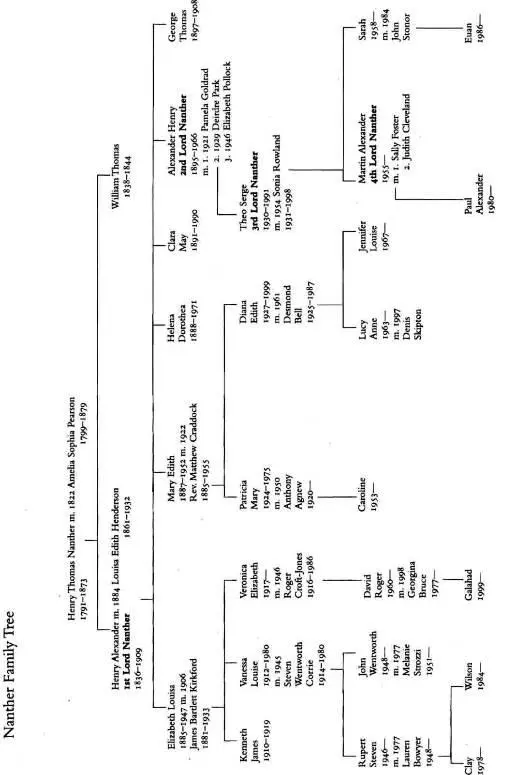
In her tenth novel writing as Barbara Vine, Ruth Rendell offers a novel of suspense based in 19th-century England and centering on deceit, murder, and various other family skeletons. Martin Nanther, the fourth Lord Nanther, has a comfortable life in present-day London as a Hereditary Peer in the House of Lords and as a historical biographer. He chooses as his most recent subject his own great-grandfather, the first Lord Nanther, physician to the royal family (Victoria and Albert) and an early noted researcher into the cause and transmission of hemophilia. The reader is taken through the family history as Martin painstakingly uncovers some not so savory bits of his own family's past. The story is dense with characters, and the author provides family trees of the two principal families, for which any reader will be eternally grateful. The story lacks the usual page-turner suspense of the Rendell/Vine novels but makes up for that with unusually detailed glimpses into Victorian life and the inner workings of the House of Parliament, which American readers will find particularly intriguing. Recommended for all public libraries. Caroline Mann, Univ. of Portland, OR
The Blood Doctor — читать онлайн бесплатно полную книгу (весь текст) целиком
Ниже представлен текст книги, разбитый по страницам. Система сохранения места последней прочитанной страницы, позволяет с удобством читать онлайн бесплатно книгу «The Blood Doctor», без необходимости каждый раз заново искать на чём Вы остановились. Поставьте закладку, и сможете в любой момент перейти на страницу, на которой закончили чтение.
Интервал:
Закладка:
I want to kill her, I want to throw them both out. I’m so anxious to get rid of them that I forget all about telling David I’d like to meet his mother before she goes back, I’d like to have a talk with her about her mother, Henry’s eldest daughter, see if she has any stories about Henry and Edith and their other children. But I forget this in my desire to say goodbye and don’t hurry back. Of course I don’t say this. I thank them for coming and say we must meet again soon and when I’ve closed the door behind them and it’s too late I remember about wanting to talk to Veronica Croft-Jones.
Jude’s miscarriage put an end to all Henry research for a time. Nor did I go into the House. I missed the further consideration of the House of Lords Bill on Report but read the debate in Hansard. A letter has come from Stanley Farrow, saying he missed seeing me in the House and he’d heard my wife was ill. I ought to reply but I don’t because I don’t know what to say. Jude doesn’t want anyone ‘outside our immediate circle’ to know about her miscarriage, only those who knew she was pregnant in the first place. Someone she didn’t tell was Paul. He called round without warning and knew at once, she says, from her face and from her thinness. She has discovered unexpected depths of tenderness in my son who, now the possible half-brother or sister has vanished, claims to have been looking forward to ‘taking it out in its buggy’.
I sit with Jude, I hold her hand. We sleep with our arms round each other as if we’re afraid something will come in in the night and prise us apart. But we have no sex. It seems an indelicate idea. Besides, I don’t know if I ought to use a condom or if she ought to go on the pill or what, and I’m afraid to ask. I take her out to her favourite restaurants and pay black market prices to get into plays we haven’t seen. I’ve joined Blockbuster Video and we watch old and new films night after night. Our childless friends are assiduous in asking us to drinks or dinner. The fecund ones maintain a tactful silence. After a month of this she doesn’t do what I’d like and what I’ve started waiting for, that is make a sexual advance on the sofa where we sit side by side watching Casablanca , but as we’re putting out the lights and starting up the stairs, she says in the sort of voice she’d use to suggest we book ahead for our Christmas holiday, that it’s time to try again for a baby.
I ought to be impotent, I ought to be a candidate for Viagra, and I don’t know why I’m not because I thought I would be. I anticipated total failure, but I didn’t fail. I suppose I simply find my wife the most attractive and desirable woman I’ve ever known and that’s that. Good. Three loud cheers from all and sundry.
I can’t sleep and I lie beside the sleeping Jude, thinking about Henry and Victorian men in general. Impotence is mostly supposed to be psychologically rather than physically caused. So if it’s true nineteenth-century women were without sexual feelings they would have presented a man with no challenge, nothing for him to rise to, ifyou’ll excuse the pun, and therefore he’d never have been incapable. But I don’t suppose it is true, it’s just what nineteenth-century men preferred to believe. For most of this past century men have been expected to be ‘good at it’. I wonder if Henry was, if he tried, if he ever thought about it. Did Jimmy Ashworth teach him? You can only teach if you have a receptive pupil and somehow I don’t think Henry would have submitted to being taught. Edith, presumably, would have accepted what she was offered, and if she expected great things, was perhaps disappointed. Marriage, as someone said in Henry’s day, is the price men pay for sex and sex is the price women pay for marriage. It sounds grim.
It’s the middle of July and I’ve begun going into the House again. Since I’d told no one I expected to become a father in December, there’s no one to commiserate with me. Stanley Farrow comes up to me at the long table at teatime and asks after Jude – he thinks she’s had a bad go of summer flu – and I tell him she’s better. I sit in the Chamber for a couple of hours, listening to the progress of the Greater London Authority Bill, listening at any rate with half an ear, while I contemplate various of my fellow hereditaries and wonder which of them will be elected to stay and which will go. And I ask myself, suppose a banned hereditary came back, came to the Peers’ Entrance and walked in and hung his coat up on his old peg, what would the doorkeepers do? Would they, respectfully, stop him? Or try to stop him? But suppose he resisted, refused, walked on and turned to the left and went up the red-carpeted staircase, would they – unthinkable, surely – manhandle him? Or call the police? I wonder if the promoters of this bill have thought of that.
Henry seldom came into the House. These days new peers are encouraged to make their maiden speech as soon as conveniently possible, to find a bill entering its second reading or a Wednesday afternoon debate and put their names down on the speakers’ list with an ‘M’ after it in brackets. The debate in question should be on a subject the new peer knows something about or can mug up and the maiden speech should be non-controversial, not lasting more than ten minutes. Henry made his in July, exactly one hundred and two years ago. His theme was, appropriately enough, public health: the improved health of British city-dwellers as a result of efficient drainage. By this time Sir Joseph Bazalgette was dead. He had died in 1891. But he had been the great engineer of London’s sewers and embankments and Henry’s neighbour in Hamilton Terrace and they’d very likely often talked on this subject. Reading the maiden speech today, you can find evidence in it of technical knowledge that may have been acquired through conversations with Sir Joseph.
He spoke again a year later on new discoveries in biochemical research, then in its early stages, on the coagulation of blood, and three years afterwards on Mendelian laws of heredity, which had apparently been ignored for thirty-five years but in 1900 were rediscovered. It was in this, extremely long, speech, that Henry made his notorious remark, for which he’s since been ridiculed: ‘What is the answer? That is the question.’ After that, he seldom spoke in the House.
He seems never to have written another book either, though there is evidence that he started one and that he regarded it as a highly significant work. The diary entry for 2 March 1900 reads, ‘Began my magnum opus this morning.’ Some months later he is writing in Alternative Henry,
I am agnostic, not a believer, though I pay lip service to religion, but certain sayings of Jesus Christ I recognize as words of great wisdom. For instance, one that springs constantly to mind is one of the last phrases He is alleged to have uttered; Father, forgive them, for they know not what they do. I knew not what I was doing when I did what I did, though I believed I knew only too well.
I shall never be a pioneer now, a great discoverer. My ambition has come to nothing. I cannot write. I can carry out no experiments. The child’s crying is a constant disturbance to me. It rings and echoes through this house, it penetrates the thick walls. No matter where I go I cannot escape from it. Sometimes I think I shall lose my mind. Oh, how I am punished!
Why? How? What has he done? I don’t know, and the rest of the Alternative Henry papers, only two of them, give no clue. Those last lines sound like the witness of someone in the ghost stories of M. R. James, some wretched haunted creature who has seen the demon yet again and seen it come closer. Or is he only saying, as a thoroughly selfish man might, albeit with unusual near-hysteria, that his three-year-old son’s crying is a nuisance and a hindrance to his work? Perhaps. Still, the terms he uses are extreme. By the standards of the time, he was an old man. It may be that he was on the verge of making some new discovery and the presence of two small boys in the house interrupted the process. Even with a staff of servants, it’s no joke to be a father of a five-year-old and a three-year-old when you’re sixty-four. This makes me think of myself and my own situation and what I now know to be Jude’s aims, to have a child whenever and by whatever means she can. I know I’m getting things out of proportion but I can’t help thinking that if she finally succeeds when she’s forty-seven, I’ll be fifty-five, and not far short of Henry’s age when it’s five.
Читать дальшеИнтервал:
Закладка:
Похожие книги на «The Blood Doctor»
Представляем Вашему вниманию похожие книги на «The Blood Doctor» списком для выбора. Мы отобрали схожую по названию и смыслу литературу в надежде предоставить читателям больше вариантов отыскать новые, интересные, ещё непрочитанные произведения.





Обсуждение, отзывы о книге «The Blood Doctor» и просто собственные мнения читателей. Оставьте ваши комментарии, напишите, что Вы думаете о произведении, его смысле или главных героях. Укажите что конкретно понравилось, а что нет, и почему Вы так считаете.