Barbara Vine - The Blood Doctor
Здесь есть возможность читать онлайн «Barbara Vine - The Blood Doctor» весь текст электронной книги совершенно бесплатно (целиком полную версию без сокращений). В некоторых случаях можно слушать аудио, скачать через торрент в формате fb2 и присутствует краткое содержание. Год выпуска: 2003, Издательство: Vintage, Жанр: Современная проза, на английском языке. Описание произведения, (предисловие) а так же отзывы посетителей доступны на портале библиотеки ЛибКат.
- Название:The Blood Doctor
- Автор:
- Издательство:Vintage
- Жанр:
- Год:2003
- ISBN:нет данных
- Рейтинг книги:4 / 5. Голосов: 1
-
Избранное:Добавить в избранное
- Отзывы:
-
Ваша оценка:
The Blood Doctor: краткое содержание, описание и аннотация
Предлагаем к чтению аннотацию, описание, краткое содержание или предисловие (зависит от того, что написал сам автор книги «The Blood Doctor»). Если вы не нашли необходимую информацию о книге — напишите в комментариях, мы постараемся отыскать её.
Barbara Vine (a.k.a. Ruth Rendell) deftly weaves this story of an eminent Victorian with a modern yarn about the embattled biographer, who is watching the House of Lords prepare to annul membership for hereditary peers and thus strip him of his position. Themes of fate and family snake throughout this teasing psychological suspense, a typically chilling tale from a master of the genre.
From Publishers Weekly
This rich, labyrinthine book by Vine (aka Ruth Rendell) concerns a "mystery in history," like her 1998 novel, The Chimney Sweeper's Boy. Martin Nanther-biographer and member of the House of Lords-discovers some blighted roots on his family tree while researching the life of his great-great-grandfather, Henry, an expert on hemophilia and physician to Queen Victoria. Martin contacts long-lost relatives who help him uncover some puzzling events in Henry's life. Was Henry a dour workaholic or something much more sinister? Vine can make century-old tragedy come alive. Still, the decades lapsed between Martin's and Henry's circles create added emotional distance, and, because they are all at least 50 years dead, we never meet Henry or his cohorts except through diaries and letters. Martin's own life-his wife's infertility and troubles with a son from his first marriage-is interesting yet sometimes intrudes on the more intriguing Victorian saga. Vine uses her own experience as a peer to give readers an insider's look into the House of Lords, at the dukes snoozing in the library between votes and eating strawberries on the terrace fronting the Thames. Some minor characters are especially vivid, like Martin's elderly cousin Veronica, who belts back gin while stonewalling about the family skeletons all but dancing through her living room. Readers may guess Henry's game before Vine is ready to reveal it, but this doesn't detract from this novel peopled by characters at once repellant and compelling.
From Library Journal
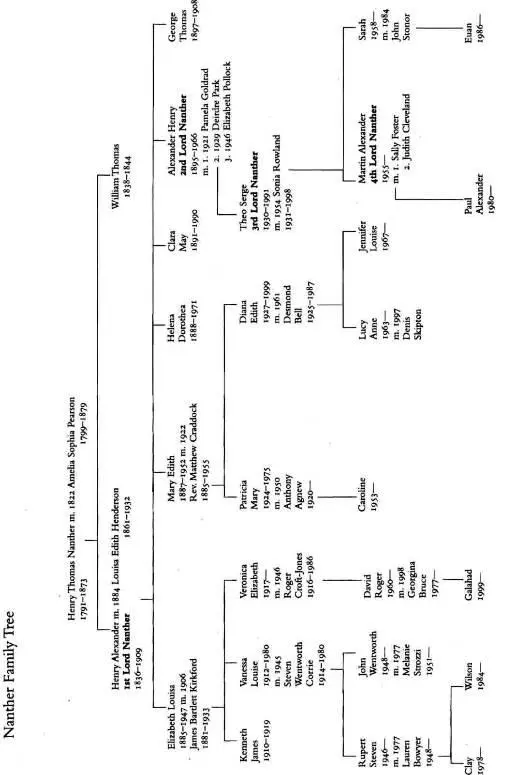
In her tenth novel writing as Barbara Vine, Ruth Rendell offers a novel of suspense based in 19th-century England and centering on deceit, murder, and various other family skeletons. Martin Nanther, the fourth Lord Nanther, has a comfortable life in present-day London as a Hereditary Peer in the House of Lords and as a historical biographer. He chooses as his most recent subject his own great-grandfather, the first Lord Nanther, physician to the royal family (Victoria and Albert) and an early noted researcher into the cause and transmission of hemophilia. The reader is taken through the family history as Martin painstakingly uncovers some not so savory bits of his own family's past. The story is dense with characters, and the author provides family trees of the two principal families, for which any reader will be eternally grateful. The story lacks the usual page-turner suspense of the Rendell/Vine novels but makes up for that with unusually detailed glimpses into Victorian life and the inner workings of the House of Parliament, which American readers will find particularly intriguing. Recommended for all public libraries. Caroline Mann, Univ. of Portland, OR
The Blood Doctor — читать онлайн бесплатно полную книгу (весь текст) целиком
Ниже представлен текст книги, разбитый по страницам. Система сохранения места последней прочитанной страницы, позволяет с удобством читать онлайн бесплатно книгу «The Blood Doctor», без необходимости каждый раз заново искать на чём Вы остановились. Поставьте закладку, и сможете в любой момент перейти на страницу, на которой закончили чтение.
Интервал:
Закладка:
When I ask Veronica Croft-Jones if she minds my recording our conversation she gives me a strange suspicious look as if I’d suggested bugging her phone. ‘It seems so businesslike,’ she says. ‘So official. You’ll have to let me see what you intend to put down in this book of yours. I mean, the actual words.’
I promise to do this. She is wearing a white suit today made out of a sort of nubbly material and with a very short skirt. Her legs are crossed at the knee and she has an irritating habit of swinging the dangling foot. I start the recording device, test it and ask her about her parents. Who was James Bartlett Kirkford and where did Elizabeth Nanther meet him? She knows their history and doesn’t mind talking about it. Have I ever heard of her great-aunt Dorothea Vincent? Trains come to mind and poor Eleanor’s death and I tell her, yes, she was the one who lived in Manaton, Samuel Henderson’s sister. Well, she says, Kirkford was a friend of her daughter Laetitia’s husband, though much younger than he. They met at Laetitia’s house in Wimbledon. ‘Daddy’, as Veronica still calls him, was in the Customs and Excise but ‘he had private means’.
I ask her about her brother Kenneth. Her foot starts swinging again. She can’t remember Kenneth at all, she says, she was very young when he died.
‘It was diphtheria,’ she says. ‘A lot of children died of it in those days. Poor Daddy couldn’t fight in the war, you know, the Great War, but he longed to be at the front. He had a bad leg but people didn’t know that and someone sent him a white feather. It was all quite ghastly.’
Veronica married in 1946 at the age of twenty-nine but her son David wasn’t born till fourteen years later. I point out – daringly – that this is a coincidence as it is precisely the length of time that elapsed between Henry’s parents’ marriage and his birth. The foot swings slowly, the way an angry cat’s tail does. ‘One has nothing to do with the other,’ she says. ‘My husband and I were all in all to one another. We were perfectly indifferent as to whether children came along or not.’
I tell her I’d like to show her a letter and produce the one Patricia Agnew wrote to her soon after David was born. The foot stops swinging and is positively stamped on the floor, her knees drawn up close together. ‘Where did you get this?’
‘From David. It was among a lot of family letters.’
‘I suppose you mean you got it from Georgina. That would be typical. One simply has no privacy left in the modern world. I gave those letters to my son purely for his family tree.’
I ask her if she’d mind answering one question about it. She looks mutinous and her white papery face has gone quite red. ‘Go ahead,’ she says. ‘If I don’t like it I shan’t answer.’
She reads the letter as if she’s never seen it before. ‘What did your cousin think might be wrong with David? Down’s Syndrome?’
‘Is that being mongoloid? They have such ridiculous names for everything nowadays. Yes, that’s what she did suspect. Or I suppose so. She was a very silly hysterical woman, I must say, though she was my own cousin.’ Veronica has completely forgotten this conversation is being recorded. ‘I mean, how absurd can you get? David, who’s simply the most intelligent man in London.’
I manoeuvre her back to her grandparents and she reminds me that Henry was dead long before she was born. Her grandmother Edith she was fond of, chiefly it seems because she allowed her to play the piano in the drawing room at Alma Villa while her grandmother Kirkford expected children to be seen and not heard. She remembers Edith painting, ‘Not with an easel and a palette and all that, you know. With a paintbox.’ She, Veronica, refused to sit for her grandmother and made a scene about it. Edith only laughed and said to leave the child alone but Veronica’s mother was cross. Edith sometimes spoke about Henry, she remembers she always called him ‘your dear grandpapa’. Her mother Elizabeth didn’t recall him as a tyrant and she can’t imagine what Mary means by suggesting he would have been but for Edith’s intervention. Elizabeth said her father spent more time with his daughters than was usual with a Victorian paterfamilias and often told them stories. One was about a drop of blood travelling around the human body and the obstacles it encountered on its journey from the heart and back again.
This is the kind of story that makes me feel squeamish. Still, I ask for more details. But of course Veronica can’t remember. Her mother tried to tell her this story but admitted failing to give it the vitality Henry had, she couldn’t give the blood drop life and personality as he had, and she lacked the anatomical knowledge. All this interests me quite a lot because it sheds new light on Henry. I’d never have suspected him of wanting to be with his children.
When we’re finished and I’m on my way home, something occurs to me. Veronica never once mentioned her elder sister Vanessa. Didn’t they get on? I take another look at David’s tree and see that though Vanessa’s recorded as having married in 1945, a year before Veronica, her husband isn’t named and no children are listed. I have three second cousins as well as David on the Nanther side, all more or less my contemporaries, Patricia’s daughter Caroline as well as Lucy and Jennifer, the two daughters of Patricia’s sister Diana. If Vanessa had children there would be more. How far down the line into the subject’s descendants does a biography have to extend? All the way, I suppose, so I shall have to find out what these people do for a living and whom they’ve married, if they have. That latter detail will no doubt be in the next stage of David’s tree.
By a coincidence that’s explicable as just a coincidence I hear about one of those second cousins on my third day back in the House. We return on 11 October, a Monday, and on the Wednesday I encounter Lachlan Hamilton sitting by himself in the Peers’ Guest Room with a pile of books and papers on the other chair at his table which happens to be the only available one in the place. He greets me with a lugubrious nod, picks up the pile of stuff and deposits it on the floor. The room is crowded as it always is these days, people propping up the bar, ‘the last days of the Raj,’ as Lachlan puts it.
‘I don’t know why they come in,’ he says. ‘It’s pure masochism.’
‘They hope for a last-minute miracle,’ I say. ‘Come to that, why do you come in?’
‘I’m a masochist.’
‘I don’t think I am. I’m interested.’
Lachlan is silent. He smiles very slightly, an unusual event with him. I ask him why he’s not drinking and when he shrugs I order whisky for him and a beer for me. The drinks are a long time coming and when she brings them Evelina looks harassed, but polite as always. Lachlan raises his glass a couple of inches and nods, the nearest he ever gets to a toast, and says he met a cousin of mine the other day. It was in Vermont. Somehow I’ve never imagined him going out of the United Kingdom and it seems even odder when he says he and his wife went to see the autumn colours.
‘Who was this cousin?’ I ask him.
‘Chap called Corrie. Dr Corrie. A PhD and a medico.’
‘I’ve never heard of him.’
‘He’s heard of you. Or rather, he knows he has a cousin who’s a lord. It’s because I’m one he happened to mention it to me. This pal of mine introduced us. It was at a party on what they call a campus, I daresay you know what that is, and my pal said, “This is Dr Corrie. John, this is Lord Hamilton,” and this chap Corrie said, “I’ve a cousin who’s a lord, maybe you’ve met him. He’s called Nanther.” ’
I ask if he’s American, this cousin, and Lachlan says he must be, he was born there, his mother was a GI bride. John Corrie looks to be on the right side of fifty. He doesn’t know what kind of a cousin he is, second or third perhaps. It means nothing to me, as far as I know there’s no one on the Nanther side he could be, so I suppose he’s some connection of my mother’s.
Читать дальшеИнтервал:
Закладка:
Похожие книги на «The Blood Doctor»
Представляем Вашему вниманию похожие книги на «The Blood Doctor» списком для выбора. Мы отобрали схожую по названию и смыслу литературу в надежде предоставить читателям больше вариантов отыскать новые, интересные, ещё непрочитанные произведения.





Обсуждение, отзывы о книге «The Blood Doctor» и просто собственные мнения читателей. Оставьте ваши комментарии, напишите, что Вы думаете о произведении, его смысле или главных героях. Укажите что конкретно понравилось, а что нет, и почему Вы так считаете.