Barbara Vine - The Blood Doctor
Здесь есть возможность читать онлайн «Barbara Vine - The Blood Doctor» весь текст электронной книги совершенно бесплатно (целиком полную версию без сокращений). В некоторых случаях можно слушать аудио, скачать через торрент в формате fb2 и присутствует краткое содержание. Год выпуска: 2003, Издательство: Vintage, Жанр: Современная проза, на английском языке. Описание произведения, (предисловие) а так же отзывы посетителей доступны на портале библиотеки ЛибКат.
- Название:The Blood Doctor
- Автор:
- Издательство:Vintage
- Жанр:
- Год:2003
- ISBN:нет данных
- Рейтинг книги:4 / 5. Голосов: 1
-
Избранное:Добавить в избранное
- Отзывы:
-
Ваша оценка:
The Blood Doctor: краткое содержание, описание и аннотация
Предлагаем к чтению аннотацию, описание, краткое содержание или предисловие (зависит от того, что написал сам автор книги «The Blood Doctor»). Если вы не нашли необходимую информацию о книге — напишите в комментариях, мы постараемся отыскать её.
Barbara Vine (a.k.a. Ruth Rendell) deftly weaves this story of an eminent Victorian with a modern yarn about the embattled biographer, who is watching the House of Lords prepare to annul membership for hereditary peers and thus strip him of his position. Themes of fate and family snake throughout this teasing psychological suspense, a typically chilling tale from a master of the genre.
From Publishers Weekly
This rich, labyrinthine book by Vine (aka Ruth Rendell) concerns a "mystery in history," like her 1998 novel, The Chimney Sweeper's Boy. Martin Nanther-biographer and member of the House of Lords-discovers some blighted roots on his family tree while researching the life of his great-great-grandfather, Henry, an expert on hemophilia and physician to Queen Victoria. Martin contacts long-lost relatives who help him uncover some puzzling events in Henry's life. Was Henry a dour workaholic or something much more sinister? Vine can make century-old tragedy come alive. Still, the decades lapsed between Martin's and Henry's circles create added emotional distance, and, because they are all at least 50 years dead, we never meet Henry or his cohorts except through diaries and letters. Martin's own life-his wife's infertility and troubles with a son from his first marriage-is interesting yet sometimes intrudes on the more intriguing Victorian saga. Vine uses her own experience as a peer to give readers an insider's look into the House of Lords, at the dukes snoozing in the library between votes and eating strawberries on the terrace fronting the Thames. Some minor characters are especially vivid, like Martin's elderly cousin Veronica, who belts back gin while stonewalling about the family skeletons all but dancing through her living room. Readers may guess Henry's game before Vine is ready to reveal it, but this doesn't detract from this novel peopled by characters at once repellant and compelling.
From Library Journal
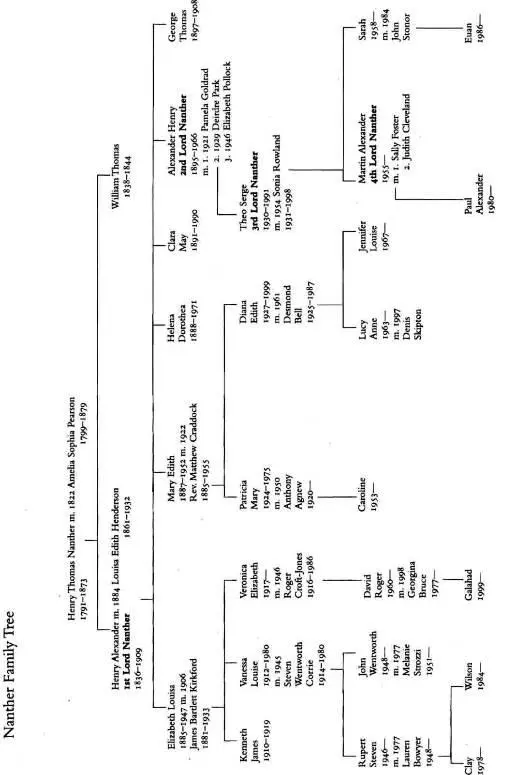
In her tenth novel writing as Barbara Vine, Ruth Rendell offers a novel of suspense based in 19th-century England and centering on deceit, murder, and various other family skeletons. Martin Nanther, the fourth Lord Nanther, has a comfortable life in present-day London as a Hereditary Peer in the House of Lords and as a historical biographer. He chooses as his most recent subject his own great-grandfather, the first Lord Nanther, physician to the royal family (Victoria and Albert) and an early noted researcher into the cause and transmission of hemophilia. The reader is taken through the family history as Martin painstakingly uncovers some not so savory bits of his own family's past. The story is dense with characters, and the author provides family trees of the two principal families, for which any reader will be eternally grateful. The story lacks the usual page-turner suspense of the Rendell/Vine novels but makes up for that with unusually detailed glimpses into Victorian life and the inner workings of the House of Parliament, which American readers will find particularly intriguing. Recommended for all public libraries. Caroline Mann, Univ. of Portland, OR
The Blood Doctor — читать онлайн бесплатно полную книгу (весь текст) целиком
Ниже представлен текст книги, разбитый по страницам. Система сохранения места последней прочитанной страницы, позволяет с удобством читать онлайн бесплатно книгу «The Blood Doctor», без необходимости каждый раз заново искать на чём Вы остановились. Поставьте закладку, и сможете в любой момент перейти на страницу, на которой закончили чтение.
Интервал:
Закладка:
Results will be available on Friday in the Printed Paper Office and the library but I shan’t bother to come in for them. Monday will be good enough for me. Or even next Wednesday when hereditaries start to vote for hereditaries, those seventy-five who are also to stay. I suddenly remember Henry’s robe.
‘D’you think I could sell my robe?’ I ask Lachlan.
‘Dunno,’ he says. ‘I’ve got one. It’s two hundred years old, falling to bits. Nobody’d buy it.’
There’s only some point in having an ancient robe if it’s been in your family all its life. A lot of kudos comes from wearing a tatty old garment. When the Queen comes to open Parliament I’ve seen young peers walk proudly into the Chamber in a moth-eaten antique, the white fur looking as if it’s been chewed by a pack of hounds.
‘They’ll all be the same in future,’ Lachlan says in his mournful tone. He’s referring to the number of ermine rows according to rank. ‘All those old robes’ll be rubbished because no one’s the right to wear ’em. Just a bunch of Life Barons in double rows of rabbit it’ll be.’
‘You’ll be elected,’ I tell him, though I’m not at all sure about this. ‘You’ll be coming to the State Opening for years yet.’
He shakes his head. It’s weeks since I saw him smile. ‘Dressing up’ll be the next thing to go. A tenner that by two thousand and two no one’ll wear robes any more.’
I take him on, though I think he’s right. Peers who haven’t got their own robes borrow them if they can or hire from Ede & Ravenscroft in Chancery Lane. Hiring costs over £100 and I’d never have been able to afford it if I hadn’t got Henry’s. If I sell mine I might get enough to pay for my flight to the United States. Then I remember I can’t go because I can’t leave Jude. That’s what she meant when she said the other day that I wouldn’t want to go. She was wrong there because I do want to. But I won’t. I’ll stay here and spend the robe money on buying her something nice and school myself into wanting this baby, this foetus that’s still securely in the womb.
And virtue is rewarded. I feel quite proud of myself for being good and never once protesting aloud. My recompense is that another fax has come from John Corrie. Contrite over the time she kept the last one before remembering to give it to me, Jude phones from work about this one. It’s just arrived and it says he’s coming over here to a conference on gene therapy. Some other research fellow has dropped out and he’s taking his place. The conference is in London, so maybe we can meet?
My usual course would have been to invite a guest in here for lunch or dinner. I’m not sure if I can do that now. I certainly won’t be able to after Prorogation, the end of the present session, which is happening next Thursday. By the State Opening on 17 November I’ll have been banished. Suddenly, ridiculously, I feel embarrassed about having to tell John Corrie that. He won’t understand. I barely understand myself. I try to explain to taxi drivers, some of whom believe that all peers are to be got rid of and replaced with a wholly elected assembly. It’s extraordinary what a large proportion of the general public seems never to have heard of life peers and believes everyone in the Upper House is male, old, rich, a landowner, of ancient lineage and set to pass on his title and estates to his eldest son. John Corrie, of course, may have heard of lords but never of a House of Lords. If I get to give him dinner it will probably be somewhere in the neighbourhood of this conference.
The Clerk of the Parliaments announces the election results this afternoon, the successful seventy-five who are to stay along with the fifteen Deputy Speakers elected last week. Earl Ferrers is in, polling 190 votes, the most of anyone, and so are the Earl of Onslow, Earl Russell and Lady Darcy de Knayth. Lachlan Hamilton’s manifesto must have had its charms or else voters were persuaded by his hard work and constant attendance, for he’s returned with a respectable 110. I congratulate him and he says he wishes I’d stood because I’d have got more votes than he.
I’ve done a deal with Julian Brewer over the sale of my robe. He’s beaten me down to £50, pointing out like someone dropping in to the Oxfam shop that there’s a moth hole in one shoulder and one of the rows of ermine looks as if some rodent’s been nibbling it. Brewer pays me in cash and I walk home via Bond Street where I buy Jude another kind of robe, a dark-blue satin dressing gown, that defeats my purpose entirely as it costs me five times what Brewer gave me for mine.
When I get home Lorraine’s still there, vacuuming the living room. She’s tidied up the study, in spite of being asked not to touch any of the papers on the dining table. I untidy them again and when the droning of the vacuum cleaner stops I dial the phone number John Corrie has given me. It’s two-thirty here, so nine-thirty in the morning in Philadelphia. After three rings I get his answering machine. I leave a message to call me, which he does at ten in the evening. I’ve given Jude the dressing gown and had three hours of the pleasure of seeing her in it, curled up on the sofa.
It’s ‘Hi, Cousin’ again, which I’m churlish to mind. He has the Ivy League voice, the US equivalent of our public school and Oxbridge. In my mind’s eye I can see him, tallish, thin, with a boy’s face still, very short hair, no eyebrows, glasses, a buttoned-down collar, an Armani jacket and blue jeans. He’s probably not like that at all. The conference starts on Monday 15 November and he’s arriving the day before, the Sunday. When I ask him where it is he says, ‘It’s in London, Chelmsford.’
I tell him I’ll come to Chelmsford, to the Conference Centre that’s not in the town but outside in a place called Writtle, and as I do I reflect that while I’m in the train the State Opening of Parliament will be going on and for the first time in fifteen years (for I usually went when my father was alive) I won’t be there.
Jude’s had a bleed. Very slight and now apparently over. But they took her into hospital and kept her overnight. Not for one moment – and I congratulate myself on this – was I glad, not once did I hope that this pregnancy would go the way of the last and the one before that and the one before that. If nothing else could have put me firmly on her side, her fear did, her panic and grief, as she held me and hung on screaming, like a child in a war zone. Then, waiting for the ambulance I’d called, she grew utterly calm, willing herself, she told me afterwards, to keep the baby, telling herself that if she wanted this hard enough it would work and all would be well.
Since then a scan’s been done with satisfactory results and she’s been given something that’s supposed to help prevent miscarriages, and told to rest and carry on taking the tablets. Only she won’t, because she’s afraid of the thalidomide effect. When she was in her teens her parents had a neighbour who’d taken thalidomide and whose daughter was born without hands. While she tells me this, something she’s never told me before, she’s shaking and shivering and her teeth are chattering. In the middle of all this Paul comes.
‘You’re always asking me,’ he says, ‘so I’ve taken you up on your offer and come for the weekend.’
I’m sure the offer didn’t stipulate a day’s or even an hour’s notice. This means I can’t complain. Jude is lying on the sofa, looking beautiful in the blue satin dressing gown, and he sits next to her and, rather oddly, holds her hand. He doesn’t ask what’s wrong but seems to assume it’s the flu. I get lunch for us all and hunt through the permafrost depths of the freezer for something for dinner, as Jude can’t go out and for once, it appears, Paul is staying in. He wants to talk about the end of the hereditary peers and how did I feel about being in there on my last day. I give him a copy of Hansard but have to tell him I wasn’t there but here, at home, looking after Jude.
Читать дальшеИнтервал:
Закладка:
Похожие книги на «The Blood Doctor»
Представляем Вашему вниманию похожие книги на «The Blood Doctor» списком для выбора. Мы отобрали схожую по названию и смыслу литературу в надежде предоставить читателям больше вариантов отыскать новые, интересные, ещё непрочитанные произведения.






Обсуждение, отзывы о книге «The Blood Doctor» и просто собственные мнения читателей. Оставьте ваши комментарии, напишите, что Вы думаете о произведении, его смысле или главных героях. Укажите что конкретно понравилось, а что нет, и почему Вы так считаете.