Barbara Vine - The Blood Doctor
Здесь есть возможность читать онлайн «Barbara Vine - The Blood Doctor» весь текст электронной книги совершенно бесплатно (целиком полную версию без сокращений). В некоторых случаях можно слушать аудио, скачать через торрент в формате fb2 и присутствует краткое содержание. Год выпуска: 2003, Издательство: Vintage, Жанр: Современная проза, на английском языке. Описание произведения, (предисловие) а так же отзывы посетителей доступны на портале библиотеки ЛибКат.
- Название:The Blood Doctor
- Автор:
- Издательство:Vintage
- Жанр:
- Год:2003
- ISBN:нет данных
- Рейтинг книги:4 / 5. Голосов: 1
-
Избранное:Добавить в избранное
- Отзывы:
-
Ваша оценка:
The Blood Doctor: краткое содержание, описание и аннотация
Предлагаем к чтению аннотацию, описание, краткое содержание или предисловие (зависит от того, что написал сам автор книги «The Blood Doctor»). Если вы не нашли необходимую информацию о книге — напишите в комментариях, мы постараемся отыскать её.
Barbara Vine (a.k.a. Ruth Rendell) deftly weaves this story of an eminent Victorian with a modern yarn about the embattled biographer, who is watching the House of Lords prepare to annul membership for hereditary peers and thus strip him of his position. Themes of fate and family snake throughout this teasing psychological suspense, a typically chilling tale from a master of the genre.
From Publishers Weekly
This rich, labyrinthine book by Vine (aka Ruth Rendell) concerns a "mystery in history," like her 1998 novel, The Chimney Sweeper's Boy. Martin Nanther-biographer and member of the House of Lords-discovers some blighted roots on his family tree while researching the life of his great-great-grandfather, Henry, an expert on hemophilia and physician to Queen Victoria. Martin contacts long-lost relatives who help him uncover some puzzling events in Henry's life. Was Henry a dour workaholic or something much more sinister? Vine can make century-old tragedy come alive. Still, the decades lapsed between Martin's and Henry's circles create added emotional distance, and, because they are all at least 50 years dead, we never meet Henry or his cohorts except through diaries and letters. Martin's own life-his wife's infertility and troubles with a son from his first marriage-is interesting yet sometimes intrudes on the more intriguing Victorian saga. Vine uses her own experience as a peer to give readers an insider's look into the House of Lords, at the dukes snoozing in the library between votes and eating strawberries on the terrace fronting the Thames. Some minor characters are especially vivid, like Martin's elderly cousin Veronica, who belts back gin while stonewalling about the family skeletons all but dancing through her living room. Readers may guess Henry's game before Vine is ready to reveal it, but this doesn't detract from this novel peopled by characters at once repellant and compelling.
From Library Journal
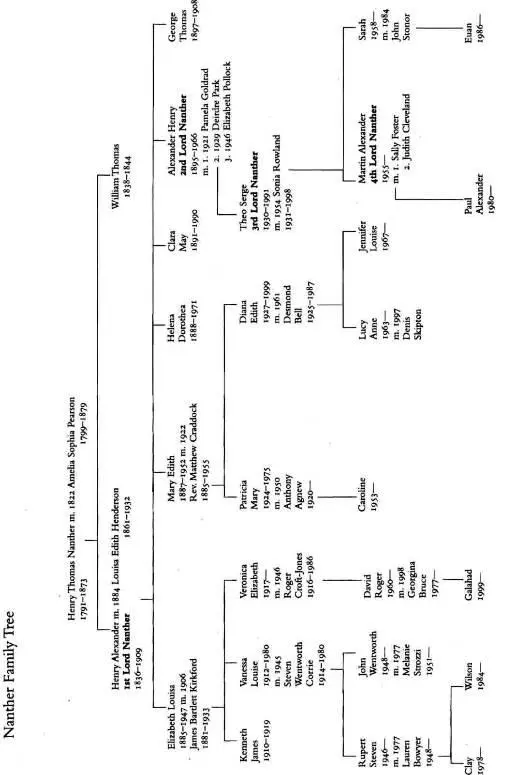
In her tenth novel writing as Barbara Vine, Ruth Rendell offers a novel of suspense based in 19th-century England and centering on deceit, murder, and various other family skeletons. Martin Nanther, the fourth Lord Nanther, has a comfortable life in present-day London as a Hereditary Peer in the House of Lords and as a historical biographer. He chooses as his most recent subject his own great-grandfather, the first Lord Nanther, physician to the royal family (Victoria and Albert) and an early noted researcher into the cause and transmission of hemophilia. The reader is taken through the family history as Martin painstakingly uncovers some not so savory bits of his own family's past. The story is dense with characters, and the author provides family trees of the two principal families, for which any reader will be eternally grateful. The story lacks the usual page-turner suspense of the Rendell/Vine novels but makes up for that with unusually detailed glimpses into Victorian life and the inner workings of the House of Parliament, which American readers will find particularly intriguing. Recommended for all public libraries. Caroline Mann, Univ. of Portland, OR
The Blood Doctor — читать онлайн бесплатно полную книгу (весь текст) целиком
Ниже представлен текст книги, разбитый по страницам. Система сохранения места последней прочитанной страницы, позволяет с удобством читать онлайн бесплатно книгу «The Blood Doctor», без необходимости каждый раз заново искать на чём Вы остановились. Поставьте закладку, и сможете в любой момент перейти на страницу, на которой закончили чтение.
Интервал:
Закладка:
Having moved, it seems, into the hereditaries’ camp, he asks me how I could bear to stay away on those grounds. ‘Just because your wife had flu?’
I expect Jude thinks she’s standing up for me, I know she does, but I wish she’d kept quiet. ‘I didn’t have flu, I had a threatened miscarriage.’
He says nothing but flushes a deep dark red.
‘Paul,’ says Jude, ‘we want to have a child. I don’t think my life will be worth living if I can’t, it’s as desperate as that. Can’t you try to understand?’
He’s been holding her hand again but he lets it go and something in his face tells me he’ll never want to hold it again, never want to kiss her again. He turns to me. ‘I really came here because there’s something you’ve got that I want. Great-great-grandad’s robe. Now you’ve been demoted I thought I could have it. You won’t need it again.’
Jude catches my eye, though her face doesn’t change. ‘What do you want it for?’
‘I just want it.’ Like a child who asks for something to eat he’s never asked for before and won’t say why.
‘I’ve sold it,’ I say. ‘I sold it to a life peer. It was rather shabby.’
He’s furious. His face goes even redder. ‘And what you’ve done is rather shabby. It wasn’t even yours to sell, it belongs to the family. One day it would have belonged to my son and his son.’
This is the first mention I’ve ever heard of his dream children. It’s useless to defend myself or the sale, particularly as I’m now feeling I shouldn’t have done it, I should have told him first. Jude, who never intervenes in our scraps, now does so and tells him she thought he was a Marxist who despised what she calls ‘the trappings of the aristocracy’.
Strife usually raises his mood to a point of cheerfulness but not this time. He looks the way he did when he was five and told he couldn’t have another slice of chocolate cake. He announces that he’s going over to see his pals in Ladbroke Grove and may be back tonight or may not. I wonder aloud to Jude if the time will ever come when my son and I will be able to be together like civilized beings, talk to each other, maybe smile at each other’s jokes, and not walk out in a rage halfway through a discussion.
‘When he’s thirty,’ she says. ‘You’ll have another son by then. Or a daughter. Let’s hope you’ll have better luck next time. After all, your marriage isn’t going to come to grief like your first one did.’
Of course I take her hand and kiss her, I kneel down by the side of the sofa and hug her, but I haven’t liked her talking about our marriage ending, even though she said it was impossible. I suppose I’m superstitious, though I always deny that I am. And all sorts of fears and resentments come creeping in as I kneel there. Does she blame me for Sally’s leaving me and leaving Paul? Does she really think having another child at my age, against my will, a child I can’t afford and don’t want, will heal the breach between Paul and me? Or am I supposed to write Paul off as a failure? The child she has will be the one I really always wanted. Is she that obtuse?
21
I’m sitting in the train going to Chelmsford. It’s not, of course, a first-class carriage but one of the new ones (not very new now to judge by the state of the upholstery) in which the seats face the backs of the seats in front, as in an aircraft. If one were fat it would be very uncomfortable. As it is, the seat back ahead seems unpleasantly close to one’s face and liable to smash one’s nose if the train had to stop suddenly. The view from the window is dreary in the extreme, Essex conurbations, grey fields and trunk roads.
If I were in the Heathrow Express I could watch the State Opening on television. As it is, I’m obliged to see it in imagination and memory. I run it before my eyes. The Queen wearing her crown and regalia will enter the crowded Royal Gallery at 11.27 precisely. If she’s late it’s said they stop Big Ben and start it again so that she does walk through at the right time, but she’s never late. She always wears white satin and pearls and a white fur robe. The Duke of Edinburgh is with her and other royals, the Leader of the House in her robes and the Captain of the Gentlemen-at-Arms in uniform and a procession of other dignitaries. The Queen may never enter the House of Commons, so after she’s taken her seat on the throne she says, ‘My Lords, pray be seated,’ whereupon the Lord Great Chamberlain raises his white wand as a signal to Black Rod who then goes to knock on the door of the Commons Chamber, a door that’s been slammed in his face, and summons members to ‘attend her Majesty immediately in the House of Peers’. The Commons pour out, led by the Prime Minister and the Cabinet, and some of them talk and laugh and make a lot of noise as they pound across the Peers’ Lobby and into the Chamber below the bar. The whole assembly of peers in red and white Parliament robes and peeresses in long gowns and tiaras are seated there, gazing at the Queen as she begins to deliver her speech.
Except in memory or on television I shall never see it again. Henry went every year for eight years, from 1897 to 1904, but wearing his new robe that was made for him only for four years in that time. Years passed when Queen Victoria never opened Parliament and when she was absent and a commission of lords presided, no robes were worn. But after the Queen’s death Edward VII opened every Parliament until his death nine years later. The new King loved colourful ceremony and there was gorgeous pageantry at his first State Opening, peers being told to arrive fully robed and in their finest carriages. For his part, he made a dramatic entrance through the East Door, resplendent in red velvet state robes and cape of white ermine, carrying a white plumed helmet. He made his speech from the throne, a custom his mother had given up forty years before.
Did Edith also attend State Openings? If she did, was there a tiara handed down among her jewellery? I must check. It’s all in the possession of my sister Sarah and some other Nanther female descendant. Veronica? Certainly not Vanessa, the renegade runaway. The most likely thing is that Edith sold it during the twenty-three years of her widowhood. This reminds me of the robe, cause of such dissension between me and Paul that he never returned from Ladbroke Grove and is now, presumably, back in Bristol academia. If Jude has a daughter will she, one day, want the tiara? The train is pulling into Chelmsford. It’s spitting with rain and rather cold. I find a taxi with a driver willing to take me to the Manor House Conference Centre.
It’s a huge Victorian Gothic place, angry red brick, its grounds thickly planted with big conifers. Wellingtonias and Scotch pines stand black and ragged against a sky of unvaried pale grey. Inside the house it’s warm in the way no private person except Barry Dreadnought and his kind can afford to maintain the heating. A blanket of warmth meets and enfolds me as I enter and am shown to a deep sofa in the lounge where I sit and wait for John Corrie. I’ve brought him two presents: one of the copies of Henry’s Diseases of the Blood, and a folder for keeping two photographs in. It’s bound in red leather and stamped in gold with the House of Lords portcullis crest and I bought it in the shop near the Home Room on my last day. Jude took the attitude that I couldn’t give someone an empty photograph case and when I ridiculed that, pointing out that he wouldn’t want pictures of her and me, she suggested one of Edith’s photographs of Henry. Edith took hundreds, most of which were in one of the trunks, so I carefully cut one to size and slipped it inside the partition.
John Corrie’s not the least like I imagined him. He’s tall but dark, he’s got a short dark beard and he looks a lot younger than he is. He doesn’t wear glasses but maybe has lenses, for his eyes are a strange unnatural green, a colour never seen in the unenhanced iris. When he smiles he shows the usual magnificent American teeth. I hand over the presents, which he calls gifts, and he reacts with transatlantic grace, enthusing over the photograph case and wanting to know who ‘the old guy’ is. Henry’s book brings just as much gratitude, but when he opens it and looks inside, reads a phrase or two and glances at a chart, I detect the twenty-first century scientist’s superiority tempered with indulgence this nineteenth-century bumbling about in the dark is bound to arouse.
Читать дальшеИнтервал:
Закладка:
Похожие книги на «The Blood Doctor»
Представляем Вашему вниманию похожие книги на «The Blood Doctor» списком для выбора. Мы отобрали схожую по названию и смыслу литературу в надежде предоставить читателям больше вариантов отыскать новые, интересные, ещё непрочитанные произведения.






Обсуждение, отзывы о книге «The Blood Doctor» и просто собственные мнения читателей. Оставьте ваши комментарии, напишите, что Вы думаете о произведении, его смысле или главных героях. Укажите что конкретно понравилось, а что нет, и почему Вы так считаете.