Barbara Vine - The Blood Doctor
Здесь есть возможность читать онлайн «Barbara Vine - The Blood Doctor» весь текст электронной книги совершенно бесплатно (целиком полную версию без сокращений). В некоторых случаях можно слушать аудио, скачать через торрент в формате fb2 и присутствует краткое содержание. Год выпуска: 2003, Издательство: Vintage, Жанр: Современная проза, на английском языке. Описание произведения, (предисловие) а так же отзывы посетителей доступны на портале библиотеки ЛибКат.
- Название:The Blood Doctor
- Автор:
- Издательство:Vintage
- Жанр:
- Год:2003
- ISBN:нет данных
- Рейтинг книги:4 / 5. Голосов: 1
-
Избранное:Добавить в избранное
- Отзывы:
-
Ваша оценка:
The Blood Doctor: краткое содержание, описание и аннотация
Предлагаем к чтению аннотацию, описание, краткое содержание или предисловие (зависит от того, что написал сам автор книги «The Blood Doctor»). Если вы не нашли необходимую информацию о книге — напишите в комментариях, мы постараемся отыскать её.
Barbara Vine (a.k.a. Ruth Rendell) deftly weaves this story of an eminent Victorian with a modern yarn about the embattled biographer, who is watching the House of Lords prepare to annul membership for hereditary peers and thus strip him of his position. Themes of fate and family snake throughout this teasing psychological suspense, a typically chilling tale from a master of the genre.
From Publishers Weekly
This rich, labyrinthine book by Vine (aka Ruth Rendell) concerns a "mystery in history," like her 1998 novel, The Chimney Sweeper's Boy. Martin Nanther-biographer and member of the House of Lords-discovers some blighted roots on his family tree while researching the life of his great-great-grandfather, Henry, an expert on hemophilia and physician to Queen Victoria. Martin contacts long-lost relatives who help him uncover some puzzling events in Henry's life. Was Henry a dour workaholic or something much more sinister? Vine can make century-old tragedy come alive. Still, the decades lapsed between Martin's and Henry's circles create added emotional distance, and, because they are all at least 50 years dead, we never meet Henry or his cohorts except through diaries and letters. Martin's own life-his wife's infertility and troubles with a son from his first marriage-is interesting yet sometimes intrudes on the more intriguing Victorian saga. Vine uses her own experience as a peer to give readers an insider's look into the House of Lords, at the dukes snoozing in the library between votes and eating strawberries on the terrace fronting the Thames. Some minor characters are especially vivid, like Martin's elderly cousin Veronica, who belts back gin while stonewalling about the family skeletons all but dancing through her living room. Readers may guess Henry's game before Vine is ready to reveal it, but this doesn't detract from this novel peopled by characters at once repellant and compelling.
From Library Journal
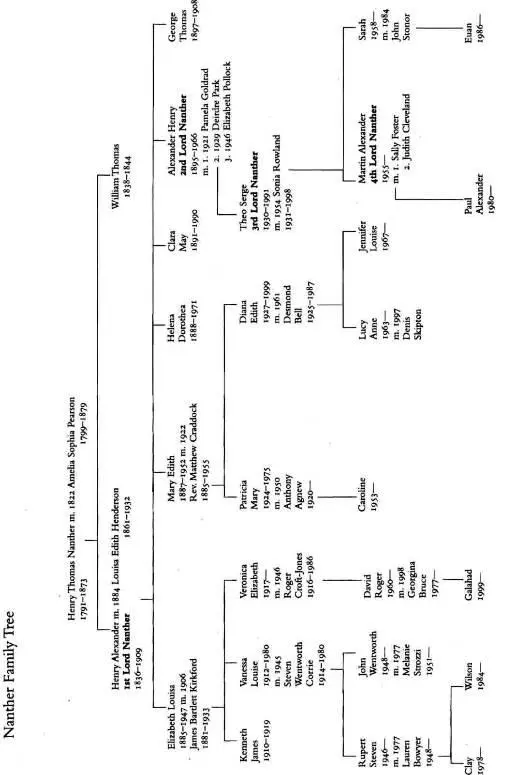
In her tenth novel writing as Barbara Vine, Ruth Rendell offers a novel of suspense based in 19th-century England and centering on deceit, murder, and various other family skeletons. Martin Nanther, the fourth Lord Nanther, has a comfortable life in present-day London as a Hereditary Peer in the House of Lords and as a historical biographer. He chooses as his most recent subject his own great-grandfather, the first Lord Nanther, physician to the royal family (Victoria and Albert) and an early noted researcher into the cause and transmission of hemophilia. The reader is taken through the family history as Martin painstakingly uncovers some not so savory bits of his own family's past. The story is dense with characters, and the author provides family trees of the two principal families, for which any reader will be eternally grateful. The story lacks the usual page-turner suspense of the Rendell/Vine novels but makes up for that with unusually detailed glimpses into Victorian life and the inner workings of the House of Parliament, which American readers will find particularly intriguing. Recommended for all public libraries. Caroline Mann, Univ. of Portland, OR
The Blood Doctor — читать онлайн бесплатно полную книгу (весь текст) целиком
Ниже представлен текст книги, разбитый по страницам. Система сохранения места последней прочитанной страницы, позволяет с удобством читать онлайн бесплатно книгу «The Blood Doctor», без необходимости каждый раз заново искать на чём Вы остановились. Поставьте закладку, и сможете в любой момент перейти на страницу, на которой закончили чтение.
Интервал:
Закладка:
‘Wouldn’t have affected me if he was. You’ll have to study the brochure. All the daughters of a haemophiliac are carriers because they have his X chromosome but his sons won’t have the condition. They have his Y chromosome.’
‘Then your mother was the conductor?’ I’ve inadvertently used the word Henry and his contemporaries did and I correct myself. ‘Carrier, I mean?’
‘She must have been. Of course it was the result of mutation.’
I’ve read a book about haemophilia in the royal family in which the author dismissed the possibility of a mutated gene in Queen Victoria’s genetic make-up. ‘But surely that’s very rare?’
He smiles that same smile. ‘Haemophilia itself is pretty rare. That said, mutation is common. About thirty per cent of haemophiliacs have the disease because of a mutation in the mother’s gene.’
‘And that was true of your mother?’
‘Sure it was. She was asked about that when I was a baby. But she didn’t know of any family history of haemophilia. It was a mutation. Let me give you an example, in a study done of five hundred and forty-three persons with haemophilia A – that’s my kind – two hundred and ninety-six unique mutations were discovered.’
I’m looking at his additions to David’s tree. ‘And your brother?’
‘Rupe’s not a haemophiliac. He was lucky. Mom had two X chromosomes as a female, remember. He must have gotten the one that’s not carrying the mutated gene.’
By this time I’m reeling from genetics. I’ve eaten nothing, which John puts down to my squeamishness. I don’t know what I put it down to. We go and help ourselves to pudding – ‘dessert’ I ought to call it. I think I can manage crème caramel. He has that and cheesecake and chocolate mousse and a banana as well. This time I manage to eat what’s on my plate. The subject has been changed to family history and I tell him about Henry’s life, his medical training, his friendships, the Tay Bridge disaster, his attendance on Prince Leopold and his women. He seems to have no idea of historical specifics and finds the Jimmy Ashworth episode shocking by his present-day standards. The foisting of jimmy on to Len Dawson is unforgivable. He wants to know why Laura Kimball doesn’t have DNA testing to establish that she and I are related and can’t understand when I tell him it’s better for her not to suspect, to retain her belief in Jimmy’s chastity.
‘Isn’t the truth always best?’ he says.
Is it? I abandon truth for the time being, it’s too big a concept for the way I feel today. ‘Henry was fascinated by blood,’ I say. ‘It was what his life was about. Blood. Isn’t it a big coincidence that you, his great-grandson, have haemophilia and also devote your life to working on blood?’
‘Genes, not blood,’ he corrects me. We go back into the lounge where coffee comes. ‘Maybe it’s a coincidence that he was an expert on haemophilia – if expertise was possible at that period – and I’m a haemophiliac. Coincidences do happen. On the other hand, look at all the family he has who aren’t haemophiliacs or carriers.’ It’s obvious from his expression that he thinks people like me, non-scientists, authors, biographers, meaning the imaginative, the woolly-minded, are always on the watch for the sensational. If it’s not there they’ll manufacture it. If it’s insignificant they’ll enlarge it.
He’s smiling at me, handing across the table a dish of chocolate mints. Suddenly I think of Jude, maybe because she hates after-dinner mints, she says they taste like toothpaste. And I have one of those premonitions others have but I seldom do, I know they mean nothing except maybe that the omened thing won’t happen. This one tells me Jude needs me, she’s tried to get hold of me but she can’t. It’s getting on for three.
‘Are you OK?’ John says. ‘You’ve turned pale. It’s all this talk.’
‘No. No, I’m fine. But it’s time I went.’
He says he’ll have them call me a taxi and he’ll pick up that brochure for me on his way. As I finish my coffee, I try to think about what he’s said but I can only think of Jude. She’s at work. I haven’t got a mobile with me, I always forget to carry it, or perhaps purposely don’t carry it because you’re supposed to keep them switched off while you’re inside the Palace of Westminster. I won’t be there again. Hooray, I’m free to carry a mobile!
I could phone from the call boxes, inside one of which John Corrie is summoning a taxi for me. He comes back, says the cab will be ten minutes. I try to phone Jude, I get through to the company but. the next step is her voicemail and all I get from that is that she’s not at her desk at present. Unable to restrain my frustration, I tell John how much I hate modern technology, am a Luddite (I’m not really), despise e-mail, don’t possess a fax, have never succeeded in penetrating the Internet further than viewing a page of a newspaper I’ve never previously heard of, and avoided like the plague the House of Lords Parliamentary Video and Data Network. John, of course, loves it all, sometimes receives twenty e-mails in a day, has already sent two to his wife this morning by means of a tiny computer he carries that’s a phone and fax as well.
The cab driver comes in, looking for me. I can’t dislike John Corrie, no one could, but we’ve nothing in common. I doubt if we’ll ever see each other again. But he congratulates me on finding him and I congratulate him on finding me and if we don’t exactly swear eternal friendship – we’re stuck with the cousinship – we faithfully promise each to come and stay with the other when I go to Philadelphia and he comes to London. Any help he can give me on blood disease he’ll be only too happy to provide and he’s thrilled to have ‘great-grandpa’s opus’.
The train’s ten minutes late. But when it comes there aren’t so many people in it as there were this morning and the seats are the old-fashioned kind, pairs facing each other with a table between. I lay the brochure on the table and open it. It’s a brightly coloured glossy booklet, the size of a newspaper’s weekend supplement, with illustrations of happy people, all young, handsome and smiling, who’ve presumably come to terms with their haemophilia through the marvels of modern medicine. I find the bit I already knew about X and Y chromosomes and read on into the complications of the different types of the disease. But concentration isn’t coming easily because all the time the coincidence of Henry, the great Victorian expert (whatever John says) on the condition and his great-grandson being a haemophiliac keeps bugging me. The coincidence of Henry’s granddaughter having a mutated gene that resulted in her son being haemophiliac bothers me too. Such an. occurrence of events, given that in John’s own words the disease is rare, is something I can’t accept. And if he can accept it this is only because he’s not one of us imaginative, sensation-seeking authors but a scientist who’s not really interested in the peculiarities of human beings’ interior lives.
Once the train pulls in to Liverpool Street, having made up the ten minutes it’s lost and loudly trumpeting this victory on the public address system, my worries about Jude come back. By now it’s half-past four. I go into a phone booth, try her number and get her voicemail again. Then I try Alma Villa. First the answering machine, then Lorraine breaking in and telling me Jude’s been taken ill and gone to hospital. She doesn’t know what’s wrong but I do. Oh, I do.
Nowhere like ninety days this time. Her obstetrician’s told her it was too soon to try again. She should have given it six months. They keep her in hospital overnight but she’s not really ill, there’s been no pain – no physical pain, that is – only blood and a tiny foetus too small to see its sex, not much more than a bag of jelly. That’s her description, not the obstetrician’s. It makes me feel nauseous. I’ve drunk a lot of whisky and coffee since I got off that train but I haven’t eaten anything. There’s been too much talk of blood these past two days and I wonder how doctors can bear it, how they get on while they’re becoming used to it. I even dreamed about blood last night, sleeping alone in our bed. I was in a transfusion centre, lying on a trestle and the man lying on the next one was Henry. It didn’t surprise me seeing him there, I knew him, we were friends, and he was also what he truly was, my ancestor. A nurse came by and said how young he looked to be my great-grandfather and he said, the way some women do, that he’d not been much more than a child when he married.
Читать дальшеИнтервал:
Закладка:
Похожие книги на «The Blood Doctor»
Представляем Вашему вниманию похожие книги на «The Blood Doctor» списком для выбора. Мы отобрали схожую по названию и смыслу литературу в надежде предоставить читателям больше вариантов отыскать новые, интересные, ещё непрочитанные произведения.




Обсуждение, отзывы о книге «The Blood Doctor» и просто собственные мнения читателей. Оставьте ваши комментарии, напишите, что Вы думаете о произведении, его смысле или главных героях. Укажите что конкретно понравилось, а что нет, и почему Вы так считаете.