Barbara Vine - The Blood Doctor
Здесь есть возможность читать онлайн «Barbara Vine - The Blood Doctor» весь текст электронной книги совершенно бесплатно (целиком полную версию без сокращений). В некоторых случаях можно слушать аудио, скачать через торрент в формате fb2 и присутствует краткое содержание. Год выпуска: 2003, Издательство: Vintage, Жанр: Современная проза, на английском языке. Описание произведения, (предисловие) а так же отзывы посетителей доступны на портале библиотеки ЛибКат.
- Название:The Blood Doctor
- Автор:
- Издательство:Vintage
- Жанр:
- Год:2003
- ISBN:нет данных
- Рейтинг книги:4 / 5. Голосов: 1
-
Избранное:Добавить в избранное
- Отзывы:
-
Ваша оценка:
The Blood Doctor: краткое содержание, описание и аннотация
Предлагаем к чтению аннотацию, описание, краткое содержание или предисловие (зависит от того, что написал сам автор книги «The Blood Doctor»). Если вы не нашли необходимую информацию о книге — напишите в комментариях, мы постараемся отыскать её.
Barbara Vine (a.k.a. Ruth Rendell) deftly weaves this story of an eminent Victorian with a modern yarn about the embattled biographer, who is watching the House of Lords prepare to annul membership for hereditary peers and thus strip him of his position. Themes of fate and family snake throughout this teasing psychological suspense, a typically chilling tale from a master of the genre.
From Publishers Weekly
This rich, labyrinthine book by Vine (aka Ruth Rendell) concerns a "mystery in history," like her 1998 novel, The Chimney Sweeper's Boy. Martin Nanther-biographer and member of the House of Lords-discovers some blighted roots on his family tree while researching the life of his great-great-grandfather, Henry, an expert on hemophilia and physician to Queen Victoria. Martin contacts long-lost relatives who help him uncover some puzzling events in Henry's life. Was Henry a dour workaholic or something much more sinister? Vine can make century-old tragedy come alive. Still, the decades lapsed between Martin's and Henry's circles create added emotional distance, and, because they are all at least 50 years dead, we never meet Henry or his cohorts except through diaries and letters. Martin's own life-his wife's infertility and troubles with a son from his first marriage-is interesting yet sometimes intrudes on the more intriguing Victorian saga. Vine uses her own experience as a peer to give readers an insider's look into the House of Lords, at the dukes snoozing in the library between votes and eating strawberries on the terrace fronting the Thames. Some minor characters are especially vivid, like Martin's elderly cousin Veronica, who belts back gin while stonewalling about the family skeletons all but dancing through her living room. Readers may guess Henry's game before Vine is ready to reveal it, but this doesn't detract from this novel peopled by characters at once repellant and compelling.
From Library Journal
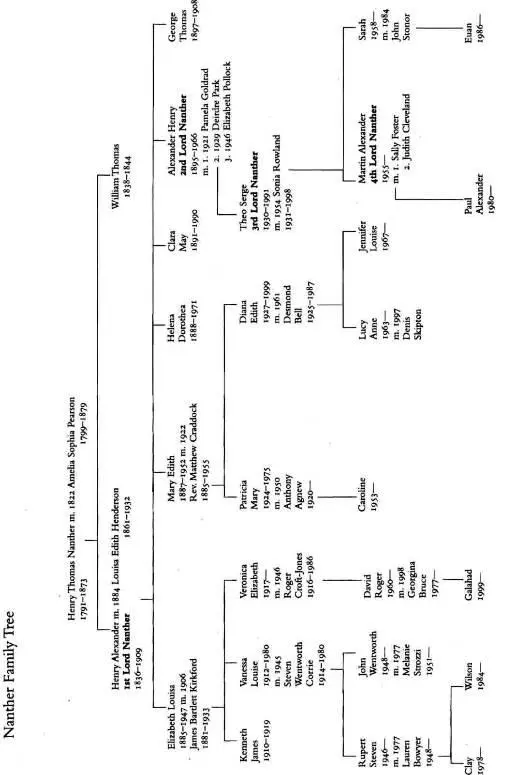
In her tenth novel writing as Barbara Vine, Ruth Rendell offers a novel of suspense based in 19th-century England and centering on deceit, murder, and various other family skeletons. Martin Nanther, the fourth Lord Nanther, has a comfortable life in present-day London as a Hereditary Peer in the House of Lords and as a historical biographer. He chooses as his most recent subject his own great-grandfather, the first Lord Nanther, physician to the royal family (Victoria and Albert) and an early noted researcher into the cause and transmission of hemophilia. The reader is taken through the family history as Martin painstakingly uncovers some not so savory bits of his own family's past. The story is dense with characters, and the author provides family trees of the two principal families, for which any reader will be eternally grateful. The story lacks the usual page-turner suspense of the Rendell/Vine novels but makes up for that with unusually detailed glimpses into Victorian life and the inner workings of the House of Parliament, which American readers will find particularly intriguing. Recommended for all public libraries. Caroline Mann, Univ. of Portland, OR
The Blood Doctor — читать онлайн бесплатно полную книгу (весь текст) целиком
Ниже представлен текст книги, разбитый по страницам. Система сохранения места последней прочитанной страницы, позволяет с удобством читать онлайн бесплатно книгу «The Blood Doctor», без необходимости каждый раз заново искать на чём Вы остановились. Поставьте закладку, и сможете в любой момент перейти на страницу, на которой закончили чтение.
Интервал:
Закладка:
I suffered for two days and was awfully afraid but at last he was born and my agony was not so great as to disincline to give him a brother or sister. James wants him to have his name and I agreed but Kenneth must come first. It is fashionable but nothing he will ever be ashamed of.
By then Henry had been dead a year. Throughout 1907 and the early part of 1908 Mary writes of their father’s ill-health. She calls it a ‘malaise’.
I don’t think even Papa himself knows what is wrong with him. It is a malaise that cannot be defined. He sometimes suffers a mild pain in his chest and down his left arm, which points to heart trouble, or so he says.
At Christmas 1907 she tells her sister,
We shall miss you here but all understand of course that you must spend the festive season with James’s people. We are to have no guests and to go nowhere. Poor Papa seems to have nothing to employ him – unless you count George. He spends all his waking hours with him, mostly reading aloud to him which George likes, though he has been able to read perfectly well himself since the age of four. He has been in terrible pain and sometimes in the night lets out bloodcurdling screams which wake the whole household. Papa has ice delivered here and applies fresh packs of it for hours on end. It seems nothing is too much trouble…
In February she is writing,
They play extraordinary games. The latest is to count how many times certain words appear in the plays of Shakespeare. For instance, ‘green’ and ‘milk’ in Macbeth! George enjoys it and claims to have found a secret code in one of them. He is such an intellectual child, which none of us was and Alexander certainly is not.
George died in July 1908. To his father it was the worst blow of his whole life. Mary writes,
It is a dreadful thing for all of us but worst for poor Papa. Mother is always so phlegmatic, though perhaps philosophical would be a kinder word. Nothing seems to upset her for long. I can’t help wondering what Papa’s reaction would have been if any of us had died. Rather different, I think. Could anyone deny that George was the only one of his children he cared a jot for? You were very seriously ill with scarlet fever in the early nineties. I was only five but I remember very well that Papa hardly came near you, claiming he was afraid of infection, though he had had the disease himself. I was with Mama when she came to tell him you were out of danger and he hardly looked up from his book.
Not very kind if Elizabeth had no prior knowledge of Henry’s callousness. He died in 1909, six months after George. ‘Of a broken heart,’ Elizabeth suggests to her sister. Mary isn’t having any of that.
Father [she never calls him Papa again] may have died of a broken heart but it was heart disease, not grief, that broke it. Whatever Mother says I believe he had a heart attack soon after George died. At any rate, she found him lying on the sofa in the study, clasping his hands to his left side and his face a most peculiar purple colour.
The next one, in the following January, killed him. The Times carried a long and sycophantic obituary and Princess Beatrice sent a wreath. Henry left most of what he possessed to his son Alexander, by then Lord Nanther. The exceptions were small legacies, providing incomes to his unmarried daughters and a life interest in Ainsworth House to his widow as well as a considerable sum in life insurance. Edith put up a gravestone to him, leaving room for her own name to be added later. It reads conventionally: ‘Henry Alexander, Baron Nanther KCB, beloved husband of Edith, born 19 February 1836, died 20 January 1909. Blessed are the merciful for they shall obtain mercy.’ I think I understand my great-grandmother well enough by now to know that no irony was intended. Her husband had been a doctor so this particular Beatitude was appropriate.
Two or three terraces of cottages remain opposite the main gates of the cemetery. They and a couple of big houses are all that survive to give an idea of what Kensal Green was like when Henry was buried there. But even then the warren of streets in the hinterland was there and the rows of shops, many now run-down, their windows boarded up. You can walk the length of the Harrow Road, from Paddington to Harlesden, and, with the exception of a butcher with a queue to his door, not pass a shop you’d dream of going into, still less buy anything from. There’s a hairdresser’s with the plaster dropping off its walls, innumerable betting shops, fast-food places, hardware stores where the hardware is all plastic. The area has become depressed, almost sinister in its atmosphere; litter and chewing gum on the pavements, every building ugly or mean, every surface in the neighbourhood of the tube station savagely coated with graffiti in primary colours. People who live here would prefer to live almost anywhere else and their discontent, not to be wondered at, shows in their grim faces. The cemetery is a green haven in summer but now bare branches shiver behind the kind of high wall you’d expect to see round the grounds of a prison.
A fine drizzle is falling, only a little wetter than a mist. I know roughly where Henry’s grave is but still I need the cemetery plan I’m given to find it. This place is huge, some of the tombs as big as the cottages outside the gates and not a very different shape. Obelisks and angels surround me, weeping widows in pock-marked limestone, broken columns, and everywhere the ivy and the ilex, eternally evergreen, dark, ugly, apparently immortal, unlike the occupants of the ground beneath my feet. I think of it as harbouring bones and rotting wood, rich with larval life, and wonder what they thought they achieved by it, those Victorians. Was their aim to overcome death? If so, they conspicuously failed, for this place is his abode, where the living man feels that he intrudes, yet must make haste if he wants to come out alive.
His is not a very impressive gravestone. It stands between an obelisk very like Cleopatra’s Needle commemorating an Egyptologist and the weeping muse of an obscure poet. Ivy and brambles blanket the spaces between. Henry shares his with his widow Edith and his son George. George’s epitaph shows more feeling than the inscription the widow devised for his father. No doubt it was composed by Henry himself, for there is no mention that he had another parent. ‘George Thomas, beloved son of Lord Nanther, aged eleven. Do ye hear the children weeping, O my brothers?’ The quotation is from Browning, I think, and as far as I remember from a poem about the suffering of factory children. I’ll look it up. Edith’s epitaph was probably put there by Alexander during one of the short periods he lived in London. ‘Louisa Edith, Lady Nanther, widow of the above, 1861–1932, a dearly loved mother.’ No doubt the married daughters are buried with their husbands. But what of Helena? What of Clara? They lie elsewhere, neglected, unwanted women, of not much account to their family or their collateral descendants.
But what really surprises me is the vase of flowers. The grave looks as if it’s been untended for a long time but not two-thirds of a century, nothing like that. On the mossy slab at its foot is a small stone vase, half-full of greenish-brown water, in which stands a bunch of dead rosebuds. They’re withered but still pink and their leaves aren’t shrivelled. Who can have put them there? Not my great-aunt Clara, the longest-lived of her generation. Though nearly a hundred, she died in 1990, and these flowers have been there not more than a few weeks. Another small mystery and one I’d like to solve.
On a curious and untypical impulse I go back to the gate where a man is selling flowers from a stall and buy a bunch of chrysanthemums. While I arrange them in the rainwater in the stone pot I decide I’m putting them there not for Henry or George but for Edith. I used to see her as a fortunate woman, making a better marriage than she might have expected, living in a fine house and wanting for nothing. Her husband was devoted to her and her children affectionate and, by her daughters’ accounts, she was of a placid equable temperament. She was an accomplished photographer and painted at least to her own satisfaction. But now I’m beginning to think of her as a wronged woman, duped and taken advantage of, though I don’t as yet know why.
Читать дальшеИнтервал:
Закладка:
Похожие книги на «The Blood Doctor»
Представляем Вашему вниманию похожие книги на «The Blood Doctor» списком для выбора. Мы отобрали схожую по названию и смыслу литературу в надежде предоставить читателям больше вариантов отыскать новые, интересные, ещё непрочитанные произведения.





Обсуждение, отзывы о книге «The Blood Doctor» и просто собственные мнения читателей. Оставьте ваши комментарии, напишите, что Вы думаете о произведении, его смысле или главных героях. Укажите что конкретно понравилось, а что нет, и почему Вы так считаете.