Barbara Vine - The Blood Doctor
Здесь есть возможность читать онлайн «Barbara Vine - The Blood Doctor» весь текст электронной книги совершенно бесплатно (целиком полную версию без сокращений). В некоторых случаях можно слушать аудио, скачать через торрент в формате fb2 и присутствует краткое содержание. Год выпуска: 2003, Издательство: Vintage, Жанр: Современная проза, на английском языке. Описание произведения, (предисловие) а так же отзывы посетителей доступны на портале библиотеки ЛибКат.
- Название:The Blood Doctor
- Автор:
- Издательство:Vintage
- Жанр:
- Год:2003
- ISBN:нет данных
- Рейтинг книги:4 / 5. Голосов: 1
-
Избранное:Добавить в избранное
- Отзывы:
-
Ваша оценка:
The Blood Doctor: краткое содержание, описание и аннотация
Предлагаем к чтению аннотацию, описание, краткое содержание или предисловие (зависит от того, что написал сам автор книги «The Blood Doctor»). Если вы не нашли необходимую информацию о книге — напишите в комментариях, мы постараемся отыскать её.
Barbara Vine (a.k.a. Ruth Rendell) deftly weaves this story of an eminent Victorian with a modern yarn about the embattled biographer, who is watching the House of Lords prepare to annul membership for hereditary peers and thus strip him of his position. Themes of fate and family snake throughout this teasing psychological suspense, a typically chilling tale from a master of the genre.
From Publishers Weekly
This rich, labyrinthine book by Vine (aka Ruth Rendell) concerns a "mystery in history," like her 1998 novel, The Chimney Sweeper's Boy. Martin Nanther-biographer and member of the House of Lords-discovers some blighted roots on his family tree while researching the life of his great-great-grandfather, Henry, an expert on hemophilia and physician to Queen Victoria. Martin contacts long-lost relatives who help him uncover some puzzling events in Henry's life. Was Henry a dour workaholic or something much more sinister? Vine can make century-old tragedy come alive. Still, the decades lapsed between Martin's and Henry's circles create added emotional distance, and, because they are all at least 50 years dead, we never meet Henry or his cohorts except through diaries and letters. Martin's own life-his wife's infertility and troubles with a son from his first marriage-is interesting yet sometimes intrudes on the more intriguing Victorian saga. Vine uses her own experience as a peer to give readers an insider's look into the House of Lords, at the dukes snoozing in the library between votes and eating strawberries on the terrace fronting the Thames. Some minor characters are especially vivid, like Martin's elderly cousin Veronica, who belts back gin while stonewalling about the family skeletons all but dancing through her living room. Readers may guess Henry's game before Vine is ready to reveal it, but this doesn't detract from this novel peopled by characters at once repellant and compelling.
From Library Journal
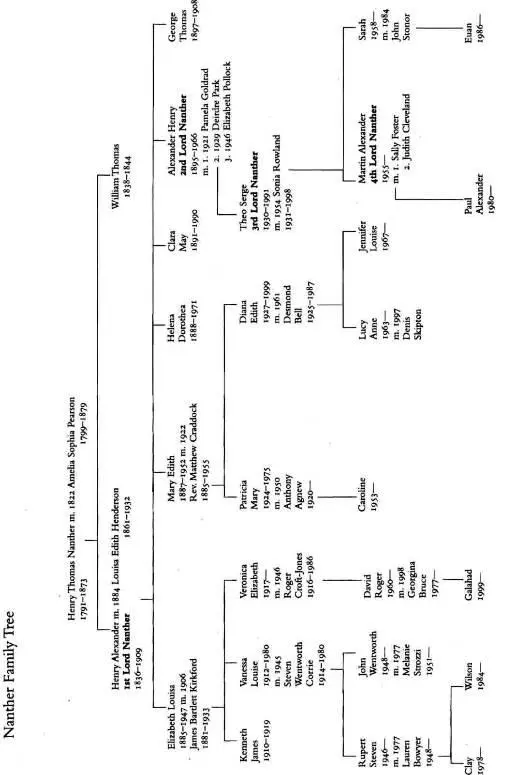
In her tenth novel writing as Barbara Vine, Ruth Rendell offers a novel of suspense based in 19th-century England and centering on deceit, murder, and various other family skeletons. Martin Nanther, the fourth Lord Nanther, has a comfortable life in present-day London as a Hereditary Peer in the House of Lords and as a historical biographer. He chooses as his most recent subject his own great-grandfather, the first Lord Nanther, physician to the royal family (Victoria and Albert) and an early noted researcher into the cause and transmission of hemophilia. The reader is taken through the family history as Martin painstakingly uncovers some not so savory bits of his own family's past. The story is dense with characters, and the author provides family trees of the two principal families, for which any reader will be eternally grateful. The story lacks the usual page-turner suspense of the Rendell/Vine novels but makes up for that with unusually detailed glimpses into Victorian life and the inner workings of the House of Parliament, which American readers will find particularly intriguing. Recommended for all public libraries. Caroline Mann, Univ. of Portland, OR
The Blood Doctor — читать онлайн бесплатно полную книгу (весь текст) целиком
Ниже представлен текст книги, разбитый по страницам. Система сохранения места последней прочитанной страницы, позволяет с удобством читать онлайн бесплатно книгу «The Blood Doctor», без необходимости каждый раз заново искать на чём Вы остановились. Поставьте закладку, и сможете в любой момент перейти на страницу, на которой закончили чтение.
Интервал:
Закладка:
‘Can you imagine anything more cruel?’ says Georgie.
We can’t. We shake our heads, though we’re not surprised. Even David, who at last seems, according to Jude, to have taken to heart the biblical injunction to leave his mother and cleave unto his wife, says Veronica can be very cruel. He’s quite sure he didn’t behave badly when young, that’s another invention of hers.
‘I’m longing for you to get pregnant,’ Georgie says to Jude as if Jude wasn’t. ‘Mind you, when you do I’ll be so excited I’ll go and have another one just to keep you company.’
David pulls a long face. ‘Don’t I get consulted?’
‘Of course you do, darling. More than consulted.’ She laughs and so does Galahad. ‘You’ll be a participant like you were last time. Don’t you remember?’
Galahad laughs so loudly that Georgie, like those people who say their pets understand every word they say, is convinced her son has a precocious knowledge of reproduction. We move on to a slight, if not total, change of subject. David has brought the latest genealogical table with him but it seems to me largely unchanged from last time. I add the Corries and ask him about the three women of whom I know no more than the names but he knows only that Lucy is married – he was invited to her wedding – and believes Jennifer isn’t. Of Caroline he knows nothing but says he’ll look her up at the Family Records Centre and I decide I may as well let him do that for me.
‘My mother doesn’t know. I asked her. It sounds as if she fell out with Patricia and maybe Diana too.’
An even more contentious woman than I thought. I tell him I ought to talk to Veronica again. Immediate alarm. ‘I really don’t think we could have her, Martin. Not at the moment, certainly. Not for a while.’ He lowers his voice, though Jude and Georgie are in the kitchen and only just visible on the other side of the serving hatch. His sibilant whispering makes Galahad laugh. ‘You may have noticed that she and Georgie don’t get on. My mother has an unfortunate turn of phrase sometimes. And Georgie can be rather emotional.’
‘I was thinking of going to Cheltenham to see her.’
His face clears. ‘Oh, well, why not? Good idea. She’s very hospitable, you know. Go to tea and she’ll be baking for days before you get there.’ He wants to know what I’m going to ask her. It’s plain he’s not interested in anything but avoiding Veronica’s presence in his house. He may even be planning visits to Cheltenham on his own or putting her up in a hotel next time she wants to come to London. ‘I’ll give you her phone number. And her address. You may prefer to write first. She’d like that, I think, a preliminary letter. And by the way, though I’m sure you wouldn’t, don’t mention Vanessa, will you?’
I let him remain in his state of certainty that I won’t, though of course I must, that’s one of the reasons I’m going, and I tell him I already have her address. I’ve had a letter from her. When I get there she may refuse to discuss her sister but that’s a chance I have to take. She may not even know Vanessa is dead. She may not care. I’m having all sorts of wild ideas about these sisters and their cousins and my great-aunt Elizabeth Kirkford, but I suppress them. I don’t want to waste thinking time on speculations that may all come to nothing once Veronica has talked to me. If she talks.
As far as my research goes I’m coming to the end of Henry’s life. There are gaps, of course, big ones that somehow or other have to be filled, but the course or stream of his life has only half a dozen years to run. He spoke again in the House of Lords, once in a debate on the motor car, which he called a ‘flash in the pan’, and once on the folly of proposing to give the vote to women. There was nothing new in this speech, made in 1904. Henry dilated for nearly fifteen minutes on the delicacy of women’s health compared to men’s, their regular ‘incapacity’, which kept them in his view in a permanent state of mild invalidism, their peculiar talents for home-making and domestic arts and their intuition as against man’s rational attitudes. None of this had much to do with allowing women the franchise, it was directed more at keeping them out of universities and the professions, but no one questioned its validity. Earl Ferrers’ view of women as potential legislators, given fifty-three years later, was only a slight advance on Henry’s. Several subsequent speakers congratulated the noble lord, the Lord Nanther, on his wise words which, one of them said, derived from his expert knowledge as a ‘medical man of awesome repute’. Misogynistic Henry. Though no doubt pleased with this reception by his peers, he spoke no more. Although I’ve trawled through Hansard for the remaining years of his life I can find no evidence that he ever entered the House again.
He was giving up, giving in to age. In February 1906 he became seventy and he records his birthday in his diary. ‘The years of man’s life are threescore years and ten. Today I reach my allotted span.’ For an avowed agnostic, he quotes the Bible surprisingly often, but no doubt this was a hangover from his Wesleyan youth. He was no longer in attendance on the royal family, for his service seems to have been terminated when Edward VII came to the throne in 1901. Someone else had been appointed to care for the Battenberg princes, Maurice and Leopold. In the spring of 1906 Barnabus Couch died. Henry records in the diary: ‘By rail to Edinburgh. Attended poor Couch’s funeral.’ Did he reflect while he stood in the churchyard, and watched his old friend’s coffin lowered into the grave, that now there was no one to ask him how his magnum opus proceeded? He could abandon it without shame and without excuse. As for the women who might have enquired how ‘papa’ was getting on, their opinions didn’t count. They were incapacitated invalids, relying on intuition.
That he’d started this book is known. In the early days, the end of the nineteenth century and the beginning of the twentieth, he notes: ‘Worked on A History and good progress was made’ and ‘Six chapters of A History completed.’ But by 1903 there are no more entries like these. We don’t even know what its full title would have been. A History of Blood Disease ? A History of Haemophilia ? He still saw the occasional patient and still gave the occasional lecture. His name is listed as among the contributors to the haemophilia section of that vast work A Treasury of Human Inheritance , always known in medical circles as ‘Bulloch and Fildes’ after its main instigators, though it wasn’t published until three years after his death. But his work was done and it seems that he considered his life was over.
In the year he became seventy and Couch died, Henry’s eldest daughter Elizabeth, aged twenty-one, married James Bartlett Kirkford at St Mark’s Church, Hamilton Terrace. Henry gave her away. He notes tersely on a Saturday in June: ‘Gave E. in marriage.’ Her husband took her to live in Yorkshire. Mary, Helena and Clara remained at home, Clara being still at school in St John’s Wood. Alexander, the heir, was also at school, a prep school in Arkley, prior to going to Harrow, but George, the sick boy, was never considered well enough to go to school. A tutor called Mr Beckwith came every day to instruct him in Latin and mathematics while a Mademoiselle Parent taught him French. Henry, who had been at home as little as possible in his daughters’ early years, now scarcely went out. It seems that when George wasn’t at his lessons, he spent his time with his father.
The letters exchanged between Elizabeth Kirkford and her sister Mary Nanther have been a rich source of information on family life. They wrote to each other once a month for many years, though there are gaps in the correspondence, notably during the summer of 1910 and again in 1917 and 1919. But in August 1910 Mary refers to ‘Your letter of June’ and in December 1917 to Elizabeth’s mention of ‘Vanessa’s whooping cough’ some months before, and those letters are missing. There are no letters in the collection between May and August 1910 and none between September and November 1917. Nineteen nineteen is another blank year with only one letter from each woman surviving. Of course they may just be lost. There is no reason to think that they were purposely destroyed. Those that remain for the years prior to Henry’s death give a detailed picture of family life at Ainsworth House and of Elizabeth’s marriage. James Kirkford walks with a limp. Apparently, he had one leg a fraction shorter than the other. This keeps him from serving in the Great War of 1914. ‘I never expected to be thankful for poor James’s disability but now I am,’ Elizabeth writes. ‘He of course frets about it, especially as some Beast has sent him a white feather.’ Four years before she has given birth to a son.
Читать дальшеИнтервал:
Закладка:
Похожие книги на «The Blood Doctor»
Представляем Вашему вниманию похожие книги на «The Blood Doctor» списком для выбора. Мы отобрали схожую по названию и смыслу литературу в надежде предоставить читателям больше вариантов отыскать новые, интересные, ещё непрочитанные произведения.






Обсуждение, отзывы о книге «The Blood Doctor» и просто собственные мнения читателей. Оставьте ваши комментарии, напишите, что Вы думаете о произведении, его смысле или главных героях. Укажите что конкретно понравилось, а что нет, и почему Вы так считаете.