Barbara Vine - The Blood Doctor
Здесь есть возможность читать онлайн «Barbara Vine - The Blood Doctor» весь текст электронной книги совершенно бесплатно (целиком полную версию без сокращений). В некоторых случаях можно слушать аудио, скачать через торрент в формате fb2 и присутствует краткое содержание. Год выпуска: 2003, Издательство: Vintage, Жанр: Современная проза, на английском языке. Описание произведения, (предисловие) а так же отзывы посетителей доступны на портале библиотеки ЛибКат.
- Название:The Blood Doctor
- Автор:
- Издательство:Vintage
- Жанр:
- Год:2003
- ISBN:нет данных
- Рейтинг книги:4 / 5. Голосов: 1
-
Избранное:Добавить в избранное
- Отзывы:
-
Ваша оценка:
The Blood Doctor: краткое содержание, описание и аннотация
Предлагаем к чтению аннотацию, описание, краткое содержание или предисловие (зависит от того, что написал сам автор книги «The Blood Doctor»). Если вы не нашли необходимую информацию о книге — напишите в комментариях, мы постараемся отыскать её.
Barbara Vine (a.k.a. Ruth Rendell) deftly weaves this story of an eminent Victorian with a modern yarn about the embattled biographer, who is watching the House of Lords prepare to annul membership for hereditary peers and thus strip him of his position. Themes of fate and family snake throughout this teasing psychological suspense, a typically chilling tale from a master of the genre.
From Publishers Weekly
This rich, labyrinthine book by Vine (aka Ruth Rendell) concerns a "mystery in history," like her 1998 novel, The Chimney Sweeper's Boy. Martin Nanther-biographer and member of the House of Lords-discovers some blighted roots on his family tree while researching the life of his great-great-grandfather, Henry, an expert on hemophilia and physician to Queen Victoria. Martin contacts long-lost relatives who help him uncover some puzzling events in Henry's life. Was Henry a dour workaholic or something much more sinister? Vine can make century-old tragedy come alive. Still, the decades lapsed between Martin's and Henry's circles create added emotional distance, and, because they are all at least 50 years dead, we never meet Henry or his cohorts except through diaries and letters. Martin's own life-his wife's infertility and troubles with a son from his first marriage-is interesting yet sometimes intrudes on the more intriguing Victorian saga. Vine uses her own experience as a peer to give readers an insider's look into the House of Lords, at the dukes snoozing in the library between votes and eating strawberries on the terrace fronting the Thames. Some minor characters are especially vivid, like Martin's elderly cousin Veronica, who belts back gin while stonewalling about the family skeletons all but dancing through her living room. Readers may guess Henry's game before Vine is ready to reveal it, but this doesn't detract from this novel peopled by characters at once repellant and compelling.
From Library Journal
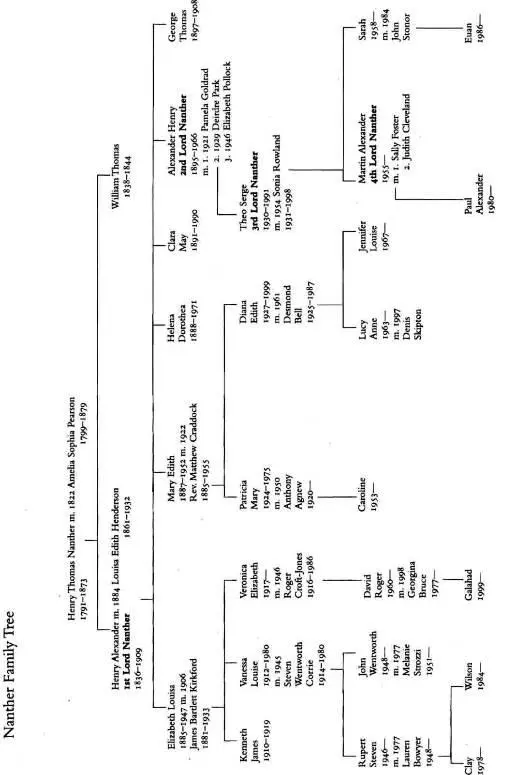
In her tenth novel writing as Barbara Vine, Ruth Rendell offers a novel of suspense based in 19th-century England and centering on deceit, murder, and various other family skeletons. Martin Nanther, the fourth Lord Nanther, has a comfortable life in present-day London as a Hereditary Peer in the House of Lords and as a historical biographer. He chooses as his most recent subject his own great-grandfather, the first Lord Nanther, physician to the royal family (Victoria and Albert) and an early noted researcher into the cause and transmission of hemophilia. The reader is taken through the family history as Martin painstakingly uncovers some not so savory bits of his own family's past. The story is dense with characters, and the author provides family trees of the two principal families, for which any reader will be eternally grateful. The story lacks the usual page-turner suspense of the Rendell/Vine novels but makes up for that with unusually detailed glimpses into Victorian life and the inner workings of the House of Parliament, which American readers will find particularly intriguing. Recommended for all public libraries. Caroline Mann, Univ. of Portland, OR
The Blood Doctor — читать онлайн бесплатно полную книгу (весь текст) целиком
Ниже представлен текст книги, разбитый по страницам. Система сохранения места последней прочитанной страницы, позволяет с удобством читать онлайн бесплатно книгу «The Blood Doctor», без необходимости каждый раз заново искать на чём Вы остановились. Поставьте закладку, и сможете в любой момент перейти на страницу, на которой закончили чтение.
Интервал:
Закладка:
‘I’m a carrier.’
‘You’re a carrier of haemophilia?’
‘That’s right. There’s no secret about it. My mother told me and my sister we might be and I was tested before I got married.’
They haven’t told Jude the results of her test, though it appears they have them. They’ve asked her to wait until the results of mine are known. She sees this as sinister and frightening, though to me it seems just like mysterious medical behaviour, the kind of way people who seem to have no empathy and no understanding of natural anxiety inevitably go on. It may even be that they want to confront us both with broad smiles to tell us there’s absolutely nothing wrong with either of us. Everyone likes being the bearer of good news.
‘It could take weeks,’ she says.
‘Look at it this way. If there was something that was wrong with you they wouldn’t need to test me. They’re testing me in case the fault lies with me.’ If I hadn’t had those thoughts on pride in one’s personal DNA I might have added that it doesn’t because I’ve already got a healthy son. That’s something I’ve learned not to say.
We decide to share a bottle of champagne without having anything special to celebrate. Its aftermath, a dry mouth and faint ache behind the eyes wakes me up in the small hours. Having been indoctrinated as a child with the theory that anything that doesn’t come from the main tap is toxic, I make my way down to the kitchen for real water and sit there at the table drinking my second glass and thinking about what Lucy told me.
It means that Diana Bell was a carrier and therefore her mother Mary Craddock must have been a carrier, since we know her sister Elizabeth Kirkford also was and Mary’s husband Matthew Craddock can’t have been a haemophiliac. So where did it come from? First of all, is it absolutely out of the question that Henry was a haemophiliac? It’s an explanation that covers almost everything. It would account for his devoting his life to a study of the disease in search of a cure. All his daughters would have been carriers and it’s likely that they were. Helena and Clara never had children but we know Clara had resolved never to marry and the reason may have been because she suspected she had the gene – or ‘the blood’, as she’d have put it.
The flaw in this theory lies with Henry himself. In the mid nineteenth century, a hundred years before the discovery of Factor VIII supplements, a haemophilia sufferer could hardly have lived the life Henry lived, walking the twenty miles from Versam to a village high in the Alps, intervening to save a man who was being assaulted, pursuing rigorous studies, taking hiking holidays. By the time he was thirty he’d have been crippled by arthropathy through bleeding into the joints. The third piece of evidence against his being a haemophiliac is Jimmy Ashworth. All his daughters, in or out of wedlock, would have carried the gene. If Mary Dawson had done so, surely one of her male descendants would have been a haemophiliac. But Laura Kimball was adamant that they all ‘grew up healthy’.
So Henry can be dismissed as the source. In which case it must have been his wife, Edith Henderson. The more I look at her as a candidate the more reasonable it sounds. If she carried the gene all her daughters might have carried it or only two or three out of the four. There would have been a fifty-fifty chance of any son of hers having the disease. Alexander did not. Did George? So we’ve come close to proving Edith was the carrier.
I go into the study and trawl through the diaries and Alternative Henry and Mary’s letters. Once you know George may have been a haemophiliac, there’s plenty of evidence that he was. In the family group, photographed by Edith, he has the patient stoical look of the ‘bleeder’. Henry writes of his screaming in pain, Mary of his being confined to bed as the result of a fall and of her father applying ice packs, presumably to his joints, a known though ineffective remedy. The conspiracy of silence on the subject becomes evident when you know what to look for. All the references are oblique or veiled. Was the reason that Henry didn’t want the world to know that he, the great haemophilia doctor, had a son with the disease, and a disease which he, despite his knowledge, couldn’t remedy? It sounds only too like him. This would be why it was put about that George suffered from tuberculosis.
If Edith was the carrier, where did she inherit the gene from? If her father Samuel Henderson was a haemophiliac his daughter would inevitably carry it. But if this was so he’d scarcely have been able to practise as a solicitor well into his fifties. And when he was attacked in the street the blow to his head would have resulted in bleeding that might have been fatal. And Henry, in his essay on courage and altruism, would hardly have presented the haemophilia hypothesis as to what would have happened if poor Mr Henderson had been a ‘bleeder’. It’s far more likely the carrier was his wife, Louisa Henderson née Quendon. Her son Lionel was very evidently not a haemophiliac but that doesn’t mean his mother wasn’t a carrier, for her chances of passing on the gene to a son were fifty-fifty. Her daughter Edith was a carrier and so, possibly, was her daughter Eleanor. I go to the larger of the correspondence files and find the letter Eleanor wrote to her sister from Manaton.
She has had a fall while out walking. ‘The bruises on my left side and leg,’ she writes, ‘are a sight to behold, but luckily no one but me does behold them!’ On another occasion Henry notes in the diary that Mrs Henderson had a private consultation with him about this daughter. Is it too far-fetched to guess that she was confiding to him her worries about Eleanor’s heavy periods? Maybe. I need more evidence. But it is known now, and perhaps was even then, that some haemophilia carriers bruise very readily and bleed heavily in menstruation. It may be that both Edith and Eleanor carried the gene.
So was it a mutation in the cells of Louisa Henderson? My head is spinning by this time. I can’t think any more and it’s four-thirty in the morning. I fetch another glass of water and go back to bed, kissing the sleeping Jude on her upturned cheek and falling asleep at once.
25
The news from the hospital has blown our lives to pieces. Nothing else is significant. It’s as if everything has fled: our day-to-day existence in this house, Jude’s job, Henry, my lost much-regretted seat in the Lords, my son, our friends, even – temporarily, I hope – our love.
When something like this happens to you, you become only a body, hardly a thinking being, and that body diseased and flawed. It harbours an unseen but outrageous deformity. They told us, using that tired old formula: do you want the bad news first or the good? The way you answer defines you as a pessimist or an optimist on the lines of whether you say the bottle is half-full or half-empty. We both chose the bad news.
So they told us. We each carry a gene of something neither of us has ever heard of. It’s called Spinal Muscular Atrophy, or in these days of acronyms SMA. Any child we might have together has a one-in-four chance of being affected by it. And SMA isn’t like having an operable heart defect or asthma or, come to that, haemophilia. It kills. If a baby was actually born alive it would be severely disabled and die before it was a year old. At best. Most foetuses abort and that accounts for Jude’s miscarriages.
Poor Jude says, ‘But that’s only twenty-five per cent. There’s still a seventy-five per cent chance of a baby not having whatever it is.’
The consultant looks at her. His face wears that expression newscasters put on when the next item they have to talk about is some famous person’s death. ‘You haven’t been in the seventy-five per cent so far, have you? Would you risk it? Would you risk trying to nurse a child twenty-four hours a day only for it to die at six months?’
Читать дальшеИнтервал:
Закладка:
Похожие книги на «The Blood Doctor»
Представляем Вашему вниманию похожие книги на «The Blood Doctor» списком для выбора. Мы отобрали схожую по названию и смыслу литературу в надежде предоставить читателям больше вариантов отыскать новые, интересные, ещё непрочитанные произведения.





Обсуждение, отзывы о книге «The Blood Doctor» и просто собственные мнения читателей. Оставьте ваши комментарии, напишите, что Вы думаете о произведении, его смысле или главных героях. Укажите что конкретно понравилось, а что нет, и почему Вы так считаете.