Barbara Vine - The Blood Doctor
Здесь есть возможность читать онлайн «Barbara Vine - The Blood Doctor» весь текст электронной книги совершенно бесплатно (целиком полную версию без сокращений). В некоторых случаях можно слушать аудио, скачать через торрент в формате fb2 и присутствует краткое содержание. Год выпуска: 2003, Издательство: Vintage, Жанр: Современная проза, на английском языке. Описание произведения, (предисловие) а так же отзывы посетителей доступны на портале библиотеки ЛибКат.
- Название:The Blood Doctor
- Автор:
- Издательство:Vintage
- Жанр:
- Год:2003
- ISBN:нет данных
- Рейтинг книги:4 / 5. Голосов: 1
-
Избранное:Добавить в избранное
- Отзывы:
-
Ваша оценка:
The Blood Doctor: краткое содержание, описание и аннотация
Предлагаем к чтению аннотацию, описание, краткое содержание или предисловие (зависит от того, что написал сам автор книги «The Blood Doctor»). Если вы не нашли необходимую информацию о книге — напишите в комментариях, мы постараемся отыскать её.
Barbara Vine (a.k.a. Ruth Rendell) deftly weaves this story of an eminent Victorian with a modern yarn about the embattled biographer, who is watching the House of Lords prepare to annul membership for hereditary peers and thus strip him of his position. Themes of fate and family snake throughout this teasing psychological suspense, a typically chilling tale from a master of the genre.
From Publishers Weekly
This rich, labyrinthine book by Vine (aka Ruth Rendell) concerns a "mystery in history," like her 1998 novel, The Chimney Sweeper's Boy. Martin Nanther-biographer and member of the House of Lords-discovers some blighted roots on his family tree while researching the life of his great-great-grandfather, Henry, an expert on hemophilia and physician to Queen Victoria. Martin contacts long-lost relatives who help him uncover some puzzling events in Henry's life. Was Henry a dour workaholic or something much more sinister? Vine can make century-old tragedy come alive. Still, the decades lapsed between Martin's and Henry's circles create added emotional distance, and, because they are all at least 50 years dead, we never meet Henry or his cohorts except through diaries and letters. Martin's own life-his wife's infertility and troubles with a son from his first marriage-is interesting yet sometimes intrudes on the more intriguing Victorian saga. Vine uses her own experience as a peer to give readers an insider's look into the House of Lords, at the dukes snoozing in the library between votes and eating strawberries on the terrace fronting the Thames. Some minor characters are especially vivid, like Martin's elderly cousin Veronica, who belts back gin while stonewalling about the family skeletons all but dancing through her living room. Readers may guess Henry's game before Vine is ready to reveal it, but this doesn't detract from this novel peopled by characters at once repellant and compelling.
From Library Journal
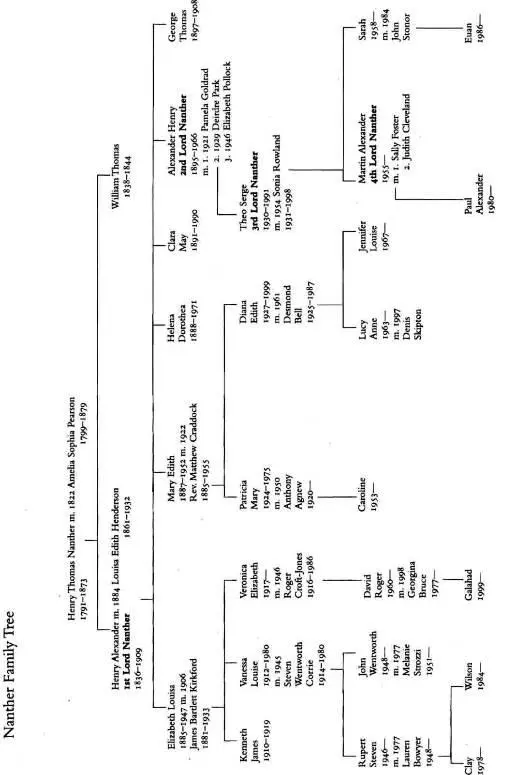
In her tenth novel writing as Barbara Vine, Ruth Rendell offers a novel of suspense based in 19th-century England and centering on deceit, murder, and various other family skeletons. Martin Nanther, the fourth Lord Nanther, has a comfortable life in present-day London as a Hereditary Peer in the House of Lords and as a historical biographer. He chooses as his most recent subject his own great-grandfather, the first Lord Nanther, physician to the royal family (Victoria and Albert) and an early noted researcher into the cause and transmission of hemophilia. The reader is taken through the family history as Martin painstakingly uncovers some not so savory bits of his own family's past. The story is dense with characters, and the author provides family trees of the two principal families, for which any reader will be eternally grateful. The story lacks the usual page-turner suspense of the Rendell/Vine novels but makes up for that with unusually detailed glimpses into Victorian life and the inner workings of the House of Parliament, which American readers will find particularly intriguing. Recommended for all public libraries. Caroline Mann, Univ. of Portland, OR
The Blood Doctor — читать онлайн бесплатно полную книгу (весь текст) целиком
Ниже представлен текст книги, разбитый по страницам. Система сохранения места последней прочитанной страницы, позволяет с удобством читать онлайн бесплатно книгу «The Blood Doctor», без необходимости каждый раз заново искать на чём Вы остановились. Поставьте закладку, и сможете в любой момент перейти на страницу, на которой закончили чтение.
Интервал:
Закладка:
‘Why do I have these miscarriages?’
He doesn’t want to say it but he has to. ‘It’s your body’s way of getting rid of disabled foetuses, Mrs Nanther.’
I am unreasonably, ridiculously angry. Why should I care if he doesn’t get it right and call her Lady Nanther? Or, come to that, Miss Cleveland? Why do I object so much to ‘getting rid of’? Getting rid of hereditary peers, getting rid of foetuses, getting rid of people. Isn’t there some other, better, way of saying it?
‘But I have a healthy son,’ I tell him.
‘Yes, we have it in your notes. You were lucky. You were married to a woman who didn’t carry the gene.’
If I’d been the grandson of one of Henry’s daughters instead of one of his sons I might have been a haemophiliac. But I’ve missed out on that and got this much worse thing. To anything but my own gratification, I had been right when I speculated as to what was wrong. Where did it come from? I don’t ask. Somehow I know he’ll give me that mutation business. ‘What’s the good news?’
‘I expect you’ve heard of Preimplantation Genetic Diagnosis. You’d call it “designer babies”.’
You’re at a party and you see a beautiful woman across a room. You may think even at that point – I did, I really did – that you’d like to spend the rest of your life with her. Because once you’ve looked on that face you know no other will do, not ever, not even as it grows old and other young faces are there, no other will be imprinted on you as this one is. This is your standard against which all others are compared and found wanting. You see it in likenesses as I used so often to see Jude’s in Herbert’s paintings in the Moses Room, and when you do it lifts your heart.
What you don’t see is that this woman may be the last woman you should choose for a life partner and you may be the last man she should choose – if you or she or both of you want a child. For her sake, you ought to turn and run out of the room, disappear, plead a pressing engagement elsewhere. You aren’t so much a poisoned chalice as a reagent, a substance harmless in itself but toxic when added to another relatively harmless substance.
I ask myself if it was like this for Henry. Did he see Eleanor that first time he called in Keppel Street to ask after her father, and seeing her, succumb? But there the parallel ends, for it was Edith, the second choice, the substitute, whose body held the hidden flaw. It’s as if I, unable for some reason to have Jude, made do with her sister. But this was something I could never have done. No other would have been the woman for me. And as I dwell miserably on this, I ask myself, perhaps absurdly, if these very deformities in our cells, Jude’s and mine, drew us inexorably to each other by some mysterious alchemy. Or was it nature’s way of achieving the end of two tainted lines, ensuring they breed no more?
So to the good news, except that to me it’s the worst news in the world. Not that I can say so to anyone. And I’m thrown more violently than ever before up against the block that wrecks marriages: the inability of one to confide true feelings to the other. More than that, the impossibility of continuing to love and live with my wife if I tell her that the dearest wish of her heart fills me with – well, yes, with terror. With horror but with both more and less than that, a simple revulsion from the idea of becoming maybe next year or the year after the father of triplets. It sounds ridiculous put like that, doesn’t it? The stuff of comic postcards. There’s the poor sap standing hangdog outside the delivery room and a pretty nurse in a mini-skirt and black stockings is putting three squalling babies into his arms.
The consultant’s face reminds me of that description in Hamlet : a man ‘may smile and smile and be a villain’. He’s not of course a villiain to Jude but her saviour. ‘The treatment begins with IVF,’ he says, ‘to generate and fertilize a number of eggs. Then we take one cell from each egg and check that it’s free from disorder. Three healthy embryos would then be implanted in your uterus.’
‘ Three? ’ I say.
‘Usually one or two won’t take hold,’ he says, with that villain’s smile. ‘If all goes well the result is a healthy child – or twins if you’re lucky.’
‘I’ll be thirty-eight in May,’ says Jude.
‘I’m not saying it wouldn’t be better if you were twenty-eight but you seem to have no trouble in conceiving and that’s very much in your favour.’
Luckily for me, I’m so sorry for Jude, I feel such an all-pervading pity and love for her, that my horror of what she’s contemplating is – temporarily, I suppose – drowned in it. And then I watch that other smiling villain, Hope, come to her rescue. She’s hoped before and it’s all been in vain, but that doesn’t deter the smiler with the knife, he’s indestructible, he knows he’s one of the cardinal virtues and he basks in his undeserved reputation. Never mind that he makes the heart sick. Never mind that every time he throws open a door his opposite number, Despair, slams it in your face. He’s back again, riding high and Jude in the saddle with him, his knife pointed at her back. But she doesn’t know that or she refuses to believe him. He’s promised her her heart’s desire and this time nothing can go wrong.
The nasty mean-mindedness of my position is that I want things to go wrong. I want the door to slam for the final time or the knife to go in. There’s not a soul I can tell. I wince when I tell myself. During the pregnancies and the miscarriages I managed more or less well to fake enthusiasm or wretchedness and sometimes I really was enthusiastic, I really was miserable. But this news – the ‘good’ news more than the ‘bad’ – I see as the ruin of our lives, hers as well as mine. It will be bad enough for her – what do I call it? Mental equilibrium? Peace of mind? Sanity? – if these implanted embryos refuse to ‘take’, it will be worse than the miscarriages. She will be wrecked.
Only a totally mercenary bastard would think about the cost and I must be one because I do. With this process there’s not a money-back guarantee. You pay for it and if it doesn’t work you try again and pay again. ‘One cycle of treatment’, as they put it, costs ₤2,500. What chance would we have to get funding out of our local health authority? None, at a guess. On the other hand it might be cheaper to throw away ₤10,000 on four cycles of treatment than to have two or three babies to bring up. Shall I have to sell this house? I lie awake in the long watches of the night wondering about things it would be better for me never to think of. Such as, how do you determine which of two people with opposing aims is the selfish one? It’s the stuff of married people’s quarrels and it’s not going to be the stuff of mine. But am I selfish in wanting my beloved wife to myself in relative comfort, with enough to live on in my family house in a quiet London square? Or is she selfish in wanting a child at all costs, at the cost of comfort, peace, a pleasant home, and, perhaps, her marriage?
Most people would be on her side. And I pretend I am because I don’t know what else to do. I don’t do anything, I’ve lost all my powers of concentration and I’m quite relieved when Lucy Skipton phones and asks if I’d mind putting off our lunch for another couple of weeks. She’s very apologetic but she has a client whose home down in Wiltshire she has to visit on that day. If she hadn’t phoned I fear I might have forgotten all about her and our date.
I must be regaining my equilibrium because I don’t forget I’m dining with Lachlan Hamilton. The papers say the House of Lords feels empty these days, now the hereditary peers, or all but ninety-two of them, have gone. I can’t say I notice it but that may be because the day I go in they’re debating a controversial clause in a bill and the Opposition have summoned all their troops. The Local Government Bill doesn’t sound likely to make a dramatic impact but one aspect of it does just that. It’s an amendment opposing the repeal of Section 28, a provision stating that a local authority shall not ‘intentionally promote homosexuality’ to young people. The Government wants it repealed, the opposition want to keep it. The fur is flying and such words as ‘necrophilia’, ‘bestiality’ and ‘sodomy’ are being bandied about.
Читать дальшеИнтервал:
Закладка:
Похожие книги на «The Blood Doctor»
Представляем Вашему вниманию похожие книги на «The Blood Doctor» списком для выбора. Мы отобрали схожую по названию и смыслу литературу в надежде предоставить читателям больше вариантов отыскать новые, интересные, ещё непрочитанные произведения.






Обсуждение, отзывы о книге «The Blood Doctor» и просто собственные мнения читателей. Оставьте ваши комментарии, напишите, что Вы думаете о произведении, его смысле или главных героях. Укажите что конкретно понравилось, а что нет, и почему Вы так считаете.