Joanna Rakoff - A Fortunate Age
Здесь есть возможность читать онлайн «Joanna Rakoff - A Fortunate Age» весь текст электронной книги совершенно бесплатно (целиком полную версию без сокращений). В некоторых случаях можно слушать аудио, скачать через торрент в формате fb2 и присутствует краткое содержание. Город: London, Год выпуска: 2015, ISBN: 2015, Издательство: Bloomsbury, Жанр: Современная проза, на английском языке. Описание произведения, (предисловие) а так же отзывы посетителей доступны на портале библиотеки ЛибКат.
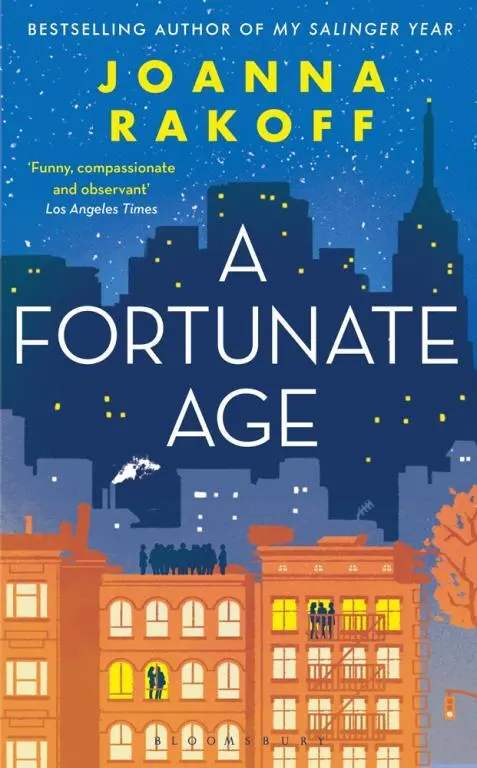
- Название:A Fortunate Age
- Автор:
- Издательство:Bloomsbury
- Жанр:
- Год:2015
- Город:London
- ISBN:978-1-4088-6239-1
- Рейтинг книги:4 / 5. Голосов: 1
-
Избранное:Добавить в избранное
- Отзывы:
-
Ваша оценка:
A Fortunate Age: краткое содержание, описание и аннотация
Предлагаем к чтению аннотацию, описание, краткое содержание или предисловие (зависит от того, что написал сам автор книги «A Fortunate Age»). Если вы не нашли необходимую информацию о книге — напишите в комментариях, мы постараемся отыскать её.
When the group come together to celebrate a marriage, anything seems possible. But soon the reality of rent, marriage and family will test them all. For this fortunate age can’t last for ever, and the group must face adulthood, whether they are ready for it or not.
Sprawling and richly drawn, A Fortunate Age traces the lives of the group during some of the most defining years of modern America—from the decadence of the dot com boom through to the sobering events of September 11 and the trailing years that followed—this brilliant, ambitious debut novel perfectly captures the hopes, anxieties and dreams of a generation.
A Fortunate Age — читать онлайн бесплатно полную книгу (весь текст) целиком
Ниже представлен текст книги, разбитый по страницам. Система сохранения места последней прочитанной страницы, позволяет с удобством читать онлайн бесплатно книгу «A Fortunate Age», без необходимости каждый раз заново искать на чём Вы остановились. Поставьте закладку, и сможете в любой момент перейти на страницу, на которой закончили чтение.
Интервал:
Закладка:
But her people—her real friends, of whom she now seemed to have dispiritingly few—were all still in Brooklyn. Just a few stops away on the F or the J, but somehow they were all so busy . Beth had Emma—almost a year now, a sweet, chubby girl with wispy blonde hair like her half brother, Sam—and her writing, with its endless deadlines, and had found friends in her neighborhood (Sadie’s old neighborhood, it pained her to think). Emily had work and school and Josh, with whom she was still in the early, obsessive stage of romance, and Clara, too, whom Josh had gotten into a special, intensive outpatient treatment program at the clinic’s Westchester campus, which was great but required a lot of time. And Lil, well, Lil had stopped speaking to Sadie after everything went wrong with Tuck’s book, though the truth was, she’d pulled away the minute Sadie announced she was pregnant. Tal, of course, was no longer her friend and she tried not to think of him (though sometimes—even after all these years—she found herself noting a song or a book or an idea to mention to him, before remembering, Oh, I can’t ). Dave was often away—touring, recording—and when he wasn’t, he was fully occupied with his music friends, many of whom had babies of their own, babies they toted with them to dinner, to midnight shows at M Shanghai and Galapagos, babies they dressed in miniature Star Wars and Clash T-shirts and took to “Rock-a-Baby” classes at the Brooklyn Brewery, where they tossed Shakey Eggs in time to “Ziggy Stardust” and “(The Angels Wanna Wear My) Red Shoes” and the first track from the new Radiohead album. But these were not Sadie’s people either, not exactly, much as Dave—and, perhaps, Sadie herself—would have liked them to be.
Usually, though, Sadie was content on her own. The rhythms of motherhood—the regularity, the structure of it, the dinner at six and bath at seven and bed at eight—suited her. And then there was Jack himself, with his hooded Peregrine eyes and his fair Peregrine hair and Ed’s pale eyes and long legs and arms, who had emerged from her, fully formed, the sort of child whom Rose described as “easy”: a decent sleeper, an infrequent crier, an eater of brussels sprouts, in possession of a broad, ready smile that charmed the proprietors of the local bakery and dry cleaner and pizza shop. In the night, when he woke and clung to her, his hot face in her shoulder, she felt the individual muscles of her heart slowly ripping into their isolate strands. She loved him so. No one had warned her of this, this furious, frightening animal love that turned her into a strange, senseless being, who had given up a job she loved—though she supposed she was already loving it less well before Jack came along; she supposed she had been perhaps looking for a reason to give it up—because she couldn’t bear the thought of leaving her infant with an underpaid West Indian woman who had abandoned her own children to take care of Sadie’s. It had turned her—a fearless traveler—into an anxious, twittering freak who had yet, in the two years since Jack’s birth, to board a plane, for what if it were to explode on takeoff, or, more likely, fall prey to box cutter–wielding madmen, causing her life to end, and preventing her from ever again watching Jake’s prodigious cheeks burst into a smile or slacken into sleep. It had happened two weeks after Jack’s birth. It would happen again.
And yet there were days. Sometimes, Jack’s very easiness—his warmth, his attachment to her—made him difficult . He still, at nearly two, often wanted to sleep on her lap for naps, rather than in his crib, so that the process of putting him down took hours and left her senseless with exhaustion. And though he was happy to sit for half an hour, loading and unloading blocks into the back of his plastic dump truck, he didn’t want her to read while he did so. “Mama, guck ,” he cried, and snatched the paper from her hands. And then there were nights: when he woke, sobbing, frightened by some shadow in his room or corner of his developing psyche (or, as Ed said, simply thirsty), and refused to return to sleep, making her feel heartless for, in her exhaustion, desiring that he do so. Even when Ed was home, it was Sadie he wanted in those terrible hours, and Sadie he wanted before he went to sleep in the evening, and before his naps, and when he woke up in the morning. For he was, somehow, still nursing. This great big boy, who barely fit on her lap, with his head of wild curls. A year ago, she’d offered him milk, just as the doctor told her to, and he’d puckered his lips and said “No. Bad.” She’d tried everything: soy, goat, sheep, rice, which was supposed to most resemble breast milk. But he refused them all—just as he’d refused the bottle (filled, then, with breast milk, pumped, painfully, in dribs and drabs, at the kitchen table, after he went to sleep) at two months, then three, then four.
“He’s not still nursing?” Rose asked each time they visited. On this one point Rose and Ed happily agreed. “You’ve got to wean him,” Ed had said the night before. “You’re wearing yourself out.”
“ How? ” Sadie snapped. “I’m trying.” But the truth was: she wasn’t. Not because she didn’t want to—she did. In a way. Sometimes, while he nursed, he rested a fat, proprietary hand on her breast, occasionally giving it a hard squeeze. “No,” she said, prying his fingers off her, fighting a wave of irritation. But why? She had shared her body with him this long, hadn’t she? Was it fair to suddenly demand it back? No. And yet, she was tired. So tired. Too tired to be groped by a three-foot-tall toddler. And yet, too tired to figure out a way to get him into his crib that didn’t involve pawing her.
Exhaustion had become a defining principle for her, guiding every choice she made, leading her, increasingly, on a lazy and lonely track: emails and phone calls went unreturned for months; the dry cleaning lingered in the shop; her hair grew flat and fuzzed with dirt; the paper collected on the coffee table, crisp and unfingered, for she could not bear to read about the endless war, the latest foibles of the absurd regime that had launched it, the murders and fires in the Bronx and Queens and far-out Brooklyn. This exhaustion, she knew, was far from a new story, so far that she could barely bring herself to mention it when Beth or Emily, on the rare occasions she spoke with them, asked how she was. And yet she thought she did have it harder than, say, Vicky , whose husband was a social worker at a school in the East Village and arrived home promptly at four in the afternoon every day, as Vicky never failed to remind her. “You should do what Noah and I do,” she’d advised months back, when Sadie, in a weak moment, admitted that she was having trouble coping. “He has half an hour to settle in after work. Then at four thirty it’s my time.” She smiled meaningfully. “Ava goes to bed at six, you know, and then we have our time.” But Ed did not get home at four o’clock—ever. He was gone for days, sometimes weeks, in L.A. for meetings, or, lately, directing videos or commercials, because, though she told neither her parents nor her friends this, they needed money, badly.
“Why don’t you go with him?” Vicky had asked a few days ago as they loaded laundry into their building’s industrial washers, Jack and Ava pushing around the heavy wire carts. It was a question she’d heard before: from Beth, from Dave, from Emily, from her mother, who thought it was Sadie’s duty to accompany Ed wherever business took him, or hey, who could blame him for finding “a little something on the side” (Rose had really used this phrase). They didn’t seem to understand that Ed wasn’t on vacation, lounging by the pool at Chateau Marmont. “He’s going to Bosnia ,” she reminded them. “But it’s safe there now, isn’t it?” they asked. She supposed it was. But still, it just seemed a bit much . What would she do with Jack all day—Ed was often on set for twenty hours in a row—in a place where she didn’t speak the language, where she knew no one. “It’s actually kind of nice being alone,” she told everyone.
Читать дальшеИнтервал:
Закладка:
Похожие книги на «A Fortunate Age»
Представляем Вашему вниманию похожие книги на «A Fortunate Age» списком для выбора. Мы отобрали схожую по названию и смыслу литературу в надежде предоставить читателям больше вариантов отыскать новые, интересные, ещё непрочитанные произведения.











Обсуждение, отзывы о книге «A Fortunate Age» и просто собственные мнения читателей. Оставьте ваши комментарии, напишите, что Вы думаете о произведении, его смысле или главных героях. Укажите что конкретно понравилось, а что нет, и почему Вы так считаете.