Kiran Desai - The Inheritance of Loss
Здесь есть возможность читать онлайн «Kiran Desai - The Inheritance of Loss» весь текст электронной книги совершенно бесплатно (целиком полную версию без сокращений). В некоторых случаях можно слушать аудио, скачать через торрент в формате fb2 и присутствует краткое содержание. Жанр: Современная проза, на английском языке. Описание произведения, (предисловие) а так же отзывы посетителей доступны на портале библиотеки ЛибКат.
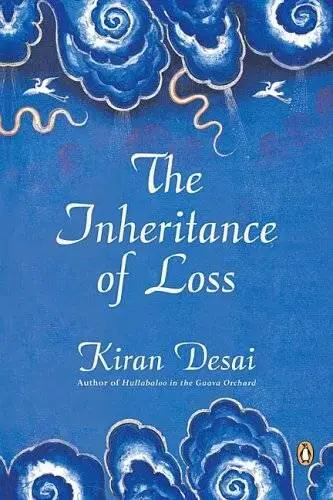
- Название:The Inheritance of Loss
- Автор:
- Жанр:
- Год:неизвестен
- ISBN:нет данных
- Рейтинг книги:3 / 5. Голосов: 1
-
Избранное:Добавить в избранное
- Отзывы:
-
Ваша оценка:
The Inheritance of Loss: краткое содержание, описание и аннотация
Предлагаем к чтению аннотацию, описание, краткое содержание или предисловие (зависит от того, что написал сам автор книги «The Inheritance of Loss»). Если вы не нашли необходимую информацию о книге — напишите в комментариях, мы постараемся отыскать её.
***
Desai's second novel is set in the nineteen-eighties in the northeast corner of India, where the borders of several Himalayan states – Bhutan and Sikkim, Nepal and Tibet – meet. At the head of the novel's teeming cast is Jemubhai Patel, a Cambridge-educated judge who has retired from serving a country he finds "too messy for justice." He lives in an isolated house with his cook, his orphaned seventeen-year-old granddaughter, and a red setter, whose company Jemubhai prefers to that of human beings. The tranquillity of his existence is contrasted with the life of the cook's son, working in grimy Manhattan restaurants, and with his granddaughter's affair with a Nepali tutor involved in an insurgency that irrevocably alters Jemubhai's life. Briskly paced and sumptuously written, the novel ponders questions of nationhood, modernity, and class, in ways both moving and revelatory.
The Inheritance of Loss — читать онлайн бесплатно полную книгу (весь текст) целиком
Ниже представлен текст книги, разбитый по страницам. Система сохранения места последней прочитанной страницы, позволяет с удобством читать онлайн бесплатно книгу «The Inheritance of Loss», без необходимости каждый раз заново искать на чём Вы остановились. Поставьте закладку, и сможете в любой момент перейти на страницу, на которой закончили чтение.
Интервал:
Закладка:
"All right for you, not all right for us."
" Shhh, "Noni shushed her sister. "Don’t be reckless," she gasped.
"We will issue you a receipt," said the boys, eyes on the food lying on the counter – intestinal-looking Essex Farm sausages; frozen salami with a furze of permafrost melting away.
"Nothing doing," said Lola.
" Shhhh, "Noni said again. "Give us a calendar then."
"Only one, Aunty?"
"All right, well, two."
"But you know how we need money…"
They invested in three calendars and two cassettes. Still the boys did not leave.
"Can we sleep on the floor? The police will never search for us here."
"No," said Lola.
"Fine, but please don’t make any noise or trouble," said Noni.
The boys ate all the food before they slept.
Lola and Noni barricaded the door to their bedroom by moving the chest of drawers in front of it as quietly as they could. The boys heard and laughed loudly: "Don’t worry. You are too old for us, you know."
The sisters spent the night awake, eyes aching against the dark. Mustafa sat rigid in Noni’s arms, feeling his self-respect assaulted, the hole of his bottom a tight exclamation point of anger, his tail a straight and uncompromising line above it.
And Budhoo, their watchman?
They waited for him to arrive with his gun and scare the boys away, but Budhoo did not arrive.
"I told you…" Lola said in a scorched whisper, "these Neps! Hand in hand…"
"Maybe the boys threatened him," spat Noni.
"Oh, come on. He’s probably uncle to one of them! We should have told them to go and now you’ve started this, Noni, they’ll come all the time."
"What choice did we have? If we had said no, we would have paid for it. Don’t be naïve."
"You’re the one who is naïve: ‘They have a point, they have poiii-intt, three-fourths of their point if not the whole poiiintt,’ now look… you stupid woman! "
"Are you worried you’ll be caught by the police," one of them asked with a smirk next morning, "for sheltering us? Is that what you’re worried about? The police won’t touch rich people, only people like us, but if you say anything we will be forced to take action against you."
"What action?"
"You’ll find out, Aunty."
Still, their exquisite politeness.
They left with the rice and the soap, the oil, and the garden’s annual output of five jars of tomato chutney, and as they climbed down the steps, they noticed what they hadn’t seen in the darkness of their arrival – how nicely the property stretched into a lawn, then dropped into tiers below. There was quite enough land to accommodate a thin line of huts. Overhead, a grim leathern bobble of electrocuted bats hanging on wires strung between the trees indicated a powerful supply of electricity during peaceful times. The market was close; a beautiful tarred road was right in front; so they might walk to shops and schools in twenty minutes instead of two hours, three hours, each way…
Not a month had passed before the sisters woke one morning to find that, under cover of night, a hut had come up like a mushroom on a newly cut gash at the bottom of the Mon Ami vegetable patch. They watched with horror as two boys calmly chopped down a bamboo from their property and carried it off right in front of their noses, a long taut drumstick, still cloudy and shivering with the push and pull, the contradiction between flexibility and contrariness, long enough to span an entire home of not-so-modest a size.
They rushed out: "This is our land!"
"It is not your land. It is free land," they countered, putting down the sentence, flatly, rudely.
"It is our land."
"It is unoccupied land."
"We’ll call the police."
They shrugged, turned back, and kept on working.
Thirty-eight
It didn’t come from nothing, even Lola knew, but from an old feeling of anger that couldn’t be divorced from Kalimpong. It was part of every breath. It was in the eyes that waited, attached themselves to you as you approached, rode on your back as you walked on, with a muttered remark you couldn’t catch in the moment of passing; it was in the snickering of those gathered at Thapa’s Canteen, at Gompu’s, at every unnamed roadside shack that sold eggs and matches.
These people could name them, recognize them – the few rich – but Lola and Noni could barely distinguish between the individuals making up the crowd of poor.
Only before, the sisters had never paid much attention for the simple reason that they didn’t have to. It was natural they would incite envy, they supposed, and the laws of probability favored their slipping through life without anything more than muttered comments, but every now and then, somebody suffered the rotten luck of being in the exact wrong place at the exact wrong time when it all caught up – and generations worth of trouble settled on them. Just when Lola had thought it would continue, a hundred years like the one past – Trollope, BBC, a burst of hilarity at Christmas – all of a sudden, all that they had claimed innocent, fun, funny, not really to matter, was proven wrong.
It did matter, buying tinned ham roll in a rice and dal country; it did matter to live in a big house and sit beside a heater in the evening, even one that sparked and shocked; it did matter to fly to London and return with chocolates filled with kirsch; it did matter that others could not. They had pretended it didn’t, or had nothing to do with them, and suddenly it had everything to do with them. The wealth that seemed to protect them like a blanket was the very thing that left them exposed. They, amid extreme poverty, were baldly richer, and the statistics of difference were being broadcast over loudspeakers, written loudly across the walls. The anger had solidified into slogans and guns, and it turned out that they, they, Lola and Noni, were the unlucky ones who wouldn’t slip through, who would pay the debt that should be shared with others over many generations.
Lola went to pay a visit to Pradhan, the flamboyant head of the Kalim-pong wing of the GNLF, so as to complain about the illegal huts being built by his followers on Mon Ami property.
Pradhan said: "But I have to accommodate my men." He looked like a bandit teddy bear, with a great beard and a bandana around his head, gold earrings. Lola didn’t know much about him, merely that he had been called the "maverick of Kalimpong" in the newspapers, renegade, fiery, unpredictable, a rebel, not a negotiator, who ran his wing of the GNLF like a king his kingdom, a robber his band. He was wilder, people said, and angrier than Ghising, the leader of the Darjeeling wing, who was the better politician and whose men were now occupying the Gymkhana Club. Ghising’s resume had appeared in the last Indian Express to get through the roadblocks: "Born on Manju tea estate; education, Singbuli tea estate; Ex-army Eighth Gorkha Rifles, action in Nagaland; actor in plays; author of prose works and poems [fifty-two books – could it be?]; bantamweight boxer; union man."
Behind Pradhan stood a soldier with a wooden stock rifle pointed out into the room. He looked, to Lola’s eyes, like Budhoo’s brother with Budhoo’s gun.
"Side of road, my land." Lola, dressed in the widow’s sari she had worn to the electric crematorium when Joydeep died, mumbled weakly in broken English, as if to pretend it was English she couldn’t speak properly rather than illuminate the fact that it was Nepali she had never learned.
Pradhan’s home was in a part of Kalimpong she had never visited before. On the outside walls, lengths of bamboo split in half had been filled with earth and planted with succulents. Porcupine and bearded cacti grew in Dalda tins and plastic bags lining the steps to the small rectangular house with a tin roof. The room was full of staring men, some standing, some seated on folding chairs, all crowded in as if at a doctor’s waiting room. She could feel their intense desire to rid themselves of her as of an affliction. Another man with a favor had preceded Lola, a Marwari shopkeeper trying to bring a shipment of prayer lamps past the roadblocks. Strangely, Marwaris controlled the business of selling Tibetan objects of worship – lamps and bells, thunderbolts, the monks’ plum robes and turmeric undershirts, buttons of brass each embossed with a lotus flower.
Читать дальшеИнтервал:
Закладка:
Похожие книги на «The Inheritance of Loss»
Представляем Вашему вниманию похожие книги на «The Inheritance of Loss» списком для выбора. Мы отобрали схожую по названию и смыслу литературу в надежде предоставить читателям больше вариантов отыскать новые, интересные, ещё непрочитанные произведения.











Обсуждение, отзывы о книге «The Inheritance of Loss» и просто собственные мнения читателей. Оставьте ваши комментарии, напишите, что Вы думаете о произведении, его смысле или главных героях. Укажите что конкретно понравилось, а что нет, и почему Вы так считаете.