Li Cunxin - Mao's Last Dancer
Здесь есть возможность читать онлайн «Li Cunxin - Mao's Last Dancer» весь текст электронной книги совершенно бесплатно (целиком полную версию без сокращений). В некоторых случаях можно слушать аудио, скачать через торрент в формате fb2 и присутствует краткое содержание. Жанр: Современная проза, на английском языке. Описание произведения, (предисловие) а так же отзывы посетителей доступны на портале библиотеки ЛибКат.
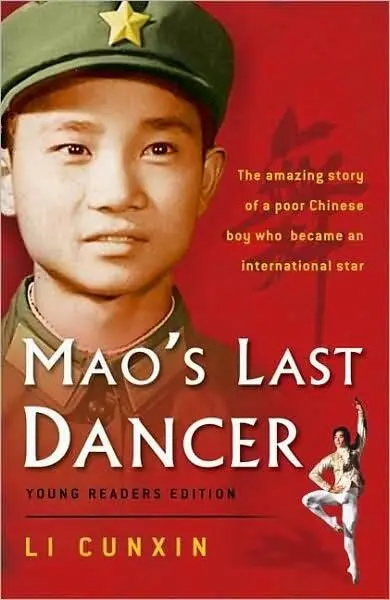
- Название:Mao's Last Dancer
- Автор:
- Жанр:
- Год:неизвестен
- ISBN:нет данных
- Рейтинг книги:3 / 5. Голосов: 1
-
Избранное:Добавить в избранное
- Отзывы:
-
Ваша оценка:
Mao's Last Dancer: краткое содержание, описание и аннотация
Предлагаем к чтению аннотацию, описание, краткое содержание или предисловие (зависит от того, что написал сам автор книги «Mao's Last Dancer»). Если вы не нашли необходимую информацию о книге — напишите в комментариях, мы постараемся отыскать её.
Mao's Last Dancer — читать онлайн бесплатно полную книгу (весь текст) целиком
Ниже представлен текст книги, разбитый по страницам. Система сохранения места последней прочитанной страницы, позволяет с удобством читать онлайн бесплатно книгу «Mao's Last Dancer», без необходимости каждый раз заново искать на чём Вы остановились. Поставьте закладку, и сможете в любой момент перейти на страницу, на которой закончили чтение.
Интервал:
Закладка:
I didn't know what to make of Mary at first. She struck me as brutally honest in her opinions-and in her dancing. She was a perfectionist, like I was.
One movement we had to rehearse in that first week was a sequence of three "fish dives", where Mary had to do a double turn on one pointe and then I would pick her up by her waist and she would dive forwards and finish with her face inches away from the floor, both of her legs high in the air. It was one of my favourite movements to practise and perform.
My back pain, however, prevented me from rehearsing this with Mary. She urged me to see a doctor. But I didn't want to: I didn't want to lose my first opportunity to dance with her. So we continued to work together for another week but by then the pain was excruciating and after a CT scan the doctors informed me that I had two, possibly three, herniated disks in my lower back.
The doctors immediately ordered me to stop dancing. Bed rest only, for as long as it took my injury to heal. Otherwise, they said, I might have to have surgery, with less than a fifty per cent success rate.
I was devastated. I had lost my first opportunity to work with Mary, and frighteningly, I faced the possibility of never being able to dance again.
That night I lay in my bed and thought of all that this might mean to my life. Ballet was all I knew, all I had known since the age of eleven. It was my passion, my identity. How could I, once again, be left on my own with an unknown future? Now I was the soaring bird suddenly shot down. I was a caged tiger once more. My frustration and despair were enormous.
I knew the only way for me to recover was to be as disciplined and dedicated with my rehabilitation as I had been with my dancing. So I taught myself to meditate. I taught myself to control my frustration and pain. I had no choice but to overcome it.
I wouldn't let my insecurity overwhelm me but during this time I missed my niang dreadfully. I didn't want my parents to worry about me, so I didn't tell them about my injury. Instead I asked them to apply for visas and come to America for a second time.
Mary visited me during that period, even though she didn't really know me very well. It was then that she asked me if I had books to read. She loved reading and was appalled when I said I read very little. I told her about my reading experience with Black Beauty.
"Read something shorter and easier to start with! Don't worry about what each word means exactly. It's hard even for Western people to understand every word. English is a difficult language. Just try to get the story, even if you have to guess to start with. You'll get so much pleasure out of reading, I promise!"
So for nearly three months, friends and fans brought me food, videotapes-and books. I took Mary's advice. I just started to read short things: newspaper articles and short storybooks. Then I tried longer books: Romeo and Juliet was one of my favourites. I even attempted The Hobbit, though I found the language in both these books hard to comprehend. But still I found it fascinating, and I especially loved Tolkien's extraordinary characters.
So Mary introduced me to literature and once I started reading I couldn't stop, couldn't believe the stories I had been missing out on. I worked hard at keeping my mental focus over those three months as I was lying on my bed. I had a secret plan-the Houston Ballet was going to perform in New York City in October. That was less than four months away. Ben and my doctors doubted I would make it back by then. But I never lost hope. I had acupuncture treatments, homeopathy, Chinese herbal medicines, and a wonderful masseur who Mary called "Mad Charles" and who worked with me constantly. He kept telling me that I would make it back to the stage, but the strengthening program seemed slow and painful and many times I had my doubts.
Eventually, however, my injuries gradually started to mend. The disk herniation never went away completely but the strengthening program helped me build stronger abdominal and back muscles to support it and I had to do continual exercises to keep the injury in check.
But finally I had made it back to the stage.
27 Mary
Mary and I were back dancing together again and we quickly became good friends. We trusted each other's tastes in dancing and each other's opinions in other aspects of life too.
After a rehearsal one day, Mary invited me to her apartment for dinner. I arrived with a six-pack of beer in hand just as Mary was in the middle of making spaghetti carbonara.
"Can I help?" I offered.
"No, thank you! Just relax! Enjoy your beer. All is under control!" she replied a little too cheerily.
I peered into the kitchen-and saw total chaos. There was a huge pot on the stove full of spaghetti which was all glued together. There was so much of it. Enough to serve at least ten people, I thought.
"How many are coming for dinner?" I asked casually.
"Oh, just the two of us!"
I laughed. "It looks like you have enough food here to feed all of Mao's army."
When the dinner was served the spaghetti was a lump and the sauce was very bland.
"How did you learn to cook?" I asked.
"I can't cook! I'm hopeless in the kitchen! Can't you tell? My mother is a good cook but I never paid any attention while she was cooking. I'm sorry this is a bit gluey. It's my first attempt at carbonara sauce," Mary said apologetically.
"Still tastes good though," I said, trying to comfort her.
"Would you like more? There's plenty left!"
"I know," I replied. We looked at each other and burst into laughter. We laughed and laughed. Her first attempt to impress me with her cooking had definitely failed the test for a perfect Chinese wife. But her efforts and her honesty won me over completely and I liked her even more after that disastrous carbonara.
My parents didn't come back to America until February of 1986, four months after our New York tour I'd worked so hard to recover for. By then my relationship with Mary had gone beyond just being friends. Her love of literature had become a major influence on me and I loved her open-mindedness and her curiosity. She constantly searched for new knowledge, not only in dance but in all aspects of life, and her tremendous inner strength and high principles seemed to be a match for my stubbornness. Mary could put me back in my place and set me straight any time.
We stayed together at each other's places often by now. However, we decided that to avoid any unnecessary shock Mary shouldn't stay overnight with me once my parents were here. Traditional Chinese marriage values couldn't possibly allow us to sleep together without being married. My parents would never approve.
Charles Foster got my parents a six-month visa this time. They were just as thrilled to see me and, though it still took them a while to get over their culture shock, they were much more familiar with America this time around and enjoyed every bit of it. Their kindness and their love of life made them the centre of attention among my friends. They were so well liked, and I was going to have them with me for the whole six months.
After a performance one night I brought Mary home to have dinner with us. My niang cooked some of my favourite dumplings. It was almost midnight by the time we finished dinner and before my parents went to bed my niang stopped and said, "Jing Hao, tell Mary, don't go home tonight, it's too late."
"But we only have two beds. Where is she going to sleep?" I asked innocently.
"You're a man now, do I have to tell you where she should sleep?"
"You don't mind if we sleep in the same bed?" I asked, red-faced.
"As long as you love each other, we don't care what you do," she replied. My niang looked at Mary. Then she whispered to me, "Of course we would prefer you to marry a Chinese girl who can look after you and cook for you like a Chinese wife could, but we know that we are old fashioned. I can tell there is something special between you," she paused. "We made a mess of arranging your second brother's marriage. We will not interfere again."
Читать дальшеИнтервал:
Закладка:
Похожие книги на «Mao's Last Dancer»
Представляем Вашему вниманию похожие книги на «Mao's Last Dancer» списком для выбора. Мы отобрали схожую по названию и смыслу литературу в надежде предоставить читателям больше вариантов отыскать новые, интересные, ещё непрочитанные произведения.





Обсуждение, отзывы о книге «Mao's Last Dancer» и просто собственные мнения читателей. Оставьте ваши комментарии, напишите, что Вы думаете о произведении, его смысле или главных героях. Укажите что конкретно понравилось, а что нет, и почему Вы так считаете.