Li Cunxin - Mao's Last Dancer
Здесь есть возможность читать онлайн «Li Cunxin - Mao's Last Dancer» весь текст электронной книги совершенно бесплатно (целиком полную версию без сокращений). В некоторых случаях можно слушать аудио, скачать через торрент в формате fb2 и присутствует краткое содержание. Жанр: Современная проза, на английском языке. Описание произведения, (предисловие) а так же отзывы посетителей доступны на портале библиотеки ЛибКат.
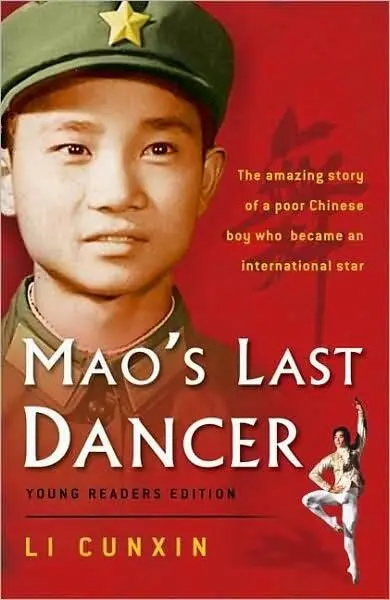
- Название:Mao's Last Dancer
- Автор:
- Жанр:
- Год:неизвестен
- ISBN:нет данных
- Рейтинг книги:3 / 5. Голосов: 1
-
Избранное:Добавить в избранное
- Отзывы:
-
Ваша оценка:
Mao's Last Dancer: краткое содержание, описание и аннотация
Предлагаем к чтению аннотацию, описание, краткое содержание или предисловие (зависит от того, что написал сам автор книги «Mao's Last Dancer»). Если вы не нашли необходимую информацию о книге — напишите в комментариях, мы постараемся отыскать её.
Mao's Last Dancer — читать онлайн бесплатно полную книгу (весь текст) целиком
Ниже представлен текст книги, разбитый по страницам. Система сохранения места последней прочитанной страницы, позволяет с удобством читать онлайн бесплатно книгу «Mao's Last Dancer», без необходимости каждый раз заново искать на чём Вы остановились. Поставьте закладку, и сможете в любой момент перейти на страницу, на которой закончили чтение.
Интервал:
Закладка:
Ballet Competition Association persisted and eventually the Russian authorities relented. They would allow me to represent the US. Ben and the Houston Ballet's pianist would go with me and before long I was on my way to Moscow.
I was of course aware that the people of the Soviet Union were still living behind the Iron Curtain, but nevertheless, once there I was surprised at just how much the Russian people were starved of freedom. It was worse than I had imagined. The fear of the KGB seemed to be on everyone's minds.
One day I went to Red Square to see Lenin's preserved body, not because I was interested in him as a communist forefather or anything, but just like the other tourists I went out of curiosity. By then I had totally abandoned my old communist beliefs.
I entered the mausoleum, following all the other tourists in single file. As we descended into the depths of the tomb, I noticed the polished black-and-red granite that covered the floor, the walls and the ceiling. It was awesome. Guards everywhere stood motionless, as though we didn't exist. And there was Lenin, lying in his sealed glass coffin. A ghostly white figure. He didn't even look real. He was so small: how surprising that just this one small man could have such an impact on the world. His communist ideals formed the background I grew up on and his influence was felt in nearly every corner of the earth. I looked at him and remembered Chairman Mao. I had seen Chairman Mao's preserved body in its glass coffin once also, on a trip organised by the Beijing Dance Academy, and I remembered thinking he looked pretty ugly. But Lenin's distorted face was even worse. I thought of my na-na, displayed in her coffin in the middle of her living room, when I was just eight years old.
I was surprised to see how many similarities there were between China and Russia. The harsh lifestyle, the lack of food, the drabness of people's dress, the discrepancy between the official exchange rate and the black market. The food at restaurants was limited too. I'd had Chicken Kiev in America on a couple of occasions and I thought, since this was Russia, Chicken Kiev would have to be much better here-like having Peking Duck in China. But I was terribly disappointed. It was nothing like what I'd had in America. The only thing that wasn't disappointing was the marvellous Russian caviar. I smeared it over toast, I ate it all the time. To me it was inexpensive but for the Russians it was nothing but an extravagance.
For the competition in Moscow we competed on the historic Bolshoi stage. It was huge, but it was also raked. When I jumped up the stage it felt like I was pushing uphill. When I did my turns my weight fell towards the audience. Becoming accustomed to this type of stage takes two to three weeks but this entire competition only ran for two weeks. American stages were all flat. Most European stages were raked but the Bolshoi was famous for its very steep rake and it proved disastrous for me. Two minutes before the curtain went up on my first round, I slipped just as I was taking off for a grand jeté. My body crashed to the floor and I landed hard on my back. Stars flashed in front of my eyes. A sharp pain travelled down my neck and lower back. I knew at once that I had a serious injury, but when I thought about the huge efforts Ben and the Houstonians had put into getting me to Moscow, I knew I had to continue. I couldn't possibly let them down.
I tried to regroup. I tried to concentrate. But before I could really assess my injury, I was called to places. The performance was about to begin.
My legs felt weak, especially when I pushed off for jumps, and my turns were wobbly. I heard the music but my mind could think only of the pain in my neck and back. All I can remember was trying to get this first solo over with. How I wished I'd had some painkillers with me. But I'd left my anti-inflammatory pills at my hotel, and anyway, I doubted there was enough time for the medication to work. The Giselle solo went like a blur and before I knew it I was on stage for my second solo-from the Coppelia wedding scene.
I got through the first round but in the second round my back worsened. I went to see a Russian doctor. He said I just had a muscle spasm-it would go away with some massage. But it didn't. I'd had muscle spasms before. This wasn't like anything I had ever experienced. I couldn't even tie my shoelaces. I tried to remember the pain of my torn hamstrings during my Beijing Opera Movement classes back in China. I tried to remember that at least here I had the freedom to choose whether I would perform or not. Here I could simply stop the competition, pack up and go back to America.
Because of the injury Ben had to modify my classical solo for the second round. It was so simplified that the judges must have thought I was deliberately avoiding the difficult steps. However, for my contemporary solo, I had never received so many curtain calls in my entire dance career. But then the Russian judges complained that this ballet was politically motivated. It was anti-communist, they said. Ben and I were astounded.
By the time I finished the second round I was having trouble even getting up from my bed in the mornings. The pain had started to travel down my legs and the heavy-duty painkillers I was taking did nothing but make me drowsy and my muscles numb. I challenged myself to finish, despite my injuries, but decided this was going to be my last ballet competition. I'd had enough of the politics and dramas and, although the medals gave me some international recognition, they would never make me a better dancer or a better human being.
There were other things to worry about during that competition too. Disturbing things. During the course of that week both Ben's room and my room were trashed. Some of Ben's belongings went missing and my alarm clock had been smashed to pieces. I remember feeling uncomfortable, unsafe. It was as though we were being watched.
Then, just as the competition ended, the Russian authorities asked to check the entry visa in my passport. They said there might be problems. The US delegation said they thought it would be safer for me to go with them to Leningrad and leave Russia from there rather than from Moscow.
I was happy to go home via Leningrad. Leningrad was where the Kirov Ballet and the Vaganova Ballet School were based, so I would have the opportunity of visiting the Mariinsky Theatre where the Kirov Ballet performed and of visiting the Vaganova Ballet School. I remember watching the Kirov Ballet perform Sleeping Beauty and I remember paying homage to the inventor of my ballet training method, the great Vaganova Ballet School. I was eternally grateful for that wonderful training.
In the end I received a bronze medal from that Moscow competition. The judges normally sign all the certificates before they are handed out, but when I received my competition certificate it was unsigned. I could not help but think about the Russians and their hatred of defectors and I knew that, in their eyes, I was no different.
By the time I left Russia my back had completely seized up and the pain was increasing. But as soon as I returned to Houston two things happened. Janie Parker and I went to Chile to perform in a gala, which was already scheduled, even though my back was getting worse by the day. And Mary McKendry from the London Festival Ballet came to join the Houston Ballet as a principal dancer.
"Jeano, is it true that Mary McKendry is coming?" I asked our general manager eagerly.
"Yes, a real coup," he replied, beaming. "Make sure you treat her well. We can't afford to lose her."
After Janie and I returned from Chile I met Mary again in class the following morning. She and I immediately started to rehearse the leading roles in Sleeping Beauty. It had been eighteen months since I'd met her in London. I was so happy that Ben had paired us together. But I wasn't sure whether my back would hold up.
Читать дальшеИнтервал:
Закладка:
Похожие книги на «Mao's Last Dancer»
Представляем Вашему вниманию похожие книги на «Mao's Last Dancer» списком для выбора. Мы отобрали схожую по названию и смыслу литературу в надежде предоставить читателям больше вариантов отыскать новые, интересные, ещё непрочитанные произведения.





Обсуждение, отзывы о книге «Mao's Last Dancer» и просто собственные мнения читателей. Оставьте ваши комментарии, напишите, что Вы думаете о произведении, его смысле или главных героях. Укажите что конкретно понравилось, а что нет, и почему Вы так считаете.