Li Cunxin - Mao's Last Dancer
Здесь есть возможность читать онлайн «Li Cunxin - Mao's Last Dancer» весь текст электронной книги совершенно бесплатно (целиком полную версию без сокращений). В некоторых случаях можно слушать аудио, скачать через торрент в формате fb2 и присутствует краткое содержание. Жанр: Современная проза, на английском языке. Описание произведения, (предисловие) а так же отзывы посетителей доступны на портале библиотеки ЛибКат.
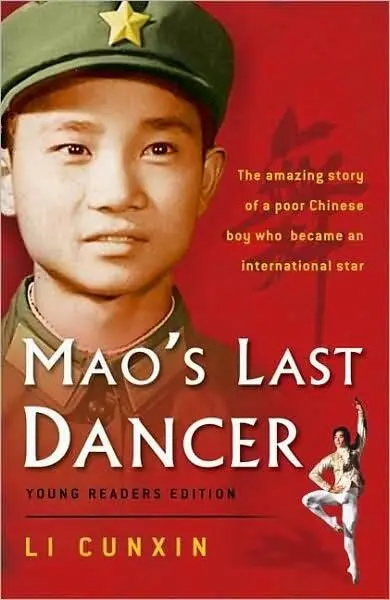
- Название:Mao's Last Dancer
- Автор:
- Жанр:
- Год:неизвестен
- ISBN:нет данных
- Рейтинг книги:3 / 5. Голосов: 1
-
Избранное:Добавить в избранное
- Отзывы:
-
Ваша оценка:
Mao's Last Dancer: краткое содержание, описание и аннотация
Предлагаем к чтению аннотацию, описание, краткое содержание или предисловие (зависит от того, что написал сам автор книги «Mao's Last Dancer»). Если вы не нашли необходимую информацию о книге — напишите в комментариях, мы постараемся отыскать её.
Mao's Last Dancer — читать онлайн бесплатно полную книгу (весь текст) целиком
Ниже представлен текст книги, разбитый по страницам. Система сохранения места последней прочитанной страницы, позволяет с удобством читать онлайн бесплатно книгу «Mao's Last Dancer», без необходимости каждый раз заново искать на чём Вы остановились. Поставьте закладку, и сможете в любой момент перейти на страницу, на которой закончили чтение.
Интервал:
Закладка:
My parents simply couldn't get over so many things about living in America: the fact that people had hot water in every home, that I had a dishwasher, washing machine and dryer. But still my niang insisted on washing everything by hand. She had hot running water, after all. What more could she want? Hot water was everything! One of my parents' most favourite things to do was to help each other wash their backs in the bath. And my dia spent a lot of time crawling in the attic or under the house inspecting the plumbing, the hot-water heater, the central heating, the air- conditioning units: he was like an awe-struck child.
The refrigerator was another fascination and my dia and niang were surprised at how long food could be kept fresh. My niang had to shop for food almost every day in China, but here shopping was completely different. "There is more Chinese food here than in China!" she said, aghast. "Many of these ingredients I can't even get in China at all!"
One weekend I took my parents to Macy's department store. "If this isn't heaven, I don't know what is!" my niang gasped. So many clothes to choose from! So much of everything everywhere! We stepped onto an escalator and she nearly lost her balance. Moving stairs!
The three weeks of my parents' stay were disappearing fast. I watched their reactions to America and re-lived some of my own reactions from when I'd arrived in America five years earlier. What a shock these three weeks were for them. They would reflect on this trip for many days, weeks, months, even years after they returned to our village in China.
I didn't want them to go back. I simply hadn't had enough time with them.
For their last few days in America I took them to Charles Foster's condominium, an elegant high-rise in Galveston about forty-five minutes from Houston. The condominium was part of a five-star hotel and the hotel staff serviced Charles' apartment. My parents felt so guilty having the hotel people do all the work that my niang and dia made their own bed every morning instead. The staff thought no one ever slept in it. And my parents would go to one of the local piers and buy fish or shrimp from the fishing boats and we'd cook them ourselves in the apartment.
Two days before my parents' departure another friend of mine kindly let us use his lakeside townhouse too, and to get around the complex my parents had to drive golf carts-the same kind I'd crashed into the ditch in Disneyland. At first I drove them to show them how, but my dia was quick to learn. He'd been working with trucks for so many years back in China, after all, so he was a natural driver. Even my niang reluctantly agreed to have a go. We spent only two days there but on the last day when I woke up I found both my parents gone. When I looked out of the window I saw each of them driving a golf cart and chasing each other around like children playing tiggy. They laughed and giggled and laughed and giggled and it was one of the happiest moments in their lives.
My parents were in constant shock during their stay in America, but they took everything calmly, storing it in their memories so they could savour it all when they returned home to China. They had never expected to see such prosperity. They had never expected such kindness from the people of another country.
I gave my parents some money before they left, so they could at least improve their lifestyle when they went back to our village. For all my brothers, sisters-in-law, nieces, my nephew, relatives and friends, I bought gifts. There was something for everyone, no matter how big or small. By the time they were ready to leave, my parents had many suitcases full of gifts: watches for my brothers, clothes for my sisters-in-law, picture books and nylon skipping ropes for the children, mugs and T-shirts with the Houston skyline on them for friends and relatives, a couple of bottles of Maotai for my grandfather and oldest uncle, and Ben's sewing machine too. "We left China poor, but will return so rich!" my niang exclaimed on their last night in America. "I don't mean the material things. It's the richness I feel in my heart. How well you're doing here and how much you're loved and respected! We will savour this trip for the rest of our lives. We're truly fortunate."
"Do you still remember the story about the frog in the well?" my dia asked all of a sudden.
I nodded. I remembered.
"Thank you for showing us what is outside our well. If it weren't for you I would die an ignorant man. We may be going back to our well but at least we've experienced the kind of life that Deng Xiaoping might lead us to in China one day. Now we will carry only fond memories and all the goodwill of your American friends home with us," he said.
We talked way past midnight. We were so afraid that some important things might be left unsaid. The uncertainty of whether we would ever see each other again weighed heavily on our minds. It was during our conversation that night that I suddenly realised my dia had become quite talkative.
I took them out to the airport the following day.
"I don't know when we will see each other again," I said, close to tears.
"But now we have seen you and met your friends we can lay all our worries to rest," my niang reassured me. "We will go home feeling happy about your life here in America. I only wish you'll be allowed to see your brothers again one day. They all miss you."
"I don't know if I'll ever be allowed to go back home."
"With Deng Xiaoping's open-door policy," my dia added, "you never know. Who could have imagined that we would be allowed to come here?"
"I will miss you," I said to him.
My niang hugged me tight. I felt her warmth, her love.
Finally I watched them disappear behind the customs checkpoint. I stood there for a long while afterwards, just staring at the wall.
After my parents' visit to America I could telephone them in China and write to them, freely, without fear of reprisal, and I could send them money too. But I was still not allowed to go back. There was a considerable amount of resentment among Chinese government officials for what had happened that night at the consulate in April 1981. But at least I had seen my parents and the heavy weight of sadness had lifted from me.
Now it was back to ballet and another competition was coming up, this time in Moscow in June. I knew there was a lot of politics involved in these competitions and my experiences in China had made me wary of going to Russia. But Russia had always had a certain allure ever since I'd watched so many brilliant Russian dancers in those videos back at the Beijing Dance Academy. I longed to go there. I was not a US citizen, however, and the Russian government had problems with me, a Chinese defector to the US who still held a Chinese passport and who wanted to represent America. The Russian government hated defectors with a passion. They had lost some of their best dancers to the West that way-Nureyev, Baryshnikov, Makarova and others too.
Faced with a dilemma, Ben and Charles started a massive campaign to lobby both Congress and the Senate to pass a special resolution, to change my status and allow me US citizenship a year ahead of the usual qualifying time.
The task was huge. To me it was inconceivable. Only rarely in American history had this been achieved before, mostly for Olympic competitors. Charles thought we had a chance though, because we had the George Bush connection, so we lobbied on the grounds of a possible gold medal at the Moscow International Ballet Competition. Americans love gold medals of any sort, even ballet ones, and I received many, many letters of support. Time was critical though, given the bureaucratic process. Charles contacted congressmen, senators, anyone and everyone who had any political connection at all and we eventually gathered enough support to have the bill passed by the immigration sub-committee of Congress. But we ran out of time to get the necessary approval in the Senate. Fortunately, however, the American International
Читать дальшеИнтервал:
Закладка:
Похожие книги на «Mao's Last Dancer»
Представляем Вашему вниманию похожие книги на «Mao's Last Dancer» списком для выбора. Мы отобрали схожую по названию и смыслу литературу в надежде предоставить читателям больше вариантов отыскать новые, интересные, ещё непрочитанные произведения.





Обсуждение, отзывы о книге «Mao's Last Dancer» и просто собственные мнения читателей. Оставьте ваши комментарии, напишите, что Вы думаете о произведении, его смысле или главных героях. Укажите что конкретно понравилось, а что нет, и почему Вы так считаете.