Li Cunxin - Mao's Last Dancer
Здесь есть возможность читать онлайн «Li Cunxin - Mao's Last Dancer» весь текст электронной книги совершенно бесплатно (целиком полную версию без сокращений). В некоторых случаях можно слушать аудио, скачать через торрент в формате fb2 и присутствует краткое содержание. Жанр: Современная проза, на английском языке. Описание произведения, (предисловие) а так же отзывы посетителей доступны на портале библиотеки ЛибКат.
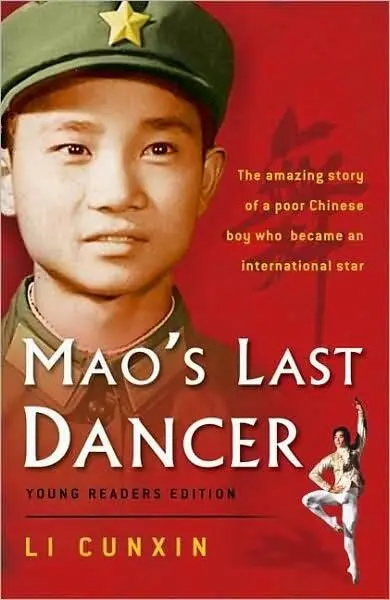
- Название:Mao's Last Dancer
- Автор:
- Жанр:
- Год:неизвестен
- ISBN:нет данных
- Рейтинг книги:3 / 5. Голосов: 1
-
Избранное:Добавить в избранное
- Отзывы:
-
Ваша оценка:
Mao's Last Dancer: краткое содержание, описание и аннотация
Предлагаем к чтению аннотацию, описание, краткое содержание или предисловие (зависит от того, что написал сам автор книги «Mao's Last Dancer»). Если вы не нашли необходимую информацию о книге — напишите в комментариях, мы постараемся отыскать её.
Mao's Last Dancer — читать онлайн бесплатно полную книгу (весь текст) целиком
Ниже представлен текст книги, разбитый по страницам. Система сохранения места последней прочитанной страницы, позволяет с удобством читать онлайн бесплатно книгу «Mao's Last Dancer», без необходимости каждый раз заново искать на чём Вы остановились. Поставьте закладку, и сможете в любой момент перейти на страницу, на которой закончили чтение.
Интервал:
Закладка:
Sometimes during the rehearsals, when Glen would ask me to do it for "the last time", I would feel sick from extreme exhaustion, but somehow Glen kept pushing me beyond my physical boundaries. I discovered those rare moments when the power of the music took over. It was refreshing, almost spiritual. By the time of the performance, I felt full of energy, ready to explode on stage.
Then came Romeo and Juliet. Ben had planned to choreograph a new version for the Houston Ballet to be staged at the newly completed Wortham Center in Houston. It would be one of the most lavish and expensive productions in Houston Ballet history. Both scenery and costumes would be designed by David Walker, the famous ballet and opera designer from The Royal Ballet in England. Everything was going to be made in London and shipped to Houston. Ben had chosen Janie Parker and me as his first cast and Mary was paired with Kenneth McCombie as second cast.
I loved the story of Romeo and Juliet and the Prokofiev score but the rehearsals were gruelling. Ben often threw out certain sections of his choreography, even though we had been rehearsing for days, and then he'd start all over again. We'd try many, many different ways of doing a particular lift, of partnering, jumping or performing turns, over and over, until Ben would finally shout, "That's it! I like that." It was a tough schedule: there were detours, setbacks, endless challenges, but our enthusiasm was always sky-high.
But for a ballet which told a story like Romeo and Juliet, I had to gather all my experiences together so I could somehow make the Romeo role more real for myself and for the audience. Some aspects of Romeo's character I found easy to portray, but others were difficult. I read Shakespeare's play over and over and watched as many Romeo and Juliet movies as I could get my hands on. I wanted to create my own version of Romeo, to make it my role. I remembered my feelings towards Her Junfang in that dark room in the Beijing Dance Academy. I remembered my first love Elizabeth, and my love for Mary. I remembered portrayals of love from literature, film, anything that would help me in my creation of Romeo.
The opening night of Romeo and Juliet was one of the biggest events in the history of the Houston Ballet. The air was full of tension. I couldn't make myself calm down. I heard the applause for the conductor. Just listen to the music, I told myself. Just listen to the sound of the music.
That night, from the very first note, I knew I had not only heard the heart and soul of the music but I had felt it as well. I leapt joyously and I lifted my Juliet high in the air. I ran wildly around the stage to celebrate our soaring love. And when Romeo mistakenly believed that Juliet was dead all the sorrow and despair I had ever experienced in my life overwhelmed me. I thought of the years of separation from my parents, of fearing for my life in that small room in the Chinese consulate. I thought of life without Mary, I thought of the greatest sacrifice one could make, to take one's own life for the sake of love. When Juliet finally plunged Romeo's knife into her heart and closed her eyes for ever, there was not a sound from anyone in the entire theatre, only the soul-wrenching music playing to the end. Then suddenly the audience erupted into applause. I didn't want it to end. I'd tasted the delicious feeling of the ultimate performance; the performance of my life. Another moment to treasure for ever.
I was invited as guest artist to dance with a number of companies worldwide after Romeo and Juliet. La Scala in Milan, steeped in history, was one of the most thrilling and inspirational. But along the way I still kept striving for one distinction. I didn't want to be just a technically good dancer: I wanted to be creative, emotionally powerful, artistically mature. I'd made many breakthroughs in my dancing already, and had a number of offers from other companies, but my loyalty was always with Ben and the Houston Ballet and I still often remembered the old Chinese fables, such as the bow-shooter, and drew on them for inspiration. I kept telling myself that I had only tasted the mango skin, not the flesh. I kept reminding myself of the painful leg-limbering exercises that Teacher Gao had made us do all those years before. Constantly I reminded myself of where I had come from-my peasant roots, the starvation, the desperation of being trapped in the deep well, of my Chinese heritage-all this I used as my internal driving force. And as my standard of dancing improved, my ambition of becoming one of the best dancers in the world was never forgotten. I worked even harder. I kept Nureyev, Baryshnikov and Vasiliev always in my mind. I had overcome so many obstacles in my life. Nothing could stop me now.
But no matter how successful I would become as a dancer, there was always one last unfulfilled dream. So, in early 1988, with Mary holding my hand, I went back to the Chinese consulate in Houston.
It was still in the same building where I had been detained, nearly seven years earlier. This time I was there to ask the Chinese government's permission to allow me back into China to visit my family. To go home. I wasn't sure what kind of reaction I would receive.
The entrance to the consulate was now much grander. A big round emblem of the People's Republic of China had been erected high above the gate. Once inside we were warmly greeted by the cultural consul Mr Tang, who led us to a meeting room and offered us some Chinese tea. He didn't have any idea that this room was the very same room where Charles, Elizabeth and I had been detained back in April 1981.
I was nervous and uncomfortable sitting there. Images from that night seven years before flashed through my mind. I felt claustrophobic. My heart began to race.
Mary sensed my apprehension and gently reached for my hand and held it tight. Almost exactly like what Elizabeth had done on that dreadful night.
Consul Tang was easy-going and friendly but, even so, I wasn't sure what to make of him. Should I trust him? I'd walked into a trap here before. I didn't want that kind of nightmare again. I guessed that he would have been well informed of my past, but Consul Tang didn't mention that. Instead he began to tell us how the Chinese now had more freedom and a much higher living standard under Deng Xiaoping. He emphasised that China today had an open-door policy towards the rest of the world. It had been nearly nine years since I'd left China. Things had changed.
"Cunxin," he said, "I've read your file and I know quite a bit of your past. We want to forget what has happened, but there still could be considerable opposition within the Chinese government to your return to China. But I will try my best to help you because I believe that what you have achieved in the last nine years has only added glory to the image of the Chinese people. I hope Beijing will grant you permission, but I can't guarantee that they will."
I left the consulate feeling vaguely optimistic, but the waiting over the next few weeks was unbearable. A month passed. No word from the consulate. I called Consul Tang.
"Nothing yet. I'm sorry," he responded.
With each passing day my hopes became dimmer.
Two months later I had just about given up hope altogether when, after a rehearsal one day, I found a message in my pigeonhole at the studios: "Please call Consul Tang at the Chinese consulate."
With a trembling hand I dialled his number and prepared myself for bad news.
"Cunxin! Congratulations! You have been granted permission to go back to China. You and your wife can come to the consulate any time to apply for your visas."
At last. I was going home.
28 Going Home
Mary and I had to finish our May performances in Houston before we could depart for China. Two months more of waiting. By the time we were ready to leave we had five suitcases full of gifts and had organised to send two refrigerators on ahead for my family back home. Mary couldn't quite understand the gift-buying frenzy. In her mind, giving them money would have been far better. But for me, the gifts were part of the Chinese tradition I was accustomed to.
Читать дальшеИнтервал:
Закладка:
Похожие книги на «Mao's Last Dancer»
Представляем Вашему вниманию похожие книги на «Mao's Last Dancer» списком для выбора. Мы отобрали схожую по названию и смыслу литературу в надежде предоставить читателям больше вариантов отыскать новые, интересные, ещё непрочитанные произведения.






Обсуждение, отзывы о книге «Mao's Last Dancer» и просто собственные мнения читателей. Оставьте ваши комментарии, напишите, что Вы думаете о произведении, его смысле или главных героях. Укажите что конкретно понравилось, а что нет, и почему Вы так считаете.