Li Cunxin - Mao's Last Dancer
Здесь есть возможность читать онлайн «Li Cunxin - Mao's Last Dancer» весь текст электронной книги совершенно бесплатно (целиком полную версию без сокращений). В некоторых случаях можно слушать аудио, скачать через торрент в формате fb2 и присутствует краткое содержание. Жанр: Современная проза, на английском языке. Описание произведения, (предисловие) а так же отзывы посетителей доступны на портале библиотеки ЛибКат.
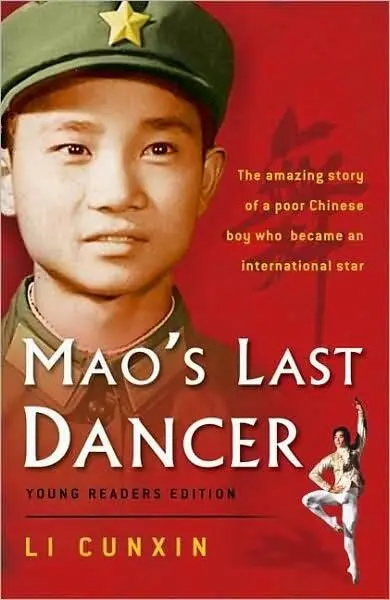
- Название:Mao's Last Dancer
- Автор:
- Жанр:
- Год:неизвестен
- ISBN:нет данных
- Рейтинг книги:3 / 5. Голосов: 1
-
Избранное:Добавить в избранное
- Отзывы:
-
Ваша оценка:
Mao's Last Dancer: краткое содержание, описание и аннотация
Предлагаем к чтению аннотацию, описание, краткое содержание или предисловие (зависит от того, что написал сам автор книги «Mao's Last Dancer»). Если вы не нашли необходимую информацию о книге — напишите в комментариях, мы постараемся отыскать её.
Mao's Last Dancer — читать онлайн бесплатно полную книгу (весь текст) целиком
Ниже представлен текст книги, разбитый по страницам. Система сохранения места последней прочитанной страницы, позволяет с удобством читать онлайн бесплатно книгу «Mao's Last Dancer», без необходимости каждый раз заново искать на чём Вы остановились. Поставьте закладку, и сможете в любой момент перейти на страницу, на которой закончили чтение.
Интервал:
Закладка:
The thought of seeing every one of my brothers, my uncles, aunties and friends from my childhood, and especially my friends in Beijing -the Bandit, Teacher Xiao, Chong Xiongjun and Fengtian -made me overwhelmingly restless. These loved ones had only existed in my dreams for the past nine years. Now, each passing day seemed like a month. I grew impatient. I tried meditation to distract me from my obsessive longing, but I simply couldn't wait a day longer.
I usually had no trouble sleeping on planes but the trip home to China was different. There seemed to be a spring in my eyelids and every time I tried to close them they just popped right open again.
Even though I'd already told Mary so much about everyone who was important to me in China, she wanted to know more, always more. She asked me so many questions and she was just as excited as I was. We had so little sleep on that trip. But we didn't feel tired. We lived on adrenalin and excitement.
Beijing Airport, 3 June 1988. It was around seven in the evening when we landed. It was summertime and the weather was warm. My blood brother the Bandit and my violinist friend Fengtian were to meet us. And there they were, waiting in the crowd outside the baggage carousel. I rushed towards them, each of us with eyes full of tears, arms outstretched ready to shake hands, which was the correct thing to do for Chinese people in public. But instead, in a split second, I pulled them towards me and we hugged and hugged, sobbing on each other's shoulders.
"It's been a long time," the Bandit finally murmured.
I said nothing, only hugged him tighter.
I wanted to say so much, but no words could describe my joy. I had imagined this moment over and over, incessantly, for the last nine years.
The airport in Beijing was the same one that I'd left from in 1979. But now it was much grander, with a massive extension. By the time we hauled our luggage onto the minibus it was nearly 10 p.m., but the place was still crowded and there were long lines of taxis busily loading people in and out. Things had changed, I thought. When I'd left, air travel was well out of the reach for most Chinese and a taxi was a rare sight indeed.
Our minibus sped onto a dimly lit road towards a hotel in the city where the Bandit had booked a room for us. We talked non- stop. So many questions to ask each other. It was impossible to cram the past nine years into the two hours of this minibus trip. The only times the conversation paused was for me to translate for Mary.
Mary looked on in amazement all through the trip. She was speechless. This reunion. The long-lost friendship. She couldn't believe how much love there was between the Bandit and me.
By now both the Bandit and Fengtian had married. The Bandit's wife Marji was a manager in a foreign joint-venture four-star hotel. She spoke fluent English, so she could translate for Mary too. Fengtian's wife Jiping was a Chinese folk dance teacher at the Beijing Dance Academy. On that bus trip to our hotel, Marji, Jiping and Mary immediately became good friends.
But just before we arrived at our hotel, the Bandit told me something else. Something unsettling. The Chinese secret police wanted to see me.
Not again, I thought to myself. But they were already waiting for me when we arrived at the hotel. Two men and a woman. They wanted to talk to me, alone, but Mary refused to leave me. She said she couldn't understand Chinese anyway, so what difference would it make? That wasn't entirely true: by then Mary could speak and understand some Chinese, but the officials didn't know that so they relented and let her stay.
The Chinese secret police asked me a lot of questions, mainly about the defection in 1981. They asked me again if there was any Taiwanese or American government involvement. There were two conflicting reports, they said, from the consulate in Houston and from the embassy in Washington. They wanted to know which was closer to the truth. They were very polite and I never really felt in danger, but they did say that, for my safety, they would provide me with discreet protection. I knew what that meant. They were going to keep an eye on me.
Mary and I stayed in Beijing at first and spent every minute with my friends. The Bandit told me all that had happened since I'd left: he was now a soloist at the Central Ballet of China. Both Fengtian and Chong Xiongjun had been selected by the Song and Dance Company of China. Chong was married too, to a nice lady who worked at a clothing factory in Beijing. Much had happened. I had been away so long.
So, on the back of the Bandit's and Fengtian's bikes, Mary and I travelled around Beijing. Sometimes we ate at their homes and other times I tried to show Mary some of the small eateries that had existed during my youth, but many places I had once known had either been torn down or had changed ownership as China had gone through rapid change. I was surprised. And impressed. Even though there were signs of prosperity everywhere and the progress I was witnessing far exceeded my expectations, still, the massive number of bicycles, the polluted air and the millions of pedestrians were all so familiar to me. There seemed to be much more freedom. People were happier. The influence of Mao and the grim shadow of the Cultural Revolution had begun to lift. Now Deng Xiaoping's "Get rich is glorious" slogan was on everyone's lips, and was splashed around on enormous billboards everywhere.
We had been in Beijing for a couple of days when I asked the Bandit if I could visit my former teachers at the Beijing Dance Academy. The Bandit was my liaison with the academy officials, but it wasn't until our third day in Beijing that I finally received permission to go.
It was a hot summer morning. Mary and I rode through the narrow backstreets with the Bandit and Fengtian, and I breathed in and savoured the familiar Beijing smells: there seemed to be a food stand on every corner. Street merchants were shouting, everyone trying to compete with each other for attention. By the time we reached the Beijing Dance Academy it was around ten o'clock.
There it was. The small windows of our three-storey sleeping quarters-the building with the blocked toilets, the building where eight of us slept on four-bed bunks in one small room. There was the metal gate, its familiarity immediately triggering vivid memories of the years I spent inside it. The discipline, the 5.30 a.m. wake-up bells, jogging in Taoranting Park, the early-morning exercise sessions, rush hour for the toilets, waiting in line for our food in the canteen, the self-criticisms, the endless political study sessions, the nights when I climbed over this gate after my desperate attempts to see Minister Wang. And I remembered most of all the two people who were instrumental in helping to create the success I now enjoyed: Teacher Xiao and Zhang Shu.
Suddenly, before I could go on with my thoughts, I saw them. Both of them-Teacher Xiao and Zhang Shu-waiting for me on the other side of the gate.
My heart was full of emotions that I wanted to express, but I couldn't speak a word. Teacher Xiao and Zhang Shu opened the gate and rushed towards me.
We could only shake hands and look at each other through tear- filled eyes. It was like a dream. I couldn't think of anything to say: my tears had flooded my brain. So instead I put all my love, gratitude and years of unspoken words into our passionate handshaking. It was only when the Bandit reminded me that I should introduce Mary to them that I was jolted back to the present.
The academy looked exactly the same as when I had left it nine years ago. There was the guardhouse by the gate, and the small sportsground. There were the canteens, the hot-water heater room, the studio building and the ping-pong tables beside it. Everything was there. Nothing had changed, except that the buildings seemed even more run down than I remembered.
Читать дальшеИнтервал:
Закладка:
Похожие книги на «Mao's Last Dancer»
Представляем Вашему вниманию похожие книги на «Mao's Last Dancer» списком для выбора. Мы отобрали схожую по названию и смыслу литературу в надежде предоставить читателям больше вариантов отыскать новые, интересные, ещё непрочитанные произведения.




Обсуждение, отзывы о книге «Mao's Last Dancer» и просто собственные мнения читателей. Оставьте ваши комментарии, напишите, что Вы думаете о произведении, его смысле или главных героях. Укажите что конкретно понравилось, а что нет, и почему Вы так считаете.