William Gibson - Spook Country
Здесь есть возможность читать онлайн «William Gibson - Spook Country» весь текст электронной книги совершенно бесплатно (целиком полную версию без сокращений). В некоторых случаях можно слушать аудио, скачать через торрент в формате fb2 и присутствует краткое содержание. Город: NEW YORK, Год выпуска: 2007, Издательство: G. P. PUTNAM’S SONS, Жанр: Современная проза, на английском языке. Описание произведения, (предисловие) а так же отзывы посетителей доступны на портале библиотеки ЛибКат.
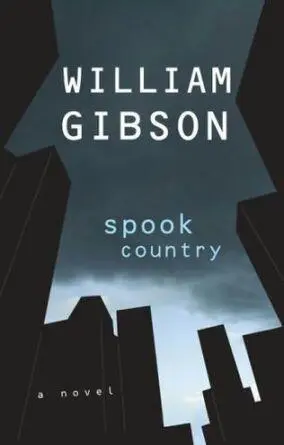
- Название:Spook Country
- Автор:
- Издательство:G. P. PUTNAM’S SONS
- Жанр:
- Год:2007
- Город:NEW YORK
- ISBN:нет данных
- Рейтинг книги:4 / 5. Голосов: 1
-
Избранное:Добавить в избранное
- Отзывы:
-
Ваша оценка:
Spook Country: краткое содержание, описание и аннотация
Предлагаем к чтению аннотацию, описание, краткое содержание или предисловие (зависит от того, что написал сам автор книги «Spook Country»). Если вы не нашли необходимую информацию о книге — напишите в комментариях, мы постараемся отыскать её.
, the challenge of writing about the present-day world drove him to create perhaps his best novel yet, and in
he remains at the top of his game. It's a stripped-down thriller that reads like the best DeLillo (or the best Gibson), with the lives of a half-dozen evocative characters connected by a tightly converging plot and by the general senses of unease and wonder in our networked, post-9/11 time.
Spook Country — читать онлайн бесплатно полную книгу (весь текст) целиком
Ниже представлен текст книги, разбитый по страницам. Система сохранения места последней прочитанной страницы, позволяет с удобством читать онлайн бесплатно книгу «Spook Country», без необходимости каждый раз заново искать на чём Вы остановились. Поставьте закладку, и сможете в любой момент перейти на страницу, на которой закончили чтение.
Интервал:
Закладка:
“Yes,” Tito said.
“Ah,” said Garreth, and drove on. Tito stared into the brown depths of the woods. He hadn’t been so far from a city since leaving Cuba.
Soon the one who called himself Garreth stopped the car, its hood a few feet from a low, heavy-looking gate of galvanized steel. “Give me a hand with this,” Garreth said, opening his door. “It’s motorized, but when I was here with the realtor, the chain kept slipping.”
Tito got out. There was two-lane blacktop, passing just beyond the gate. Garreth had opened a gray metal box, attached to a white wooden post, and was using the keypad mounted inside it. The smell of the forest was rich and strange. A small animal ran through branches overhead, but Tito couldn’t see it, only a branch left swaying. An electric motor whined, and a chain like a very long bicycle chain, part of the gate, began to jump and rattle.
“Help it along,” Garreth said. Tito took the gate in his hands and shoved to the right, toward the sound of the engine. The chain caught, the gate juddering sideways, following a raised track of the same metal. “In the car. There’s a beam that closes it, when we’re through.”
Tito looked back, from the front seat, as the rear of the Lincoln cleared the gate. It closed smoothly enough, but Garreth stopped, got out, went back to check that it was fully closed. “That needs looking after,” said the old man. “Gives a prospective buyer the impression the whole place is in poor repair.”
Garreth got back in. They turned, onto the blacktop, and Garreth drove, picking up speed. “No more helicopters today, Tito,” he said.
“Good,” Tito said.
“Strictly fixed-wing, this next leg.”
Tito, who had been looking at the bananas in the basket between them, thought better of it.
“Leg?” asked Tito.
“A Cessna Golden Eagle,” said the old man, “1985. One of the last they manufactured. Very comfortable. Quiet. We’ll be able to sleep.”
Tito’s body wanted to press itself further back into the seat. He saw buildings ahead. “Where are we going?”
“Right now,” said Garreth, “East Hampton Airport.”
“A private plane,” said the old man, “no security checks, no identification. We’ll be getting you something more viable than a New Jersey driver’s license, but you won’t be needing anything today.”
“Thank you,” Tito said, unable to think of anything else to say. They passed a small building with a painted sign, LUNCH, cars parked in front of it. Tito looked down at the banana. He hadn’t eaten since the night before, with Vianca and Brotherman, and the Guerreros were no longer with him. He picked up the banana and began resolutely to peel it. If I have to learn to fly, he told his stomach, I refuse to starve while doing it. His stomach seemed unconvinced, but he ate the banana anyway.
Garreth drove on, and the old man said nothing.
49. ROTCH
O dile sat in the white armchair with the white robot on its back in her lap, poking a white Mondrian pencil into its mechanism of plastic gears and black rubber bands. “They break, these thing.”
“Who made it?” Hollis asked, from her own chair. Legs folded beneath her bathrobe. They were drinking room-service coffee. Nine in the morning, after what for Hollis had been a surprisingly undisturbed night.
“Sylvia Rotch,” Odile said, levering with her pencil. Something clicked. “Bon,” said Odile.
“Rotch? How do you spell that?” Hollis’s own white pencil, poised.
“R-O-I-G,” managed Odile, who struggled with the letters’ English pronunciation.
“Are you sure?”
“Catalan,” said Odile, bending to put the robot right side up on the carpet. “Is difficult.”
Hollis wrote it down. Roig. “The poppies, are they characteristic of her work?”
“She only does the poppies,” said Odile, eyes huge beneath her smooth, serious brow. “She fills the entire Mercat des Flores with the poppies. The old flower market.”
“Yes,” said Hollis, putting down her pencil and pouring herself fresh coffee. “When you left your message, you mentioned that you wanted to talk about Bobby Chombo.”
“Fer-gus-son,” said Odile, making it three distinct syllables.
“Ferguson?”
“His name is Robert Fer-gus-son. He is Canadian. Shombo, it is his art name.”
Hollis took that in over a sip of coffee. “I didn’t know that. Do you think Alberto knows that?”
Odile shrugged, in that complexly French way that seemed to require a slightly different skeletal structure. “I doubt it. I know because my boyfriend worked in a gallery in Vancouver. Do you know it?”
“The gallery?”
“Vancouver! It is beautiful.”
“Yes,” Hollis agreed, though actually the most she’d seen of the place had been their rooms at the Four Seasons and the inside of their rather too-small venue, a repurposed second-story Deco taxi-dance hall on a weirdly traffic-free midtown artery full of theaters. Jimmy had been having a rough time. She’d stayed with him constantly. Not a good time.
“My boyfriend, he knew Bobby as a DJ.”
“He’s Canadian?”
“My boyfriend is French.”
“I mean Bobby.”
“Of course he is Canadian. Fer-gus-son.”
“He knew him well? Your boyfriend, I mean?”
“He buy E from him,” said Odile.
“Was that before he went to Oregon to work on GPSW projects?”
“I don’t know. Yes, I think. Three years? In Paris, my boyfriend sees Bobby’s photo, an opening in New York, Dale Cusak, his memories of Natalie, do you know it?”
“No,” said Hollis.
“Bobby does the geohacking for Cusak. My boyfriend tells me this is Robert Fer-gus-son.”
“Can you be sure, though?”
“Yes. Some other artists, here, they know he is Canadian. It is not so much of a secret, perhaps.”
“But Alberto doesn’t know?”
“Not everyone does. Everyone need Bobby. To work in this new medium. He is the best, for this. But a recluse. Those who know him before, they become very careful. They don’t say what Bobby does not want.”
“Odile, do you know anything about Bobby’s having…moved, recently.”
“Yes,” said Odile, gravely. “His e-mail bounce. Servers aren’t there. Artists cannot contact him for works in progress. They are concern.”
“Alberto told me. Do you know where he might have gone?”
“He is Shombo.” She picked up her coffee. “He may be anywhere. Ollis, will you come to Silverlake with me? To visit Beth Barker?”
Hollis considered it. Odile was an underutilized asset. Definitely, if her boyfriend (ex?) actually knew Bobby Chombo-Ferguson. “She’s the one with the virtually annotated apartment?”
“Eeparespatial tagging,” corrected Odile.
God help me, thought Hollis.
Her cell rang. “Yes?”
“Pamela. Mainwaring. Hubertus asked me to tell you that it looks as though they’re going to Vancouver.”
Hollis looked across at Odile. “Does he know that Bobby is Canadian?”
“Actually,” said Pamela Mainwaring, “yes.”
“I’ve only just learned.”
“Had you discussed his background with Hubertus?”
Hollis thought about it. “No.”
“There you are, then. He suggests you go. To Vancouver.”
“When?”
“If you left immediately, you might make Air Canada’s one o’clock.”
“When’s the latest?”
“Eight tonight.”
“Book for two, then,” she said. “Henry and Richard. I’ll call you back.”
“Done,” said Pamela, and was gone.
“Ollis,” said Odile, “what is that?”
“Can you come to Vancouver for a few days, Odile? Tonight. Entirely on Node’s ticket. Your flights, hotel, any expenses.”
Читать дальшеИнтервал:
Закладка:
Похожие книги на «Spook Country»
Представляем Вашему вниманию похожие книги на «Spook Country» списком для выбора. Мы отобрали схожую по названию и смыслу литературу в надежде предоставить читателям больше вариантов отыскать новые, интересные, ещё непрочитанные произведения.


Обсуждение, отзывы о книге «Spook Country» и просто собственные мнения читателей. Оставьте ваши комментарии, напишите, что Вы думаете о произведении, его смысле или главных героях. Укажите что конкретно понравилось, а что нет, и почему Вы так считаете.