Margaret Atwood - The Robber Bride
Здесь есть возможность читать онлайн «Margaret Atwood - The Robber Bride» весь текст электронной книги совершенно бесплатно (целиком полную версию без сокращений). В некоторых случаях можно слушать аудио, скачать через торрент в формате fb2 и присутствует краткое содержание. Год выпуска: 1993, Жанр: Современная проза, на английском языке. Описание произведения, (предисловие) а так же отзывы посетителей доступны на портале библиотеки ЛибКат.
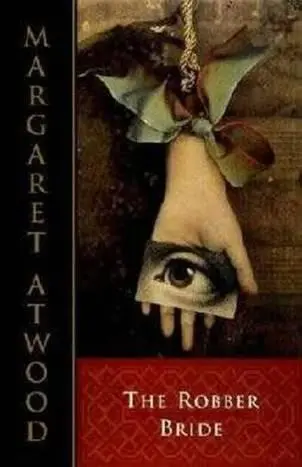
- Название:The Robber Bride
- Автор:
- Жанр:
- Год:1993
- ISBN:нет данных
- Рейтинг книги:5 / 5. Голосов: 1
-
Избранное:Добавить в избранное
- Отзывы:
-
Ваша оценка:
The Robber Bride: краткое содержание, описание и аннотация
Предлагаем к чтению аннотацию, описание, краткое содержание или предисловие (зависит от того, что написал сам автор книги «The Robber Bride»). Если вы не нашли необходимую информацию о книге — напишите в комментариях, мы постараемся отыскать её.
Even Zenia’s name is enough to provoke the old sense of outrage, of humiliation and confused pain. The truth is that at certain times—early mornings, the middle of the night—she finds it hard to believe that Zenia is really dead.’ Zenia is beautiful, smart and greedy; by turns manipulative and vulnerable, needy and ruthless; a man’s dream and a woman’s nightmare. She is also dead. Just to make absolutely sure Tony, Roz and Charis are there for the funeral. But five years on, as the three women share a sisterly lunch, the impossible happens: ‘with waves of ill will flowing out of her like cosmic radiation’, Zenia is back ...
This is the wise, unsettling, drastic story of three women whose lives share a common wound: Zenia, a woman they first met as university students in the sixties. Zenia is smart and beautiful, by turns manipulative, vulnerable—and irresistible. She has entered into their separate lives to ensnare their sympathy, betray their trust, and exploit their weaknesses. Now Zenia, thought dead, has suddenly reappeared. In this richly layered narrative, Atwood skilfully evokes the decades of the past as she retraces three women’s lives, until we are back in the present—where it’s yet to be discovered whether Zenia’s ‘pure, free-wheeling malevolence’ can still wreak havoc.
reports from the farthest reaches of the sex wars and is one of Margaret Atwood’s most intricate and subversive novels yet.
Exploring the paradox of female villainy, this tale of three fascinating women is another peerless display of literary virtuosity by the supremely gifted author of
and
. Roz, Charis and Tony all share a wound, and her name is Zenia. Beautiful, smart and hungry, by turns manipulative and vulnerable, needy and ruthless, Zenia is the turbulent center of her own neverending saga. She entered their lives in the sixties, when they were in college. Over the three decades since, she has damaged each of them badly, ensnaring their sympathy, betraying their trust, and treating their men as loot. Then Zenia dies, or at any rate the three women—with much relief -- attend her funeral. But as
begins, Roz, Charis and Tony have come together at a trendy restaraunt for their monthly lunch when in walks the seemingly resurrected Zenia...
In this consistently entertaining and profound new novel, Margaret Atwood reports from the farthest reaches of the war between the sexes with her characteristic well-crafted prose, rich and devious humor, and compassion.
The Robber Bride — читать онлайн бесплатно полную книгу (весь текст) целиком
Ниже представлен текст книги, разбитый по страницам. Система сохранения места последней прочитанной страницы, позволяет с удобством читать онлайн бесплатно книгу «The Robber Bride», без необходимости каждый раз заново искать на чём Вы остановились. Поставьте закладку, и сможете в любой момент перейти на страницу, на которой закончили чтение.
Интервал:
Закладка:
“You must be living ahead of yourself.” Karen had no idea what she meant.
Finally it was Aunt Vi who arrived, not Karen’s mother. She didn’t even stay at the grandmother’s house. She stayed at the one hotel in town, and the grandmother drove Karen in. Karen didn’t sit in the back of the truck this time. She sat in the front seat with the dog hairs, wearing her dress, the same as the day she came, looking out the window and not saying a thing. Her grandmother whistled softly.
Aunt Vi wasn’t all that pleased to see Karen but she pretended to be. She gave Karen a peck on the cheek. “Look how tall you’ve grown!” she said. It sounded like an accusation. “You’ve got her suitcase?” she said to the grandmother:
“Viola, I’m hardly senile yet,” said the grandmother. “I’m not likely to forget her suitcase. Here you go,” she said to Karen softly. “I put a wishbone in it.” She crouched down and put her bony arms around Karen, and Karen could feel her square body, solid as a house, and then her grandmother wasn’t there any longer.
Karen sat on the train beside Aunt Vi, who fussed and fussed. “We’ll have to get you enrolled in school, right away,” she said. “You’ve missed almost a month already! My goodness, you’re brown as a berry!”
“Where’s my mother?” said Karen. She couldn’t think of any berries that were brown.
Aunt Vi frowned and looked away. “Your mother isn’t well,” she said.
When Karen got to Aunt Vi’s house she went into her usual room with the orange-and-pink flowered curtains and opened up her suitcase right away. There was the hen wishbone, wrapped in a piece of wax paper, with a rubber band around it, from her grandmother’s jar of saved-up rubber bands that was kept beside the sink. She took the wishbone out. It smelled sour, but rich and full, like a hand with dirt on it. She hid it in the hem of one of the curtains. She knew that if Aunt Vi found it she would throw it away.
Karen’s mother is in a building, a new flat yellow building that looks like a school. Aunt Vi and Uncle Vern take Karen to visit her. They sit in the waiting room, on hard chairs covered with a nubbly fabric, and Karen is frightened because Aunt Vi and Uncle Vern are so solemn; solemn, and at the same time avid. They are like the people who stop their cars and get out to see when there’s been a car accident. Something is bad, something is wrong, but they want to participate in it, whatever it is. Karen would rather not, she would like to go back right now, back in time, back as far as the farm, but a door opens and her mother comes into the room. She walks slowly, putting a hand out to touch the furniture as if to guide herself: Sleepwalking, thinks Karen. Before, her mother’s fingers were slim, the nails polished. She was proud of her hands. But now her hands are swollen and clumsy and there is no ring any more on her wedding finger. She’s wearing a grey housecoat and slippers that Karen has never seen before, and also she has never before seen her mother’s face.
Not this face. It’s a flat face with a dull shine on it, like the dead fish in the white enamel trays at the fish store: A fading light, silvery, like scales. She turns this face towards Karen; it’s expressionless as a plate. Eyes of china. Suddenly Karen is framed in those eyes, a small pale girl sitting on a nubbly chair, a girl her mother has never seen before. Karen brings her two hands up to her mouth and breathes in, a gasp, the reverse of a scream.
“Gloria. How’re you feeling?” says Uncle Vern.
Karen’s mother’s head swings towards him, a ponderous head, heavy. The hair on it is pulled back, held with clips. Karen’s mother used to do her hair up in pincurls, and when she combed it out it would be wavy. This hair is plain and straight, and filmed over, as if it’s been kept in a cupboard. Karen thinks about her grandmother’s root cellar, with its smell of indoor earth and its rows of preserve bottles, bright berries glassed over, powdered with dust.
“Fine,” says Karen’s mother, after a minute.
“I can’t stand it,” says Aunt Vi. She dabs at her eyes with a hankie. Then, in a firmer voice: “Karen, aren’t you going to give your mother a kiss?”
Aunt Vi’s questions are like orders. Karen slides off her chair and goes over to this woman. She doesn’t put her arms around her, she doesn’t touch her with her hands. She bends her body from the waist and places her lips against the woman’s cheek. She hardly presses at all, but her mouth sinks in and down, on the cheek that is like cool rubber. She thinks of Pinky without a head, collapsing in the barnyard, becoming ham. Her mother has the texture of luncheon meat. She feels sick to her stomach.
Her mother receives the kiss passively. Karen steps back. There is no red fight around her mother now. Only a faint mauve-brown shimmer.
In the car on the way home, Karen sits between Aunt Vi and Uncle Vern instead of in the back where she usually sits. Aunt Vi wipes at her eyes: Uncle Vern asks Karen if she wants an ice cream cone. She says no thank you, and he pats her knee.
“I felt so bad, my own little sister; but I had to do it,” Aunt Vi says, on the phone. “It was the third time, and what could I do? I don’t know where she got them! Lucky the empty bottle was right there beside her so at least we could tell the doctor what she took. It’s just a wonder we were in time. Something in her voice, I guess; well, it’s not like I hadn’t heard it before! When we got there she was out cold. She had bruises on her mouth for weeks, they had to pry it open to get the hose down, and today it was like you wouldn’t of known her. I don’t know—shock treatments, I guess. If that doesn’t work, they’ll have to do an operation,” She says operation in that solemn voice, the voice she uses for saying grace, as if it’s a holy word. She wants it, this operation, Karen can tell. If her mother has an operation, some of that holiness will rub off on Aunt Vi.
Karen went to school, where she said little and did not make friends. She was not teased either, she was mostly ignored. She knew how to do that, make herself invisible. All she had to do was to suck in the light around her body; it was like sucking in her breath. When the teacher looked at her the look went right through, to whoever was sitting behind her. This way
Karen hardly needed to be in the classroom at all. She let her hands do whatever was required: long rows of a’s and b’s, neat columns of numbers. She got gold stars for neatness. Her paper snowflake and her paper tulip were among the ten pinned up on the corkboard.
Every week, then every two weeks, then every three, she went with her aunt and uncle to visit her mother. Her mother was in a different hospital now. “Your mother is very ill,” Aunt Vi told her, but Karen didn’t need to be told. She could see the illness spreading on her mother’s skin, like the hairs on arms, gone out of control; like filaments of lightning, only very small and slow. Like grey mould spreading through bread. When her mother was veined through and through like that, then she would die. Nobody could stop her, because that was what she wanted to do.
Karen thought about using her wishbone but she knew it wouldn’t be any good. To make awish work you had to really want it, and she didn’t want this woman to stay alive. If she could have had her mother back the way she was before, during the good times, yes. But she knew this was impossible. There wasn’t enough of that mother left. So she kept the wishbone in the hem of the curtain, checking once in a while to make sure it was still there.
Karen sat in her room. Sometimes she banged her head softly against the wall, so she wouldn’t have to think. Or she looked out the window a lot. Or she looked out the window at school. What she looked at was the sky. She thought about the summer. Maybe next summer her aunt and uncle would go on a vacation and she could be back at her grandmother’s farm, gathering the eggs, picking yellow beans in the sun.
Читать дальшеИнтервал:
Закладка:
Похожие книги на «The Robber Bride»
Представляем Вашему вниманию похожие книги на «The Robber Bride» списком для выбора. Мы отобрали схожую по названию и смыслу литературу в надежде предоставить читателям больше вариантов отыскать новые, интересные, ещё непрочитанные произведения.





Обсуждение, отзывы о книге «The Robber Bride» и просто собственные мнения читателей. Оставьте ваши комментарии, напишите, что Вы думаете о произведении, его смысле или главных героях. Укажите что конкретно понравилось, а что нет, и почему Вы так считаете.