Margaret Atwood - The Robber Bride
Здесь есть возможность читать онлайн «Margaret Atwood - The Robber Bride» весь текст электронной книги совершенно бесплатно (целиком полную версию без сокращений). В некоторых случаях можно слушать аудио, скачать через торрент в формате fb2 и присутствует краткое содержание. Год выпуска: 1993, Жанр: Современная проза, на английском языке. Описание произведения, (предисловие) а так же отзывы посетителей доступны на портале библиотеки ЛибКат.
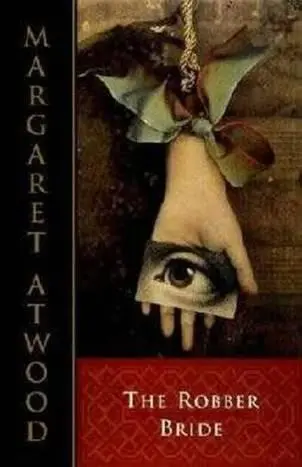
- Название:The Robber Bride
- Автор:
- Жанр:
- Год:1993
- ISBN:нет данных
- Рейтинг книги:5 / 5. Голосов: 1
-
Избранное:Добавить в избранное
- Отзывы:
-
Ваша оценка:
The Robber Bride: краткое содержание, описание и аннотация
Предлагаем к чтению аннотацию, описание, краткое содержание или предисловие (зависит от того, что написал сам автор книги «The Robber Bride»). Если вы не нашли необходимую информацию о книге — напишите в комментариях, мы постараемся отыскать её.
Even Zenia’s name is enough to provoke the old sense of outrage, of humiliation and confused pain. The truth is that at certain times—early mornings, the middle of the night—she finds it hard to believe that Zenia is really dead.’ Zenia is beautiful, smart and greedy; by turns manipulative and vulnerable, needy and ruthless; a man’s dream and a woman’s nightmare. She is also dead. Just to make absolutely sure Tony, Roz and Charis are there for the funeral. But five years on, as the three women share a sisterly lunch, the impossible happens: ‘with waves of ill will flowing out of her like cosmic radiation’, Zenia is back ...
This is the wise, unsettling, drastic story of three women whose lives share a common wound: Zenia, a woman they first met as university students in the sixties. Zenia is smart and beautiful, by turns manipulative, vulnerable—and irresistible. She has entered into their separate lives to ensnare their sympathy, betray their trust, and exploit their weaknesses. Now Zenia, thought dead, has suddenly reappeared. In this richly layered narrative, Atwood skilfully evokes the decades of the past as she retraces three women’s lives, until we are back in the present—where it’s yet to be discovered whether Zenia’s ‘pure, free-wheeling malevolence’ can still wreak havoc.
reports from the farthest reaches of the sex wars and is one of Margaret Atwood’s most intricate and subversive novels yet.
Exploring the paradox of female villainy, this tale of three fascinating women is another peerless display of literary virtuosity by the supremely gifted author of
and
. Roz, Charis and Tony all share a wound, and her name is Zenia. Beautiful, smart and hungry, by turns manipulative and vulnerable, needy and ruthless, Zenia is the turbulent center of her own neverending saga. She entered their lives in the sixties, when they were in college. Over the three decades since, she has damaged each of them badly, ensnaring their sympathy, betraying their trust, and treating their men as loot. Then Zenia dies, or at any rate the three women—with much relief -- attend her funeral. But as
begins, Roz, Charis and Tony have come together at a trendy restaraunt for their monthly lunch when in walks the seemingly resurrected Zenia...
In this consistently entertaining and profound new novel, Margaret Atwood reports from the farthest reaches of the war between the sexes with her characteristic well-crafted prose, rich and devious humor, and compassion.
The Robber Bride — читать онлайн бесплатно полную книгу (весь текст) целиком
Ниже представлен текст книги, разбитый по страницам. Система сохранения места последней прочитанной страницы, позволяет с удобством читать онлайн бесплатно книгу «The Robber Bride», без необходимости каждый раз заново искать на чём Вы остановились. Поставьте закладку, и сможете в любой момент перейти на страницу, на которой закончили чтение.
Интервал:
Закладка:
She heard breathing. Then she felt a wet nose pushed into her hand, and something brushed against her. The two dogs were with her, one on either side. Had they barked when she came out of the house? She didn’t know, she hadn’t heard them. But she didn’t worry any more because they would know the way back. She stood for a long time, breathing in and breathing in, the scent of trees and dogs and night flowers and water, because this was the best thing, it was what she wanted, to be outside in the night by herself. She wasn’t sick any longer.
Finally the dogs nudged her gently, turning her around, herding her back towards the dark bulk of the house. No lights were on anywhere; she thought she might go in and up the stairs and into her bed without her grandmother knowing. She didn’t want to be shaken or told she was hard, or hit with anything. But when she reached the house her grandmother was standing beside it, in a long pale nightgown with her hair feathery in the moonlight, holding the door open, and she didn’t say anything at all. She simply nodded at Karen, and Karen went inside.
She felt welcomed, as if the house were a different house, at night; as if this was the first time she had entered it. She knew now that her grandmother walked in her sleep, too, and that her grandmother also could see in the dark.
In the morning Karen ran her hands over the backs of her legs. Nothing hurt. All she could feel, instead of the sticky welts that had been there before, were some tiny thin lines, like hairs; like the cracks in a mirror.
The room Karen slept in was the smallest bedroom upstairs. It used to be her mother’s. The bed was narrow, with a scratched headboard of dark varnished wood. There was a white bedspread on it that looked like a lot of caterpillars sewn together, and a chest of drawers painted blue, with a straight-backed wooden chair to match. The drawers were lined with old newspapers; Karen put her folded clothes into them. The curtains were a faded forget-me-not print. In the mornings the sunlight came in through them, showing the dust on the surfaces, and on the rungs of the chair. There was a braided rug, shabby from use, and a dark wardrobe jammed into one corner.
Karen knew her mother hated this room; she hated the whole house. Karen didn’t hate it, although there were some things about it she found strange. In the big front bedroom where her grandmother slept, there was a row of men’s boots in the closet. There was no bathroom, only an outhouse, with a wooden box of lime and a little wooden paddle, to put the lime down the hole. There was a front parlour with dark curtains and a collection of Indian arrowheads picked up in the fields, and huge stacks of old newspapers all over the floor. On the wall was a framed photo of Karen’s grandfather, from a long time ago, before he got crushed by a tractor. “He didn’t grow up with tractors,” said the grandmother. “Only horses. Damn thing rolled on him. Your mother saw it happen, she was only ten at the time. Maybe that’s where she went off the rails. He said it was his own fault, for meddling with the Devil’s inventions. He lived for a week, but there was nothing I could do. I can’t do a thing about bones.” She said these things more to herself than to Karen, as she said many things.
The tractor itself was still in the drive shed; her grandmother used to drive it before she got too old. Now the fields were worked by Ron Sloane from down the road, and he used his own tractor, his own baler, all his own stuff: The second week Karen was there one of the hens went broody and made a nest on the tractor seat instead of in her box. Karen found her, sitting on twenty-three eggs. “They’ll do that,” said the grandmother. “They know we take their eggs, so they sneak off by themselves. The other hens’ve been dropping their own eggs on her. Saving themselves the bother. Lazy sluts:”
That hen had to be moved back into the henhouse though, because of the weasels. “They come at night,” said Karen’s grandmother. “They bite the chickens in the neck and suck out their blood:” The weasels were so thin they could get through the smallest crack. Karen imagined them, long thin animals like snakes, cold and silent, slithering in through the walls, their mouths open, their sharp fangs ready, their eyes shining and vicious. Her grandmother sent her into the henhouse one night after dark, with the lantern, while she herself stayed outside, looking for cracks in the boards where the light shone through. One weasel in a henhouse, she said, and that would be that. “They don’t kill to eat,” she said. “They kill for the pleasure of it:”
Karen looked at the photo of her grandfather. She could never tell much from pictures; the bodies in them were just flat, made from black-and-white paper, and no light came out of them. The grandfather had a beard and heavy eyebrows and was wearing a black suit and a hat; he was not smiling. Karen’s grandmother said he was a Mennonite, before he married her and broke with the rest of them. Karen was not able to make any sense of this at all, because she didn’t know what a Mennonite was. Her grandmother said they were a religion. They wouldn’t use anything newfangled, they kept themselves to themselves, they were good farmers. You could always tell a
Mennonite farm because they farmed right to the edges of the fields. Also, they didn’t hold with war. They wouldn’t fight. “In wartime they aren’t too popular,” she said. “There’s people on this line who still aren’t speaking to me, because of him.”
“I don’t hold with war, either,” said Karen solemnly. She had just decided that. It was the war that gave her mother so many nerves.
“Well, I know Jesus said turn the other cheek, but God said an eye for an eye,” said her grandmother. “If people start killing your folks, you should fight back. That’s my opinion.”
“You could just go somewhere else,” said Karen.
“That’s what the Mennonites did,” said her grandmother. “Trouble is, what happens when there’s no place else to go? Answer that one, I say to him!” Her grandmother often spoke of the grandfather as if he were still alive—“He likes a good pot roast for dinner,” or “He never cuts corners.” Karen began to wonder whether he was indeed still alive, in some way. If anywhere, he would be in the front parlour.
Maybe that was why they never used the front parlour, only the back one. They would sit in it and Karen’s grandmother would knit, one bright afghan square after another, and they would listen to the radio, the news and weather mostly. Karen’s grandmother liked to know if it was going to rain, though she said she could tell better than the radio, she could feel rain in her bones. She fell asleep in there every afternoon, on the sofa, wrapped in one of the finished afghans, with her teeth in a glass of water and the pig and the two dogs guarding. In the mornings she was brisk and cheerful; she whistled, she talked to Karen and told her what to do; because there was a right and a wrong way to do everything. But in the afternoons, after lunch, she would droop and begin to yawn, and then she would say she was just going to sit down for a minute.
Karen didn’t like being awake while her grandmother was asleep: This was the only part of the day she found frightening.
The rest of the time she was busy, she could help. She pulled weeds out of the garden, she collected the eggs, at first with her grandmother and then by herself. She dried the dishes, she fed the dogs. But while her grandmother slept she didn’t even go outside, because she didn’t want to get too far away. She stayed in the kitchen. Sometimes she looked at the old newspapers. She would search for the weekend comic pages and study them: if you put your eye up close to the page, the faces dissolved into tiny coloured dots. Or she would sit at the kitchen table, drawing with the stub of a pencil on pieces of scrap paper. At first she tried to write letters to her mother. She knew how to print, she had learned at school. Dear Mother, How are you, Love, Karen. She would walk down to the mailbox beside the road and put the letter in, and lift the red metal flag. But no letters came in return.
Читать дальшеИнтервал:
Закладка:
Похожие книги на «The Robber Bride»
Представляем Вашему вниманию похожие книги на «The Robber Bride» списком для выбора. Мы отобрали схожую по названию и смыслу литературу в надежде предоставить читателям больше вариантов отыскать новые, интересные, ещё непрочитанные произведения.





Обсуждение, отзывы о книге «The Robber Bride» и просто собственные мнения читателей. Оставьте ваши комментарии, напишите, что Вы думаете о произведении, его смысле или главных героях. Укажите что конкретно понравилось, а что нет, и почему Вы так считаете.