Margaret Atwood - The Robber Bride
Здесь есть возможность читать онлайн «Margaret Atwood - The Robber Bride» весь текст электронной книги совершенно бесплатно (целиком полную версию без сокращений). В некоторых случаях можно слушать аудио, скачать через торрент в формате fb2 и присутствует краткое содержание. Год выпуска: 1993, Жанр: Современная проза, на английском языке. Описание произведения, (предисловие) а так же отзывы посетителей доступны на портале библиотеки ЛибКат.
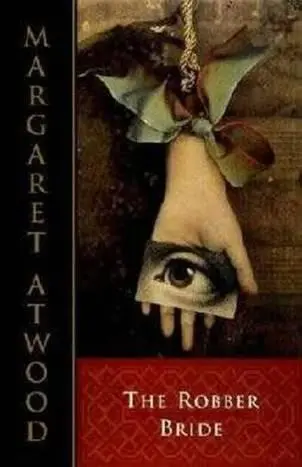
- Название:The Robber Bride
- Автор:
- Жанр:
- Год:1993
- ISBN:нет данных
- Рейтинг книги:5 / 5. Голосов: 1
-
Избранное:Добавить в избранное
- Отзывы:
-
Ваша оценка:
The Robber Bride: краткое содержание, описание и аннотация
Предлагаем к чтению аннотацию, описание, краткое содержание или предисловие (зависит от того, что написал сам автор книги «The Robber Bride»). Если вы не нашли необходимую информацию о книге — напишите в комментариях, мы постараемся отыскать её.
Even Zenia’s name is enough to provoke the old sense of outrage, of humiliation and confused pain. The truth is that at certain times—early mornings, the middle of the night—she finds it hard to believe that Zenia is really dead.’ Zenia is beautiful, smart and greedy; by turns manipulative and vulnerable, needy and ruthless; a man’s dream and a woman’s nightmare. She is also dead. Just to make absolutely sure Tony, Roz and Charis are there for the funeral. But five years on, as the three women share a sisterly lunch, the impossible happens: ‘with waves of ill will flowing out of her like cosmic radiation’, Zenia is back ...
This is the wise, unsettling, drastic story of three women whose lives share a common wound: Zenia, a woman they first met as university students in the sixties. Zenia is smart and beautiful, by turns manipulative, vulnerable—and irresistible. She has entered into their separate lives to ensnare their sympathy, betray their trust, and exploit their weaknesses. Now Zenia, thought dead, has suddenly reappeared. In this richly layered narrative, Atwood skilfully evokes the decades of the past as she retraces three women’s lives, until we are back in the present—where it’s yet to be discovered whether Zenia’s ‘pure, free-wheeling malevolence’ can still wreak havoc.
reports from the farthest reaches of the sex wars and is one of Margaret Atwood’s most intricate and subversive novels yet.
Exploring the paradox of female villainy, this tale of three fascinating women is another peerless display of literary virtuosity by the supremely gifted author of
and
. Roz, Charis and Tony all share a wound, and her name is Zenia. Beautiful, smart and hungry, by turns manipulative and vulnerable, needy and ruthless, Zenia is the turbulent center of her own neverending saga. She entered their lives in the sixties, when they were in college. Over the three decades since, she has damaged each of them badly, ensnaring their sympathy, betraying their trust, and treating their men as loot. Then Zenia dies, or at any rate the three women—with much relief -- attend her funeral. But as
begins, Roz, Charis and Tony have come together at a trendy restaraunt for their monthly lunch when in walks the seemingly resurrected Zenia...
In this consistently entertaining and profound new novel, Margaret Atwood reports from the farthest reaches of the war between the sexes with her characteristic well-crafted prose, rich and devious humor, and compassion.
The Robber Bride — читать онлайн бесплатно полную книгу (весь текст) целиком
Ниже представлен текст книги, разбитый по страницам. Система сохранения места последней прочитанной страницы, позволяет с удобством читать онлайн бесплатно книгу «The Robber Bride», без необходимости каждый раз заново искать на чём Вы остановились. Поставьте закладку, и сможете в любой момент перейти на страницу, на которой закончили чтение.
Интервал:
Закладка:
“We’re not Irish,” says Karen.
“Not by a long shot,” says Karen’s grandmother, “though your great-grandmother was.” She herself is Scotch, partly, so Karen is part Scotch too. Part Scotch, part English, part Mennonite, and part of whatever her father was. According to her grandmother, Scotch is the best thing to be.
The cemetery is weedy, though people still come here: some of the graves are mowed. Grandmother knows where everyone’s buried, and why: a car crash at a crossroads, four dead, they’d been drinking; a man who blew himself in two with his own shotgun, everyone knew only they didn’t want to say because then it would be suicide and that was a disgrace. A lady and her baby, the baby’s grave smaller, like a tiny bedstead; another disgrace, because that baby had no real father. But “All fathers are real,” says the grandmother, “though they’re not all right:” There are angel heads on the grave—stones, urns with willow trees, stone lambs, stone flowers; real flowers too, wilting in jam jars. The grandmother’s mother and father are in here, and her two brothers. She takes Karen to look at them; she doesn’t say “their graves,” she says “them:” But mostly she wants to see Karen’s grandfather. His name is carved on his stone, and his two numbers—when he was born, and when he died.
“Maybe I should’ve sent him back to the Mennonites,” she says. “He might like to be with his own people. But most likely they wouldn’t’ve took him. Anyways, he’s best here with me.
Grandmother’s own name is carved underneath his, but her righthand date is a blank. “I had to get it fixed beforehand,” she says to Karen. “Nobody around here to do it, after. That Gloria and that Vi would probably just dump me into the ditch, save the money. They’re waiting for me to die so they can sell the farm. Or else they’d move me into that city, some hole in the ground. So I fooled them, I bought my own gravestone. I’m all set, come hell or high water.”
“I don’t want you to die,” says Karen. She doesn’t. Her grandmother is a safe place for her, although hard. Or because hard. Not shifting, nQt watery. She doesn’t change.
Her grandmother sticks out her chin. “I don’t intend to die,” she says. “Only the body dies:’ She glares at Karen; she looks almost ferocious. Her hair on top is like thistles, after they’ve gone to seed.
Did Karen love her grandmother? thinks Charis, halfway to the Island, sitting at the back of the ferry, remembering herself remembering. Sometimes yes, sometimes no. Love is too simple a word for such a mixture of harsh and soft colours, of pungent tastes and rasping edges. “There’s more than one way to skin a cat,” her grandmother would say, and Karen would flinch, because she could picture her grandmother actually skinning one. Her grandmother went out at dawn with her .22
rifle and shot woodchucks; also rabbits, which she made into stews. She killed the chickens when they were too old to lay or just when she wanted a chicken; she chopped their heads off with an axe, on the wooden chopping block, and they ran silently around the barnyard with their necks fountaining blood and the grey smoke of their life rising up from them and the rainbow of light around them fading and then going out. Then she plucked and gutted them and singed off their pinfeathers with a candle, and after they were cooked she saved their wishbones and dried them on the windowsill. She had five there already. Karen wanted them to break one, but her grandmother said, “Have you got a wish?” and Karen couldn’t think of one. “You save these for when you need them,” said her grandmother.
Karen asks more questions now; she does more things. Her grandmother says she is toughening up. When she goes to the henhouse by herself to get the eggs, she swats at the hens if they hiss and try to peck her, and if the rooster jumps at her bare legs she kicks him; sometimes she carries a stick, to beat him off. “He’s a mean old devil,” her grandmother says. “Don’t you take anything from him. Just give him a good whack. He’ll respect you for it.”
One morning they’re eating bacon, and her grandmother says, “This here is Pinky.”
“Pinky?” says Karen. Pinky the pig is lying on her afghan where she usually is during meals, blinking with her bristlylashed eyes and hoping for scraps. “Pinky’s right here!”
“This is last year’s Pinky,” says her grandmother. “There’s a new one every year.” She looks across the table at Karen. She has a sly expression; she’s waiting to see how Karen will take it.
Karen doesn’t know what to do. She could start to cry and jump up from the table and run out of the room, which is what her mother would do and is also what she herself feels like doing. Instead she sets her fork down and takes the rubbery chewed piece of bacon out of her mouth and places it gently on her plate, and that’s the end of bacon for her, right then and there, forever.
“Well, for heaven’s sake,” says her grandmother, aggrieved but with some contempt. It’s as if Karen has failed at something. “It’s only pigs. They’re cute when they’re young, smart too, but if I let them stay alive they’d get too big. They’re wild when they grow up, they’re cunning, they’d eat you, yourself. They’d gobble you up as soon as look at you!”
Karen thinks about Pinky, running around the barnyard with no head, the grey smoke of her life going up from her and her rainbow light shrinking to nothing. Whatever else, her grandmother is a killer. No wonder other people are afraid of her.
xxxv
It was Labour Day. That was when Karen’s mother was supposed to come on the train and take Karen back to the city. Karen had her suitcase all packed. She cried, in her narrow bed, under her chenille spread, under her pillow. She didn’t want to leave her grandmother, but she wanted to see her mother, who—already—she couldn’t remember clearly. All she could remember was her dresses, and the smell of Tabu, and one of her voices, her sweet voice, the too-sweet voice she used on the Grade Twos.
Her mother didn’t come. Instead there was a phone call from Aunt Vi, and Karen’s grandmother said there had been a hitch and Karen would be staying a little longer. “You can help me put up the tomatoes,” she said. Karen picked tomatoes and washed them in the pantry, and her grandmother scalded them and peeled them and boiled them in jars.
Then it was time for school to begin, and still nothing happened. “There’s no point starting you at that school,” said Karen’s grandmother. “You’d just be in and out:” Karen didn’t mind. She didn’t much like school anyway, it was hard to pay attention to so many people in the same room at once. It was like the radio when there was a thunderstorm near: she could hardly hear a thing.
Her grandmother brought the Bible out of the front parlour and stood it on the kitchen table. “Let me see, said the blind man,” she said. She closed her eyes and poked with a pin. “Psalm Eighty-eight. I’ve had that before. ‘Lover and friend hast thou put far from me, and mine acquaintance into darkness.’ Well, that’s right enough; it means I should get ready to go, myself, pretty soon. Now you.”
Karen took the pin and closed her eyes, and her hand followed the strong current that pulled it downwards. “Ah,” said her grandmother, squinting. “Jezebel again. Revelations, Two, Twenty. ‘Notwithstanding I have a few things against thee, because thou sufferest that woman Jezebel, which callest herself a prophetess, to teach and to seduce my servants to commit fornication, and to eat things sacrificed unto idols.’ Now that’s a strange thing, for a little girl:’ And she smiled at Karen, the smile of a withered apple.
Читать дальшеИнтервал:
Закладка:
Похожие книги на «The Robber Bride»
Представляем Вашему вниманию похожие книги на «The Robber Bride» списком для выбора. Мы отобрали схожую по названию и смыслу литературу в надежде предоставить читателям больше вариантов отыскать новые, интересные, ещё непрочитанные произведения.



Обсуждение, отзывы о книге «The Robber Bride» и просто собственные мнения читателей. Оставьте ваши комментарии, напишите, что Вы думаете о произведении, его смысле или главных героях. Укажите что конкретно понравилось, а что нет, и почему Вы так считаете.