Margaret Atwood - The Robber Bride
Здесь есть возможность читать онлайн «Margaret Atwood - The Robber Bride» весь текст электронной книги совершенно бесплатно (целиком полную версию без сокращений). В некоторых случаях можно слушать аудио, скачать через торрент в формате fb2 и присутствует краткое содержание. Год выпуска: 1993, Жанр: Современная проза, на английском языке. Описание произведения, (предисловие) а так же отзывы посетителей доступны на портале библиотеки ЛибКат.
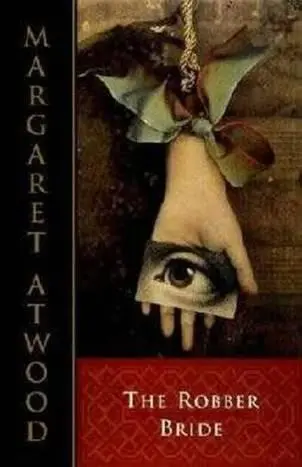
- Название:The Robber Bride
- Автор:
- Жанр:
- Год:1993
- ISBN:нет данных
- Рейтинг книги:5 / 5. Голосов: 1
-
Избранное:Добавить в избранное
- Отзывы:
-
Ваша оценка:
The Robber Bride: краткое содержание, описание и аннотация
Предлагаем к чтению аннотацию, описание, краткое содержание или предисловие (зависит от того, что написал сам автор книги «The Robber Bride»). Если вы не нашли необходимую информацию о книге — напишите в комментариях, мы постараемся отыскать её.
Even Zenia’s name is enough to provoke the old sense of outrage, of humiliation and confused pain. The truth is that at certain times—early mornings, the middle of the night—she finds it hard to believe that Zenia is really dead.’ Zenia is beautiful, smart and greedy; by turns manipulative and vulnerable, needy and ruthless; a man’s dream and a woman’s nightmare. She is also dead. Just to make absolutely sure Tony, Roz and Charis are there for the funeral. But five years on, as the three women share a sisterly lunch, the impossible happens: ‘with waves of ill will flowing out of her like cosmic radiation’, Zenia is back ...
This is the wise, unsettling, drastic story of three women whose lives share a common wound: Zenia, a woman they first met as university students in the sixties. Zenia is smart and beautiful, by turns manipulative, vulnerable—and irresistible. She has entered into their separate lives to ensnare their sympathy, betray their trust, and exploit their weaknesses. Now Zenia, thought dead, has suddenly reappeared. In this richly layered narrative, Atwood skilfully evokes the decades of the past as she retraces three women’s lives, until we are back in the present—where it’s yet to be discovered whether Zenia’s ‘pure, free-wheeling malevolence’ can still wreak havoc.
reports from the farthest reaches of the sex wars and is one of Margaret Atwood’s most intricate and subversive novels yet.
Exploring the paradox of female villainy, this tale of three fascinating women is another peerless display of literary virtuosity by the supremely gifted author of
and
. Roz, Charis and Tony all share a wound, and her name is Zenia. Beautiful, smart and hungry, by turns manipulative and vulnerable, needy and ruthless, Zenia is the turbulent center of her own neverending saga. She entered their lives in the sixties, when they were in college. Over the three decades since, she has damaged each of them badly, ensnaring their sympathy, betraying their trust, and treating their men as loot. Then Zenia dies, or at any rate the three women—with much relief -- attend her funeral. But as
begins, Roz, Charis and Tony have come together at a trendy restaraunt for their monthly lunch when in walks the seemingly resurrected Zenia...
In this consistently entertaining and profound new novel, Margaret Atwood reports from the farthest reaches of the war between the sexes with her characteristic well-crafted prose, rich and devious humor, and compassion.
The Robber Bride — читать онлайн бесплатно полную книгу (весь текст) целиком
Ниже представлен текст книги, разбитый по страницам. Система сохранения места последней прочитанной страницы, позволяет с удобством читать онлайн бесплатно книгу «The Robber Bride», без необходимости каждый раз заново искать на чём Вы остановились. Поставьте закладку, и сможете в любой момент перейти на страницу, на которой закончили чтение.
Интервал:
Закладка:
Soon one finger isn’t enough for him. He stands Karen in front of him, facing away so she can’t see, a big knee holding her on either side, and puts his hands up under her pleated school skirts and slides her panties right down, shoving something hard in between her legs from behind. Or he uses two fingers, three. It hurts, but Karen knows that people who love you can do painful things to you, and she tries hard to believe that he does love her. He says he does. “Your old uncle loves you,” he tells her, scraping his face against hers.
When they are having dinner afterwards he laughs more, he talks louder, he tells jokes, he kisses Aunt Vi on the cheek. He brings them both presents: boxes of chocolates for Aunt Vi, stuffed animals for Karen. “You’re just like our daughter,” he says. Aunt Vi smiles thinly. Nobody can say they aren’t doing the right thing.
Karen loses her appetite: the effort of not thinking about Uncle Vern, both when he’s there and when he isn’t, is making her weak. She becomes thinner and paler, and Aunt Vi discusses her on the phone—“It’s the loss of her mother, she’s the quiet type but you can tell she feels it. She just mopes around. I wasn’t expecting it to go on this long. She’s almost ten!” She takes Karen to the doctor to see if she has anemia, but she doesn’t.
“Tell me what’s wrong,” says Aunt Vi. “It’s better if you talk about it. You can tell me!” She has that solemn, avid look on her face, she’s expecting to hear about Karen’s mother. She urges and urges.
“I don’t like Uncle Vern touching me,” says Karen finally. Aunt Vi’s face goes slack, then hardens. “Touching you?” she says suspiciously. “What do you mean, touching?”
“Touching,” says Karen miserably. “Down there.” She points.
She knows already she’s done a wrong, an unforgivable thing. Up to now Aunt Vi has been willing to tolerate her, even to put on a show of liking her. Not any more.
Aunt Vi’s lips are white, her eyes are sparkling dangerously. Karen looks down at the floor so as not to see. “You’re exactly like your mother,” says Aunt Vi. “A liar. I wouldn’t be surprised if you went crazy, just like her. God knows it runs in the family! Don’t you ever say such an evil thing about your uncle! He loves you like a daughter! Do you want to destroy him?” She starts to cry. “Pray to God to forgive you!” Then her face changes again. She wipes her eyes, she smiles. “We’ll just forget you ever said that, dear,” she says. “We’ll both forget it. I know things have been hard on you. You never had a father.”
After that, what can be done? Nothing at all. Uncle Vern knows Karen has told. He is nicer than ever to Aunt Vi. He is even nice to Karen, in front of people; but sadly, as if he’s forgiving her. When Aunt Vi isn’t looking he stares across the dinner table at Karen, his eyes in his face of uncooked beef shining with triumph. You can’t win this fight, he’s telling her. She can hear the words as clearly as if he’s spoken them. For the time being he’s-avoiding her, he no longer tracks her through the house, but he’s waiting. He’s itching to get his hands on her, but not with any pleading whispers. Now he won’t ask if she likes him, now he’s more like her mother used to be, before she would start screaming and reach for the broom handle. That ominous lull, that softness.
Karen sleeps with her head under her pillow, because she doesn’t want to hear or see; but she’s sleepwalking again, more than ever. She wakes up in the living room, trying to get out through the French windows, or in the kitchen, shaking the back door handle. But Aunt Vi locks all the doors.
Karen is sitting straight up in her bed, holding her pillow against her chest. Her heart is beating with terror. There’s a man standing in her dark bedroom; it’s Uncle Vern, she can see his face in the light that comes through from the hall, just before he eases the door shut. His eyes are open, but he’s sleep-walking; he has his striped pyjamas on, he has a glazed look. Don’t ever wake a person sleepwalking, said her grandmother. It breaks their journey.
Uncle Vern sleepwalks quietly across the floor to Karen’s bed. With him comes a smell of stale sweat and rancid meat. He kneels and the bed heaves like a boat, he pushes and Karen falls backwards. “You’re a little bastard, that’s what you are,” he whispers softly. “A sly little bastard.” He’s talking in his sleep.
Then he falls on top of Karen and puts his slabby hand over her mouth, and splits her in two. He splits her in two right up the middle and her skin comes open like the dry skin of a cocoon, and Charis flies out. Her new body is light as a feather, light as air. There’s no pain in it at all. She flies over to the window and in behind the curtain, and stays there, looking out through the cloth, right through the pattern of pink and orange roses. What she sees is a small pale girl, her face contorted and streaming, nose and eyes wet as if she’s drowning—gasping for air, going under again, gasping. On top of her is a dark mass, worrying at her, like an animal eating another animal. Her entire body—because Charis can see right through things, through the sheets, through the flesh to the bone—her body is made of something slippery and yellow, like the fat in a gutted hen. Charis watches in amazement as the man grunts, as the small child wriggles and flails as if hooked through the neck. Charis doesn’t know she is Charis, of course. She has no name yet.
The man sits up, his hand over his heart, gasping for air now himself. “There,” he says, as if he’s completed something: a task. “Shut up now I didn’t hurt you. Shut up! You keep your dirty little mouth shut about this or I’ll kill you!” Then he groans, the way he does in the bathroom in the mornings. “Oh God, I don’t know what got into me!”
The small girl is rolling over onto her side. As Charis watches, she leans over and vomits onto the floor, onto the man’s feet. Charis knows why. It’s because that brown-green light is inside her body now, thick and sticky, like goose turds. It came out of Uncle Vern and went into Karen, and she has to get it out.
The door opens Aunt Vi is standing there, in her nightgown. “What is it, what’s going on?” she says.
“I heard her in here,” says Uncle Vern. “She was calling—I think she’s got the stomach flu:”
“Well, for heaven’s sake,” says Aunt Vi: “You should’ve had sense enough to take her into the bathroom. I’ll get the floor cloth. Karen, are you going to do that again?”
Karen has no speech, because Charis has taken all the words with her. Karen opens her mouth, and Charis is sucked back, it’s as if she’s being vacuumed into their shared throat. “Yes,” she says.
After the third time Karen knows she is trapped. All she can do is split in two; all she can do is turn into Charis, and float out of her body and watch Karen, left behind with no words, flailing and sobbing. She will have to go on like this forever because Aunt Vi will never hear her, no matter what she says. She would like to take an axe and chop Uncle Vern’s head off, and Aunt Vi’s too, as if they were chickens; she would watch the grey smoke of their lives twist up out of them. But she knows she could never kill anything. She isn’t hard enough.
She takes the wishbone out of the hem of her curtain and closes her eyes, and holds both stems of the wishbone, and pulls. What she wishes for is her grandmother. Her grandmother is far away now, almost like a story she was told once; she can hardly believe she once lived at such a place as the farm, or even that there is such a place. But she wishes anyway, and when she opens her eyes her grandmother is there, coming right into her room through the closed door, wearing her overalls and frowning a little, and smiling also. She walks towards Karen and Karen feels a cool wind against her skin, and the grandmother holds out both of her knobby old hands, and Karen puts out her own hands and touches her, and her hands feel as if sand is falling over them. There’s a smell of milkweed flowers and garden soil. The grandmother keeps on walking; her eyes are light blue, and her cheek comes against Karen’s, cool grains of dry rice. Then she’s like the dots on the comic page, close up, and then she’s only a swirl in the air, and then she’s gone.
Читать дальшеИнтервал:
Закладка:
Похожие книги на «The Robber Bride»
Представляем Вашему вниманию похожие книги на «The Robber Bride» списком для выбора. Мы отобрали схожую по названию и смыслу литературу в надежде предоставить читателям больше вариантов отыскать новые, интересные, ещё непрочитанные произведения.




Обсуждение, отзывы о книге «The Robber Bride» и просто собственные мнения читателей. Оставьте ваши комментарии, напишите, что Вы думаете о произведении, его смысле или главных героях. Укажите что конкретно понравилось, а что нет, и почему Вы так считаете.