Margaret Atwood - The Robber Bride
Здесь есть возможность читать онлайн «Margaret Atwood - The Robber Bride» весь текст электронной книги совершенно бесплатно (целиком полную версию без сокращений). В некоторых случаях можно слушать аудио, скачать через торрент в формате fb2 и присутствует краткое содержание. Год выпуска: 1993, Жанр: Современная проза, на английском языке. Описание произведения, (предисловие) а так же отзывы посетителей доступны на портале библиотеки ЛибКат.
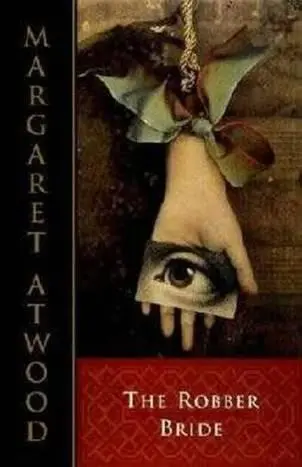
- Название:The Robber Bride
- Автор:
- Жанр:
- Год:1993
- ISBN:нет данных
- Рейтинг книги:5 / 5. Голосов: 1
-
Избранное:Добавить в избранное
- Отзывы:
-
Ваша оценка:
The Robber Bride: краткое содержание, описание и аннотация
Предлагаем к чтению аннотацию, описание, краткое содержание или предисловие (зависит от того, что написал сам автор книги «The Robber Bride»). Если вы не нашли необходимую информацию о книге — напишите в комментариях, мы постараемся отыскать её.
Even Zenia’s name is enough to provoke the old sense of outrage, of humiliation and confused pain. The truth is that at certain times—early mornings, the middle of the night—she finds it hard to believe that Zenia is really dead.’ Zenia is beautiful, smart and greedy; by turns manipulative and vulnerable, needy and ruthless; a man’s dream and a woman’s nightmare. She is also dead. Just to make absolutely sure Tony, Roz and Charis are there for the funeral. But five years on, as the three women share a sisterly lunch, the impossible happens: ‘with waves of ill will flowing out of her like cosmic radiation’, Zenia is back ...
This is the wise, unsettling, drastic story of three women whose lives share a common wound: Zenia, a woman they first met as university students in the sixties. Zenia is smart and beautiful, by turns manipulative, vulnerable—and irresistible. She has entered into their separate lives to ensnare their sympathy, betray their trust, and exploit their weaknesses. Now Zenia, thought dead, has suddenly reappeared. In this richly layered narrative, Atwood skilfully evokes the decades of the past as she retraces three women’s lives, until we are back in the present—where it’s yet to be discovered whether Zenia’s ‘pure, free-wheeling malevolence’ can still wreak havoc.
reports from the farthest reaches of the sex wars and is one of Margaret Atwood’s most intricate and subversive novels yet.
Exploring the paradox of female villainy, this tale of three fascinating women is another peerless display of literary virtuosity by the supremely gifted author of
and
. Roz, Charis and Tony all share a wound, and her name is Zenia. Beautiful, smart and hungry, by turns manipulative and vulnerable, needy and ruthless, Zenia is the turbulent center of her own neverending saga. She entered their lives in the sixties, when they were in college. Over the three decades since, she has damaged each of them badly, ensnaring their sympathy, betraying their trust, and treating their men as loot. Then Zenia dies, or at any rate the three women—with much relief -- attend her funeral. But as
begins, Roz, Charis and Tony have come together at a trendy restaraunt for their monthly lunch when in walks the seemingly resurrected Zenia...
In this consistently entertaining and profound new novel, Margaret Atwood reports from the farthest reaches of the war between the sexes with her characteristic well-crafted prose, rich and devious humor, and compassion.
The Robber Bride — читать онлайн бесплатно полную книгу (весь текст) целиком
Ниже представлен текст книги, разбитый по страницам. Система сохранения места последней прочитанной страницы, позволяет с удобством читать онлайн бесплатно книгу «The Robber Bride», без необходимости каждый раз заново искать на чём Вы остановились. Поставьте закладку, и сможете в любой момент перейти на страницу, на которой закончили чтение.
Интервал:
Закладка:
On her eighth birthday Karen has a cake. Aunt Vi has baked it, and put sugar roses on it from the store, and eight candles. She asks Karen if she wants to have a little friend over, but Karen says no. So they eat the birthday dinner by themselves, the three of them, Oh Lord, bless this food to our use, Amen, and there are tuna and egg salad sandwiches, and peanut butter and jelly, and Aunt Vi says, “Isn’t this nice,” and then there is Neapolitan ice cream in three colours, white, pink, and brown. After that the cake. Aunt Vi lights the candles and tells Karen to blow them out and make a wish, but Karen just sits there, looking at the flames.
“I don’t think she’s ever had a cake before,” Aunt Vi says to Uncle Vern, and Uncle Vern says, “Poor little tyke’” and ruffles Karen’s hair. He does this often these days and Karen doesn’t like it. Uncle Vern’s hands have a heavy luminescence around them, thick like jelly, sticky, brown-green. Sometimes Karen examines her blonde hair in the mirror to see if any of it has come off.
“Make a wish,” says Uncle Vern heartily. “Wish for a bicycle!”
“You have to close your eyes,” says Aunt Vi.
So to humour them Karen closes her eyes, and sees nothing but the sky, and opens her eyes again and obediently blows out the candles. Aunt Vi and Uncle Vern clap their hands, applauding, and Uncle Vern says, “Well, what do you know! Look what we have here!” and out of the kitchen he wheels a brandnew bicycle, bright red. It’s decorated with pink ribbons and has a balloon tied to one handle. “What do you think of that?” says Uncle Vern eagerly.
It’s dusk; the smell of mowed grass comes in through the open window, the June bugs batter themselves against the screen. Karen looks at the bicycle, at its glinting spokes and chains and its two black wheels, and knows that her mother is dead.
Her mother did not die for another three weeks, but it was the same thing, because sometimes (thinks Charis) there is a fold in time, like the way you fold the top bedsheet down to make a border, and if you stick a pin through at any spot, then the two pinholes are aligned, and that’s the way it is when you foresee the future. There’s nothing mysterious about it, any more than there is with a backwash in a lake or with harmony in music, two melodies going on at the same time. Memory is the same overlap, the same kind of pleat, only backwards.
Or maybe the fold is not in time itself but in the mind of the person watching. In any case, Karen looks at the bicycle and sees her mother’s death, and collapses onto the floor, crying, and Aunt Vi and Uncle Vern are baffled and then angry, and tell her she is a lucky girl; a lucky, ungrateful girl, and she can’t explain.
There was a funeral but not very many people came. A few teachers from her mother’s old school, some friends of Aunt Vi’s. Her grandmother wasn’t there, but Karen didn’t find that strange—her grandmother in the city would have been out of place. There was another reason as well—stroke, said Aunt Vi, and nursing home, in the tone of voice that was supposed to enlist other people’s sympathy for her—but these words meant nothing to Karen and she didn’t want to hear them, so she put them out of her mind. She had on a navy blue dress, which was the closest Aunt Vi could get to black, at short notice, although—she said on the phone—she should’ve seen it coming. Karen wasn’t allowed to visit her mother’s body in the coffin because Aunt Vi said it was too shocking a thing for a young child, but she knew anyway what it would look like. The same as alive, only more so.
Uncle Vern and Aunt Vi have had part of their cellar re-done. They’ve had plasterboard put over the cement-block walls, linoleum with thick carpeting over it on the floor. They’ve made a rec room down there, rec not like wreck but like recreation. There’s a bar with bar stools, and a set of chinese chequers for Karen, and a television set. It’s the second television set they’ve bought; the first one is kept in the living room. Karen likes to watch the set in the rec room, out of everyone’s way. She doesn’t actually have to pay attention to what’s in front of her on the screen; she can be by herself, inside her head, and no one will ask what she’s doing.
It’s September, but outside, upstairs, it’s still dry and hot. Karen sits on the carpet, in the rec room where it’s cooler, in bare feet and shorts and a sleeveless top, watching Kukla, Fran & Ollie on TV Kukla, Fran and Ollie are puppets, or two of them are. Overhead, Aunt Vi’s shoes clack busily back and forth across the kitchen floor. Karen hugs her own knees, rocking gently. After a while she gets up and goes to the bar sink and runs herself a glass of water, and puts in an ice cube out of the little refrigerator, and sits back down on the rug.
Uncle Uern comes down the stairs. He’s been mowing the lawn. He is a deeper red than usual, and the smell of sweat encircles him, like the water drops when a wet dog shakes itself. He goes to the bar and gets out a beer, takes the cap off the bottle and drinks down half, and wipes his wet face with the towel beside the sink. Then he sits down on the sofa. The sofa is a sofa-bed, in case they have visitors, because Karen has the room that used to be the guest room. That room is still called “the guest room,” although Karen is living in it. They don’t have visitors, though.
Karen gets up. She intends to go upstairs, because she knows what will happen next, but she isn’t fast enough. “Come on,” says Uncle Vern. He pats his huge, hairy knee, and Karen goes reluctantly towards him. He likes her to sit on his knee. He thinks it’s fatherly. “You’re our little girl now,” he says fondly. But he isn’t really fond of her, Karen knows that. She knows she is unsatisfactory to him, because she doesn’t talk to him, she doesn’t hug him, she doesn’t smile enough. It’s his smell she doesn’t like. That, and his greeny-brown light.
She sits on Uncle Vern’s knee and he pulls her higher up onto his lap and encircles her with one of his red arms. With the other hand he strokes her leg. He often does this, she’s used to it; but this time he moves his hand up higher, between her legs. Kukla, Fran and Ollie continue to talk in their made-up voices; Kukla is some sort of a dragon. Karen squirms a little, trying to move herself away from the enormous fingers, which are inside her shorts now, but the arm tightens around her stomach arid Uncle Vern says into her ear, “Hold still!” He does not sound hearty, wheedling, the way he usually does; he sounds angry. He has both hands on her now, he rubs her back and forth across himself as if she’s a washcloth; his sticky breath is all over her ear. “You like your old Uncle Vern, don’t you?” he says furiously.
“You two!” Aunt Vi calls gaily down the cellar stairs. “Suppertime! There’s corn on the cob!”
“Be right there!” Uncle Vern yells hoarsely, as if the words have been expelled from him by a kick in the stomach. He shoves one finger right up inside Karen, and groans as if he’s been stabbed. He holds Karen against himself for another minute: the energy is leaking out of him and he needs a bandage. Then he lets her go.
“Scamper upstairs,” he tells her. He’s trying for his fake voice, his uncle voice, but he hasn’t got it back; his voice is desolate. “Tell your Auntie Vi I’ll be up in a minute:” Karen looks behind herself, to see if the back of her shorts is browny-green, but it isn’t; only wet. Uncle Vern is wiping himself off with the bar towel.
Uncle Vern lurks, he lies in wait. Karen evades him, but she can’t evade him all the time. The strange thing is that Uncle Vern never comes looking for her when Aunt Vi isn’t in the house. Maybe he likes the danger; or maybe he knows that with Aunt Vi there, Karen won’t dare to make a sound. It’s unclear how he knows this, or why this is so, but it’s true. Karen’s fear of Aunt Vi’s finding out is greater than her fear of Uncle Vern’s sausage fingers.
Читать дальшеИнтервал:
Закладка:
Похожие книги на «The Robber Bride»
Представляем Вашему вниманию похожие книги на «The Robber Bride» списком для выбора. Мы отобрали схожую по названию и смыслу литературу в надежде предоставить читателям больше вариантов отыскать новые, интересные, ещё непрочитанные произведения.





Обсуждение, отзывы о книге «The Robber Bride» и просто собственные мнения читателей. Оставьте ваши комментарии, напишите, что Вы думаете о произведении, его смысле или главных героях. Укажите что конкретно понравилось, а что нет, и почему Вы так считаете.