Margaret Atwood - The Robber Bride
Здесь есть возможность читать онлайн «Margaret Atwood - The Robber Bride» весь текст электронной книги совершенно бесплатно (целиком полную версию без сокращений). В некоторых случаях можно слушать аудио, скачать через торрент в формате fb2 и присутствует краткое содержание. Год выпуска: 1993, Жанр: Современная проза, на английском языке. Описание произведения, (предисловие) а так же отзывы посетителей доступны на портале библиотеки ЛибКат.
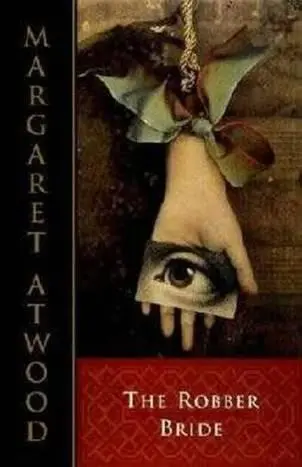
- Название:The Robber Bride
- Автор:
- Жанр:
- Год:1993
- ISBN:нет данных
- Рейтинг книги:5 / 5. Голосов: 1
-
Избранное:Добавить в избранное
- Отзывы:
-
Ваша оценка:
The Robber Bride: краткое содержание, описание и аннотация
Предлагаем к чтению аннотацию, описание, краткое содержание или предисловие (зависит от того, что написал сам автор книги «The Robber Bride»). Если вы не нашли необходимую информацию о книге — напишите в комментариях, мы постараемся отыскать её.
Even Zenia’s name is enough to provoke the old sense of outrage, of humiliation and confused pain. The truth is that at certain times—early mornings, the middle of the night—she finds it hard to believe that Zenia is really dead.’ Zenia is beautiful, smart and greedy; by turns manipulative and vulnerable, needy and ruthless; a man’s dream and a woman’s nightmare. She is also dead. Just to make absolutely sure Tony, Roz and Charis are there for the funeral. But five years on, as the three women share a sisterly lunch, the impossible happens: ‘with waves of ill will flowing out of her like cosmic radiation’, Zenia is back ...
This is the wise, unsettling, drastic story of three women whose lives share a common wound: Zenia, a woman they first met as university students in the sixties. Zenia is smart and beautiful, by turns manipulative, vulnerable—and irresistible. She has entered into their separate lives to ensnare their sympathy, betray their trust, and exploit their weaknesses. Now Zenia, thought dead, has suddenly reappeared. In this richly layered narrative, Atwood skilfully evokes the decades of the past as she retraces three women’s lives, until we are back in the present—where it’s yet to be discovered whether Zenia’s ‘pure, free-wheeling malevolence’ can still wreak havoc.
reports from the farthest reaches of the sex wars and is one of Margaret Atwood’s most intricate and subversive novels yet.
Exploring the paradox of female villainy, this tale of three fascinating women is another peerless display of literary virtuosity by the supremely gifted author of
and
. Roz, Charis and Tony all share a wound, and her name is Zenia. Beautiful, smart and hungry, by turns manipulative and vulnerable, needy and ruthless, Zenia is the turbulent center of her own neverending saga. She entered their lives in the sixties, when they were in college. Over the three decades since, she has damaged each of them badly, ensnaring their sympathy, betraying their trust, and treating their men as loot. Then Zenia dies, or at any rate the three women—with much relief -- attend her funeral. But as
begins, Roz, Charis and Tony have come together at a trendy restaraunt for their monthly lunch when in walks the seemingly resurrected Zenia...
In this consistently entertaining and profound new novel, Margaret Atwood reports from the farthest reaches of the war between the sexes with her characteristic well-crafted prose, rich and devious humor, and compassion.
The Robber Bride — читать онлайн бесплатно полную книгу (весь текст) целиком
Ниже представлен текст книги, разбитый по страницам. Система сохранения места последней прочитанной страницы, позволяет с удобством читать онлайн бесплатно книгу «The Robber Bride», без необходимости каждый раз заново искать на чём Вы остановились. Поставьте закладку, и сможете в любой момент перейти на страницу, на которой закончили чтение.
Интервал:
Закладка:
So instead she would sit there drawing with the pencil stub; or else not drawing. Listening. Her grandmother snored, and mumbled in her sleep sometimes. There were flies buzzing, distant cows, chuckling of geese, a car going by, way down on the gravel road at the front of the property. Other sounds. The tap dripping into the sink, in the pantry. Footsteps in the front parlour, a creaking, what was it? The rocker in there, the hard sofa? She sat very still, chilled in the afternoon heat, with the small hairs on her arms lifting, waiting to see if the footsteps would come closer.
On Sundays her grandmother would put on a dress, but she didn’t go to church—not like Aunt Vi, who went twice a day on Sundays. Instead she would take the huge family Bible out of the front parlour and stand it up on the kitchen table. She would close her eyes and poke between the pages with a pin, and then open to the page that the pin had chosen. “Now you,” she would say to Karen, and Karen would take the pin and close her own eyes, and let her hand hover over the page until she felt it pulled down. Then her grandmother would read the part where the pin had stuck in.
“‘If any man among you seemeth to be wise in this world, let him become a fool, that he may be wise,”‘ she read. “‘For the wisdom of this world is foolishness with God: Well now, I know who that must mean.” And she would nod her head.
Sometimes though she would be puzzled. “‘The dogs shall eat Jezebel by the wall of Jezreel,”‘ she read. “Now I don’t know at all who that could be. Must be too far ahead:’ She only read one verse a Sunday. After that she would close up the Bible and put it back in the front parlour, and change into her overalls and go outside to do the chores.
Karen kneels in the garden. She’s picking beans into a six-quart basket, yellow beans. She picks slowly, one bean at a time. Her grandmother can pick with both hands at once, not even looking, the same way she knits, but Karen has to look, to find the bean first and then pick it. The sun is white-hot; she’s wearing her shorts—and a sleeveless blouse, and the straw sunhat her grandmother makes her wear so she won’t get sunstroke. Crouched down like that she’s almost hidden, because the bean plants are so big. The sunflowers watch her with their huge brown eyes, their yellow petals like spikes of dry fire.
The air shimmers like cellophane, a clear sheet of it shaken over the flat fields; it crackles with grasshopper static. Good haying weather. From two fields over comes the drone of Ron Sloane’s tractor, the clack and thump of the baler. Then it stops. Karen reaches the end of the bean row. She pulls a carrot up for herself, wipes off the dirt with her fingers, then rubs the carrot on her leg, then bites into it. She knows she’s supposed to wash it first but she likes the earth taste.
There’s a motor noise. A dark green pickup truck is coming up the drive. It comes fast, skewing from side to side on the gravel. Karen knows the truck: it’s Ron Sloane’s truck.
Why isn’t he in the field, why is he coming here? Mostly nobody visits. Her grandmother has no opinion of the neighbours. She says they think stupid things and they gossip, and they stare at her when they pass her on the street, when she goes shopping in town. Karen has seen people doing that, all right.
The truck skids to a stop; there’s a rush of geese, the dogs barking. The door of the truck opens and Ron S.loane falls out. Staggers out, holding his arm. The tanned skin of his face looks like a brown paper bag, all the pinky-red gone out of it. “Where is she?” he says to Karen. He smells of sweat and fear. His sleeve is torn, his arm is dripping blood, pouring blood, she sees now. The hurt, the danger comes off the arm in shock waves of brilliant red. Karen wants to scream, but she can’t, she can’t move. She calls to her grandmother inside her head, and her grandmother comes around the corner of the house carrying a pail, and sees the blood too and drops the pail. “God Almighty,” she says. “Ron.”
Ron Sloane turns his face to her and it is a look of abject, helpless appeal. “Fuckin’ baler,” is what he says.
Karen’s grandmother is hurrying towards him. “Boys and girls, boys and girls,” she says to the dogs and geese. “Cully, out,” and there is a barking, cackling retreat.
“It’ll be fine,” she says to Ron. She puts out her hand and touches him, touches his arm, and says something. What Karen sees is light, a blue glow coming out from her grandmother’s hand, and then it’s gone and the blood has stopped. “It’s done,” she says to Ron. “But you need to get to a hospital. All I can do is the blood. I’ll drive you, you’re not fit. That was a vein; it’ll start again in half an hour. Get a wet cloth,” she says to Karen. “A tea towel. Cold water.”
Karen sits in the back of her grandmother’s truck, with Glennie the dog. She always sits in the back now, if she can. The air whirls around her, her own hair ripples against her face, the trees blur by, it’s like flying. They go to the hospital, twenty miles away, in the same town as the train station, and Ron gets out, and then he has to sit and put his head down, and then Karen’s grandmother gets an arm around him and they hobble together into the hospital like people in a three-legged race. Karen and Glennie wait in the truck.
After a while her grandmother comes out. She says they’re leaving Ron Sloane at the hospital to get sewed up, and he will be all right now. They drive back to tell Mrs. Sloane what’s happened to Ron, so she won’t worry. They sit at Mrs. Sloane’s kitchen table and Karen’s grandmother has tea and Karen has a glass of lemonade, and Mrs. Sloane cries and says thank you, and the grandmother doesn’t say you’re welcome. She only nods, a little stiffly, and says, “Don’t thank me. It isn’t me does it.”
Mrs. Sloane has a fourteen-year-old daughter with pale hair, paler than Karen’s, and pink eyes, and skin devoid of colour. She passes a plate of store cookies, and stares and stares at Karen’s grandmother as if her pink eyes are about to fall out. Mrs. Sloane doesn’t like Karen’s grandmother, although she urges her to have more tea. Neither does the white-haired daughter. Instead they are afraid of her. Their~fear is all around their bodies, little grey icy shivers, like wind blowing on a pond. They’re afraid and Karen isn’t; or not as much. She would like to touch blood too, she would like to be able to make it stop.
In the evenings, when it’s cooler, Karen and her grandmother visit the cemetery. It’s less than a mile away. At these times Karen’s grandmother puts on her dress, but Karen doesn’t have to.
They always walk, they never take the truck. They go along the gravel road beside the fences and the ditches and the dustcoated weeds, and Karen holds her grandmother’s hand. It’s the only time she does. She holds it in a new way now, feeling its stringy veins and its knobs of bone and the loose skin on it not as old but as a colour. The colour of light blue. It’s a hand with power.
The cemetery is small; the church beside it small too, and vacant. The people who used to be there have built a new church, a bigger one, out beside the main highway.
“That’s where we put the women and children, when the Fenians came,” says Karen’s grandmother. “Inside that very church.”
“What are Fenians?” says Karen. The word makes her think of a laxative, she’s heard it on the radio. Feen-a-mints.
“Trash up from the States,” says the grandmother. “Irish. They wanted war. Their eyes were bigger than their stomachs though:” She talks about this event as though it just happened the other day, but really it was a long time ago. Over seventy years.
Читать дальшеИнтервал:
Закладка:
Похожие книги на «The Robber Bride»
Представляем Вашему вниманию похожие книги на «The Robber Bride» списком для выбора. Мы отобрали схожую по названию и смыслу литературу в надежде предоставить читателям больше вариантов отыскать новые, интересные, ещё непрочитанные произведения.




Обсуждение, отзывы о книге «The Robber Bride» и просто собственные мнения читателей. Оставьте ваши комментарии, напишите, что Вы думаете о произведении, его смысле или главных героях. Укажите что конкретно понравилось, а что нет, и почему Вы так считаете.