Margaret Atwood - The Robber Bride
Здесь есть возможность читать онлайн «Margaret Atwood - The Robber Bride» весь текст электронной книги совершенно бесплатно (целиком полную версию без сокращений). В некоторых случаях можно слушать аудио, скачать через торрент в формате fb2 и присутствует краткое содержание. Год выпуска: 1993, Жанр: Современная проза, на английском языке. Описание произведения, (предисловие) а так же отзывы посетителей доступны на портале библиотеки ЛибКат.
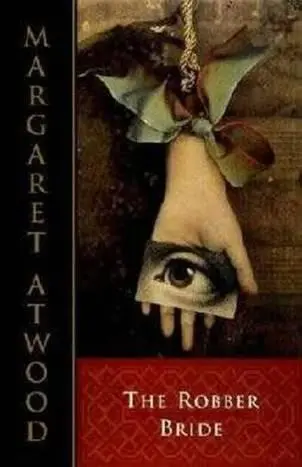
- Название:The Robber Bride
- Автор:
- Жанр:
- Год:1993
- ISBN:нет данных
- Рейтинг книги:5 / 5. Голосов: 1
-
Избранное:Добавить в избранное
- Отзывы:
-
Ваша оценка:
The Robber Bride: краткое содержание, описание и аннотация
Предлагаем к чтению аннотацию, описание, краткое содержание или предисловие (зависит от того, что написал сам автор книги «The Robber Bride»). Если вы не нашли необходимую информацию о книге — напишите в комментариях, мы постараемся отыскать её.
Even Zenia’s name is enough to provoke the old sense of outrage, of humiliation and confused pain. The truth is that at certain times—early mornings, the middle of the night—she finds it hard to believe that Zenia is really dead.’ Zenia is beautiful, smart and greedy; by turns manipulative and vulnerable, needy and ruthless; a man’s dream and a woman’s nightmare. She is also dead. Just to make absolutely sure Tony, Roz and Charis are there for the funeral. But five years on, as the three women share a sisterly lunch, the impossible happens: ‘with waves of ill will flowing out of her like cosmic radiation’, Zenia is back ...
This is the wise, unsettling, drastic story of three women whose lives share a common wound: Zenia, a woman they first met as university students in the sixties. Zenia is smart and beautiful, by turns manipulative, vulnerable—and irresistible. She has entered into their separate lives to ensnare their sympathy, betray their trust, and exploit their weaknesses. Now Zenia, thought dead, has suddenly reappeared. In this richly layered narrative, Atwood skilfully evokes the decades of the past as she retraces three women’s lives, until we are back in the present—where it’s yet to be discovered whether Zenia’s ‘pure, free-wheeling malevolence’ can still wreak havoc.
reports from the farthest reaches of the sex wars and is one of Margaret Atwood’s most intricate and subversive novels yet.
Exploring the paradox of female villainy, this tale of three fascinating women is another peerless display of literary virtuosity by the supremely gifted author of
and
. Roz, Charis and Tony all share a wound, and her name is Zenia. Beautiful, smart and hungry, by turns manipulative and vulnerable, needy and ruthless, Zenia is the turbulent center of her own neverending saga. She entered their lives in the sixties, when they were in college. Over the three decades since, she has damaged each of them badly, ensnaring their sympathy, betraying their trust, and treating their men as loot. Then Zenia dies, or at any rate the three women—with much relief -- attend her funeral. But as
begins, Roz, Charis and Tony have come together at a trendy restaraunt for their monthly lunch when in walks the seemingly resurrected Zenia...
In this consistently entertaining and profound new novel, Margaret Atwood reports from the farthest reaches of the war between the sexes with her characteristic well-crafted prose, rich and devious humor, and compassion.
The Robber Bride — читать онлайн бесплатно полную книгу (весь текст) целиком
Ниже представлен текст книги, разбитый по страницам. Система сохранения места последней прочитанной страницы, позволяет с удобством читать онлайн бесплатно книгу «The Robber Bride», без необходимости каждый раз заново искать на чём Вы остановились. Поставьте закладку, и сможете в любой момент перейти на страницу, на которой закончили чтение.
Интервал:
Закладка:
“Oh, Mother,” said Karen’s own mother reproachfully, in her sweet Grade Twos voice. “She won’t know you’re only joking!”
“Then she better find out fast,” said the grandmother. “Part of it’s true, anyway. She’s too skinny. If I had a calf like that I’d say it was starving:”
There was a black-and-white collie on the seat of the pickup truck, lying on a filthy plaid rug. “Into the back, Glennie,” said the grandmother, and the dog pricked up its ears, wagged its tail, jumped down, and scrambled into the back of the truck via’ the back fender. “In you go,” said the grandmother, picking Karen up as if she were a sack and hoisting her onto the seat. “Shove over for your mother.” Karen slid along the seat; it hurt, because of her legs. Karen’s mother looked at the dog hairs, hesitating.
“Get in, Gloria,” said the grandmother drily. “It’s just as dirty as it always was.”
She drove the truck fast, whistling tunelessly, one elbow jauntily out the window. Both windows were open and the gravel dust billowed in, but even so the inside of the car stank of old dog. Karen’s mother took off her white hat and stuck her head partway out the window. Karen, who was squashed in the middle and feeling a little sick, tried to imagine she was a dog herself, because if she was, then she would think the smell was nice.
“Home again, home again, jiggy jog jog,” said the grandmother jovially. She swung up a bumpy driveway, and Karen caught a glimpse of a huge skeleton, like a dinosaur skeleton, in the long weedy grass in front of the house. This thing was a rusty red, with sharp spines and many encrusted bones sticking out of it. She wanted to ask what it was but she was still too afraid of her grandmother, and anyway the truck was no longer moving and now there was a commotion, a barking and hissing and cackling outside, and a grunting, and her grandmother was yelling, “Be off, be off with you, shoo, shoo, boys and girls!”
Karen couldn’t see out, so she looked at her mother. Her mother was sitting bolt upright, her hat on her knees, with her eyes tight shut, scrunching her white cotton gloves into a ball. The grandmother’s face appeared at the window. “Oh, for
Christ’s sake, Gloria,” she said, jerking open the door. “It’s only the geese:”
“Those geese are killers,” said Karen’s mother, but she clambered down out of the truck. Karen thought that her mother shouldn’t have worn her white shoes, because the yard in front of the house wasn’t a lawn, it was an expanse of mud, some of it dry, some of it not, and some of it not mud at all but animal poo of various kinds. Karen was familiar only with the dog kind, because they had that in the city. There were now two dogs, the black-and-white collie and a larger, brown-and-white one, and at the moment they were herding a flock of geese back towards the barnyard, barking and waving their brushy tails. There were a lot of flies buzzing around.
“Yeah, they can give you a good peck,” said Karen’s grandmother. “You just have to stand up to them! Show some willpower!” She reached in for Karen, but Karen said, “I can get down by myself” and her grandmother said, “That’s the ticket.” Karen’s mother had gone ahead, carrying her overnight case in one hand and waving her purse at the flies, picking her way across the yard through the clumps of poo in her high heels, and the grandmother took this opportunity to say, “Your mother’s weak-minded. Hysterical. Always has been. I hope you’re not.”
“What’s that thing?” said Karen, finding some courage because she sav~ that it was required of her.
“What thing?” said her grandmother. Leaning against her grandmother’s legs was a medium-sized pig. It snuffled at Karen’s socks with its alarming snout, wet and tender as an eyeball, drooly as a mouth. “This here’s Pinky. She’s a pig.”
“No,” said Karen. She could tell it was a pig, she’d seen pictures. “The big thing, at the front.”
“Old cultivator,” said her grandmother, leaving Karen to wonder what a cultivator was. “Come on!” She strode off towards the door with Karen’s suitcase under one arm, and
Karen trotted along behind. In the distance there was more barking and cackling. The pig followed as far as the house, and then, to Karen’s surprise, came right in. It knew how to nose open the screen door.
They were in the kitchen, which was a lot less like a rubbish heap than Karen had thought it would be. There was an oval table covered with oilcloth—light green with a design of strawberries—with a huge teapot and some used plates on it. There were some chairs painted apple green, and a wood range and a saggy maroon velvet sofa piled with newspapers. On the floor there were more newspapers, with a ravelled afghan thrown on top of them.
Karen’s mother was sitting in a rocking chair beside the window, looking exhausted. Her linen outfit was all creased. She had her shoes off and was fanning herself with her hat, but when the pig came into the room she gave a slight scream.
“It’s okay, she’s house-broken,” said the grandmother. “That is the limit,” said Karen’s mother, in a tight, furious voice.
“Cleaner than most people,” said the grandmother. “Smarter, too. Anyways, this is my house. You can do what you like in yours. I didn’t ask you to come here and I won’t ask you to leave, but while you’re here you can take things as you find them.”
She scratched the pig behind the ears and gave it a slap on the rump, and it grunted gently and squinted up at her and then went over and flopped down sideways on the afghan. Karen’s mother burst into tears and scrambled out of her chair, and headed out of the room in her stocking feet, with her white gloves crushed to her eyes. Karen’s grandmother laughed. “It’s okay, Gloria,” she called. “Pinky can’t climb stairs!”
“Why not?” said Karen. Her voice was almost a whisper. She’d never heard anyone talk to her mother like that. “Legs’re too short,” said her grandmother. “Now, you can take off that dress, if you’ve got any other kind of clothes, and help me wash the potatoes.” She sighed. “I should’ve had sons:” Karen opened her suitcase and found her long cotton pants, and changed into them in a room her grandmother called the back parlour. She didn’t want to put on shorts because of the backs of her legs. They were a secret between her and her mother. She wasn’t supposed to tell, about the broom handle or the pancake flipper, or there would be trouble, the way there was when her mother punched one of the Grade Two boys in the face and almost lost her job, and then what would they eat?
“I’ll show you your own room later, when Gloria’s over the sniffles,” said her grandmother. Then Karen helped her grandmother wash the potatoes. They did this in a smaller kitchen off the main one where there was an electric stove, and a tin sink with a cold-water tap. Her grandmother called this room the pantry. The pig came in with them and grunted hopefully until it was sent away. “Not now, Pinky,” said the grandmother. “Too many raw potatoes make her sick. She loves ’em, though. She’ll take a drink too, and that’s just as bad for her. Most animals like to go on a good drunk if they get the chance:’
For dinner they had the potatoes, boiled, and chicken stew with biscuits. Karen wasn’t all that hungry. She fed pieces of her dinner furtively to the pig and also to the two dogs, who were underneath the table. Her grandmother saw her doing it but didn’t object, so she knew it was all right.
Her mother came down for dinner, still in the linen dress, with her face washed and a fresh mouth painted on and a grim set to her lips. Karen knew that expression: it meant her mother was going to see this through or else. Or else what? Or else things would not be so good, for Karen.
Читать дальшеИнтервал:
Закладка:
Похожие книги на «The Robber Bride»
Представляем Вашему вниманию похожие книги на «The Robber Bride» списком для выбора. Мы отобрали схожую по названию и смыслу литературу в надежде предоставить читателям больше вариантов отыскать новые, интересные, ещё непрочитанные произведения.








Обсуждение, отзывы о книге «The Robber Bride» и просто собственные мнения читателей. Оставьте ваши комментарии, напишите, что Вы думаете о произведении, его смысле или главных героях. Укажите что конкретно понравилось, а что нет, и почему Вы так считаете.