Margaret Atwood - The Robber Bride
Здесь есть возможность читать онлайн «Margaret Atwood - The Robber Bride» весь текст электронной книги совершенно бесплатно (целиком полную версию без сокращений). В некоторых случаях можно слушать аудио, скачать через торрент в формате fb2 и присутствует краткое содержание. Год выпуска: 1993, Жанр: Современная проза, на английском языке. Описание произведения, (предисловие) а так же отзывы посетителей доступны на портале библиотеки ЛибКат.
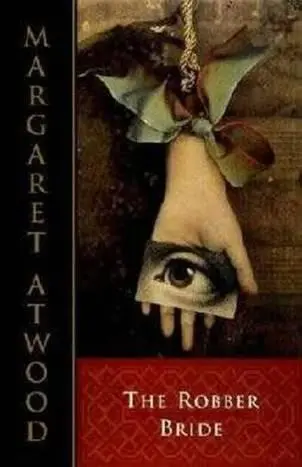
- Название:The Robber Bride
- Автор:
- Жанр:
- Год:1993
- ISBN:нет данных
- Рейтинг книги:5 / 5. Голосов: 1
-
Избранное:Добавить в избранное
- Отзывы:
-
Ваша оценка:
The Robber Bride: краткое содержание, описание и аннотация
Предлагаем к чтению аннотацию, описание, краткое содержание или предисловие (зависит от того, что написал сам автор книги «The Robber Bride»). Если вы не нашли необходимую информацию о книге — напишите в комментариях, мы постараемся отыскать её.
Even Zenia’s name is enough to provoke the old sense of outrage, of humiliation and confused pain. The truth is that at certain times—early mornings, the middle of the night—she finds it hard to believe that Zenia is really dead.’ Zenia is beautiful, smart and greedy; by turns manipulative and vulnerable, needy and ruthless; a man’s dream and a woman’s nightmare. She is also dead. Just to make absolutely sure Tony, Roz and Charis are there for the funeral. But five years on, as the three women share a sisterly lunch, the impossible happens: ‘with waves of ill will flowing out of her like cosmic radiation’, Zenia is back ...
This is the wise, unsettling, drastic story of three women whose lives share a common wound: Zenia, a woman they first met as university students in the sixties. Zenia is smart and beautiful, by turns manipulative, vulnerable—and irresistible. She has entered into their separate lives to ensnare their sympathy, betray their trust, and exploit their weaknesses. Now Zenia, thought dead, has suddenly reappeared. In this richly layered narrative, Atwood skilfully evokes the decades of the past as she retraces three women’s lives, until we are back in the present—where it’s yet to be discovered whether Zenia’s ‘pure, free-wheeling malevolence’ can still wreak havoc.
reports from the farthest reaches of the sex wars and is one of Margaret Atwood’s most intricate and subversive novels yet.
Exploring the paradox of female villainy, this tale of three fascinating women is another peerless display of literary virtuosity by the supremely gifted author of
and
. Roz, Charis and Tony all share a wound, and her name is Zenia. Beautiful, smart and hungry, by turns manipulative and vulnerable, needy and ruthless, Zenia is the turbulent center of her own neverending saga. She entered their lives in the sixties, when they were in college. Over the three decades since, she has damaged each of them badly, ensnaring their sympathy, betraying their trust, and treating their men as loot. Then Zenia dies, or at any rate the three women—with much relief -- attend her funeral. But as
begins, Roz, Charis and Tony have come together at a trendy restaraunt for their monthly lunch when in walks the seemingly resurrected Zenia...
In this consistently entertaining and profound new novel, Margaret Atwood reports from the farthest reaches of the war between the sexes with her characteristic well-crafted prose, rich and devious humor, and compassion.
The Robber Bride — читать онлайн бесплатно полную книгу (весь текст) целиком
Ниже представлен текст книги, разбитый по страницам. Система сохранения места последней прочитанной страницы, позволяет с удобством читать онлайн бесплатно книгу «The Robber Bride», без необходимости каждый раз заново искать на чём Вы остановились. Поставьте закладку, и сможете в любой момент перейти на страницу, на которой закончили чтение.
Интервал:
Закладка:
Charis can feel the skin of her entire face sliding down in dismay. She has noticed nothing. But why hasn’t she? It’s obvious to her, now that Zenia’s said it—the energy that leaps out of Billy’s finger-ends and hair whenever Zenia is near. A sexual bristling, like tomcats. “What do you mean?” she says.
“He wants to haul me into bed,” says Zenia. Her voice is lightly regretful. “He wants to jump me.”
“He loves you?” says Charis. Her entire body has gone slack, as if her bones have melted. Dread is what she feels. Billy loves me, she protests silently. “Billy loves me,” she says, in a choked voice. “He says so.” She sounds to herself like a whiny child. And when was the last time he said that?
“Oh, it’s not love,” says Zenia gently. “Not what he feels for me, I mean. It’s hate. Sometimes it’s so hard for men to tell the difference. But you knew that already, didn’t you?”
“What are you talking about?” Charis whispers.
Zenia laughs. “‘Come on, you’re not a baby. He loves your ass. Or some other body part, how would I know? Anyway, for sure it’s not your soul, it’s not you. If you didn’t put out he’d just take anyway. I’ve watched him, he’s a greedy shit, they’re all just rapists at heart. You’re an innocent, Karen. Believe me, there’s only one thing any man ever wants from a woman, and that’s sex. How much you can get them to pay for it is the important thing.”
“Don’t say that,” says Charis. “Don’t say it!” She can feel something breaking in her, collapsing, a huge iridescent balloon ripped and greying like a punctured lung. What’s left, if you take away love? Just brutality. Just shame. Just ferocity. Just pain. What becomes of her gifts then, her garden, her chickens, her eggs? All her acts of careful tending. She’s shaking now, she feels sick to her stomach.
“I’m just a realist, that’s all,” says Zenia. “The one reason he wants to stick his dick into me is that he can’t. Don’t worry, he’ll forget all about it after I’ve left. They have short memories. That’s why I want to go, Karen—it’s for you.” She’s still smiling. She looks at Charis, and her face against the weak light of the ceiling bulb is in darkness, with only her eyes gleaming, red as in car headlights, and the look goes into Charis, down and down. It’s a resigned look. Zenia is accepting her own death.
“But you’ll die,” says Charis. She can’t let that happen. “Don’t give up!” She starts to cry. She clutches Zenia’s hand, or Zenia clutches hers, and the two of them hang onto each other’s hands across the tableful of dirty dishes.
Charis lies awake in the night. Billy has come back, long after she went to bed, but he hasn’t reached for her. Instead he turned away in bed and closed himself off and went to sleep. It’s like that a lot, these days. It’s as if they’ve had a fight. But now she knows there’s another reason too: she is not wanted. It’s Zenia who is the wanted one.
But Billy wants Zenia with his body only. That’s why he’s so rude to her—his body is divided from his spirit. That’s why he’s being so cold to Charis, as well: his body wants Charis out of the way, so he can grab Zenia, shove her up against the kitchen counter, take hold of her against her will, even though she’s so ill. Maybe he doesn’t know that’s what he wants. But it is.
A wind has come up. Charis listens to it scraping through the bare trees, and to the cold waves slapping against the shore. Someone is coming towards her across the lake, her bare feet touching the tops of the waves, her nightgown tattered by the years of weathering, her colourless hair floating. Charis closes her eyes, focusing on the inner picture, trying to see who it is. Inside her head there’s moonlight, obscured by scudding clouds; but now the sky lightens and she can see the face.
It’s Karen, it’s banished Karen. She has travelled a long distance. Now she’s coming nearer, with that cowed, powerless face Charis used to see in the rnirror looming up to her own face, blown towards her through the darkness like an ousted ghost, towards this house where she has been islanded, thinking herself safe; demanding to enter her, to rejoin her, to share in her body once again.
Charis is not Karen. She has not been Karen for a long time, and she never wants to be Karen again. She pushes away with all her strength, pushes down towards the water, but this time Karen will not go under. She drifts closer and closer, and her mouth opens. She wants to speak.
Karen was born to the wrong parents. That’s what Charis’s grandmother said could happen, and it is what Charis believes as well. Such people have to look for a long time, they have to search out and identify their right parents. Or else they have to go through life without.
Karen was seven when she met her grandmother for the first time. On that day she wore a cotton dress with smocking across the front and a sash, and matching hairbows on the ends of her pale blonde pigtails, which were braided so tight her eyes felt slanted. Her mother had starched the dress, and it was stiff and also a little sticky because of the damp late June heat. They took the train, and when Karen got up off the hot plush seat she had to peel the skirt of the dress off the backs of her legs. That hurt, but she knew better than to say so.
Her mother wore an ivory-coloured linen outfit with a sleeveless dress and a short-sleeved jacket over it. She had a white straw hat and a white bag and shoes to match, and a pair of white cotton gloves, which she carried. “I think you’ll enjoy this,” she kept telling Karen anxiously. “You’re a lot like your grandmother in some ways:” This was news to Karen, because for a long time her mother and her grandmother had hardly been on speaking terms. She knew from listening in that her mother had run away from the farm when she was only sixteen. She’d worked at grinding hard jobs and saved up her money so she could go to school and become a teacher. She’d done this so she could be out from under the thumb of her own mother; the crazy old bat. Wild horses would not drag her back to that rubbish heap, or this was what she said.
Yet here they were, heading straight to the farm that Karen’s mother hated so much, with Karen’s summer clothes packed neatly into a suitcase and her mother’s overnight bag beside it on the rack above their heads. They passed dirt fields, isolated houses, grey sagging barns, herds of cows. Karen’s mother hated cows. One of her stories was about having to get up in the winter, in blizzards, before sunrise even, and go out shivering through the whirling snow to feed the cows. But, “You’ll like the cows,” she said now, in the too-sweet voice she used on the Grade Twos at school. She checked her lipstick in the mirror of her compact, then smiled at Karen to see how she was taking it. Karen smiled back uncertainly. She was used to smiling even when she didn’t feel like it. She would be in Grade Two in September; she was hoping she wouldn’t be put in her mother’s class.
This wasn’t her first time staying away from home. Other times she’d been sent to her aunt, her mother’s older sister Viola. Sometimes it was just overnight, because her mother was going out; sometimes it was for weeks, especially in the summers. Her mother needed a long rest in the summers because of her nerves. Well, who wouldn’t have nerves, considering? said Aunt Vi with disapproval, as if what could Karen’s mother expect? She was speaking to Uncle Vern but looking sideways at Karen as if the nerves were Karen’s doing. But surely not all of them were, because Karen tried to do what she was told, although sometimes she made mistakes; and there were other things, like the sleepwalking, that she couldn’t help.
Читать дальшеИнтервал:
Закладка:
Похожие книги на «The Robber Bride»
Представляем Вашему вниманию похожие книги на «The Robber Bride» списком для выбора. Мы отобрали схожую по названию и смыслу литературу в надежде предоставить читателям больше вариантов отыскать новые, интересные, ещё непрочитанные произведения.






Обсуждение, отзывы о книге «The Robber Bride» и просто собственные мнения читателей. Оставьте ваши комментарии, напишите, что Вы думаете о произведении, его смысле или главных героях. Укажите что конкретно понравилось, а что нет, и почему Вы так считаете.