Margaret Atwood - The Robber Bride
Здесь есть возможность читать онлайн «Margaret Atwood - The Robber Bride» весь текст электронной книги совершенно бесплатно (целиком полную версию без сокращений). В некоторых случаях можно слушать аудио, скачать через торрент в формате fb2 и присутствует краткое содержание. Год выпуска: 1993, Жанр: Современная проза, на английском языке. Описание произведения, (предисловие) а так же отзывы посетителей доступны на портале библиотеки ЛибКат.
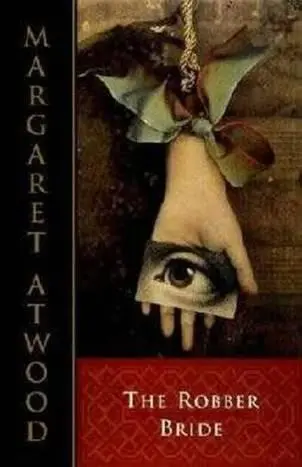
- Название:The Robber Bride
- Автор:
- Жанр:
- Год:1993
- ISBN:нет данных
- Рейтинг книги:5 / 5. Голосов: 1
-
Избранное:Добавить в избранное
- Отзывы:
-
Ваша оценка:
The Robber Bride: краткое содержание, описание и аннотация
Предлагаем к чтению аннотацию, описание, краткое содержание или предисловие (зависит от того, что написал сам автор книги «The Robber Bride»). Если вы не нашли необходимую информацию о книге — напишите в комментариях, мы постараемся отыскать её.
Even Zenia’s name is enough to provoke the old sense of outrage, of humiliation and confused pain. The truth is that at certain times—early mornings, the middle of the night—she finds it hard to believe that Zenia is really dead.’ Zenia is beautiful, smart and greedy; by turns manipulative and vulnerable, needy and ruthless; a man’s dream and a woman’s nightmare. She is also dead. Just to make absolutely sure Tony, Roz and Charis are there for the funeral. But five years on, as the three women share a sisterly lunch, the impossible happens: ‘with waves of ill will flowing out of her like cosmic radiation’, Zenia is back ...
This is the wise, unsettling, drastic story of three women whose lives share a common wound: Zenia, a woman they first met as university students in the sixties. Zenia is smart and beautiful, by turns manipulative, vulnerable—and irresistible. She has entered into their separate lives to ensnare their sympathy, betray their trust, and exploit their weaknesses. Now Zenia, thought dead, has suddenly reappeared. In this richly layered narrative, Atwood skilfully evokes the decades of the past as she retraces three women’s lives, until we are back in the present—where it’s yet to be discovered whether Zenia’s ‘pure, free-wheeling malevolence’ can still wreak havoc.
reports from the farthest reaches of the sex wars and is one of Margaret Atwood’s most intricate and subversive novels yet.
Exploring the paradox of female villainy, this tale of three fascinating women is another peerless display of literary virtuosity by the supremely gifted author of
and
. Roz, Charis and Tony all share a wound, and her name is Zenia. Beautiful, smart and hungry, by turns manipulative and vulnerable, needy and ruthless, Zenia is the turbulent center of her own neverending saga. She entered their lives in the sixties, when they were in college. Over the three decades since, she has damaged each of them badly, ensnaring their sympathy, betraying their trust, and treating their men as loot. Then Zenia dies, or at any rate the three women—with much relief -- attend her funeral. But as
begins, Roz, Charis and Tony have come together at a trendy restaraunt for their monthly lunch when in walks the seemingly resurrected Zenia...
In this consistently entertaining and profound new novel, Margaret Atwood reports from the farthest reaches of the war between the sexes with her characteristic well-crafted prose, rich and devious humor, and compassion.
The Robber Bride — читать онлайн бесплатно полную книгу (весь текст) целиком
Ниже представлен текст книги, разбитый по страницам. Система сохранения места последней прочитанной страницы, позволяет с удобством читать онлайн бесплатно книгу «The Robber Bride», без необходимости каждый раз заново искать на чём Вы остановились. Поставьте закладку, и сможете в любой момент перейти на страницу, на которой закончили чтение.
Интервал:
Закладка:
The nerves were the fault of the war. Karen’s father was killed in the war when Karen wasn’t even born yet, leaving Karen’s mother to bring up Karen all by herself—a thing that was understood to be very hard, practically impossible. There was something else too, which had to do with Karen’s mother’s wedding, or else the absence of it. Whether her father and her mother were actually married was one of the many things Karen wasn’t sure about, although her mother called herself Mrs. and wore a ring. There were no wedding photos, but things had been done differently during the war; everyone said so. There was something in Aunt Vi’s tone of voice that alerted Karen: she was an embarrassment, someone who could only be spoken of obliquely. She wasn’t quite an orphan but she had the taint of one.
Karen didn’t miss her dead father, because how could you miss someone you never even knew? But she was told by her mother that she ought to miss him. There was a framed snapshot of him—not with her mother, but alone, in his uniform, his long bony face looking solemn and somehow already dead—which appeared and disappeared from the mantelpiece, depending on the state of Karen’s mother’s health. When she was up to looking at it, the picture was there; , otherwise not. Karen used the picture of her father as a sort of weather report. When it vanished she knew there was going to be trouble, and she tried to keep out of the road, out from underfoot, out of her mother’s hair (road, feet, hair, how could she be on or under or in all of them at the same time?). But she didn’t always succeed, or else she succeeded too well and her mother would accuse her of daydreaming, of not helping, of not caring, of not giving a sweet Jesus about anyone but herself, and her voice would go up high, up higher, up dangerously high, like a thermometer, into the red part.
Karen tried to help, she tried to care. She would have cared except she didn’t know what she was supposed to care about, and also there were so many things she needed to watch, because of the colours, and other things she needed to listen to. Hours before a storm, when the sky was still windless and blue, she would feel the whisper of the distant lightning running up her arms. She heard the phone before it rang, she heard pain gathering in her mother’s hands, building up there like water behind a dam, getting ready to spill over, and she would stand terrified in the middle of the floor with her eyes elsewhere, looking—her mother said—like an idiot. Stupid! Maybe she was stupid, because sometimes she didn’t understand what was being said to her. She wasn’t hearing the words, she was hearing past the words; she heard the faces instead, and what was behind them. At night she would wake up, standing by the door, holding onto the door handle, and wonder how she got there.
Why do you do that? Why? said her mother, shaking her, and
Karen couldn’t answer. My God, you’re an idiot! Don’t you know what could happen to you out there? But Karen didn’t know, and her mother would say, I’ll teach you! Little bitch! Then she would hit the backs of Karen’s legs with one of her shoes, or else the pancake flipper or the broom handle, whatever was nearby, and thick red light would pour out of her body and some of it would get on Karen, and Karen would squirm and scream. “If your Daddy was alive it’d be him doing this, and he’d do it a damn sight harder, believe you me!” Hitting Karen was the only function Karen’s mother ever ascribed to her father, which made her secretly relieved that he wasn’t there.
Ordinarily Karen’s mother did not say Jesus and God and bitch, she didn’t swear; only when she was heading into a patch of bad nerves. Karen cried a lot when her mother hit her, not just because it hurt but because she was supposed to show that she was sorry, although she was confused about why. Also, if she didn’t cry her mother would keep right on hitting her until she did. You hard girl! But she had to stop at the right moment or her mother would hit her for crying. Stop that noise! Stop right now! Sometimes Karen couldn’t stop and neither could her mother, and those were the worst times. Her mother couldn’t help it. It was her nerves.
Then Karen’s mother would fall on her knees and wrap her arms around Karen’s body and squeeze her so she could scarcely breathe, and cry, and say, “I’m sorry, I love you, I don’t know what got into me, I’m sorry!” Karen would try to stop crying then, she would try to smile, because her mother loved her. If someone loved you that made it all right. Karen’s mother sprayed herself every day with Tabu perfume; she had a horror of smelling bad. So that was the smell in the room, during these beatings: warm Tabu.
Karen’s Aunt Vi didn’t like Karen very much, but at least she didn’t touch her, and it wasn’t bad at her place. Karen slept in the guest room, which had large disturbing roses on the curtains, orange and pink ones, like cauliflowers. She stayed out of the way as much as possible. She helped with the dishes without being asked, and kept her handkerchiefs folded in the top bureau drawer and her socks in pairs, and did not get dirty. “She’s a nice enough little thing, but there’s not that much to her,” said Aunt Vi on the telephone. “Milk and water. Well, I keep her clean and fed, it’s not that hard. Anyway it’s only Christian charity, and it’s not as if we have children of our own. I don’t mind, really.”
Uncle Vern went further than that. “Who’s my girl?” he would exclaim. He wanted Karen to sit on his knee, he rubbed her head, he put his face down close to hers and grinned at her, and tickled her under the arms; Karen didn’t like this but she laughed nervously anyway, because she could tell he wanted her to. “We have a good time, don’t we?” he said boisterously; but he didn’t believe it, it was only his idea of how he should behave towards her. “Don’t pester her,” said Aunt Vi coldly.
Uncle Vern’s skin was white on top but red underneath. He mowed the lawn in his shorts, on Sunday evenings when Aunt Vi was at church, and at those times he got even redder, though the light around his body was dim and a muddy green-brown. In the mornings, when she was still lying in bed, Karen could hear him grunting and groaning in the bathroom. She would put her pillow over her ears.
“She does sleepwalk, but not that much,” said Aunt Vi on the phone. “I just keep the doors locked, she can’t get out. I don’t know what Gloria makes such a fuss about. Of course her nerves are shot. Left with a—well, a child on her hands, like that—I feel I have to help out. But then, I’m her sister.” She dropped her voice when saying this, as if it was a secret.
Her aunt and uncle did not live in an apartment, the way her mother did. They lived in a house, a new house in the suburbs, with carpets all over the floor. Uncle Vern was in the home furnishings business; there was a real demand for home furnishings because it was right after the war, so Uncle Vern was doing well, and right now Uncle Vern and Aunt Vi had gone on a vacation. They had gone to Hawaii. This was why Karen couldn’t stay with them, but had to go to her grandmother’s instead.
She had to go, because her mother needed a rest. She needed it badly; Karen knew how badly. When she peeled the starched skirt away from the backs of her legs, some of the skin came off too, because last night her mother had used the pancake flipper, not the flat way but sideways; she had used the cutting edge and there had been blood.
The grandmother met them at the train station in a battered blue pickup truck.
“How are you, Gloria,” she said to Karen’s mother, shaking hands with her as if they were strangers. Her hands were large and sunburned and so was her face; her head was topped with a straggly whitish grey nest, which Karen realized after a moment was her hair. She was wearing overalls, and not clean ones either. “So this is wee Karen:” Her big, crinkly face swooped down, with a beak of a nose and two small bright blue eyes under wiry eyebrows, and her teeth appeared, large too and unnaturally even, and so white they were almost luminous. She was smiling. “I’m not going to eat you,” she said to Karen. “Not today. You’re too skinny, anyway—I’d have to fatten you up.”
Читать дальшеИнтервал:
Закладка:
Похожие книги на «The Robber Bride»
Представляем Вашему вниманию похожие книги на «The Robber Bride» списком для выбора. Мы отобрали схожую по названию и смыслу литературу в надежде предоставить читателям больше вариантов отыскать новые, интересные, ещё непрочитанные произведения.





Обсуждение, отзывы о книге «The Robber Bride» и просто собственные мнения читателей. Оставьте ваши комментарии, напишите, что Вы думаете о произведении, его смысле или главных героях. Укажите что конкретно понравилось, а что нет, и почему Вы так считаете.