Julian Fellowes - Past Imperfect
Здесь есть возможность читать онлайн «Julian Fellowes - Past Imperfect» весь текст электронной книги совершенно бесплатно (целиком полную версию без сокращений). В некоторых случаях можно слушать аудио, скачать через торрент в формате fb2 и присутствует краткое содержание. Жанр: Современная проза, на английском языке. Описание произведения, (предисловие) а так же отзывы посетителей доступны на портале библиотеки ЛибКат.
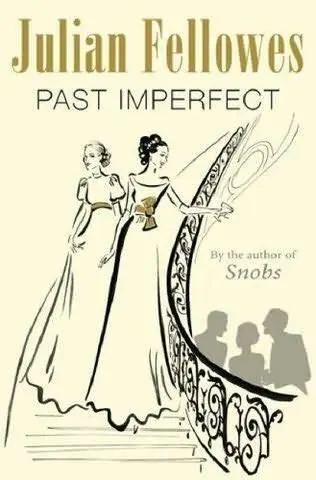
- Название:Past Imperfect
- Автор:
- Жанр:
- Год:неизвестен
- ISBN:нет данных
- Рейтинг книги:3 / 5. Голосов: 1
-
Избранное:Добавить в избранное
- Отзывы:
-
Ваша оценка:
Past Imperfect: краткое содержание, описание и аннотация
Предлагаем к чтению аннотацию, описание, краткое содержание или предисловие (зависит от того, что написал сам автор книги «Past Imperfect»). Если вы не нашли необходимую информацию о книге — напишите в комментариях, мы постараемся отыскать её.
Past Imperfect — читать онлайн бесплатно полную книгу (весь текст) целиком
Ниже представлен текст книги, разбитый по страницам. Система сохранения места последней прочитанной страницы, позволяет с удобством читать онлайн бесплатно книгу «Past Imperfect», без необходимости каждый раз заново искать на чём Вы остановились. Поставьте закладку, и сможете в любой момент перейти на страницу, на которой закончили чтение.
Интервал:
Закладка:
‘Mummy shouldn’t have said that. I hope she hasn’t driven you in here.’ Her voice could always unnerve me. ‘If you were even a bit in love with me I find it tremendously flattering.’ That Serena should be so near to me was a joy, that she should have heard her mother’s words was a nightmare, so it was with mixed emotions that I turned to find her looking at me through the door from the middle of the anteroom.
‘At the time, I always rather hoped no one had guessed.’
‘I didn’t at the beginning.’
‘Until Portugal.’
‘Before. But never mind.’ Unsurprisingly, she didn’t want to be drawn into that one. ‘Of course, Mummy told me afterwards that she knew when you first stayed here, but I suppose one’s mother is bound to be more aware of these things.’
‘Yours is.’ We both smiled. ‘It was kind of her not to bring up the whole Estoril thing, seeing it was the last time I saw them.’
‘Was it really?’
‘I might have glimpsed them across the room at a summer party at Christie’s or something, but I haven’t spoken to them properly between that night and this.’
She shrugged gently. ‘Well, it was ages ago.’ I wondered at her. As I have already mentioned, I had run into Serena occasionally over the years, so there was no four-decade gap to be leaped, but the sight of her was always an amazement. To start with, she seemed to have aged one year for every ten that the rest of us had gone through. In fact, she was hardly changed at all. A few fine lines at the sides of her eyes, a shallow crease by her mouth, her hair a slightly paler colour, nothing more. ‘Are you all here for the weekend?’
‘Most of us. Mummy made it a three-line whip. In case the whole thing went belly-up and we had to save the show. But the organisers were much better this year than last.’
‘Is Mary with you? And Rupert?’
‘Mary is. She was in the hall when I last saw her. Poor old Rupert’s in Washington. He’s been posted there for the last three years.’
‘Washington? What an honour.’
‘An honour and a bore. We’re aching for him to get something in Paris or Dublin or anywhere he can get home from for the weekend.’
‘What about Peniston? Have you brought him with you?’ Serena had two children. The elder, Mary, whom I was doubtless about to see again after many years, was now married to the first secretary in the Washington embassy, Rupert Wintour, and was well on her way to being an ambassadress. When a child, she was ordinary in every way, and horribly like her father to look at, so I confess I suspected her husband’s motives when I first heard about the marriage. His father, Sir Something Wintour, was an entrepreneur and his mother a former beautician, so the eldest child of an earl seemed like a suspiciously welcome choice, but once I had met him I felt I’d been unjust to Rupert. He was quite a bright spark. Serena’s other child was the essential boy, Peniston, a little younger than his sister, whom I had seen occasionally in their house in Lansdowne Crescent, just as our friendship was petering out.
‘Peniston’s here but he arrived under his own steam, since he’s married and has children of his own. These days I’m a grandmother three times over.’
‘I need proof.’
She smiled pleasantly, used to compliments. ‘Helena’s come with William and the boys. You must say hello. And Anthony. I’m not sure where Venetia’s got to. Mummy says she’s in New York, but I got a card last week from Singapore. You know what she’s like.’ She rolled her eyes ceilingwards, with a tolerant laugh. There were three girls, starting with Serena herself and a brother who was, of course, heir to the kingdom. Helena, the second Gresham sister, had married an amiable landowning banking baronet in a neighbouring county, a union that had satisfied her mother, if it did not send her into ecstasies. However the youngest sister, Venetia, had defied the family by accepting the proposal of a pop impresario, an episode I remember only too well. The Claremonts had absolutely refused to countenance it at first. But to everyone’s surprise, since she was not seen as particularly strong or rebellious, Venetia had stuck to her guns and in the end they caved in rather than endure the scandal of a wedding without their presence. As my own father used to say, ‘Never provide material for a story.’ Venetia was the winner in the end. Her husband made an immense fortune in the music industry and now she was richer than, or at least as rich as, any of them but the family exacted its revenge by continuing to patronise her, as if her life had been a trivial and wasteful mass of nothing, up to the present day.
Oddly, the male sibling, Anthony, was the one we all knew least. He came after Serena and before the others. He was still young, not much more than a boy, when Serena and I were running around together, but I can’t say that even when he was grown up we were ever much the wiser where he was concerned. He was polite, of course, and pleasant to talk to at dinner or while having a drink before lunch, but he was always curiously opaque. He revealed nothing. The kind of person who, years later, might turn out to be a terrorist or a serial killer, without causing any great surprise. I liked him though, and I will say that he never demonstrated that supremely tedious habit that some people acquire, of loudly advertising to all and sundry the amount of information they are concealing. He hid everything about himself, but without pretence, mystery or conceit.
‘So, how are you?’ she said. ‘Have you got another book out? I shouldn’t have to ask. I feel rather feeble, not knowing.’ There is a way of enquiring into an artistic career, which may sound or read as generous, but which in fact manages to reduce the value of it almost to nothing. The contempt is contained within its enthusiastic kindness, rather as a little girl’s painting will be praised by someone who is hopeless with children. No one can do this better than the genuinely posh.
‘There’s one coming out next March.’
‘You must let us know when it does.’ Such people often say this sort of thing to their acquaintance in the media: ‘Let me know when you’re next on television,’ ‘Let us know when it’s published,’ ‘Let us know when you’re back on Any Questions.’ As if one is likely to sit down and send off three thousand postcards when a personal appearance is scheduled. Obviously, they understand this will never happen. The message is really: ‘We are not sufficiently interested in what you do to be aware of it if you don’t make us aware. You understand that it does not impinge on our world, so you will please forgive us in future for missing whatever you are involved in.’ Serena did not mean it unkindly, which is the case with many of them, but I cannot deny it is disheartening at times.
Her friendliness continued unabated. ‘When did you know you’d be here tonight? You might have given us some warning. You could have come to dinner.’ I explained the situation. Serena raised her eyebrows. ‘Are they friends of yours? He’s acquired the title of Bore of the County, but perhaps we’re being unjust.’
‘I wouldn’t say that.’
She laughed. ‘Well, it’s nice to welcome you back. Has it changed?’
‘Not really. Not as much as most of the rest of my life.’
‘A trip down Memory Lane.’
‘I’m living in Memory Lane at the moment.’ Naturally, this demanded an explanation and I gave a partial one. I did not tell her the reason for why I was interviewing all these women from our joint past, only that Damian wanted to check up on what had happened to them and he’d asked me to do it, because he met them all through me in the first place.
‘But why did you agree? Isn’t it very time-wasting? And you certainly don’t owe him a favour.’ She raised her eyebrows to punctuate this.
Читать дальшеИнтервал:
Закладка:
Похожие книги на «Past Imperfect»
Представляем Вашему вниманию похожие книги на «Past Imperfect» списком для выбора. Мы отобрали схожую по названию и смыслу литературу в надежде предоставить читателям больше вариантов отыскать новые, интересные, ещё непрочитанные произведения.










Обсуждение, отзывы о книге «Past Imperfect» и просто собственные мнения читателей. Оставьте ваши комментарии, напишите, что Вы думаете о произведении, его смысле или главных героях. Укажите что конкретно понравилось, а что нет, и почему Вы так считаете.