Julian Fellowes - Past Imperfect
Здесь есть возможность читать онлайн «Julian Fellowes - Past Imperfect» весь текст электронной книги совершенно бесплатно (целиком полную версию без сокращений). В некоторых случаях можно слушать аудио, скачать через торрент в формате fb2 и присутствует краткое содержание. Жанр: Современная проза, на английском языке. Описание произведения, (предисловие) а так же отзывы посетителей доступны на портале библиотеки ЛибКат.
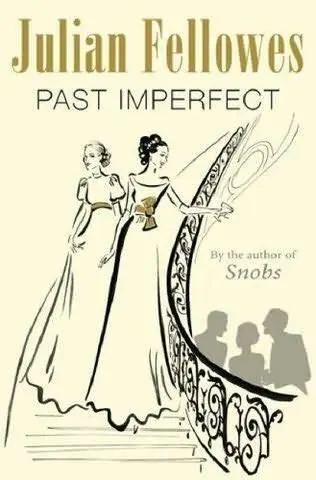
- Название:Past Imperfect
- Автор:
- Жанр:
- Год:неизвестен
- ISBN:нет данных
- Рейтинг книги:3 / 5. Голосов: 1
-
Избранное:Добавить в избранное
- Отзывы:
-
Ваша оценка:
Past Imperfect: краткое содержание, описание и аннотация
Предлагаем к чтению аннотацию, описание, краткое содержание или предисловие (зависит от того, что написал сам автор книги «Past Imperfect»). Если вы не нашли необходимую информацию о книге — напишите в комментариях, мы постараемся отыскать её.
Past Imperfect — читать онлайн бесплатно полную книгу (весь текст) целиком
Ниже представлен текст книги, разбитый по страницам. Система сохранения места последней прочитанной страницы, позволяет с удобством читать онлайн бесплатно книгу «Past Imperfect», без необходимости каждый раз заново искать на чём Вы остановились. Поставьте закладку, и сможете в любой момент перейти на страницу, на которой закончили чтение.
Интервал:
Закладка:
His envy and Bridget’s misery combined to fill the car with a green mist of resentful, hurt rage, but Jennifer wouldn’t give up. ‘I thought they were so nice. And they’re obviously very fond of you.’
‘Well, he’s very fond of them. Or some of them. Aren’t you? Darling?’ Bridget’s contribution at moments like this was the vocal equivalent of throwing acid. Of course, as I was forced to realise, the downside of remembering what love is came in the form of a clear realisation of what it is not and whatever it was that I was sharing with Bridget was not love. I’d seen this coming. I had hinted as much to my dear old Daddy when I went to have lunch with him. But I don’t think, before that evening at Gresham, I’d appreciated that the buffers were not only in sight but nearly upon us. In fairness, I cannot blame Bridget for feeling cheesed off. She was an intelligent, attractive woman, and she was obliged to accept that, once again, she had wasted several, long years on a dry well, on a bagless hunt, on a dead end. As I have mentioned, she’d made this mistake before, more than once, which I knew well, and until this very evening I’d always taken her line that the men in question were beasts and cads for not releasing her when they must have known it was going nowhere. Instead, they had, as I thought, strung her along until they had stolen her future and her children, who would never now know life. It was at this point, in that darkened car pushing through the Yorkshire lanes, that I suddenly realised that they had not been cads exactly, simply selfish, insensitive, unthinking fools. As I was. And from tomorrow morning I would be sharing their guilt, in the Sad Story of Bridget FitzGerald.
She didn’t speak again until we were in our freezing, damp bedroom. She had started to undress in that angular, vengeful way that I knew so well, talking over her shoulder at me, or through the back of her furious head. ‘The whole thing is so ridiculous.’
‘What thing? There isn’t a “thing”.’
‘Darn right, there isn’t. She’s not at all interested in you. Not in the least.’ She spoke the words crisply with a vivid, sparky relish, as if Serena’s lack of love for me was somehow all her own work, a real achievement to be proud of.
‘No. I don’t suppose she is.’
‘Not in the least.’ The repeat was heightened in volume and acerbity. ‘Anyone can see that. She could hardly remember who you were.’ This was, I thought, a punch below the belt but I decided not to argue. Instead, I settled for looking wounded. I was wasting my time. Bridget, in full flow by now, was unfazed by any perceived sense of injustice. ‘She’d never leave him. You can’t imagine that she would.’
‘No.’
‘And if she did? What makes you think she’d ever want to live with a sad, little depressive like you?’
‘I don’t.’
‘Because she wouldn’t, you know. You can’t believe that would happen in a million light years.’
‘Fine.’
‘Give up all the privileges? All the profile? Go from Countess of Belton to Mrs You? Never.’
For a moment I was going to protest facetiously that she would have been more correctly styled as ‘Lady Serena You’ but thought better of it. I was rather interested by her suggestion that Serena and Andrew had a ‘profile.’ What did that mean? What is a ‘profile’ in this context? I suppose Bridget’s rage had now taken on a life of its own and her editing faculties were impeded. ‘I dare say it is unlikely,’ I said.
‘I’ll say. That type never do.’
‘She’s a “type,” is she? Well, that’s encouraging. I must look out for some more of them.’
‘Oh, fuck off.’ I cannot complain at this since I deserved it.
But by the time I too had undressed and we were both shivering beneath our inadequate coverings in our ugly carved bed, she had calmed down. Up until now her anger had protected me against feeling guilt, but I was not to get off scot-free. Just before I turned out the light she lowered her book and looked over at me. ‘What did I do wrong?’ Her voice was quite gentle again and the soft Irish burr that I always found so beguiling gave it a poignancy that reminded me painfully how much I hate to hurt.
I shook my head and gave what I hoped was a warm smile, which in that temperature was quite a challenge. ‘It’s not your fault,’ I answered her in what I felt was a suitably genuine tone. ‘You’ve done nothing wrong. It isn’t you, it’s me.’ As one mouths these oh so familiar sentiments, and this last, hackneyed sentence in particular, one likes to feel that one is expressing a noble and generous sentiment. That you are ‘taking the blame’ for the failure, ‘shouldering the responsibility’ and so on. In fact, of course, this is dishonest, as any serial love-rat, to lift a title from the tabloids, could tell you, and we are almost all love-rats at some stage. The phrases are a kind of lazy shorthand, designed to deflect the brickbats hurtling at your head and bring all discussion of the topic to a close as quickly as possible.
Bridget, quite rightly, felt she deserved more than this craven and mendacious reply. ‘Please,’ she said. ‘I mean it.’ And her tone was now pulling at my heart strings to an uncomfortable degree. ‘Is there anything I could have done that would have made it better?’
I looked at her and decided on honesty. ‘You could have been happier.’
She bridled. ‘You could have made me happier.’
I nodded with almost military precision. ‘Precisely,’ I said. And with both of us feeling that her words had put us each inalienably in the right, I turned out the light and we pretended to sleep.
Joanna
NINE
It was the day after we returned from Yorkshire that I received another call from Damian. I say ‘from Damian’ but in fact Bassett’s modest, unassuming voice greeted me down the receiver. ‘Mr Baxter was wondering…’ He paused nervously and I began to wonder what Damian could be wondering that would give me such offence, but the answer, when it came, was mild, ‘if you might possibly be able to get down to see him at all soon.’
I felt I should confess my lack of progress straight away, not that it was very likely I was concealing a major find. ‘I haven’t much to report yet, I’m afraid,’ I said.
But Bassett did not seem to be expecting anything different. ‘Mr Baxter knows that, Sir. He assumed that he would have heard from you before now if there was anything to hear. But he would like to catch up with you all the same.’
Despite Bassett’s dulcet tones, there was an absolute expectation of my agreeing to this suggestion that triggered an alarm bell in my vitals. I had the uncomfortable feeling that I had somehow put myself in Damian’s power by agreeing to his request, that, in short, far from doing him a favour I had in fact been bought. I was not being paid, of course, but against my better judgement I had accepted the insulting credit card and in a way it made me an employee, which I should have spotted at the outset. I had broken my own rule, viz. that if one is bought, let it be for a high price. This is why no one should ever accept a charity lecture or brief local appearance where a fee is involved, at least in England. The sum is invariably tiny, but the organisers will most definitely feel, once they have pressed a few coins into your hand, that they own you body and soul. If you must do these things, and sometimes one must, then please do them for nothing. Do them out of the goodness of your heart. The money will make no difference to your life, but you will never have to endure the sense of being a purchased hireling, since you retain the whip hand of your generosity. Better yet, donate the fee you might have had to their cause, or to something equally worthy, and add a halo to your head for good measure. But in this instance somehow, by sleight of hand, Damian had tricked me and retained the moral high ground. I was no longer doing a good turn, I was carrying out a commission. It is quite a different matter.
Читать дальшеИнтервал:
Закладка:
Похожие книги на «Past Imperfect»
Представляем Вашему вниманию похожие книги на «Past Imperfect» списком для выбора. Мы отобрали схожую по названию и смыслу литературу в надежде предоставить читателям больше вариантов отыскать новые, интересные, ещё непрочитанные произведения.








Обсуждение, отзывы о книге «Past Imperfect» и просто собственные мнения читателей. Оставьте ваши комментарии, напишите, что Вы думаете о произведении, его смысле или главных героях. Укажите что конкретно понравилось, а что нет, и почему Вы так считаете.