Julian Fellowes - Past Imperfect
Здесь есть возможность читать онлайн «Julian Fellowes - Past Imperfect» весь текст электронной книги совершенно бесплатно (целиком полную версию без сокращений). В некоторых случаях можно слушать аудио, скачать через торрент в формате fb2 и присутствует краткое содержание. Жанр: Современная проза, на английском языке. Описание произведения, (предисловие) а так же отзывы посетителей доступны на портале библиотеки ЛибКат.
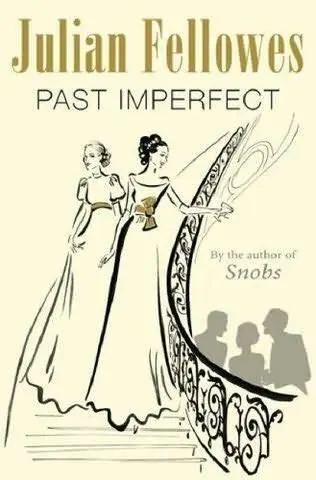
- Название:Past Imperfect
- Автор:
- Жанр:
- Год:неизвестен
- ISBN:нет данных
- Рейтинг книги:3 / 5. Голосов: 1
-
Избранное:Добавить в избранное
- Отзывы:
-
Ваша оценка:
Past Imperfect: краткое содержание, описание и аннотация
Предлагаем к чтению аннотацию, описание, краткое содержание или предисловие (зависит от того, что написал сам автор книги «Past Imperfect»). Если вы не нашли необходимую информацию о книге — напишите в комментариях, мы постараемся отыскать её.
Past Imperfect — читать онлайн бесплатно полную книгу (весь текст) целиком
Ниже представлен текст книги, разбитый по страницам. Система сохранения места последней прочитанной страницы, позволяет с удобством читать онлайн бесплатно книгу «Past Imperfect», без необходимости каждый раз заново искать на чём Вы остановились. Поставьте закладку, и сможете в любой момент перейти на страницу, на которой закончили чтение.
Интервал:
Закладка:
‘So we repelled you from our world and spoiled you for your own.’
‘In a nutshell.’
‘Serena must have got married almost straight away? When you and she were finished.’
‘Not long afterwards.’ He thought about this. ‘I hope she’s happy.’
I sipped my tea in a vague, and vain, attempt to soothe my troubled spirits. ‘Not very, I would guess. But with her kind it’s hard to tell.’
Once more he was watching me, with all the care of an anthropologist making a study of a rare and unpredictable beast. ‘Are you enjoying it at all? This Proustian return? It’s your past as much as mine.’
‘Not much.’
‘What does your…’ He hesitated. ‘I hate the word “partner.” What does she make of it all?’
‘Bridget? I don’t think she’s interested. It’s not her scene.’ This last was true, but the statement before it wasn’t completely. Still, I couldn’t be bothered to get into all that. ‘It doesn’t matter either way,’ I continued. ‘We’ve broken up.’
‘Oh dear. I hope it’s coincidental.’
‘Not completely. But it was coming anyway.’
He nodded, insufficiently curious to pursue it. ‘So, who’s next?’
‘Candida Finch or Joanna Langley. Joanna, probably.’
‘Why?’
‘I always had rather a crush on her.’
He smiled at my revelation. ‘Obviously, something we shared.’
‘Do you remember the famous Ascot appearance?’
‘How could anyone forget it?’
‘Were you with her then?’ I asked breezily. ‘I know you weren’t in her party when you got there. Didn’t you come with the Greshams?’ Another crunch, hard down on that loose and aching tooth.
He frowned, concentrating. ‘Technically. But I don’t think I was “with” either of them at that stage. That all came later.’
I winced. ‘I used to think you and Joanna made rather a good pair.’
He nodded. ‘Because we were both common and on the make? And I wouldn’t get in your way?’
‘Because you were both modern and in touch with reality, which is more than you could say for most of us. The big learning curve we were all facing wasn’t going to be necessary for you two.’
‘That’s generous.’ He acknowledged my courtesy with a polite nod from the neck. ‘But we weren’t as synchronised as we must have looked from the outside. I was very ambitious, remember.’
‘I certainly do.’
My tone was perhaps more revealing than I had intended and it made him flick his eyes up at me. ‘And in those early months of the whole thing I still hadn’t decided what I did, or didn’t, want from all of you. Joanna wanted nothing. Except to escape from her mother and hide. She may not have known it, at least not consciously, not then. But it was in her and of course she found out the truth before very long.’
‘As we all know.’
Damian laughed. ‘As we all know.’
‘And when she did, it was clear you weren’t going in the same direction.’
He nodded in acceptance of this, although I could see, each time I interrupted, that it troubled him not to set his own pace. Actually, I fully understand how annoying this can be, those tiresome, unfunny men at dinners who heckle a speaker, destroying the jokes, but not replacing them with anything amusing of their own. Even so, I wasn’t prepared to listen to Damian’s cleaned-up and sanitised account of these events, without the odd comment. He continued, ‘When you do see her and you’ve finished your snooping, I’m interested to learn what she feels about all that time now. I look forward to hearing when you’ve tracked her down.’
This was the question that was troubling me. Of all the women on the list she was the one with the least information. ‘You haven’t given me a lot to go on. To find her.’
Damian accepted this. ‘Her name doesn’t bring up much on the Internet. The Ascot story, of course, and some other early stuff, but nothing after the divorce.’
‘Divorce?’
‘In 1983.’ I must have looked solemn for a moment. He shook his head, clucking his tongue as he did so. ‘Please don’t let’s pretend it’s a shock. The wonder is that they got fourteen years out of it.’
‘I suppose so. What was the husband called again? I forget.’
‘Kieran de Yong. You’ll find there’s plenty about him.’
‘Kieran de Yong.’ I hadn’t thought of that name in so long, but it still had the power to make me smile.
Ditto Damian. ‘I used to get a glimpse of him at the odd city feste, but he always studiously ignored me. And I haven’t seen anything of Joanna, in print or person, since they split.’ He spoke musingly. ‘What do you think his real name was?’
‘Not Kieran de Yong.’
He laughed. ‘It might be Kieran. But I doubt it was de Yong.’
Now I too was trying to remember those headlines and that curious young man. ‘What was he? A hairdresser? A modelling agent? A dress designer? Something that chimed with the zeitgeist of the day.’
‘I think you’ll be surprised. Most people get less from the future than they expected but some people get more. We’ve got an address for him. They should have given it to you.’
I nodded. ‘If they’ve split up, will he know where to find her?’
‘Of course he will. They’ve got a son.’ He paused. ‘Or I have. Anyway, even if he doesn’t he may provide a lead. In any case I should start with him because we haven’t come up with an alternative.’
I was leaving when I had to ask one last question. ‘Are you really a Catholic?’
He laughed. I suppose the wording was rather funny. ‘I’m not sure what you mean. I was born a Catholic. Didn’t you know?’
I shook my head. ‘So you “lapsed”?’
‘I’m afraid so.’
His answer interested me. ‘Why “afraid”? Would you like to believe?’
Damian glanced at me patronisingly, as if I were a child. ‘Of course I would,’ he said. ‘I’m dying.’
The car was waiting patiently outside, but I knew there was a train every twenty minutes and so, with the immaculate chauffeur’s permission, I allowed myself a little wander among the stalls of the fête below. I thought about Damian’s unexpected words as I looked at these tables of old, unreadable books, at the piles of lamps from all the worst periods, at the cakes and jams, painstakingly made and all soon doubtless to be outlawed by the Health and Safety Stasi, at the dolls without their voice boxes and the jigsaws ‘missing one piece,’ and I, too, felt a kind of comfort and balm in the decency they represented. Naturally, it was very old-fashioned, and I am sure that if a New Labour minister could be offended by the Last Night of the Proms, she would be rendered suicidal by the sight of this comic, uniquely English event, but there was goodness here. These people had worked hard at what I would once have judged as such a little thing, yet their efforts were not wasted on me; in fact, they almost made me cry.
It is hard to be certain from this distance, but I think I’m right in saying that Ascot came after Queen Charlotte’s Ball. I had anyway, as I have said, met Joanna Langley several times before the race meeting, but it was on that day that I suppose we became friends, which even now I like to think we were. It was then that I understood she was a creature of her own era, that she was not, like the rest of us, engaged in some kind of action replay of our parents’ youth.
Ascot as a fashionable event is almost finished now. No doubt sensibly, Her Majesty’s Representative has decided the meeting would better earn its keep as a day for racing enthusiasts and corporate entertaining. To this end the Household Stand (their sole remaining perk, poor dears, in exchange for all that unpaid smiling and standing) and various other, arcane sanctums were eliminated from the wonderful, new grandstand, and the famous Royal Enclosure is no longer workable in the altered layout. Once the Court felt unwelcome, many of its members found other things to do and after this retreat it followed as the night the day that first the smart set and next the social aspirants, those who do not live and breathe horses anyway, would start to drop away. Soon, most of them will abandon it, I would guess forever, since once British toffs are given permission to avoid a social obligation it is hard to make them take it up again. Some will say it was high time and the racing crowd will be glad that horses have once again become the business of the day. But whether or not we would agree with this now, in the 1960s we enjoyed it like billy-o.
Читать дальшеИнтервал:
Закладка:
Похожие книги на «Past Imperfect»
Представляем Вашему вниманию похожие книги на «Past Imperfect» списком для выбора. Мы отобрали схожую по названию и смыслу литературу в надежде предоставить читателям больше вариантов отыскать новые, интересные, ещё непрочитанные произведения.








Обсуждение, отзывы о книге «Past Imperfect» и просто собственные мнения читателей. Оставьте ваши комментарии, напишите, что Вы думаете о произведении, его смысле или главных героях. Укажите что конкретно понравилось, а что нет, и почему Вы так считаете.