Julian Fellowes - Past Imperfect
Здесь есть возможность читать онлайн «Julian Fellowes - Past Imperfect» весь текст электронной книги совершенно бесплатно (целиком полную версию без сокращений). В некоторых случаях можно слушать аудио, скачать через торрент в формате fb2 и присутствует краткое содержание. Жанр: Современная проза, на английском языке. Описание произведения, (предисловие) а так же отзывы посетителей доступны на портале библиотеки ЛибКат.
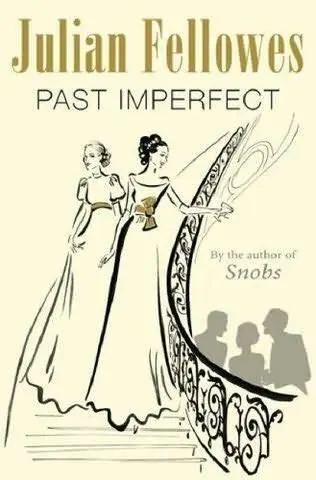
- Название:Past Imperfect
- Автор:
- Жанр:
- Год:неизвестен
- ISBN:нет данных
- Рейтинг книги:3 / 5. Голосов: 1
-
Избранное:Добавить в избранное
- Отзывы:
-
Ваша оценка:
Past Imperfect: краткое содержание, описание и аннотация
Предлагаем к чтению аннотацию, описание, краткое содержание или предисловие (зависит от того, что написал сам автор книги «Past Imperfect»). Если вы не нашли необходимую информацию о книге — напишите в комментариях, мы постараемся отыскать её.
Past Imperfect — читать онлайн бесплатно полную книгу (весь текст) целиком
Ниже представлен текст книги, разбитый по страницам. Система сохранения места последней прочитанной страницы, позволяет с удобством читать онлайн бесплатно книгу «Past Imperfect», без необходимости каждый раз заново искать на чём Вы остановились. Поставьте закладку, и сможете в любой момент перейти на страницу, на которой закончили чтение.
Интервал:
Закладка:
I learned this from a conversation I had with Joanna that same day, when I decided to take up her invitation and make my way to the Langleys’ box. This decision came after a slight altercation with Minna, and in the end she went off alone to meet her father for tea while I retreated to the door in the wall, guarded like all the Enclosure entrances by those charming chaps in their obligatory bowler hats. My disagreement with Minna cannot have been sinister as I had dinner with them all later that evening, but perhaps it contributed to the end of our mini-romance. I have never been very good at people who cannot step out of their own setting even for a moment, whatever that setting might be.
Once through the door, I was suddenly propelled into the middle of the other Ascot and in some ways flung forward into the future, into our present day. Toughs in shiny suits, or with no jacket at all, jostled past with their women gaily, if sometimes surprisingly, adorned as I pushed on towards the covered escalator that would take me up to the floor where the boxes could be found in this different and even uglier stand. Here and there, dotted about in the crowd, there were fellow Enclosure members battling their way to and fro, and there was some joshing, wolf whistles and the like, to mark the difference in our costumes. This rapids-running element of journeying from the Enclosure to the boxes would in fact continue until the end of fashionable Ascot, but it grew a little less friendly as the years went on. Various politicians of every hue saw class warfare as so important a weapon in manipulating public opinion that they could not resist inflaming it. Even today, we are constantly encouraged to believe in a capitalist economy, but to despise and revile those who profit from it. It is an odd philosophical position, to say the least, a dysfunctional theory that has contributed to a largely dysfunctional society, but as I say, in the 1960s it was only just starting. Breaking down class barriers was still seen as a happy thing then, so the jokes at one’s expense were, on the whole, good-natured.
The boxes at Ascot have always occupied a kind of limbo position when it comes to the whole event. There are boxes set aside for major trainers and owners, and of course I do not mean these. Their usefulness is logical and credible, but those people were always present at Ascot as part of the racing fraternity and never because of fashion. They will continue to be at the meetings, long after the beau monde has moved on. But for those who only went to Ascot for the fun and frolic, a day out with some horses in the background, the boxes were always faintly unconvincing. To start with it was not necessary to get an Enclosure badge to rent or visit one, and in the old days, when the authorities exerted some control over whom they admitted to the Enclosure, the boxes could become the haven of the socially not-quites, those divorced actresses and grinning, motor dealers who were snubbed by the Old Guard.
The second problem was that most of them were simply minute. You went through a door in a concrete gallery, to be admitted to an itsy-bitsy entrance hall, with a little kitchenette from a 1950s caravan on one side. This led into the space for dining and generally living it up, which was roughly the size of a hotel bathroom, and beyond was the balcony, where two people could just about stand side by side on two or three steps. All in all, the average box was about as capacious and gracious as a lift in Selfridges. But to the mighty ones who are socially insecure, a much larger group than many people realise, they offered a chance to enjoy the race meeting on their own terms, in a place which might be modest but where they were king, instead of spending the day detecting sneers and slights in the behaviour of the Enclosure crowd that surrounded them. I would guess this was the appeal for Joanna’s father, and that Alfred Langley was prepared to accompany his wife and daughter, but only on the condition that he could have a box to hide in for most of the day.
Mrs Langley darted up to me, her eyes flicking round the empty room behind my back, checking that nobody more important needed attention. ‘Joanna’s on the balcony,’ she said, ‘with some friends.’ Then, nervous that she had somehow given offence with this blameless statement, she continued, ‘She told us you were coming.’
‘I’m afraid Minna had to meet her father in White’s, but she sends her love.’
Mrs Langley nodded. ‘Sir Timothy Bunting,’ she muttered, as if I were unaware of the name of my host.
‘Yes,’ I said.
She nodded again. There was something shifty about her that her smooth hair and tailored suit and really rather nice diamond brooch could not mask. She was jumpy, like Peter Lorre waiting to have his collar felt in a black-and-white thriller about the mob. As I got to know her better I found this sense of frightened uncertainty never left her. She couldn’t relax, which I suspect was both part of what turned her daughter against her, but at the same time was the root of her power.
Joanna was leaning against the railing when I went out, attended by Lord George Tremayne and one or two other swains, all a little, but not very, drunk, and all holding empty or near-empty champagne flutes, that new glass that had only recently started to replace the gentle, bosom-shaped cup favoured in the previous decade. But then the Langleys were nothing if not up to the minute. That said, it was a lovely day and the sight of Joanna smiling up at me, her face framed with her own golden hair and the white brim of her lace hat, with the wide sweep of the lush green racetrack behind her, was very cheering.
‘I came,’ I said.
‘So you did.’ She walked up a step or two and kissed my cheek, then turned back to her companions. ‘Push off, will you?’ They protested, but she was quite definite. ‘Go inside. Get some more to drink and bring me one in a minute.’ She touched my sleeve. ‘I’ve got something to tell him and it’s private.’ Naturally, none of this would have been sayable if she had lived even remotely within the rules of the crowd she was running with, but not for the last time I appreciated that the advantage of not being held captive by the need to observe correct form is that you can often get things done far more efficiently. In other words, they left.
I have already written about her beauty and it is probably true that I place physical beauty too high on my list of desirable attributes, but, in this case, it really was spectacular. No matter how closely one looked, Joanna’s face was as near perfect as any I have ever seen not made of plastic, drawn on a page or enshrined on the silver screen. Smooth, evenly coloured skin, without a trace of a blemish; a mouth shaped with the soft curves of a petal, beneath widely placed deep-blue, almost purple, eyes, fringed with thick, long lashes; a statue’s nose; and masses of gleaming born-blonde curls framing her cheeks and cascading to her shoulders. She was, as the song says, lovely to look at. ‘What are you looking at?’ Her voice, with its faint tinge of Essex, caught at my reveries, repeated the phrase and returned me to the present.
‘At you,’ I said.
She smiled. ‘That’s nice.’ There was, in addition to everything else, something particularly charming in the contrast between her ethereal appearance and her absolute normality, her complete next-doorness which is hard to capture in words but was probably the core of the charm that delivered Charles II to Nell Gwynne, or enabled so many of the cockney Gaiety Girls to marry into the peerage in the 1890s. Her cheeriness was in some way the opposite of vanity, yet not self-consciously modest either. Just perfectly natural.
‘What is this private thing you have to say to me? I couldn’t be more fascinated.’
Читать дальшеИнтервал:
Закладка:
Похожие книги на «Past Imperfect»
Представляем Вашему вниманию похожие книги на «Past Imperfect» списком для выбора. Мы отобрали схожую по названию и смыслу литературу в надежде предоставить читателям больше вариантов отыскать новые, интересные, ещё непрочитанные произведения.








Обсуждение, отзывы о книге «Past Imperfect» и просто собственные мнения читателей. Оставьте ваши комментарии, напишите, что Вы думаете о произведении, его смысле или главных героях. Укажите что конкретно понравилось, а что нет, и почему Вы так считаете.