Julian Fellowes - Past Imperfect
Здесь есть возможность читать онлайн «Julian Fellowes - Past Imperfect» весь текст электронной книги совершенно бесплатно (целиком полную версию без сокращений). В некоторых случаях можно слушать аудио, скачать через торрент в формате fb2 и присутствует краткое содержание. Жанр: Современная проза, на английском языке. Описание произведения, (предисловие) а так же отзывы посетителей доступны на портале библиотеки ЛибКат.
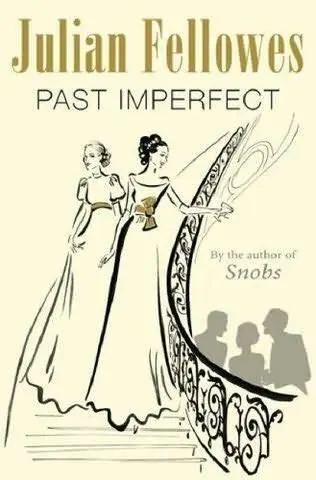
- Название:Past Imperfect
- Автор:
- Жанр:
- Год:неизвестен
- ISBN:нет данных
- Рейтинг книги:3 / 5. Голосов: 1
-
Избранное:Добавить в избранное
- Отзывы:
-
Ваша оценка:
Past Imperfect: краткое содержание, описание и аннотация
Предлагаем к чтению аннотацию, описание, краткое содержание или предисловие (зависит от того, что написал сам автор книги «Past Imperfect»). Если вы не нашли необходимую информацию о книге — напишите в комментариях, мы постараемся отыскать её.
Past Imperfect — читать онлайн бесплатно полную книгу (весь текст) целиком
Ниже представлен текст книги, разбитый по страницам. Система сохранения места последней прочитанной страницы, позволяет с удобством читать онлайн бесплатно книгу «Past Imperfect», без необходимости каждый раз заново искать на чём Вы остановились. Поставьте закладку, и сможете в любой момент перейти на страницу, на которой закончили чтение.
Интервал:
Закладка:
For some reason, that year I had gone with the family of a girl called Minna Bunting. Her father held some position at Buckingham Palace which I cannot now recall, Keeper of the Privy Purse maybe, or at any rate one of those ancient-sounding titles that brought, among other privileges, a place in the Ascot car park reserved for the use of members of the Royal Household. This was, and is, located across the road from the main entrance to the course and has always been considered very smart, despite consisting of a large but unremarkable ashphalt yard, overlooked by the unfragrant main stables and boasting a single loo more properly reserved for the grooms. A sort of disintegrating Dutch barn provided a bit of shelter on one side and a couple of abandoned pony stalls offered some shade on the other. Otherwise it was lines of cars. But the whole arrangement was supervised every year by the nicest group of men you could hope to encounter, which always gave the place rather a lift, and I do know it was considered quite a feather in my cap to be having my picnic lunch there, even if there were moments when the aroma made swallowing hard.
I think Minna and I were fairly keen on each other, in a moderate way, for a brief while back then. I know we went out to dinner a few times and I could not now tell you why this ended. I am often struck by how hard it is to unravel your own motives when you look back on certain incidents or relationships in the dim and distant past. Why this girl failed but that one broke your heart. Why this man made you smile and that one made your spirits sink. They all seem to have been quite nice, friends and enemies and lovers alike, young and pleasant and, to be honest, all much of a muchness from the vantage point of hindsight. What was it about them as individuals that intrigued or bored me forty years ago?
We had finished our lunch and it was time to make our way over the road and on to the course, so we strolled together down the high, laurel-lined path to the entrance. The police were managing the traffic, as they did even then in those comparatively traffic-free days and we were obliged to pause. ‘What on earth is going on?’ said Minna.
She was right. On the other side of the road, by the main entrance, the gathering of what later came to be called Paparazzi, was going mad. As a rule there were far fewer of them then, not much more than a handful from the fashion magazines and the odd red top, but the public’s taste for what celebrities were wearing was easily assuaged in 1968. On this day, however, you would have thought there was an item of international news being played out before us all. We crossed to the other pavement, passed through the gates and walked into the little courtyard where the disorganised could buy their badges on the day itself, and moved on to the gate into the Royal Enclosure. Something happening at the barrier was what was apparently fascinating the photographers most. Some were resorting to that trick, familiar now but novel in those days, of just holding their cameras above their heads and snapping away blindly, on the off chance that something worth printing might come out.
Armed with our badged lapels and a sense of entitlement, we pushed through the crowd and there was the cause of the riot. Joanna Langley, in an exquisite trouser suit of white lace, a pale hat trimmed with more lace and white flowers setting off her gleaming curls, white gloves on her hands, white bag by her side, was attempting to reason with the bluff ex-soldier in a bowler who sat guard. ‘Sorry, Miss,’ he said, without malice but without hesitation either, ‘no trousers is the rule. And I can’t change it. Even if I wanted to. Skirts only. That’s what it says.’
‘But this is almost a skirt,’ replied Joanna.
‘ “Almost” isn’t good enough, I’m afraid, Miss. Now if you’d like to stand aside.’ He beckoned to us and we started forward.
‘Hello,’ I smiled at Joanna, as we drew near. I may not have known her well by that stage, but all our previous encounters had been friendly ones. ‘You seem to be making news, today.’
She laughed. ‘It’s my mother’s idea. She’s put me up to it. I thought she was wrong, and they were bound to let me in. But it seems not.’
‘Come on.’ Minna pulled at my arm, anxious to dissociate herself from the media throng. As with all these people, then or now, this is not an affectation. They really hate it.
But I was too intrigued. I couldn’t understand what Joanna was saying. If her mother was the one who thought she would be refused entry, how could she have put her up to it? ‘Why did your mother want you to be stopped? Is she here?’
Joanna nodded towards a small group beyond the railings. I recognised the anxious, little woman from Queen Charlotte’s Ball. She was wearing a tailored, fuchsia suit with a socking great brooch on her bosom. She seemed to be quivering with excitement watching her daughter, nudging her companions, sucking at her lower lip, but oddly she made no attempt to come nearer. ‘What’s she waiting for?’ I asked.
Joanna sighed. ‘What they’re all waiting for. This.’ Before my astonished gaze, she reached up under the tunic of her trouser suit and unfastened the waistband of her trousers. With a graceful movement she extracted first one long, shapely, stockinged leg and then the other, until she was standing there in a white micro-miniskirt, with the trousers making a pool of lace on the ground. Predictably, the frenzy of the photographers knew no bounds. They could have been witnessing the last appearance of Marilyn Monroe, the discovery of Hitler’s child, the Second Coming, so excited were they by this coup de thèâtre. ‘I suppose I can come in now,’ she said softly to the astonished, bowlerhatted gateman, who could not pretend to be uninterested.
‘I suppose you can,’ he said and nodded her through.
I was within earshot when Joanna was reunited with her family. ‘Well, that was very silly,’ she said as she rejoined them.
‘Just wait. It’ll be all over the evening papers tonight, never mind tomorrow morning.’ Her mother spoke in short, sharp, chirrupy bursts, like a hungry bird in a hedgerow.
‘I think it was a bloody embarrassment,’ said a large man in a thick northern accent.
‘That’s because you don’t know anything.’ Mrs Langley always treated the man I came to know as her husband and Joanna’s father with an odd and quite unusual mixture of deference and contempt. She needed to keep him in his place, but she also needed to keep him.
‘I quite agree. Now, come and buy me some champagne.’ Joanna slipped her arm through her father’s. She always loved him best and she made no secret of it, but it somehow never empowered either of them to resist her mother’s demands. It was an odd, uncomfortable set-up.
We watched them go. ‘Do you want a drink?’ I wondered.
Minna shook her head. ‘Not yet. Not with them.’
It may have been because she heard these words, even if I hope not, but Joanna turned back once more and called, ‘Come up to the box for some tea. Number five three one. Come about four and watch the next race.’ I waved by way of answer and they were gone.
‘We’re meeting my father in White’s at four,’ said Minna.
‘I’m sure we can do both if we want to.’ We drifted up the steps into that long, faintly lavatorial tunnel at the base of the grandstand, built at such an unfortunate part of the Sixties and yet much missed now that it has been swept away despite its replacement being infinitely superior, and we set off on our way through to the back of the building and the Enclosure lawns. It was at precisely that moment I saw Damian loitering in the arch, looking at his race card, with his left arm casually draped round the waist of the girl standing next to him. He was dressed correctly, for my crowd, in a black morning coat and if his costume stood out it was only because it looked as if it had been made for him, not, as with most of us, like a misfit dragged from an upstairs wardrobe, from clothes discarded by forgotten uncles, which our mothers told us, without irony, would be perfectly all right once the sleeves were let down. I was amused to see that his silk hat was old and black, and wondered for a moment where he’d found it. In the great days of racing before the war, there were all sorts of rules about black and grey coats, and black and grey hats, being worn before the Derby or after the Oaks, or some such thing, but by the time I had begun to put in an appearance the matter had been simplified: If you were a toff you wore a black coat and a black hat, and if you were not you wore grey. The only real qualification to this that happened in my time was that after the early Eighties, again if you were posh or trying to be, you didn’t take a hat to a wedding at all.
Читать дальшеИнтервал:
Закладка:
Похожие книги на «Past Imperfect»
Представляем Вашему вниманию похожие книги на «Past Imperfect» списком для выбора. Мы отобрали схожую по названию и смыслу литературу в надежде предоставить читателям больше вариантов отыскать новые, интересные, ещё непрочитанные произведения.







Обсуждение, отзывы о книге «Past Imperfect» и просто собственные мнения читателей. Оставьте ваши комментарии, напишите, что Вы думаете о произведении, его смысле или главных героях. Укажите что конкретно понравилось, а что нет, и почему Вы так считаете.