Julian Fellowes - Past Imperfect
Здесь есть возможность читать онлайн «Julian Fellowes - Past Imperfect» весь текст электронной книги совершенно бесплатно (целиком полную версию без сокращений). В некоторых случаях можно слушать аудио, скачать через торрент в формате fb2 и присутствует краткое содержание. Жанр: Современная проза, на английском языке. Описание произведения, (предисловие) а так же отзывы посетителей доступны на портале библиотеки ЛибКат.
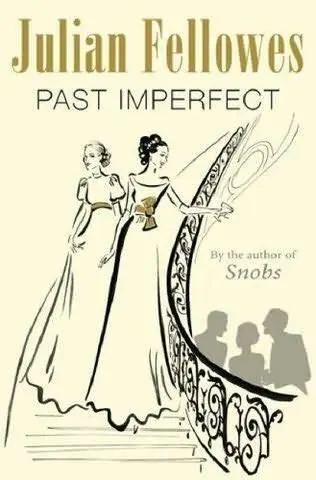
- Название:Past Imperfect
- Автор:
- Жанр:
- Год:неизвестен
- ISBN:нет данных
- Рейтинг книги:3 / 5. Голосов: 1
-
Избранное:Добавить в избранное
- Отзывы:
-
Ваша оценка:
Past Imperfect: краткое содержание, описание и аннотация
Предлагаем к чтению аннотацию, описание, краткое содержание или предисловие (зависит от того, что написал сам автор книги «Past Imperfect»). Если вы не нашли необходимую информацию о книге — напишите в комментариях, мы постараемся отыскать её.
Past Imperfect — читать онлайн бесплатно полную книгу (весь текст) целиком
Ниже представлен текст книги, разбитый по страницам. Система сохранения места последней прочитанной страницы, позволяет с удобством читать онлайн бесплатно книгу «Past Imperfect», без необходимости каждый раз заново искать на чём Вы остановились. Поставьте закладку, и сможете в любой момент перейти на страницу, на которой закончили чтение.
Интервал:
Закладка:
Was this news? I can’t pretend I was surprised. ‘Then perhaps you should break out together. You seem rather well suited.’
‘Don’t talk like that.’
‘Like what?’
‘All toffee-nosed and self-important. You sound like a berk.’ Naturally, this silenced me for the next few minutes, while she continued, ‘Anyway, Damian and I, we’re not well-suited, not deep down. I thought we might be for a bit, but we’re not.’
‘You both seem to me to be very up to the minute.’ For some reason I couldn’t stop sounding like the stupid-berk-plonker she’d described. To quote my mother against myself, I was just jealous.
But the comment made her more thoughtful than indignant. ‘He does want to be part of today’s world,’ she admitted, ‘like I do. But he wants to dominate it. He wants to bully it, to take over, to push people like you around in it and be the big, bad cheese.’
‘And you don’t? Not even as a great lady, dispensing warmth and wisdom from the house at the end of the drive?’
Again, she shook her head. ‘You keep going on about that, but it’s not me. And I don’t want to be on television either. Nor married to some big-business boss with a modern flat in Mayfair and a villa in the South of France.’ The world she described so accurately in that single phrase was, of course, one she knew well and presumably also despised, along with County Society, the peerage and Damian’s imaginative vision of himself as a City whizz-kid, which was impressively ahead of its time.
‘There must be something that you do want,’ I said.
Joanna laughed again, mirthlessly. ‘Nothing I’ll find pursuing this game.’ She thought for a while. ‘I don’t mean to be rude’ – always a precursor to rudeness of the most offensive sort – ‘but you lot are all completely divorced from what’s going on around you. Damian’s right about that. You’re just not part of the Sixties at all. The fashions. The music…’ She paused, shaking her head slowly, dizzy with wonder at our irrelevance.
I felt a little indignant. ‘We play the music.’
She sighed. ‘Yes, you play the music and you dance to the Beatles and the Rolling Stones, but you’re still in evening dress and you’re still in some ballroom or marquee, with hot breakfast being served from two o’clock onwards by a line of footmen. That’s not what they’re singing about. That’s not what’s happening.’
‘I don’t suppose it is.’
‘The world’s changing. And I want to change with it.’
‘Darling!’ I knew Damian’s voice well enough not to need to turn round.
‘Talk of the devil,’ said Joanna.
Which I completed: ‘And there he is.’
Damian came lazily down the steps towards us and enfolded her in a hug when he drew level. ‘Come and cheer us up. You’ve spent long enough with droopy-drawers. He’ll start to think he’s in with a chance and then there’ll be no controlling him.’ He winked at me, as if inviting me to share the joke, which had, of course, as we both knew been intended as an insult. Initially, at the start of the Season he had felt the need to defer to me a little, just to make sure that I was still on side, but the need for that was long gone. He was the master now.
‘All right,’ she said, ‘I’ll come. But only if you give me a certainty for the next race.’ She smiled and started back up the steps towards the door of the box where her fan club hovered.
Damian smiled back at her, his arm still round her waist. ‘There’s only one certainty for you. And that is me.’
And with a shared laugh they were inside and lost to view.
I have often thought since of my conversation with Joanna on that bright summer’s day in our privileged seats above the crowded racetrack. It was perhaps in some ways my closest encounter with the elephant trap of Sixties fantasy, that would swallow so many of my contemporaries in the following decade. Things were changing, it is true. The post-war depression had been shaken off and the economy was booming, and many old values were being rejected. But they would be back, most of them. Not perhaps white tie or taking houses in Frinton for the summer, but certainly those that governed ambition and rapacity and greed and the lust for power. There would be fifteen years or so of chaos, then most of the old rules would be resurrected. Until now, when there is a richer elite buying houses in Belgravia than at any time since the Edwardians. But these were not the changes that Joanna and her ilk expected.
They thought, they knew, a world was coming where money would be meaningless, where nationalism and wars and religion would vanish, where class and rank and every worthless distinction between people would drift away into the ether like untrapped steam, and love would be all. It was a belief, a philosophy, that coloured my generation so strongly that many still cannot find the strength to shake it off. It is easy to laugh at these infantile notions, mouthed with increasing desperation by ageing ministers and sagging singers as their pension age approaches. Indeed, I do laugh at them since these fools have apparently lived a whole life and learned nothing. But, even so, I don’t mind saying I was touched that day, listening to this lovely, well-intentioned, clever, nice, young woman, sitting in the sun and putting all her bets on Optimism.
Predictably, every paper ran a picture of Joanna Langley removing her white lace trousers to gain entry to Ascot the following day and I seem to remember that either the Mail or the Express printed a whole series of them, like a literal strip cartoon. And we all joked about it and most of us took her even less seriously than we had before and Mrs Langley’s aspirations were crushed still further underfoot. But of course it was soon immaterial. I never did find out whether Joanna tried to talk to her mother about her doubts. If so, it did not have much effect, as the invitation to her coming-out ball in the country, from ‘Mrs Alfred Langley’ arrived not long afterwards. It was printed on white card so stiff it might have been cut from seasoned oak, with lettering sufficiently embossed to stub a toe. I would guess most people accepted. With the ruthless reasoning of the English, we all expected that a lot of money would be spent on the evening’s pleasures and so it would be worth attending, whatever we thought of the daughter. I personally, of course, liked her and I freely confess I was much looking forward to it, and seen from now, when such entertainments are rarer and, to my old and jaded palate, seem pretty indistinguishable, I can only imagine what delights Mrs Langley had ordered for our delectation. I am certain it would have been a night to remember with treats galore.
However, as things turned out we opened the newspaper on a sunny day in early July, to read the banner headline ‘LOVE DASH HEIRESS!’ and the article below explained that Joanna, only child of ‘Travel King, Multi-Millionaire, Alfred Langley,’ had eloped with her dress designer, Kieran de Yong. The couple had not yet married, an added, salacious delight for the journalists of the day, which would hardly merit a mention these days, but they were ‘believed to be sharing Mr de Yong’s flat in Mayfair.’ After Joanna’s comment at the races I could not prevent a slightly wistful wince at the final detail.
Two days later another card arrived from Mrs Langley. On it was printed the sober but straightforward information: ‘The dance arranged for Miss Joanna Langley will not now take place.’
TEN
To my surprise, and contrary to my jokey and snobbish expectations, Kieran de Yong turned out to have been a busy boy since last we met. The printout filled me in on what he had been up to, during the intervening years and it was almost alarming. He had been twenty-eight when he ran off with ‘Joanna, daughter of Alfred Langley, of Badgers’ Wood, Godalming in Surrey,’ making him nine or ten years older than most of us, and the following year he married her. After which, presumably putting some Langley gold to work, he’d built up a chain of dress shops by the late 1970s called Clean Cut, which I thought quite clever, and there were various photographs of him at ‘red carpet’ events during this period, clutching Joanna and wearing clothes that were terrible, even by the standards of that terrible time. What kind of blindness struck my generation? What allowed people to leave the safety of their homes wearing white, leather jackets with cowboy studs and fringe, or pale-blue, glistening suits, with black shirts and silver kipper ties? Or Russian peasant shirts or butchered army uniforms? I imagine they must have thought they looked like Elvis or Marlon Brando, when in fact they resembled a children’s conjuror on speed.
Читать дальшеИнтервал:
Закладка:
Похожие книги на «Past Imperfect»
Представляем Вашему вниманию похожие книги на «Past Imperfect» списком для выбора. Мы отобрали схожую по названию и смыслу литературу в надежде предоставить читателям больше вариантов отыскать новые, интересные, ещё непрочитанные произведения.








Обсуждение, отзывы о книге «Past Imperfect» и просто собственные мнения читателей. Оставьте ваши комментарии, напишите, что Вы думаете о произведении, его смысле или главных героях. Укажите что конкретно понравилось, а что нет, и почему Вы так считаете.