Julian Fellowes - Past Imperfect
Здесь есть возможность читать онлайн «Julian Fellowes - Past Imperfect» весь текст электронной книги совершенно бесплатно (целиком полную версию без сокращений). В некоторых случаях можно слушать аудио, скачать через торрент в формате fb2 и присутствует краткое содержание. Жанр: Современная проза, на английском языке. Описание произведения, (предисловие) а так же отзывы посетителей доступны на портале библиотеки ЛибКат.
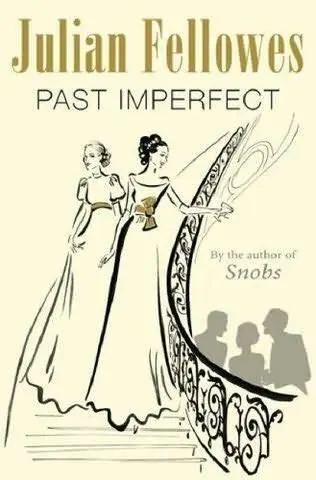
- Название:Past Imperfect
- Автор:
- Жанр:
- Год:неизвестен
- ISBN:нет данных
- Рейтинг книги:3 / 5. Голосов: 1
-
Избранное:Добавить в избранное
- Отзывы:
-
Ваша оценка:
Past Imperfect: краткое содержание, описание и аннотация
Предлагаем к чтению аннотацию, описание, краткое содержание или предисловие (зависит от того, что написал сам автор книги «Past Imperfect»). Если вы не нашли необходимую информацию о книге — напишите в комментариях, мы постараемся отыскать её.
Past Imperfect — читать онлайн бесплатно полную книгу (весь текст) целиком
Ниже представлен текст книги, разбитый по страницам. Система сохранения места последней прочитанной страницы, позволяет с удобством читать онлайн бесплатно книгу «Past Imperfect», без необходимости каждый раз заново искать на чём Вы остановились. Поставьте закладку, и сможете в любой момент перейти на страницу, на которой закончили чтение.
Интервал:
Закладка:
Lady Claremont was less altered. It seems odd to think of it, but I must have known her first when some of the bloom of youth was still upon her. Serena was the eldest child and her mother had married young so she cannot have been much more than forty-two or -three, when we met. It is always odd for the young grown old to realise how youthful the dominating creatures of their early years must in many cases have been. In those days her haughty, witty confidence was further empowered by her cold beauty and as a result, to me she had seemed formidable. It is true that her looks had largely, though not entirely, disappeared. But I could see, even from a distance, that she had replaced whatever she had lost with other qualities, some more sterling than the earlier version. She glanced our way and for a moment, forgetting everything that had kept me huddled out of her eyeline, I was tempted to signal my presence in some way, but the thought of her ignoring my wave and the fun it would give Tarquin when she did kept me still. Then came the broadcast announcement that told us the concert was about to begin. She looked at her husband, muttering some suggestion, I would assume about returning to their seats and a moment later, with a final, general acknowledgement, the group from the house climbed the stone steps towards the top terrace.
The concert was cheerful rather than profound, a Hungry Hundreds medley of Puccini, Rossini and Verdi, with a bit of Chopin thrown in to make you cry. The lead-up to the interval was the Drinking Song from Traviata, which was adequately sung by quite a good tenor from some northern company, and a fat soprano over from Italy, who was supposed to be much better than him but wasn’t. It was an appropriate choice as the throats of the watching hoards were dry as dust by this time, and you could hear the champagne corks starting to pop as the couple trilled the final soaring note. Tarquin, naturally, had provided some rare sustenance, Cristal, or the like, and was lecturing us on how to savour it, when we were interrupted by a man in the neolivery of the modern butler, striped trousers and a short black jacket. There was no mistaking Tarquin as our leader and he went over to him, murmuring in his ear. Tarquin’s surprise deepened to astonishment as he pointed me out. ‘That’s him,’ he said, and the man scuttled over towards me.
‘Her Ladyship wonders if you and your party would like to join the family after the concert, Sir, to watch the fireworks from the terrace.’
I cannot deny I felt a warm sense of self-justification at his words, as anyone must when they find what they had supposed was a one-way relationship, is in fact reciprocal. I had been forgiven, or at any rate I had not been forgotten. I turned to the others. ‘Lady Claremont has asked us up to the house for the fireworks.’ Silence greeted this extraordinary development. ‘After the music’s finished.’
Jennifer was the first to gather her wits. ‘How tremendously kind. We should love it. Please thank her.’
The man nodded with a slight inclination of his head, rather than a bow, and pointed towards the steps. ‘If you go up to the top there – ’ He stopped, looking back at me. ‘Of course, you’ll know the way, Sir.’
‘Yes.’
‘They’ll be in the Tapestry Drawing Room.’
‘Thank you.’ He hurried back to his normal duties. There was silence as the other three stared at me.
‘You’ll know the way, Sir?’ For once, Tarquin’s determination never to be impressed had deserted him.
‘I used to come here when I was younger.’
Tarquin was silent. I knew him well enough by now to understand that he was considering the facts with a view to reimposing his mastery of the situation. So far, the solution had eluded him.
‘Why didn’t you say?’ Jennifer’s enquiry was, under the circumstances, a reasonable one.
‘I didn’t know where we were coming until we got here. We asked but Tarquin wouldn’t tell us.’ Jennifer threw a swift, admonitory glance at her pensive spouse. ‘And I wasn’t sure they’d be interested in seeing me again after such a long time. It’s true that I used to stay here at one period of my misspent youth, but it was forty years ago.’
‘Then she must have very sharp eyes, this “Lady Claremont” of yours.’ Bridget spoke in derisive, inverted commas, as she always did when dealing with any part of my past that threatened her. I knew already, without being told, that of all the aspects of this uncomfortable weekend, the present episode would prove the most uncomfortable for her. But before we could discuss it further, the orchestra struck up and we were being sprayed with a deeply accessible version of ‘Quando M’en Vo’ from La Bohème, which may be played for laughs in context but is generally more lachrymose in concert and soon had all those MFHs and lifetime presidents of the village flower show committee reaching for their handkerchiefs.
I knew that in fact the Tapestry Drawing Room opened directly on to the gardens above us, but some trace of late-teen diffidence told me that to push in through the French windows with a crowd of strangers was overplaying my hand, so I devised the plan that at the end of the performance we would deposit our debris in the car, to obviate the need to collect it later, and make our way to the front of the house. The programme of events stated clearly that there was a fifty-minute break between concert and fireworks to allow the night to get properly dark, so I knew we had time. In that way we could come into the house via the front door, like normal people, and not be suspected of springing an ambush on our hosts.
I was glad of the decision when we got there, as quite a crowd was arriving and it was clear that the Claremonts had cunningly devised this plan to placate those locals who felt they had a right to be acknowledged by the family without the bore of giving them all dinner. The hall at Gresham was vast and high, stone-floored and with a screen of columns completing the square, behind which a graceful cantilevered staircase rose up to the next floor, its steps so shallow that a woman descending in a long skirt, which for our generation meant evening dress, seemed to float down as if her feet barely skimmed the steps beneath. It was a more awkward progress for men, who had to adjust quickly to the fact that each step taken only brought them about an inch nearer their destination, but for women the effect was like gliding, flying, and quite magical to watch, as I remembered so very well.
The portraits displayed here had been selected by Lady Claremont in a massive re-hang when she and her husband took over the house in 1967, just before my first visit, and which I could see at once had not been altered. They were chosen, as she freely confessed, unashamedly and entirely for their looks, and despite the anguished protests of Lord Claremonts’ surviving aunts, those distinguished Victorian statesmen in undertakers’ frock coats, those fearsome Georgian soldiers, all red faces and stubborn chins, those wily Tudor statesmen with their shifty eyes and avaricious mouths and generally the uglier members of the family, had been banished to anterooms and passages and bedrooms, except the ones by really famous painters, who had wound up either in the library or hung in fearsome double tiers against the crimson, damask walls of the great dining room. Both these chambers, Lady Claremont had explained to me at the time, were masculine rooms and so needed to be impressive but not pretty. Here, in the hall, charming children from every period were interlarded with handsome, nervous, young men in their Eton leaving portraits, trembling with anticipation at the welcoming life ahead, and lovely Gresham girls, painted on their betrothal to other lordly magnates or as part of some series of Court beauties for King Charles II or the Prince Regent, smiled down on their worshippers beneath. Their shining, gilded frames were set off by the apricot walls and the intricate plasterwork, picked out in varying shades of grey and white, while in the centre of the ceiling hung a huge chandelier, like a shower of glistening raindrops, frozen in their fall by a glance from the Snow Queen.
Читать дальшеИнтервал:
Закладка:
Похожие книги на «Past Imperfect»
Представляем Вашему вниманию похожие книги на «Past Imperfect» списком для выбора. Мы отобрали схожую по названию и смыслу литературу в надежде предоставить читателям больше вариантов отыскать новые, интересные, ещё непрочитанные произведения.












Обсуждение, отзывы о книге «Past Imperfect» и просто собственные мнения читателей. Оставьте ваши комментарии, напишите, что Вы думаете о произведении, его смысле или главных героях. Укажите что конкретно понравилось, а что нет, и почему Вы так считаете.