Julian Fellowes - Past Imperfect
Здесь есть возможность читать онлайн «Julian Fellowes - Past Imperfect» весь текст электронной книги совершенно бесплатно (целиком полную версию без сокращений). В некоторых случаях можно слушать аудио, скачать через торрент в формате fb2 и присутствует краткое содержание. Жанр: Современная проза, на английском языке. Описание произведения, (предисловие) а так же отзывы посетителей доступны на портале библиотеки ЛибКат.
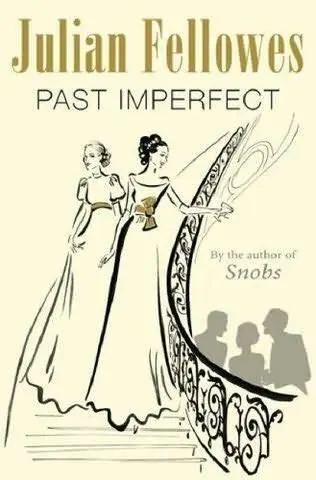
- Название:Past Imperfect
- Автор:
- Жанр:
- Год:неизвестен
- ISBN:нет данных
- Рейтинг книги:3 / 5. Голосов: 1
-
Избранное:Добавить в избранное
- Отзывы:
-
Ваша оценка:
Past Imperfect: краткое содержание, описание и аннотация
Предлагаем к чтению аннотацию, описание, краткое содержание или предисловие (зависит от того, что написал сам автор книги «Past Imperfect»). Если вы не нашли необходимую информацию о книге — напишите в комментариях, мы постараемся отыскать её.
Past Imperfect — читать онлайн бесплатно полную книгу (весь текст) целиком
Ниже представлен текст книги, разбитый по страницам. Система сохранения места последней прочитанной страницы, позволяет с удобством читать онлайн бесплатно книгу «Past Imperfect», без необходимости каждый раз заново искать на чём Вы остановились. Поставьте закладку, и сможете в любой момент перейти на страницу, на которой закончили чтение.
Интервал:
Закладка:
Tarquin raised his eyebrows, hesitating for the maximum effect. ‘You’ll find out.’
My sigh must have been audible.
EIGHT
I don’t quite know why, but it was not until we were nearly there that I began to suspect our destination. We turned off the main road at a point I did not at first recognise. When I’d known it the road had not been a dual carriageway and there was no estate of modern housing, with its sickly yellowish street lighting, near the corner. But then, as we came into the village a bell did start to ring. The peripheries might have altered but the main street was much as it had always been, unspoiled and, if anything, improved. The pub was certainly much smarter, catering no doubt for the yuppie weekend trade and not just for the thirsty farm labourers who had crushed into the bar forty years before. We passed it by and, once out of the village, it was no more than five or ten minutes before I could see the familiar little Palladian lodge, and in a loosely stretched-out line of cars we turned through the gates into the drive and enjoyed the comfortable crunch of private gravel beneath the wheels.
But I said nothing. Not even to Bridget, who did not know the place or much about my life when I was a visitor here. My reason was simple: I could not see any profit in reviving the association, given the circumstances of my last meeting, not with Serena but with her parents. I could, after all, be fairly sure they had not forgotten that dinner, since few lives boast many such evenings. Thank Christ. And there was another, weaker motive for my silence, which was that they might have forgotten both the episode and me. My worst nightmare would have been for Tarquin to talk up my acquaintance with the family to gain some local mileage from it among the assembled throng, which he was more than capable of doing, and then for me not to be recognised by any of them. This may seem like vanity. It was vanity. But it was also a reluctance to let daylight in on my dreams. Even if my career with the Greshams had ended in disaster, I liked to think that I had been a feature of their lives in that distant era, when they had been so vital a feature in mine. And while logic told me this was unlikely, still I’d preserved the fantasy thus far and I wished to get back into the car at the end of the evening with my chimera intact. Anyway, they would not be there. I was quite sure of that when I thought more about it. They would be in London or on holiday or at any rate somewhere else when the locals and the lesser County invaded their demesne. ‘Oh, look,’ said Jennifer and there was the house, perched high on its terraces, lording it over the valley beneath, as we made our way down the winding drive. It was lit, rather gracefully, by spotlights concealed in the surrounding shrubs, an innovation since my time, and the shining beams seemed to give the cool grey stone façade a kind of ethereal beauty in the dusk.
‘What a fabulous place,’ said Bridget. ‘What’s it called?’
‘Gresham Abbey,’ said Tarquin, as if the words belonged to him and he was reluctant to allow them free range.
‘Is it National Trust?’
‘No. Still private. Lord and Lady Claremont.’
‘Are they nice?’
He hesitated. ‘Nice enough.’ Which meant, of course, that he did not know them. ‘They’re quite old. They’re not really out and about much.’ As he said it, I found it strange to think of Lady Claremont as ‘quite old.’ She had been a frightening, powerful, if fundamentally benevolent figure in my youth, elegant, crisp, always competent, always charming, but with a rod of tungsten in her spine. She had not, of course, paid much attention to me as I hung about on the edge of her parties, obediently sitting where I was told, usually in the most junior spot at the table, obligingly talking to my neighbours during dinner, walking with their old relations in the gardens, buying things I did not want at the village fête, reading in the library.
I remember her coming in on me once, as I sat squinting at the page before me in the gathering gloom. She laughed and I looked up as she turned on all the lamps in the room with a single switch. ‘You mustn’t be too scared to put the lights on,’ she said with a brisk smile and went on about her business, and I felt so humiliated that my back started to prickle with embarrassed sweat. Because I suppose I had been too scared to turn them on, or rather I was just hoping that someone else would come to turn them on for me and I wouldn’t have to take responsibility for it. But as I say, she was never unkind. Nor was she cross to see me there again and again. Just uninterested.
As we approached the house, we were greeted by the customary cheery gardeners and groundsmen, each equipped with their torches, who waved and signalled and called instructions to each other, until we had been safely routed off the drive and into a large field, where row upon row of cars gave us an idea of the scale of the gathering. ‘Will you look at this,’ said Bridget, ‘there can’t be much else happening in Yorkshire tonight.’
‘I think you’ll find the music is of a very high standard,’ said Tarquin in the voice of an ageing geography mistress, which momentarily stifled our good humour. We parked and started to lug the various bits of picnic apparatus out of the car. Tarquin had already taken responsibility for a frightful plastic ‘wine carrier’ and was legging it towards the gate that would lead us back to the festivities. By parking in the field, we had skirted the house, so the gate in the pretty, iron, sheep fencing led directly into one side of the gardens that stretched away from the back of the abbey in a falling series of terraces, leading down to the distant lake in the valley below. Clearly, taking in the crowd that was already here, Tarquin was determined to find a good spot and he was soon out of sight, leaving us to manage the rest. Bridget followed him with a collection of rugs and cushions, obliging Jennifer and me to carry the long, white cold box between us. We staggered along, nearly tripping on the tufts of cow grass, until we reached the gate.
‘Can we stop for a moment?’ said Jennifer. Actually, it was quite heavy and the rope handles were cutting into our sissy palms. We leant for a moment against the rail. In the distance we could hear the murmurs and laughter of the crowd, and some sort of canned music was coming out of hidden loudspeakers, Elgar or Mahler, or at any rate an inoffensive choice for those oh-so-British ears. Jennifer broke our silence. ‘I think we’ve got until nine to eat and then the real music starts.’ I nodded. ‘You are kind to come,’ she added in a tone of real gratitude. ‘I know we kept saying we’d make a date, but I never thought we would and I do appreciate it.’
‘Nonsense. We’re loving being here.’ But of course it wasn’t nonsense and we weren’t loving it. I was, as I have mentioned, very fond of Jennifer. There is something about a publicity tour that is so ghastly, and makes one feel so vulnerable, as your book or film or whatever it might be that you are flogging is paraded in front of the public gaze, like a Spartan baby exposed to the cruelties of Mount Tygetus, that a bond is formed with fellow sufferers which is hard to describe to anyone who has not been through it. Like survivors in a lifeboat, I suppose. Selling things is part of the modern world and if you have a product, you have to sell it, but by heaven it’s no fun if it does not come naturally to you; and Jennifer, like me, came from a world that was uncomfortable with selling in any guise. Even buying should not be advertised, but professional, or worse, personal, selling can only ever be shameful. This prejudice manifests itself in lots of sharp, spiky comments. ‘I saw you on the box with that man who can’t pronounce his Rs. I never watch it normally but the au pair turned it on.’ Or ‘I heard you on the car wireless being grilled by some angry little northerner. Grim.’ Or ‘What on earth were you doing on afternoon television? Haven’t you got any work to get on with?’ And you listen, knowing that this same afternoon programme sells more books than any billboard or advertising campaign in Britain and in fact you’re lucky, incredibly lucky, to have been invited on to it.
Читать дальшеИнтервал:
Закладка:
Похожие книги на «Past Imperfect»
Представляем Вашему вниманию похожие книги на «Past Imperfect» списком для выбора. Мы отобрали схожую по названию и смыслу литературу в надежде предоставить читателям больше вариантов отыскать новые, интересные, ещё непрочитанные произведения.












Обсуждение, отзывы о книге «Past Imperfect» и просто собственные мнения читателей. Оставьте ваши комментарии, напишите, что Вы думаете о произведении, его смысле или главных героях. Укажите что конкретно понравилось, а что нет, и почему Вы так считаете.