Julian Fellowes - Past Imperfect
Здесь есть возможность читать онлайн «Julian Fellowes - Past Imperfect» весь текст электронной книги совершенно бесплатно (целиком полную версию без сокращений). В некоторых случаях можно слушать аудио, скачать через торрент в формате fb2 и присутствует краткое содержание. Жанр: Современная проза, на английском языке. Описание произведения, (предисловие) а так же отзывы посетителей доступны на портале библиотеки ЛибКат.
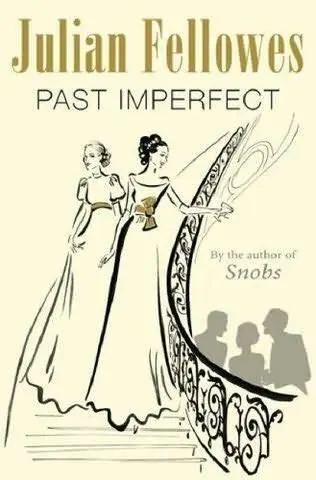
- Название:Past Imperfect
- Автор:
- Жанр:
- Год:неизвестен
- ISBN:нет данных
- Рейтинг книги:3 / 5. Голосов: 1
-
Избранное:Добавить в избранное
- Отзывы:
-
Ваша оценка:
Past Imperfect: краткое содержание, описание и аннотация
Предлагаем к чтению аннотацию, описание, краткое содержание или предисловие (зависит от того, что написал сам автор книги «Past Imperfect»). Если вы не нашли необходимую информацию о книге — напишите в комментариях, мы постараемся отыскать её.
Past Imperfect — читать онлайн бесплатно полную книгу (весь текст) целиком
Ниже представлен текст книги, разбитый по страницам. Система сохранения места последней прочитанной страницы, позволяет с удобством читать онлайн бесплатно книгу «Past Imperfect», без необходимости каждый раз заново искать на чём Вы остановились. Поставьте закладку, и сможете в любой момент перейти на страницу, на которой закончили чтение.
Интервал:
Закладка:
We were staying for the weekend, Bridget and I, with a very tiresome architect and his very charming wife at a house he had purchased some years before in Yorkshire. It was an old house, a historical house, a ‘great house’ in a way and, oh boy, didn’t he know it. The architect in question was called Tarquin Montagu. I did not believe that this was a name he, or more probably anyone, would have received at the baptismal font, and I certainly never discovered any link between him and the ducal house of Manchester, a connection that he liked to imply. He came into my life as the husband of a delightful novelist called Jennifer Bond who was also with my publisher. We’d been paired for a book tour one summer a few years before, forging a friendship in the process. I was not then clear about how he came by his money, since he was never associated with any vividly spectacular building, but he lived in a way that Vanbrugh would have envied and some years before our visit he had bought a splendid semi-ruin near Thirsk, called Malton Towers.
A George IV, Gothic confection, abandoned by its family after the war, Malton had followed the sad trail of such places in those years as first a school and then a training college, and after that a home for old people, and I am fairly sure at one point a finishing school specialising in Nouvelle Cuisine. Until finally it achieved a slight, if spurious, fame in the mid 1990s as a ‘World Centre’ for some later version of Transcendental Meditation, which attracted the members of one of the manufactured Boy Bands of the era. This last incarnation was run by a dubious character who claimed the authority and support of, I seem to remember, the Dalai Lama, but I may be wrong in that. At any rate the day dawned when a red-topped Sunday scandal sheet revealed that he was not, in fact, a philosopher in touch with the higher plane, as his earnest pupils had no doubt assumed, but instead an old fraud from Pinner who had previous form for shoplifting, car theft and making false claims on his insurance. His exposure resulted in a mass exodus of the faithful, shortly followed by that of their non-spiritual leader, and for the next eight years the wind had whistled through the dusty galleries and servants’ attics and former drawing rooms of the decaying folly until, at what can only have been the eleventh hour, Tarquin showed up. I am quite sure that from the house’s point of view it was a very good thing that he did. Whether it was quite so beneficial to Jennifer’s quality of life is rather more open to question.
The continuing craving on the part of the successful to reproduce the lifestyle and customs of the nineteenth-century aristocracy must be trying for our Labour masters. They would deny this, as they deny so many aspects of human nature, but I’m sure it is so. And the life these aspirants choose to ape is from a very specific period. Not for them the casual round of the eighteenth-century aristo, sleeping sitting upright, breakfasting at noon on sticky chocolate before a ride; who wore no uniforms for his sporting or social activities, who dined at five in the afternoon, drank three or four bottles of port a night and frequently, when travelling, shared a bed with his manservant, while his wife might hunker down with her maid. This is not an attractive model for the modern millionaire. Nor, certainly, would they copy the altogether more brutish customs of the sixteenth-century toff, whose personal hygiene, to say nothing of his politics, would make a strong man faint. No, their template was developed by the late Victorians, who had such a talent for mixing rank with comfort: Majesty and deference combined with warmth and draught-free bedrooms, splendour with thick carpets and interlined curtains, where the food is hot, but there are still footmen to serve it.
Sadly, to live like this requires much, much more money than most modern copiers ever imagine. They do the sums and there seems to be enough to bring the house up to date, tidy the garden, hire someone nice to help at table and they begin. Alas, these palaces were designed to preside over thousands of rent-producing acres, to be the window display of huge fortunes in trade and manufacturing, which might have been concealed from Society but, like the mole, were working busily all the while in the dark. Because these houses eat money. They gobble it up, as the rampaging giants of the Brothers Grimm eat children and every other good thing in their path.
When the genuinely, very rich buy these palaces I am sure they enjoy them and, even if they do not often stay long, still the houses are the better for their passing. The trouble comes when they are bought by the not-quite-rich-enough, who think they can just about manage. With these, as a rule, there is a pattern. They make their fortune, such as it is. They buy a castle to celebrate. They restore it and entertain like mad for eight to ten years and then they sell, exhausted by their own poverty and the constant effort to stay afloat. While the County, those families whose fortunes were never deconstructed, and whose houses and pretensions are built on solid rock, smile, occasionally with regret, and move on to the next candidates. Tarquin Montagu was about six years into the process.
Reviewing him now, having not seen him for a while, I feel more sympathy for him than I did. That is to say that I feel some sympathy, when before I felt none at all. At that time, when we were staying with him, he must have been worried that his whole self-ennobling adventure would implode, but it was part of his personality not to admit or ever discuss his fears. He would have seen that as weakness and loss of control. In fact, his main problem was his total inability to relax control under any circumstances. I would go as far as to say that his nature was the most controlling I have ever encountered. This made him not only impossible to entertain, or to be entertained by, but also lonely and desolate, for he could not admit to anyone, least of all his wife, that events were slipping out of his grasp. I had known him as a difficult and rather ill-tempered man, who always found any conversation not centred on him, hard to follow and harder still to contribute to. But I had not fully understood the extent of his mania before we arrived at his house, tired from the long drive, at tea time on that summer Friday. We were normal people. All we wanted was to be shown our room, to have a hot bath and generally to recover in order, like the model guests we were, to come downstairs refreshed, changed and ready to eat, or talk about, whatever our hosts might throw at us.
It was not to be. First, apparently, we had to sit and listen to a history of the house and when Jennifer suggested that we might be more in the mood for this lesson after we had rested, Tarquin replied that he did not judge us yet as ‘ready’ to see the rooms he had prepared. Naturally, my almost overpowering instinct was to tell him to piss off and drive straight back to London. But looking at Jennifer’s tired and harassed face, I suspected this was an option taken by more than one guest before now, so in pity and to Bridget’s relief, I allowed myself to be led into the library, to listen to the lecture like a good boy.
‘The thing is,’ said Tarquin, getting into his interminable stride, ‘you have to understand that when Sir Richard decided to rebuild in eighteen twenty-four, he wanted both to be in the height of fashion, but at the same time not to lose the sense of historicity that his ancient blood demanded.’ He took a deep breath and looked at us as if waiting for a response though what this might be I could not fathom.
‘So that’s why he chose Gothic?’ I volunteered eventually, wondering if we were ever going to be offered sustenance. I had arrived wanting a cup of tea, but after twenty minutes of this I was ready for whisky, neat and in a pint pot.
Читать дальшеИнтервал:
Закладка:
Похожие книги на «Past Imperfect»
Представляем Вашему вниманию похожие книги на «Past Imperfect» списком для выбора. Мы отобрали схожую по названию и смыслу литературу в надежде предоставить читателям больше вариантов отыскать новые, интересные, ещё непрочитанные произведения.









Обсуждение, отзывы о книге «Past Imperfect» и просто собственные мнения читателей. Оставьте ваши комментарии, напишите, что Вы думаете о произведении, его смысле или главных героях. Укажите что конкретно понравилось, а что нет, и почему Вы так считаете.