Julian Fellowes - Past Imperfect
Здесь есть возможность читать онлайн «Julian Fellowes - Past Imperfect» весь текст электронной книги совершенно бесплатно (целиком полную версию без сокращений). В некоторых случаях можно слушать аудио, скачать через торрент в формате fb2 и присутствует краткое содержание. Жанр: Современная проза, на английском языке. Описание произведения, (предисловие) а так же отзывы посетителей доступны на портале библиотеки ЛибКат.
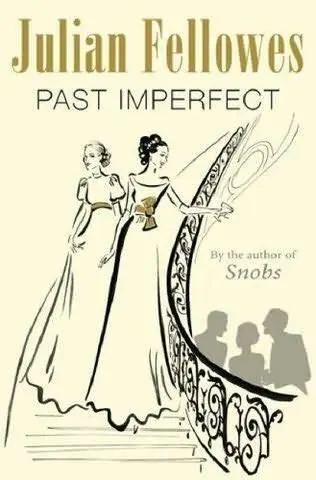
- Название:Past Imperfect
- Автор:
- Жанр:
- Год:неизвестен
- ISBN:нет данных
- Рейтинг книги:3 / 5. Голосов: 1
-
Избранное:Добавить в избранное
- Отзывы:
-
Ваша оценка:
Past Imperfect: краткое содержание, описание и аннотация
Предлагаем к чтению аннотацию, описание, краткое содержание или предисловие (зависит от того, что написал сам автор книги «Past Imperfect»). Если вы не нашли необходимую информацию о книге — напишите в комментариях, мы постараемся отыскать её.
Past Imperfect — читать онлайн бесплатно полную книгу (весь текст) целиком
Ниже представлен текст книги, разбитый по страницам. Система сохранения места последней прочитанной страницы, позволяет с удобством читать онлайн бесплатно книгу «Past Imperfect», без необходимости каждый раз заново искать на чём Вы остановились. Поставьте закладку, и сможете в любой момент перейти на страницу, на которой закончили чтение.
Интервал:
Закладка:
‘I had rather a turn the other day and I went to see old Babbage. He’s run a few tests and it seems I may be cracking up at last.’
‘I thought you said Babbage ought to be struck off.’
‘I never did.’
‘You said he couldn’t diagnose a gunshot wound.’
‘Did I?’ My father was slightly cheered by this. ‘Perhaps I did. Anyway, it doesn’t alter much. I’m going some time and it won’t be long now.’
‘What did he say?’
‘Nothing to bother you with.’
‘I have driven for two and a quarter hours. I deserve details.’
But he could not break the habits of a lifetime. ‘It was all about blood being where it shouldn’t be. Revolting stuff that I have no intention of discussing over pudding.’ There wasn’t much to come back with, so I waited while he got to the point. ‘Anyway, I realised that you and I had never had a proper talk about everything.’
How strange death is. It seems to make such nonsense of the years that have gone before. Here was my father about to die, presumably of some form of cancer, and what had been the point of it all? What had it all been for? He’d worked pretty hard, in the way his generation did work, which was different from, and more sensible than ours, with their late starts and long lunches and getting home by half past six. Even so, he had done his best and travelled the world and stayed in horrible hotels, and sat through boring meetings and listened to heads of state lying, and experts making dire predictions that proved quite unfounded; he had studied worthless reports without number, and pretended to believe government spokesmen when they made ludicrous and mendacious claims for their inadequate ministers, and… for what? He had no money. Or not what my mother would have called ‘real’ money. This house, a few shares, one or two nice things left over from his forebears who had lived better than he did, a pension that would perish with him. My sister and I had been given good educations, which must have set them back, but Louise had largely thrown hers away by marrying a very ordinary stockbroker and bringing up three children, all of whom were dull to the point of genius, while I-
‘I want you to know what I’ve arranged, in case you think I’ve made anything unnecessarily complicated. You’re the executor, so you’ll have to deal with it if I’ve made a nonsense.’
I nodded. My thoughts would not get back in their box. Poor old boy. It had been a good life, I suppose. At least that’s what people would say when his funeral eventually came to pass. ‘He had a good life.’ But did he really? Was it a good life? Was it enough? He met my mother towards the end of the war, when she was working for someone in the Foreign Office. He had been seconded to assist with the settlement of Poland and other places where the British would make the wrong decisions, as a preparatory move to taking up his career again when the fighting stopped. They married in 1946, just before he was appointed second secretary to our embassy in Madrid, and, on the whole, they’d been quite happy. I honestly believe that. She liked travelling and the constant relocation of their home had pleased, rather than annoyed her. Once he made ambassador, I would go as far as to say she had a good time and, while he never got one of the really big ones, Paris or Washington or Brussels, still he did get Lisbon and Oslo, both of which they enjoyed, as well as Harare, which proved a lot more interesting than either had bargained for, and not in a good way. But when it was all over they’d come home to a farmhouse which they’d bought near Devizes, and that was it. He’d been knighted before his second-to-last posting and I was glad, as it helped them to feel they had made their mark, which of course they hadn’t. It was also probably of mild use in getting them started socially in what was, for them, a brand-new part of England. But I never really understood the compulsion to make their home in the country when neither of them was the type to spend their lives walking dogs and working for local causes. Certainly, they were not at all sporty. My father had given up shooting twenty years before, after he spent four days on a grouse moor in the Borders without hitting a single bird, and my mother never cared much for anything that made her cold.
There is a tyranny that forces people of a certain class to insist they are only happy in the country and it is a cruel one. My parents were among its many victims. As everyone but they could see, their natural milieu was urban. They liked varied and informed conversation. They liked to mingle with different social groups. They liked their gossip from its source. They liked to talk politics and art and theatre and philosophy, and none of this, as we know, is much to be found beyond the city limits. Nor were they big local employers and, since their families had no historic connection with the part of Wiltshire they had chosen, they would never have more than a day pass to the County proper, so their egos were doomed to starvation rations as long as they remained there. In short, there was no real chance for them of happiness, or even entertainment, in that society, not as there would have been in Chelsea or Knightsbridge or Eaton Square but they made do, with introductions and dinners and charity functions and signing petitions about local planning and getting cross about the way the village pub was run and all the rest of it. And then my mother died, which was exactly what my father had never expected. But he showed courage as he packed up his life in Devizes and exchanged it for an equally meaningless one in Gloucestershire, and now here he was, after ten years of non-event, telling me about his own approaching death as we tucked into the disgusting splodge on our plates. I have never felt the ultimate absurdity of most lives more strongly than at that moment.
‘It’s all written down, so there shouldn’t be any confusion,’ my father said, producing from somewhere near the table a plastic folder filled with typed sheets. He handed it to me as he stood up. ‘Let’s go through.’
He led the way into the little library, which he used for most of his daily activities, and as usual I was touched by the sight of it. Unlike the characterless drawing room, the library was an exact reproduction, in miniature, of one my mother had designed for the Wiltshire farmhouse, with walls lined in red damask and fluted bookshelves in a soft dove grey. Even the cushions and lamps had been transferred intact after the move. A portrait of her, rather a good one, painted just after their marriage, in a snappy, 1940s suit, hung over the chimneypiece and my father would glance at it from time to time as he spoke, as if seeking her approval for his decisions, which I imagine was exactly what he was doing.
In front of the green corduroy sofa, a table held a tray made ready by the indefatigable Mrs Snow, with coffee equipment for two. He poured himself a cup, nodding at the folder. ‘Funeral, memorial, it’s all there. Prayers, hymns, who should do the address if you don’t want to, everything.’
‘I thought you hated hymns.’
‘So I do, but I don’t think a funeral is a good place for a “statement,” do you?’
‘It’s your last chance to make one.’ Which made him smile. ‘I’ll do the address,’ I said.
‘Thank you.’ He chuckled gently to cover his emotions. ‘I’ve left this house to Louise, since you got the flat.’
His words were perfectly logical and true but, irrationally, I felt a twinge of irritation. Does anyone ever feel content with the way things are arranged at these times? An only child, perhaps. Never a sibling. ‘What about the stuff?’
‘I thought you could split it. But I haven’t really specified.’
‘I wish you would.’
Читать дальшеИнтервал:
Закладка:
Похожие книги на «Past Imperfect»
Представляем Вашему вниманию похожие книги на «Past Imperfect» списком для выбора. Мы отобрали схожую по названию и смыслу литературу в надежде предоставить читателям больше вариантов отыскать новые, интересные, ещё непрочитанные произведения.



Обсуждение, отзывы о книге «Past Imperfect» и просто собственные мнения читателей. Оставьте ваши комментарии, напишите, что Вы думаете о произведении, его смысле или главных героях. Укажите что конкретно понравилось, а что нет, и почему Вы так считаете.