Julian Fellowes - Past Imperfect
Здесь есть возможность читать онлайн «Julian Fellowes - Past Imperfect» весь текст электронной книги совершенно бесплатно (целиком полную версию без сокращений). В некоторых случаях можно слушать аудио, скачать через торрент в формате fb2 и присутствует краткое содержание. Жанр: Современная проза, на английском языке. Описание произведения, (предисловие) а так же отзывы посетителей доступны на портале библиотеки ЛибКат.
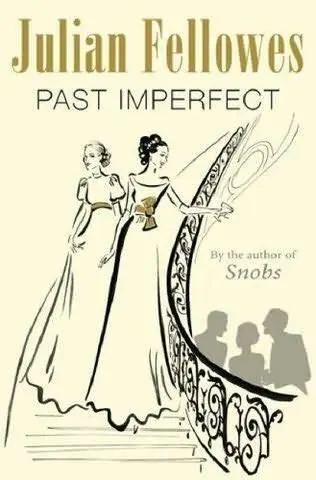
- Название:Past Imperfect
- Автор:
- Жанр:
- Год:неизвестен
- ISBN:нет данных
- Рейтинг книги:3 / 5. Голосов: 1
-
Избранное:Добавить в избранное
- Отзывы:
-
Ваша оценка:
Past Imperfect: краткое содержание, описание и аннотация
Предлагаем к чтению аннотацию, описание, краткое содержание или предисловие (зависит от того, что написал сам автор книги «Past Imperfect»). Если вы не нашли необходимую информацию о книге — напишите в комментариях, мы постараемся отыскать её.
Past Imperfect — читать онлайн бесплатно полную книгу (весь текст) целиком
Ниже представлен текст книги, разбитый по страницам. Система сохранения места последней прочитанной страницы, позволяет с удобством читать онлайн бесплатно книгу «Past Imperfect», без необходимости каждый раз заново искать на чём Вы остановились. Поставьте закладку, и сможете в любой момент перейти на страницу, на которой закончили чтение.
Интервал:
Закладка:
I always find this kind of talk intensely irritating, draped as it is with self-importance. ‘You are quite right,’ I said coolly. ‘I don’t like having a plate piled up with things I have not chosen since I have been out of the nursery for some years. Nor do I see why we haven’t got all day. What pressing engagement are we racing to meet?’ Having delivered this twaddle, no less self-important than the speech that had provoked it, I sat down at the table.
But Bridget had not quite finished. ‘I’m afraid it’s very overcooked,’ she sighed, as she laid the concoction before me.
It was clearly time to acknowledge that we were having a spat and with that remark she had finally used up the last stock of patience I had kept in reserve. ‘I cannot think why, since I was here before eight,’ I muttered, deliberately using a harsh and frigid tone to combat hers. ‘At what hour were you planning to eat?’ She bit her lip and said nothing.
Of course, as I knew well enough, this was a dishonourable dig. Before meeting me, Bridget had generally tucked into her evening feed at about half past six or seven, and she still found my insistence on dining at half past eight or nine not so much unreasonable as weird. This will be familiar to many who have ventured beyond their home pastures to find a mate. Even in this day and age, even after almost everyone, south of Watford anyway, says ‘lunch’ and when all sorts of foods from avocados to sushi have become ordinary fare, still the time for evening eating can provoke an absolute clash of cultures. To me, early eating can only be explained if food is considered essentially as fuel to strengthen one for the adventures yet to come. So, people will dine at six or six thirty in order to be fuelled by seven, in time to fill the next few hours with fun. This time may be spent in a club or in a pub or keeping fit or studying macramé or learning Mandarin or line dancing or simply watching television while sitting on a sofa. The evening is your oyster and, by eating early, you are free to enjoy every pleasure while it lasts.
The reason this is completely bewildering for the upper middle and upper classes is simply because for them the dinner is the pleasure. It is the apex, the core, the point. If the whole business of feeding is over by half past seven, what on earth is one to do until bed? These people don’t go to self-help groups, or engage in amateur acting, nor do they study art or quilting, or drop into a bar. This is why any role in local government is so difficult for them. It takes place just when they prefer to be sitting at a table for a very different purpose. For those who cross the great social divide, there can be few habits harder to adjust to, whichever direction they have travelled. Certainly, Bridget had found it difficult and now, here I was, deliberately goading her, insulting her, putting her down. I was ashamed of myself. But not, it seems, sufficiently ashamed to regain my good humour. I stared at the plate. ‘And I wish you wouldn’t pile it up like that. It’s so off-putting.’ I whined as I unfolded my napkin. ‘I feel like a tramp being fed before retiring to my cubicle in a Rowton House.’
‘And I feel like the skivvy serving him,’ said Bridget without the trace of a smile, and we let it rest there.
At the time of these events my father lived in a modest village called Abberley, on the Gloucestershire borders. He was eighty-six then and he’d chosen it as his retreat after my mother’s fairly early death ten years before. There was no pressing reason for him to go there, since their marriage had largely been spent abroad and the first years of his retirement had been passed in Wiltshire, but I suppose he wanted a change and our family had been based for the latter half of the nineteenth century at Abberley Park, a rather over-christened large house of negligible architectural merit, situated behind a cobbled forecourt, at one end of the main street of the village. It meant little to me, as it had only been a third-rate hotel in my lifetime; still we would visit it occasionally for lunch or tea, and Pa would pretend a kind of nostalgia for the place. This, I suspect, was to encourage me to take an interest in my family’s history, but I always found his Turgenev-style melancholy fairly unconvincing. The large, dreary hall and the largish dreary drawing and dining rooms on either side of it were all hideously decorated, and any trace of private life had long since vanished from the atmosphere. My father had no memories of the house anyway, since his grandfather had sold it, after the agricultural depression, in the early years of the twentieth century before he was even born. I suppose the staircase, in slightly crude nineteenth-century baroque, was pretty and the dark, panelled library may once have been nice, but its translation into a bar, complete with upside-down bottles on silver holders, had obliterated its fragile charm. However, the seller-grandfather, plus his wife and various other members of the two preceding generations of our clan, lay in the graveyard of the local church and were commemorated with plaques in the nave, and I imagine this gave my papa a sense of belonging, something neither he nor my mother had ever quite achieved in their previous home.
His life in Abberley was pleasant enough but a bit sad, of course, as all old men living on their own are sad, in a way that old women are not. He had a housekeeper called Mrs Snow, who was reasonably civil and would cook him lunch every day and depart after it was washed up and put away. She would leave his dinner in the fridge, in a terrifying array of dishes covered in cling film, with post-it notes carrying strict instructions: ‘Boil for twenty minutes,’ ‘Put in a pre-heated oven at gas mark 5 for half an hour.’ I could never see the point of this, since she wasn’t a very good cook, to say the least of it, her repertoire consisting entirely of English nursery food from the 1950s, and he could have bought everything at the local Waitrose. It would have been quicker and easier to prepare, as well as much nicer to eat. But, looking back, I think he rather enjoyed the disciplined activity of unwrapping everything and obeying her iron will. It must have taken up quite a bit of the evening and that would have been a real bonus.
On the day that I went to see him Mrs Snow was preparing our lunch when I arrived, but he told me in dulcet tones, as he poured two glasses of very dry sherry, that she was going to leave us as soon as she had brought in the pudding. In other words she was not going to stay to wash up. ‘We’ll have the place to ourselves,’ he muttered out of the side of his mouth as he led the way to a chair in his chilly and unsuccessful drawing room. Why is it that some people can live in a house for twenty years, yet the furniture still looks as if the removal van has just pulled out of the gates? In this, his last house he had copied a few rooms from earlier homes that my mother had decorated, but he never seemed to find a template for the little, irregularly shaped drawing room, so it just waited, with its magnolia walls and disparate collection of furniture, for an inspiration that never came.
‘Good,’ I answered, since that was what seemed to be called for.
He nodded briskly. ‘I think it’s better.’ Years in the diplomatic had made him secretive as a rule, in addition to which he shared the usual prejudice of his kind that it was impossible to have any kind of conversation about money, outside the walls of a bank or a brokers’, were it not serving one of two purposes. These comprised discussing your future son-in-law’s net worth and prospects, and talking about your own will. Since my sister was long married, I gathered at once that the second was what we were in for and so it proved.
We had exchanged bits of family information in a desultory fashion through some unsalted, tasteless shepherd’s pie and we were staring at an uninviting plum duff with custard, when Mrs Snow leant round the door in her coat and hat. ‘I’ll be off, then,’ she said to my father. ‘I’ve put coffee in the library, Sir David, so don’t let it get cold.’ In response to this, he twisted his face into something akin to a wink, signifying that as with all, lonely old people who employ one servant, the relationship was becoming dangerous, and he nodded his thanks. We heard the door bang and he started.
Читать дальшеИнтервал:
Закладка:
Похожие книги на «Past Imperfect»
Представляем Вашему вниманию похожие книги на «Past Imperfect» списком для выбора. Мы отобрали схожую по названию и смыслу литературу в надежде предоставить читателям больше вариантов отыскать новые, интересные, ещё непрочитанные произведения.





Обсуждение, отзывы о книге «Past Imperfect» и просто собственные мнения читателей. Оставьте ваши комментарии, напишите, что Вы думаете о произведении, его смысле или главных героях. Укажите что конкретно понравилось, а что нет, и почему Вы так считаете.