Julian Fellowes - Past Imperfect
Здесь есть возможность читать онлайн «Julian Fellowes - Past Imperfect» весь текст электронной книги совершенно бесплатно (целиком полную версию без сокращений). В некоторых случаях можно слушать аудио, скачать через торрент в формате fb2 и присутствует краткое содержание. Жанр: Современная проза, на английском языке. Описание произведения, (предисловие) а так же отзывы посетителей доступны на портале библиотеки ЛибКат.
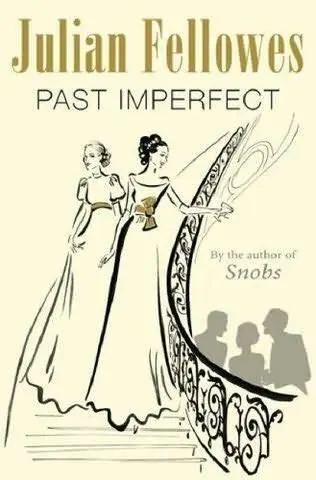
- Название:Past Imperfect
- Автор:
- Жанр:
- Год:неизвестен
- ISBN:нет данных
- Рейтинг книги:3 / 5. Голосов: 1
-
Избранное:Добавить в избранное
- Отзывы:
-
Ваша оценка:
Past Imperfect: краткое содержание, описание и аннотация
Предлагаем к чтению аннотацию, описание, краткое содержание или предисловие (зависит от того, что написал сам автор книги «Past Imperfect»). Если вы не нашли необходимую информацию о книге — напишите в комментариях, мы постараемся отыскать её.
Past Imperfect — читать онлайн бесплатно полную книгу (весь текст) целиком
Ниже представлен текст книги, разбитый по страницам. Система сохранения места последней прочитанной страницы, позволяет с удобством читать онлайн бесплатно книгу «Past Imperfect», без необходимости каждый раз заново искать на чём Вы остановились. Поставьте закладку, и сможете в любой момент перейти на страницу, на которой закончили чтение.
Интервал:
Закладка:
Of course you want so much to say that. Or at the very least to tell them to grow up or drop dead, or to open their eyes to the fact that the Fifties are over. But you don’t. My late mother would have said ‘they’re just jealous, darling’ and maybe they are, a bit, even when they don’t know it. But I am jealous, too. Jealous that their living never requires them to make an ass of themselves at the end of the pier at a shilling a go, which is exactly what it feels like most of the time. In any life, in any career, only people who’ve made the same journey understand each other completely. Mothers want advice from other mothers, not from childless social workers, cancer sufferers need to hear from survivors of cancer, not from the doctors who cure it, even victims of a scandal will only really want to compare notes with some other politician or celebrity who has similarly gone down in flames. This was the bond that Jennifer and I shared. We were published authors of moderate and precarious success, and I valued her friendship. I wanted to please her and for some reason I knew it was important to her that we should come and stay in Yorkshire. I had assumed her urgency was a measure of her love but I suspect, now, that by this stage, it was because very few people would stay, certainly nobody would come twice who didn’t need to borrow money, and that the weekends when she was alone with Tarquin were becoming intolerable.
‘Is he always like this?’ I asked. I felt that her honesty in thanking me for coming merited a bit of straight talking, although, as the words left my mouth I wondered if I hadn’t overstepped the mark.
But she smiled. ‘Not when he’s asleep.’ Her expression developed into an ironic laugh. ‘I can’t decide whether he was the same when we first married and I was so young and so insecure that I mistook his pomposity for knowledge and his patronising for instruction, or whether he’s got worse.’
‘I think he must have got a bit worse,’ I said. ‘I’m not sure Helen Keller would have married him if he’d been as he is now.’
She laughed again, but still her laugh was sad. ‘I wish we’d had a child,’ she said, but then caught my look. ‘I know. Everyone thinks it would have solved everything and everyone is wrong.’
‘Don’t ask me. I’m the sad old bachelor who could never commit.’
‘I just think, with him, it would have shored him up. Allowed him that bat squeak of immortality that children bring. Or even if he’d just succeeded at something convincingly. Because he never really has.’
‘He lives very well for a failure.’
She shook her head. ‘It’s all inherited.’
This surprised me. ‘Really? I hadn’t got him down for a Trustafarian.’
She knew what I was saying and she wasn’t offended. ‘It’s not old money. All that stuff about the Montagus is bollocks. It isn’t even our real name. His father arrived from Hungary after the uprising of 1956. He started as a lorry driver, built up a transport business and sold out in the mid Nineties. Tarquin’s his only child. He was a lovely man, actually. I doted on him, but Tarquin used to keep him hidden, so none of our friends were allowed to meet him. Now he wants you to think the money is the remains of an ancient fortune, amplified by his own recent success. It’s neither. But I expect you knew that.’
I didn’t confirm this, as it seemed superior and smug. ‘It’s rather a romantic fantasy, in a way,’
‘It can’t last for much longer.’ She sighed wearily at the thought of impending collapse. ‘The whole thing costs far more than either of us realised and there’s very little coming in, now we’ve tied it all up in the house. I write my books so at least we can eat and go to the theatre, but I’m not sure how long that’ll keep us above the waterline. He’s a hopeless architect, you know. He gets taken on for particular jobs now and then, when a practice needs some extra help, but nobody ever asks him to stay.’
‘Would you?’
This time she laughed out loud. ‘Perhaps that’s it. Perhaps he’s a fabulous architect but anathema to have in the office.’
‘So what are you going to do?’
Which made her stop laughing. ‘I don’t know. Everyone says I should leave him, most of all my mother, which would have astonished her and me if anyone had predicted such a thing twenty years ago, but the odd thing is, in a funny way I do still rather love him. You’ll say I’m mad, but I watch him boring everyone to death and trying to control and impress and make people admire him, and I know he’s so puzzled and frightened and bewildered inside. He can tell it isn’t working, but he just doesn’t understand why not. No one comes to stay any more.’
‘Except us.’
‘Except fools like you. And nobody wants to know us down here. I’ve seen them literally roll their eyes when we walk into a room. I somehow feel I can’t leave him open to attack, when it’s so obvious to everyone but him that he can’t protect himself.’
As often as I am reminded that love, like everything else in this world, comes in many different shapes and sizes, I can still be amazed by some of the forms it takes. ‘I don’t think you’re mad. It’s your life,’ I said.
‘I know. And it isn’t a dress rehearsal. But even if I don’t add up to much in the end, the fact is I took him on, nobody forced me, and I have to see it through. I suppose that sounds like a quote from G. A. Henty.’
‘It sounds like something only a very decent woman would say.’ She blushed and at that moment Bridget reappeared at the fence. ‘Please come. If he doesn’t stop talking about the wine we’re going to drink I swear to God I’ll break a bottle of it over his head.’ So saying, she relieved Jennifer of her burdensome share of the cold box and guided us to our site on the top terrace where Tarquin had staked his claim. To a restful mixture of chattering crowd noise, music and Tarquin droning on, we unpacked our food and spread it forth luxuriously upon our waiting, cushioned rugs.
We had nearly finished eating when Tarquin suddenly broke off his current lecture. He had been telling us about the Ptolemaic dynasty of Egypt or some subject equally fascinating, and we had each retreated into a kind of glazed, mental cave of our own making, when his voice altered and took on a nervous edge: ‘They’re here.’
‘Who?’ Bridget was keen to support the introduction of any new topic, never mind what.
‘The family. The Claremonts.’
As he said their name, I was amazed to find that, like a lyric in a wartime love song, my heart actually skipped a beat. Dear Lord, does there never come a time when we are too old for such foolishness? But when I looked there was no sign of Serena, only an elderly group, all in evening dress; presumably they had enjoyed a smarter, better dinner inside. They glanced benevolently at the crowds enjoying their policies in so pleasant and decorous a manner, and in their midst were two ancient pensioners who seemed to be impersonating the Earl and Countess of Claremont, darling Roo and Pel, as I had never known them well enough to call them, who had once been such a vivid part of my life. I looked at them now, these icons of my youth, confident that they could not see me. Was I avoiding them because the sight of me would make them start and stretch their eyes in horror, or because I could not bear to see that they did not recognise me and I was forgotten? Probably the latter. I was sneakily afraid that if someone had mentioned that one of the hundreds of picnickers was an acquaintance of theirs from four decades before and had thought of them many, many times in the interim, they would have been none the wiser. Not even had I been paraded before them in person.
This deflating suspicion was reinforced by the sad but apparent truth that my Lord Claremont had been more or less exchanged for another man. The handsome, corpulent, sexy, flirty hedonist, with his thick, wavy hair and his wavier smile, had completely vanished and been replaced by a bony, stooped individual. His nose, stripped of its flesh and unsupported by the plump cheeks on either side, had become prominent, hooked like the Duke of Wellington’s to whom he was no doubt related in some wise, while his generous lips had been shaved down, as if by a razor, and he had almost no hair left. I would not say he appeared less distinguished. Not at all. This fellow looked like someone who read poetry and philosophy and pondered the great issues of life, while the Lord Claremont of my memories knew how to get a good table at the last minute and where you could find an excellent Château d’Yquem, but not much else. For a moment he glanced my way but of course registered nothing, which was not surprising since, while I knew him in those distant days, he did not know me. Not really. Certainly, he gave little sign of being aware of that awkward, plain young man whose only use was to make up a table for bridge. Even so, looking at this stick-like figure, with a Baron Munchausen outline, I missed the man he had been and it was hard not to feel a pang at the pitiless work of the passing years.
Читать дальшеИнтервал:
Закладка:
Похожие книги на «Past Imperfect»
Представляем Вашему вниманию похожие книги на «Past Imperfect» списком для выбора. Мы отобрали схожую по названию и смыслу литературу в надежде предоставить читателям больше вариантов отыскать новые, интересные, ещё непрочитанные произведения.











Обсуждение, отзывы о книге «Past Imperfect» и просто собственные мнения читателей. Оставьте ваши комментарии, напишите, что Вы думаете о произведении, его смысле или главных героях. Укажите что конкретно понравилось, а что нет, и почему Вы так считаете.