Malcolm Bradbury - Doctor Criminale
Здесь есть возможность читать онлайн «Malcolm Bradbury - Doctor Criminale» весь текст электронной книги совершенно бесплатно (целиком полную версию без сокращений). В некоторых случаях можно слушать аудио, скачать через торрент в формате fb2 и присутствует краткое содержание. Город: London, Год выпуска: 2000, ISBN: 2000, Издательство: Picador, Жанр: Современная проза, на английском языке. Описание произведения, (предисловие) а так же отзывы посетителей доступны на портале библиотеки ЛибКат.
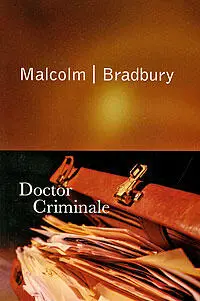
- Название:Doctor Criminale
- Автор:
- Издательство:Picador
- Жанр:
- Год:2000
- Город:London
- ISBN:978-0330390347
- Рейтинг книги:5 / 5. Голосов: 1
-
Избранное:Добавить в избранное
- Отзывы:
-
Ваша оценка:
Doctor Criminale: краткое содержание, описание и аннотация
Предлагаем к чтению аннотацию, описание, краткое содержание или предисловие (зависит от того, что написал сам автор книги «Doctor Criminale»). Если вы не нашли необходимую информацию о книге — напишите в комментариях, мы постараемся отыскать её.
Doctor Criminale — читать онлайн бесплатно полную книгу (весь текст) целиком
Ниже представлен текст книги, разбитый по страницам. Система сохранения места последней прочитанной страницы, позволяет с удобством читать онлайн бесплатно книгу «Doctor Criminale», без необходимости каждый раз заново искать на чём Вы остановились. Поставьте закладку, и сможете в любой момент перейти на страницу, на которой закончили чтение.
Интервал:
Закладка:
‘How is it different?’ I asked. ‘I read the other day a book, Postmodernism, Consumer Culture, and Global Disorder , described as an account of the joys and sorrows of the contemporary consumer in an age of world crisis. Half the people of the world starve or fight each other. Meanwhile where is the new life conducted? In the shopping mall. On the one hand, crisis and death, on the other the joys of the meat counter, the sorrows of the pants department. When we reach a certain point of wealth, everyone asks, where do I find myself? The answer? Hanging on a peg in the clothes store, newest fashion, designer label, for you reduced by thirty per cent. Why is there trouble in Russia? Because they have not yet invented the store.’ ‘Never mind the thing to put inside it,’ said Sepulchra, reaching in her jangling handbag for some powder compact or other. ‘They have not even discovered money,’ said Criminale, ‘They still barter goods for goods. That is why they want to become American. They too like to be born to shop.’
I felt somewhat baffled. At times like this Criminale and Sepulchra looked not like great philosopher and mate, but like some semi-geriatric couple, two fond old-timers on a holiday cruise. They bickered, spatted and then agreed, in what seemed almost a mockery of connubial bliss. For a trendy world thinker, a man endlessly snapped with one arm round some chic topless model or world leader, this seemed extremely odd. I remembered my treatment, thirty sparkling pages that everyone believed in and nobody had read. In this, the erotic adventures and mysterious loves of Bazlo Criminale appeared crucially. Nothing in all I had read and thought prepared me for anything like Sepulchra, who, sitting there jangling, would suddenly begin tapping at her watch: ‘Dearling, time for congress,’ she would say. ‘Oh, really, time for congress?’ Criminale would say, infinitely mild, ‘So do I go today, or do I don’t?’ ‘Of course you go, my dearling,’ Sepulchra would say, heaving him up, ‘People have come right across world to hear you.’ ‘I don’t think so, it is free tickets they like,’ Criminale would say, ‘Very well, very well, I know my duty. You always teach me my duty. See you, little sexpot. I just go up to the room a minute.’ The only odd thing was that, after all this fuss, when we all began gathering in the upstairs conference room, Criminale would always prove absent.
We would go in, sit down. Five-channel interpretation headsets waited for us in wooden boxes as we entered. On the wide tables, small national flags, nameplates, notepads and pencils, bottles of mineral water and colas, stood ready. So did a panoply of video-recorders, overhead projectors and other technological facilities; no modern conference can function without them, and there was nothing of which Barolo was short. The day’s business was about to begin. The writers would gather on one side of the room, chatting together with that spirit of mutual suspicion which is so often their stock-in-trade, and makes the idea of an international republic of letters such an absurd notion. The politicians would gather on the other – ministers of culture, financial advisers, representatives of international cultural commissions, all embracing each other across vast political frontiers with such a warmth of diplomatic civility that it made the very idea of modern war and conflict seem ever more absurd. If we want world peace, the great mistake we make is letting our leaders back into their own countries. The smart thing would be to keep them at conferences, permanently abroad.
Now Monza would enter, clapping his hands at the top of the table, and we would be off once more into his world of announcaments. Then he would extol the virtues of dialoga – it was for dialoga we had come, our dialoga was now going very well – and introduce, and then constantly interrupt, the various speakers lined up for our pleasure. We sat in our headsets, which hummed with multi-linguality; imported translators sat in glass boxes and rendered the proceedings pan-European. The papers started, first one by a writer, then one by a politician. Monza would listen birdlike, check them all with his stopwatch (‘One more minuta!’), as if this were some Olympic event in speed paper-giving, then halt the flow and demand that we all immediately engage in our ‘great common dialoga’.
But wait a minute: where was the man I had come for? Had he disappeared yet again? I would glance anxiously out of the windows, and there he’d be – sitting outside huddled in some gazebo, his great ship Sepulchra beside him. What was he doing? Dictating; he was talking rapidly, she was taking it down in a notebook. If anyone approached – a gardener, a butler with coffee – she would stand up, like some farmer’s wife, and flap at them, as if shooing away geese. Criminale would keep talking on; you would see her scrabbling again for her notebook, then writing furiously. Maybe that said what this marriage was all about: prophet and amanuensis, master and slave. Then I noticed I was not the only one in the conference room looking up from some statement about the welfare of humankind, the protection of the eco-system and the excessive importance of literary prizes to glance out of the window. Yes, Criminale was absent, but also almost present, ever reassuring.
And sure enough, when we broke for drinks before lunch, Criminale would be there – concerned, interested, benign and thoughtful. Now he was a far more public self, the international thinker. ‘Certainly I intended to be present,’ he would say, as we gathered on the chill of the terrace, ‘However a few thoughts of great urgence occurred to me suddenly. But you had I expect a very good morning. It was an excellent dialogue? Now tell me everything. I do not wish to miss a word of it.’ So he’d pass right round the gathering, speaking to everyone, sharing every interest, picking each brain. ‘You know the architectonics of pure sound are infinite, did we know it,’ you could hear him saying to some music specialist, They take us into conceptions we cannot imagine, better than any spaceship. By the way, I like this suit.’ Or, ‘You are a minister of culture, oh really? I do believe the fact that there are so many ministers here, leaving so little room for writers, is proof positive of the seriousness with which literature is nowadays taken. It raises my heart, really.’
As Criminale did his priestly work, Sepulchra would go scurrying round after him. ‘Dearling, you will be very tired,’ she would say. ‘Not at all, please, please,’ he would answer, ‘Don’t you see, I am in the most stimulating company possible, how could I possibly be tired?’ ‘Up late,’ said Sepulchra, ‘Working too hard.’ ‘Don’t fuss, Sepulchra, but by the way, better to take those notes you made and lock them in our suitcase,’ he would say, ‘You know the old saying: thought is free, but even wise men are thieves.’ This was somehow insulting, but it offended no one, just as his absences offended no one. Criminale had permission; he lived by edgy irony. So the delegates would crowd round, reporting like happy children on the deeds they had so bravely performed in the congress sessions. And on anything, everything, they discussed Criminale had an opinion, a judgement. Constantly he summed matters up with some aphorism so wise it completely excused his absence. It was somehow generally acknowledged that what it took duller minds three hours to deliberate, Criminale, Mr Thought, could sort out and settle in a matter of seconds.
‘Ah, what a minda!’ cried Monza on the first day, grasping my arm through his, as we stood there holding pre-lunch drinks on the cold terrace, ‘A minda like quicksilver!’ ‘Yes, he’s impressive,’ I said, ‘It’s a pity we didn’t have him to talk in this morning’s session when Tatyana Tulipova . . .’ ‘But you know such a man is too busy,’ said Monza. ‘Is he?’ I asked. ‘Of coursa!’ cried Monza, ‘He has publishing affairsa! Financial affairsa! Political affairsa! Everyone asksa for him!’ Suddenly there was a stir, as blue-coated servants rushed outside and began meticulously tidying the terrace. A moment later, Mrs Valeria Magno swept grandly through the doorway, and appeared amongst us on the terrace. The chatter stopped, and we all turned to look. The great padrona had arrived.
Читать дальшеИнтервал:
Закладка:
Похожие книги на «Doctor Criminale»
Представляем Вашему вниманию похожие книги на «Doctor Criminale» списком для выбора. Мы отобрали схожую по названию и смыслу литературу в надежде предоставить читателям больше вариантов отыскать новые, интересные, ещё непрочитанные произведения.




Обсуждение, отзывы о книге «Doctor Criminale» и просто собственные мнения читателей. Оставьте ваши комментарии, напишите, что Вы думаете о произведении, его смысле или главных героях. Укажите что конкретно понравилось, а что нет, и почему Вы так считаете.