Malcolm Bradbury - Doctor Criminale
Здесь есть возможность читать онлайн «Malcolm Bradbury - Doctor Criminale» весь текст электронной книги совершенно бесплатно (целиком полную версию без сокращений). В некоторых случаях можно слушать аудио, скачать через торрент в формате fb2 и присутствует краткое содержание. Город: London, Год выпуска: 2000, ISBN: 2000, Издательство: Picador, Жанр: Современная проза, на английском языке. Описание произведения, (предисловие) а так же отзывы посетителей доступны на портале библиотеки ЛибКат.
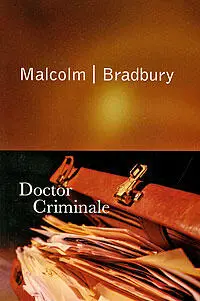
- Название:Doctor Criminale
- Автор:
- Издательство:Picador
- Жанр:
- Год:2000
- Город:London
- ISBN:978-0330390347
- Рейтинг книги:5 / 5. Голосов: 1
-
Избранное:Добавить в избранное
- Отзывы:
-
Ваша оценка:
Doctor Criminale: краткое содержание, описание и аннотация
Предлагаем к чтению аннотацию, описание, краткое содержание или предисловие (зависит от того, что написал сам автор книги «Doctor Criminale»). Если вы не нашли необходимую информацию о книге — напишите в комментариях, мы постараемся отыскать её.
Doctor Criminale — читать онлайн бесплатно полную книгу (весь текст) целиком
Ниже представлен текст книги, разбитый по страницам. Система сохранения места последней прочитанной страницы, позволяет с удобством читать онлайн бесплатно книгу «Doctor Criminale», без необходимости каждый раз заново искать на чём Вы остановились. Поставьте закладку, и сможете в любой момент перейти на страницу, на которой закончили чтение.
Интервал:
Закладка:
Just then I noticed that Professor Monza had been quietly joined by someone else. He was a sturdy, square, bodily firm man in his early or middle sixties. I say a man; he was rather a presence. He wore a light-blue silk suit that had a fine sheen to it, like the best Venetian glassware; I imagined it had come from some tailor in Hong Kong who had spent years thoughtfully pondering every detail of his personal measurements. There was a dark-blue silk kerchief tucked into his top pocket; a Swiss gold watch shone brightly on his wrist, under the cuff of his blue silk shirt. His cufflinks had probably come from Iran, his shoes no doubt from Gucci. The soufflé chef at Maxim’s seemed to have bouffanted his coiffed-up, elegant grey hair. In one way his appearance seemed a little coarse; his arms were fat, his body rather squat, and a tuft of wiry chest hair stuck out over the knot of his Hermes tie. In another his appearance was highly refined: his manner was gracious and courtly, the hand he stuck out to the people who began crowding round him in warm recognition had the suppleness of a pianist as he fondled the keys of his Bechstein. I did not know him; and yet, of course, I did. ‘Ecce homo,’ cried Miss Belli, seizing my arm and pointing him out. ‘Oh yes, there he is, that is the one,’ said Ildiko, equally excited, ‘Do you see him, that is Bazlo Criminale.’
8
Criminale gave the room the centre it seemed to lack . . .
From the moment he appeared, from goodness knows where, amongst us, it was immediately apparent that Bazlo Criminale had given the room the centre that in the chaos of arrival, it had seemed to lack. The distinguished writers toting their hand luggage, stopped in their chatter to he photographers surged forward, as if at last they were now truly flashing their cameras at something really worth the flashing. Despite the regulations about the press, it was clear that quite a few Italian journalists had been allowed to join the arriving party, and they now left all other prey behind and began to form a great circle around him. Monza made a brief pretence of waving them away, but it was perfectly apparent that he was the one who had allowed them into the villa in the first place. It made no difference; they were, after all, Italian.
In his sparkling blue suit, Criminale remained calm, used to ‘Let them, Monza,’ I heard him say, as I pressed forward too These people must always have their little ounces or two flesh.’ ‘Maybe just one or two photographas!’ said Monza. ‘Radio Italiana,’ said a young man who had shoved himself forward, a recorder hanging from his shoulder, ‘Prego, please, Dottore Criminale!’ ‘Oh, radio, I don’t think so,’ said Monza, dismissively, ‘Or do we allow him perhapsa just one minute, hey?’ ‘Very well, very well, I will answer just one question,’ said Criminale patiently, ‘Though I like just a little silence.’ ‘Silenza, silenza!’ cried Monza. ‘Dottore Criminale,’ asked the man from Radio Italiana, who had beautiful black hair, ‘The changes now in the Soviet Union, do you think they are totally irreversible?’ ‘Ah,’ said Criminale, The changes in Russia become incontrovertible only when the rouble becomes convertible.’ ‘Si, si,’ said the man from Radio Italiana, ‘And so what happens now in Eastern Europe?’
Criminale laughed. ‘One question is now two,’ he said. ‘Please, Dottore Criminale!’ ‘Remember, the world has changed but the people in it remain inside the same,’ said Criminale, ‘This is the problem of all revolutions. You know the old saying: never forget the past, you may need it again in the future.’ ‘Then how does this affect your meetings here?’ ‘Two questions are now three,’ said Criminale, ‘Well, the problem of Literature After the Cold War is the same problem as Literature During the Cold War, da? It is the problem to stop it being merely politics or journalism and make it become literature. It is to make history deliver the aesthetic, to make events a thing of form. It is also a problem that is never solved, because we are mortal. Enough?’ ‘Basta?’ asked Monza. ‘Wonderful, Dottore Criminale,’ said the radio reporter.
Then a girl with a spiral notebook pushed up close. She was extremely good-looking; I saw Criminale smile pleasantly at her. ‘Signer Criminale, do you speak perhaps Italian? I like your views on the works of Pliny.’ ‘It’s all righta, I translate for you,’ said Monza, ‘Si?’ ‘It is not necessary, Monza,’ said Criminale, and produced two or three sentences in graceful Italian that clearly served their turn, for there was a small burst of applause at the end. ‘Maestro, maestro, maestro!’ cried another journalist from the back of the crowd, an innocent-looking young man with long hair and glasses, who seemed something of an Italian version of myself, ‘I needa your attention! Some personal questions?’ Criminale raised his head, as if disturbed. And then there was an extraordinary interruption.
‘My dearling, really, you will be much too tired,’ cried someone. I turned; we all did. A vast woman like a ship, hung with flags and trophies, her hair raised into a great decorated poop, her great handbag clanking noisily, as if it was filled with doubloons, was forging heedlessly through the crowd. ‘It’s Sepulchra,’ said Ildiko, ‘Oh, my God, hasn’t she got bigger!’ ‘Bazlo, dearling, it is time for your think,’ said Sepulchra firmly. ‘Yes, my dear,’ said Criminale, timidly, turning to her, ‘Monza, I fear all this is becoming a bit of a bore. A bit of a big noisy bore.’ ‘I’m sorry, Bazlo,’ said Monza, going a little pale. ‘May I trouble you, or perhaps one of your very kind assistants, to take me to some room or quiet place or other.’ ‘Somewhere he can write a little,’ said Sepulchra. ‘To write, now?’ asked Monza, ‘We are just beginning . . .’
‘Yes,’ said Criminale, ‘One or two thoughts on Kant and Hegel have suddenly occurred to me I had better commit down to paper at once.’ ‘If you can wait only one minuta,’ said Monza, ‘I have a few important announcementas to make, and I really musta introduce you to the gatheringa. Then I personally will find you a good place to worka.’ ‘If very brief,’ said Sepulchra. ‘Quite brief,’ said Monza, ‘We must make a welcome.’ ‘Very very brief,’ said Sepulchra. ‘Attenzione! Achtung! Not so noisy prego! Can I have your attention bitte!’ cried Monza, clapping his hands over his head. Slowly the distinctive noise of chattering writers began to subside. ‘Distinguished guestsa!’ pronounced Monza, now standing on a chair, ‘My name is Massimo Monza, and I like to welcoma you to this great Barolo Congress, on the thema “Writing and Power: The Changing Nineties: Literatura After the Colda Wara!”
‘Here he goes,’ Miss Belli whispered in my ear. ‘For an entira weeka, in these so beautiful surroundingsa, both classical and romantical, we will meeta and worka together, to discuss the most lifa and deatha questions of the modern world of today!’ ‘This is brief?’ Sepulchra could be heard saying, ‘I do not think it is brief.’ ‘Fortuna’ said Monza ‘has smiled often on this fantastical place. It smiles againa today. I will be making you of course many announcementsa.’ ‘Of course,’ murmured Miss Uccello. ‘But the firsta is the finesta!’ said Monza, ‘You know we have here as Guesta of Honour a man without whom all serious discussion is frankly impossible! I mean of course our maestro, Dottore Bazlo Criminale, biographer of Goethe, autore of Homeless , and truly the greatest philosopher of our tima! I ask you, pleasa welcome Dottore Criminale!’ Arm out, Monza turned on his chair, gesturing towards his guest of honour. Applause surged; then it faltered and stopped. The space in the hall to which Monza was gesturing was vacant. Somehow, without anyone quite noticing, Criminale and his spouse, who had been there only a moment before, had absented themselves: disappeared.
Читать дальшеИнтервал:
Закладка:
Похожие книги на «Doctor Criminale»
Представляем Вашему вниманию похожие книги на «Doctor Criminale» списком для выбора. Мы отобрали схожую по названию и смыслу литературу в надежде предоставить читателям больше вариантов отыскать новые, интересные, ещё непрочитанные произведения.



Обсуждение, отзывы о книге «Doctor Criminale» и просто собственные мнения читателей. Оставьте ваши комментарии, напишите, что Вы думаете о произведении, его смысле или главных героях. Укажите что конкретно понравилось, а что нет, и почему Вы так считаете.