Malcolm Bradbury - Doctor Criminale
Здесь есть возможность читать онлайн «Malcolm Bradbury - Doctor Criminale» весь текст электронной книги совершенно бесплатно (целиком полную версию без сокращений). В некоторых случаях можно слушать аудио, скачать через торрент в формате fb2 и присутствует краткое содержание. Город: London, Год выпуска: 2000, ISBN: 2000, Издательство: Picador, Жанр: Современная проза, на английском языке. Описание произведения, (предисловие) а так же отзывы посетителей доступны на портале библиотеки ЛибКат.
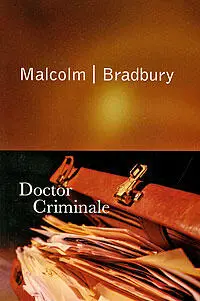
- Название:Doctor Criminale
- Автор:
- Издательство:Picador
- Жанр:
- Год:2000
- Город:London
- ISBN:978-0330390347
- Рейтинг книги:5 / 5. Голосов: 1
-
Избранное:Добавить в избранное
- Отзывы:
-
Ваша оценка:
Doctor Criminale: краткое содержание, описание и аннотация
Предлагаем к чтению аннотацию, описание, краткое содержание или предисловие (зависит от того, что написал сам автор книги «Doctor Criminale»). Если вы не нашли необходимую информацию о книге — напишите в комментариях, мы постараемся отыскать её.
Doctor Criminale — читать онлайн бесплатно полную книгу (весь текст) целиком
Ниже представлен текст книги, разбитый по страницам. Система сохранения места последней прочитанной страницы, позволяет с удобством читать онлайн бесплатно книгу «Doctor Criminale», без необходимости каждый раз заново искать на чём Вы остановились. Поставьте закладку, и сможете в любой момент перейти на страницу, на которой закончили чтение.
Интервал:
Закладка:
Probably because of our subordinate press status, we had been put in the very last car. This proved fortunate, because it meant we found ourselves in the ebullient company of Signorinas Belli and Uccello. Fine-looking girls of a familiar, and expensive, Italian type, they flashed their eyes a lot, laughed a good deal, and happily explained to us what a whole lot of blasted fun this whole blasted congress was going to be. ‘Professor Monza has prepared it for many month,’ said Miss Belli, ‘I suppose you have both heard of Professor Monza?’ ‘I don’t know him,’ said Ildiko. ‘He is not known in my country.’ ‘But he is just our very best-known professor!’ cried Miss Uccello, ‘He has his own column in La Stampa !’ ‘His own arts programme on Radio Italiana, Ecco Bravo !’ cried Miss Belli. ‘He writes experimental novels of Sicily!’ cried Miss Uccello. ‘And edits the famous magazine Soufflé , you know it?’ cried Miss Belli, ‘All about literature and food!’ ‘Also he drives a Porsche,’ said Miss Belli. ‘He has a very beautiful, very rich wife,’ said Miss Uccello, ‘Of course he keeps her at his villa in the campagna.’ ‘He has the best collection of South American art in Italy,’ said Miss Belli. ‘In short he is very blasted famous and very blasted rich,’ said Miss Uccello.
‘And he is a professor, he teaches as well?’ asked Ildiko. Misses Belli and Uccello laughed. ‘Well, when the universities are open, he sometimes visits us,’ said Miss Belli, ‘In Italy the universities are not open so often.’ ‘You’re his students?’ I asked. ‘Well, we make our theses with him,’ said Miss Uccello. ‘So what do you study?’ asked Ildiko. ‘Signs, we study signs,’ said Miss Belli. ‘Mostly the film Casablanca , do you know it?’ asked Miss Uccello, ‘That has very interesting signs.’ ‘We look at it from a semiotic Marxist perspective,’ said Miss Belli. ‘You mean, Professor Monza is a Marxist?’ I asked. ‘Of course, he is a leading Italian intellectual,’ said Miss Uccello. ‘A very rich Marxist, that is the best kind to be,’ said Miss Belli, ‘Never be a Marxist and also poor.’ ‘He takes us out on his yacht at the weekends and we discuss the theories of Gramsci,’ said Miss Uccello, looking at Miss Belli and giggling. ‘It’s right,’ said Miss Belli, giggling too, ‘We call it, topless Gramsci.’
Milan was well behind us now, and we were proceeding north, back toward the slopes of the Italian Alps; the white peaks rose ahead of us, backlit with a roseate afternoon glow. Even with winter coming, various perfumed fragrances blew in on us from the Lombardy countryside, with its red farmhouses and verdant gardens – though these were as nothing compared with the expensive musky perfumes that wafted from the bodies of the delightful Signorinas Belli and Uccello, who sat in the seats in front of us. ‘So that’s Monza,’ I said, ‘But what happened to Doctor Criminale? I didn’t see him at the station.’ ‘At the station, naiou,’ said Miss Belli, ‘Of course not, he is at the villa, preparing his great speech for the close of the congress.’ ‘Has he been there a little while?’ asked Ildiko. ‘Already three, four day,’ said Miss Uccello, ‘He likes to come there often, because it is a good place for him to write. My mount of Olympus, that is how he calls it.’ ‘He’s alone?’ I asked. Miss Belli and Miss Uccello turned to each other and laughed. ‘No, not alone,’ said Miss Belli finally, ‘La Stupenda is with him.’
‘La Stupenda?’ I asked. ‘His wife Sepulchra,’ said Miss Uccello, ‘We call her La Stupenda.’ Ildiko turned to me. ‘You remember her,’ she said, ‘I showed you her nude photographs in Budapest.’ ‘Her blasted nude photo!’ cried Miss Belli joyously, falling with tears of laughter into the arms of Miss Uccello. ‘Non possibile!’ cried Miss Ucello, wiping her eyes. ‘Why not?’ I asked. ‘You don’t know her?’ asked Miss Belli, ‘This lady is like a great battleship.’ ‘She charges all round and fires at people all the time, always ready for the attack,’ said Miss Uccello. ‘That poor man,’ said Miss Belli, ‘Really we feel so sorry for him.’ ‘How does such a nice man marry such a woman!’ asked Miss Uccello. ‘Oh look,’ said Miss Belli, ‘Here we are at the blasted lake!’ ‘And now we must go on the blasted speedo!’ said Miss Uccello. The car stopped, in the long line of cars; the driver descended, and opened the doors for us; we all got out.
We were beside a wooden pier, where three white speedboats with bright awned canvas roofs stood rocking, waiting to take us on board. Behind us lay a small Italian town, buzzing with the noise of motorscooters; in front of us lay a great Italian lake, surrounded by ilex-covered green hillsides. Along the spread of the lake were a few small settlements, their lights twinkling in reflection in the pearly grey water. The lake was thin and long, and made a great finger pointing north into the granite white-capped mass of the Alps, which rose up in a wall at the further end. Behind them a purple evening light was already beginning to glow. ‘Why do we go on a boat?’ asked Ildiko. ‘Because now we go to an island, Isola Barolo,’ said Miss Belli, ‘And there you will find the villa. Let us go on board.’ The other writers were already settling in the seats, some of them wrapping themselves around with rugs. Helped on board by a white-capped boatman, Ildiko and I went up to the prow, to be joined by Misses Belli and Uccello.
Soon we were speeding up the lake, over still grey chilly water that fizzed like champagne under our motion. Around the lake sat many fine and ancient villas, terra cotta or ochre in colour, built on small outcrops or tucked into coves; their manicured gardens were filled with statuary, and all had great boathouses, packed with yachts, cruisers, small motor boats. Hair blowing in the wind, Misses Belli and Uccello explained to us that most of these were ancient villas, homes that had once belonged to Pliny and Vergil, to noble contessas and elegant principessas, to deposed kings and displaced literary exiles. Now, in another order of things, they mostly belonged to Milanese furniture designers or Arab entrepreneurs, people whose bank accounts kept them going and who only came there on occasional weekends, leaving the lake to a kind of peace it had not really enjoyed since the days of the Ghibellines and the Guelphs. ‘So now we have it nearly to ourselves,’ said Miss Belli, ‘Now, when we turn the point, you will see Barolo.’
There was a burst of spray as our boat changed course, and there in front of us lay a long low island, rising to a sharp and craggy peak at its far end. At the base of this prominence was a small village, with pier, promenade, an arcaded street with small shops and cafes, a few small hotels, the stone belltower of an ancient church. Above the village rose terrace after terrace, garden after garden, wood after wood. Near the top, among cypresses, ilexes, jacaranda trees, was a vast pink villa, gazing out in all directions up and down the lake, and grander even than those we had already seen. ‘Ecco, Villa Barolo,’ cried Miss Belli. ‘We go there? Really?’ asked Ildiko. ‘Si si,’ said Miss Uccello, ‘Blasted nice, don’t you say?’ On the glassed-in terraces of the hotels, the few winter guests rose from their pasta to watch our extraordinary arrival. The writers of the world unloaded at the pier, where several minibuses waited to shuttle us from the village itself to the remarkable world of the villa above.
We took our places in the bus, and soon came to the great iron security gates that barred the entrance to the estate; they opened by some electronic magic on our arrival. We drove up the winding ilex-lined drive, past great gardens and ordered woods, and came at last to the formal lawn and the grand portico of the villa itself. Blue-coated servants hurried out to take the hand luggage; white-coated butlers steered us into the fine vast hallway of the house. In the middle of the lobby stood small Professor Monza, clapping his hands, giving orders. He had somehow arrived ahead of us, by what means it was not entirely clear, but maybe by helicopter or hologram. Talking, gazing, exclaiming, looking up at the ceiling by Tiepolo, at the statues by Canova, we surged in – writers of the world, novelists and critics, journalists and reviewers, the leading citizens in fact of the life, which was here evidently the highlife, of contemporary literature.
Читать дальшеИнтервал:
Закладка:
Похожие книги на «Doctor Criminale»
Представляем Вашему вниманию похожие книги на «Doctor Criminale» списком для выбора. Мы отобрали схожую по названию и смыслу литературу в надежде предоставить читателям больше вариантов отыскать новые, интересные, ещё непрочитанные произведения.



Обсуждение, отзывы о книге «Doctor Criminale» и просто собственные мнения читателей. Оставьте ваши комментарии, напишите, что Вы думаете о произведении, его смысле или главных героях. Укажите что конкретно понравилось, а что нет, и почему Вы так считаете.