Чимаманда Адичи - Purple hibiscus
Здесь есть возможность читать онлайн «Чимаманда Адичи - Purple hibiscus» — ознакомительный отрывок электронной книги совершенно бесплатно, а после прочтения отрывка купить полную версию. В некоторых случаях можно слушать аудио, скачать через торрент в формате fb2 и присутствует краткое содержание. Год выпуска: 2003, ISBN: 2003, Издательство: Algonquin Books of Chapel Hill, Жанр: Современная проза, на английском языке. Описание произведения, (предисловие) а так же отзывы посетителей доступны на портале библиотеки ЛибКат.
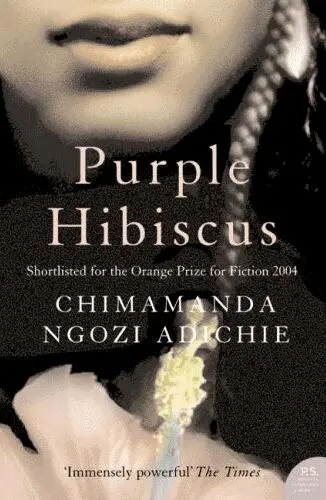
- Название:Purple hibiscus
- Автор:
- Издательство:Algonquin Books of Chapel Hill
- Жанр:
- Год:2003
- ISBN:1-56512-387-5
- Рейтинг книги:5 / 5. Голосов: 1
-
Избранное:Добавить в избранное
- Отзывы:
-
Ваша оценка:
Purple hibiscus: краткое содержание, описание и аннотация
Предлагаем к чтению аннотацию, описание, краткое содержание или предисловие (зависит от того, что написал сам автор книги «Purple hibiscus»). Если вы не нашли необходимую информацию о книге — напишите в комментариях, мы постараемся отыскать её.
Purple hibiscus — читать онлайн ознакомительный отрывок
Ниже представлен текст книги, разбитый по страницам. Система сохранения места последней прочитанной страницы, позволяет с удобством читать онлайн бесплатно книгу «Purple hibiscus», без необходимости каждый раз заново искать на чём Вы остановились. Поставьте закладку, и сможете в любой момент перейти на страницу, на которой закончили чтение.
Интервал:
Закладка:
The guests came in and sat down in the living room. I could not see them from the dining table, but while I ate, I tried hard to make out what they were saying. I knew Jaja was listening, too. I saw the way his head was slightly tilted, his eyes focused on the empty space in front of him. They were talking in low tones, but it was easy to make out the name Nwankiti Ogechi, especially when Ade Coker spoke, because he did not lower his voice as much as Papa and the other man did. He was saying that Big Oga's assistant-Ade Coker referred to the head of state as Big Oga even in his editorials-had called to say that Big Oga was willing to give him an exclusive interview. "But they want me to cancel the Nwankiti Ogechi story. Imagine the stupid man, he said they knew some useless people had told me stories that I planned to use in my piece and that the stories were lies…"
I heard Papa interrupt in a low voice, and the other man added something afterward, something about the Big People in Abuja not wanting such a story out now that the Commonwealth Nations were meeting. "You know what this means? My sources were right. They have really wasted Nwankiti Ogechi," Ade Coker said. "Why didn't they care when I did the last story about him? Why do they care now?"
I knew what story Ade was referring to, since it was in the Standard about six weeks ago, right around the time Nwankiti Ogechi first disappeared without a trace. I remembered the huge black question mark above the caption "Where is Nwankiti?" And I remembered that the article was full of worried quotes from his family and colleagues. It was nothing like the first Standard feature I'd read about him, titled "A Saint among Us," which had focused on his activism, on his pro-democracy rallies that filled the stadium at Surulere.
"I am telling Ade we should wait, sir," the other guest was saying. "Let him do the interview with Big Oga. We can do the Nwankiti Ogechi story later."
"No way!" Ade burst out, and if I had not known that slightly shrill voice, it would have been hard for me to imagine the round, laughing Ade sounding that way, so angry. "They don't want Nwankiti Ogechi to become an issue now. Simple! And you know what it means, it means they have wasted him! Which one is for Big Oga to try and bribe me with an interview? I ask you, eh, which one is that?"
Papa cut him short then, but I could not hear much of what he said, because he spoke in low, soothing tones, as though he were calming Ade down. The next thing I heard him say was, "Come, let us go to my study. My children are eating."
They walked past us on their way upstairs. Ade smiled as he greeted us, but it was a strained smile. "Can I come and finish the food for you?" he teased me, making a mock attempt to swoop down on my food.
After lunch, as I sat in my room, studying, I tried hard to hear what Papa and Ade Coker were saying in the study. But I couldn't. Jaja walked past the study a few times, but when I looked at him, he shook his head-he could hear nothing through the closed door, either.
It was that evening, before dinner, that the government agents came, the men in black who yanked hibiscuses off as they left, the men Jaja said had come to bribe Papa with a truckful of dollars, the men Papa asked to get out of our house.
When we got the next edition of the Standard, I knew it would have Nwankiti Ogechi on its cover. The story was detailed, angry, full of quotes from someone called The Source. Soldiers shot Nwankiti Ogechi in a bush in Minna. And then they poured acid on his body to melt his flesh off his bones, to kill him even when he was already dead.
During family time, while Papa and I played chess, Papa winning, we heard on the radio that Nigeria had been suspended from the Commonwealth because of the murder, that Canada and Holland were recalling their ambassadors in protest. The newscaster read a small portion of the press release from the Canadian government, which referred to Nwankiti Ogechi as "a man of honor."
Papa looked up from the board and said, "It was coming to this. I knew it would come to this."
Some men arrived just after we had dinner, and I heard Sisi tell Papa that they said they were from the Democratic Coalition. They stayed on the patio with Papa, and even though I tried to, I could not hear their conversation.
The next day, more guests came during dinner. And even more the day after. They all told Papa to be careful. Stop going to work in your official car. Don't go to public places. Remember the bomb blast at the airport when a civil rights lawyer was traveling. Remember the one at the stadium during the pro-democracy meeting. Lock your doors. Remember the man shot in his bedroom by men wearing black masks.
Mama told me and Jaja. She looked scared when she talked, and I wanted to pat her shoulder and tell her Papa would be fine. I knew he and Ade Coker worked with truth, and I knew he would be fine. "Do you think Godless men have any sense?" Papa asked every night at dinner, often after a long stretch of silence. He seemed to drink a lot of water at dinner, and I would watch him, wondering if his hands were really shaking or if I was imagining it.
Jaja and I did not talk about the many people who came to the house. I wanted to talk about it, but Jaja looked away when I brought it up with my eyes, and he changed the subject when I spoke of it. The only time I heard him say anything about it was when Aunty Ifeoma called to find out how Papa was doing, because she had heard about the furor the Standard story had caused. Papa was not home, and so she spoke to Mama. Afterward, Mama gave the phone to Jaja. "Aunty, they won't touch Papa," I heard Jaja say. "They know he has many foreign connections." As I listened to Jaja go on to tell Aunty Ifeoma that the gardener had planted the hibiscus stalks, but that it was still too early to tell if they would live, I wondered why he had never said that to me about Papa. When I took the phone, Aunty Ifeoma sounded close by and loud. After our greetings, I took a deep breath and said, "Greet Father Amadi."
"He asks about you and Jaja all the time," Aunty Ifeoma said. "Hold on, nne, Amaka is here."
"Kambili, he kwanu?" Amaka sounded different on the phone. Breezy. Less likely to start an argument. Less likely to sneer-or maybe that was simply because I would not see the sneer.
"I'm fine," I said. "Thank you. Thank you for the painting."
"I thought you might want to keep it." Amaka's voice was still hoarse when she spoke of Papa-Nnukwu.
"Thank you," I whispered. I had not known that Amaka even thought of me, even knew what I wanted, even knew that I wanted.
"You know Papa-Nnukwu's akwam ozu is next week?"
"Yes."
"We will wear white. Black is too depressing, especially that shade people wear to mourn, like burnt wood. I will lead the dance of the grandchildren." She sounded proud.
"He will rest in peace," I said. I wondered if she could tell that I, too, wanted to wear white, to join the funeral dance of the grandchildren.
"Yes, he will." There was a pause. "Thanks to Uncle Eugene."
I didn't know what to say. I felt as if I were standing on a floor where a child had spilled talcum powder and I would have to walk carefully so as not to slip and fall. "Papa-Nnukwu really worried about having a proper funeral," Amaka said. "Now I know he'll rest in peace. Uncle Eugene gave Mom so much money she's buying seven cows for the funeral!"
"That's nice." A mumble.
"I hope you and Jaja can come for Easter. The apparitions are still going on, so maybe we can go on pilgrimage to Aokpe this time, if that will make Uncle Eugene say yes. And I am doing my confirmation on Easter Sunday and I want you and Jaja to be there."
"I want to go, too," I said, smiling, because the words I had just said, the whole conversation with Amaka, were dreamlike. I thought about my own confirmation, last year at St. Agnes. Papa had bought my white lace dress and a soft, layered veil, which the women in Mamas prayer group touched, crowding around me after Mass. The bishop had trouble lifting the veil from my face to make the sign of the cross on my forehead and say, "Ruth, be sealed with the gift of the Holy Spirit." Ruth. Papa had chosen my confirmation name.
Читать дальшеИнтервал:
Закладка:
Похожие книги на «Purple hibiscus»
Представляем Вашему вниманию похожие книги на «Purple hibiscus» списком для выбора. Мы отобрали схожую по названию и смыслу литературу в надежде предоставить читателям больше вариантов отыскать новые, интересные, ещё непрочитанные произведения.



![О Генри - Пурпурное платье [The Purple Dress]](/books/405339/o-genri-purpurnoe-plate-the-purple-dress-thumb.webp)






Обсуждение, отзывы о книге «Purple hibiscus» и просто собственные мнения читателей. Оставьте ваши комментарии, напишите, что Вы думаете о произведении, его смысле или главных героях. Укажите что конкретно понравилось, а что нет, и почему Вы так считаете.