Hermann Hesse - The Glass Bead Game
Здесь есть возможность читать онлайн «Hermann Hesse - The Glass Bead Game» весь текст электронной книги совершенно бесплатно (целиком полную версию без сокращений). В некоторых случаях можно слушать аудио, скачать через торрент в формате fb2 и присутствует краткое содержание. Год выпуска: 1969, Жанр: Современная проза, Социально-психологическая фантастика, на английском языке. Описание произведения, (предисловие) а так же отзывы посетителей доступны на портале библиотеки ЛибКат.
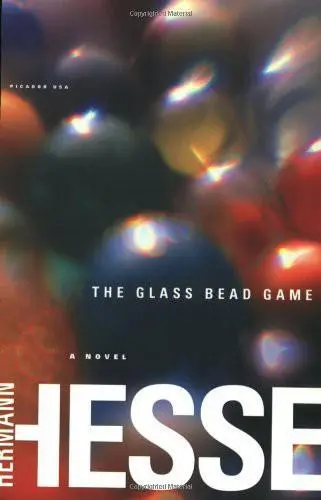
- Название:The Glass Bead Game
- Автор:
- Жанр:
- Год:1969
- ISBN:нет данных
- Рейтинг книги:4 / 5. Голосов: 2
-
Избранное:Добавить в избранное
- Отзывы:
-
Ваша оценка:
The Glass Bead Game: краткое содержание, описание и аннотация
Предлагаем к чтению аннотацию, описание, краткое содержание или предисловие (зависит от того, что написал сам автор книги «The Glass Bead Game»). Если вы не нашли необходимую информацию о книге — напишите в комментариях, мы постараемся отыскать её.
Something like chess but far more intricate, the game of Magister Ludi known as the Glass Bead Game is thought in its purest form, a synthesis through which philosophy, art, music and scientific law are appreciated simultaneously. The scholar-players are isolated within Castalia, an autonomous elite institution devoted wholly to the mind and the imagination…
The Glass Bead Game — читать онлайн бесплатно полную книгу (весь текст) целиком
Ниже представлен текст книги, разбитый по страницам. Система сохранения места последней прочитанной страницы, позволяет с удобством читать онлайн бесплатно книгу «The Glass Bead Game», без необходимости каждый раз заново искать на чём Вы остановились. Поставьте закладку, и сможете в любой момент перейти на страницу, на которой закончили чтение.
Интервал:
Закладка:
Joseph Knecht took no such pleasure in these endeavors, nor had he any faith in their outcome. He was determined to free himself from the fetters of his present situation, leaving himself unencumbered for tasks which he felt were awaiting him. But he fully realized that he could not overpower the Board by rational arguments, nor delegate Tegularius any part of the real work that had to be done. Nevertheless, he was very glad to know that Fritz was occupied and diverted for the short while that they would still be living in proximity to each other. The next time he saw Plinio Designori he was able to report: “Friend Tegularius is now busy, and compensated for what he thinks he has lost because of your reappearance on the scene. His jealousy is almost cured, and working on something for me and against my colleagues is doing him good. He is almost happy. But don’t imagine, Plinio, that I count on anything concrete coming out of this project, aside from the benefit to himself. It is most unlikely that our highest authority will grant this petition of mine. In fact, it’s out of the question. At best they will reply with a mild reprimand. What dooms my request is the nature of our hierarchy itself. A Board that would release its Magister Ludi in response to a petition, no matter how persuasively argued, and would assign him to work outside Castalia, wouldn’t be to my liking at all. Besides, there is the character of our present Master of the Order. Master Alexander is a man whom nothing can bend. No, I shall have to fight this battle out alone. But let us allow Tegularius to exercise his mind for the present. All we lose by that is a little time, which I need in any case so as to leave everything here so well arranged that my departure will cause no harm to Waldzell. But meanwhile you must find me some place to live on the outside, and some employment, no matter how modest; if necessary I shall be content with a position as a music teacher, say. It need only be a beginning, a springboard.”
Designori said he thought something could be found, and when the time came his house was at his friend’s disposal for as long as he liked. But Knecht would not accept that.
“No,” he said, “I wouldn’t do as a guest; I must have some work. Besides, my staying more than a few days in your house, lovely as it is, would only add to the tensions and troubles there. I have great confidence in you, and your wife, too, nowadays treats me in a friendly way, but all this would look entirely different as soon as I ceased to be a visitor and Magister Ludi, and became a refugee and permanent guest.”
“Surely you’re being a little too literal-minded about it,” Plinio said. “Once you’ve made your break and are living in the capital, you’ll soon be offered a suitable post, at least a professorship at the university — you can count on that as a certainty. But such things take time, as you know, and of course I can only begin working in your behalf after you have won your freedom.”
“Of course,” the Master said. “Until then my decision must remain secret. I cannot offer myself to your authorities before my own authority here has been informed and has made its decision; that goes without saying. But for the present, you know, I am not at all seeking a public appointment. My wants are few, probably fewer than you can imagine. I need a little room and my daily bread, but above all work to do, some task as a teacher; I need one or a few pupils to whom I can be near and whom I can influence. A university post is the last thing on my mind. I would be just as glad — no, I would by far prefer — to work with a boy as a private tutor, or something of the sort. What I am seeking and what I need is a simple, natural task, a person who needs me. Appointment at a university would from the start mean my fitting into a traditional, sanctified, and mechanized bureaucracy, and what I crave is just the opposite of that.”
Hesitantly, Designori brought up the project that had been on his mind for some time.
“I do have something to propose,” he said, “and hope you will at least think it over. If you can possibly accept it, you would be doing me a service too. Since that first day I visited you here you have given me a great deal of help. You’ve also come to know my household and know how things stand there. My situation isn’t good, but it is better than it has been for years. The thorniest problem is the relationship between me and my son. He is spoiled and impudent; he’s made himself a privileged position in our house — as you know, this was virtually pressed on him while he was still a child and courted by both his mother and myself. Since then he’s decidedly gone over to his mother’s side, and gradually whatever authority I might have had over him has been adroitly taken out of my hands. I had resigned myself to that, as I have to so much else in my botched life. But now that I have recovered somewhat, thanks to you, I’ve regained hope. You can see what I am driving at. I would think it a piece of great good fortune if Tito, who is having difficulties in school anyhow, were to have a tutor who would take him in hand. It’s a selfish request, I know, and I have no idea whether the task appeals to you at all. But you’ve encouraged me to make the suggestion, as least.”
Knecht smiled and extended his hand.
“Thank you, Plinio. No proposal could be more welcome to me. The only thing lacking is your wife’s consent. Furthermore, the two of you must be prepared to leave your son entirely to me for the time being. If I am to do anything with him, the daily influence of his home must be excluded. You must talk to your wife and persuade her to accept this condition. Go at it cautiously; give yourselves time.”
“Do you really think you can do something with Tito?” Designori asked.
“Oh yes, why not? He has good blood and high endowments from both parents. What is missing is the harmony of these forces. My task will be to awaken in him the desire for this harmony, or rather to strengthen it and ultimately to make him conscious of it. I shall be happy to try.”
Thus Joseph Knecht had his two friends occupied with his affair, each in a different way. While Designori in the capital presented the new plan to his wife and tried to couch it in terms acceptable to her, Tegularius sat in a carrel in the library at Waldzell following up Knecht’s leads and gathering material for the petition. The Magister had put out good bait in the reading matter he had prescribed. Fritz Tegularius, the fierce despiser of history, sank his teeth into the history of the warring epoch, and became thoroughly infatuated with it. With his enthusiasm for any pastime, he ferreted out more and more anecdotes from that epoch in the dark prehistory of the Order. Soon he had collected such copious notes that when he presented them to his friend, Knecht could use only a tenth of them.
During this period Knecht made several visits to the capital. Because a sound, integrated personality often finds easy access to troubled and difficult people, Designori’s wife came to trust him more and more. Soon she consented to her husband’s plan. Tito himself, on one of these visits, boldly informed the Magister that he no longer wished to be addressed with the familiar pronoun, as if he were a child, since everyone nowadays, including his teacher, used the polite pronoun to him. Knecht thanked him with perfect courtesy and apologized. In his Province, he explained, the teachers used the familiar form to all students, even those who were quite grown up. After dinner he invited the boy to go for a walk with him and show him something of the city.
In the course of the walk Tito guided him down a stately street in the old part of the city, where the centuries-old houses of wealthy patrician families stood in an almost unbroken row. Tito paused in front of one of these substantial, tall, and narrow buildings and pointed to a shield over the doorway. “Do you know what that is?” he asked. When Knecht said he did not, he explained: “Those are the Designori arms, and this is our old house. It belonged to the family for three hundred years. But we are living in our meaningless, commonplace house just because after grandfather’s death my father took it into his head to sell this marvelous old mansion and build himself a fashionable place that by now isn’t so modern any more. Can you understand anyone’s acting like that?”
Читать дальшеИнтервал:
Закладка:
Похожие книги на «The Glass Bead Game»
Представляем Вашему вниманию похожие книги на «The Glass Bead Game» списком для выбора. Мы отобрали схожую по названию и смыслу литературу в надежде предоставить читателям больше вариантов отыскать новые, интересные, ещё непрочитанные произведения.









Обсуждение, отзывы о книге «The Glass Bead Game» и просто собственные мнения читателей. Оставьте ваши комментарии, напишите, что Вы думаете о произведении, его смысле или главных героях. Укажите что конкретно понравилось, а что нет, и почему Вы так считаете.