Hermann Hesse - The Glass Bead Game
Здесь есть возможность читать онлайн «Hermann Hesse - The Glass Bead Game» весь текст электронной книги совершенно бесплатно (целиком полную версию без сокращений). В некоторых случаях можно слушать аудио, скачать через торрент в формате fb2 и присутствует краткое содержание. Год выпуска: 1969, Жанр: Современная проза, Социально-психологическая фантастика, на английском языке. Описание произведения, (предисловие) а так же отзывы посетителей доступны на портале библиотеки ЛибКат.
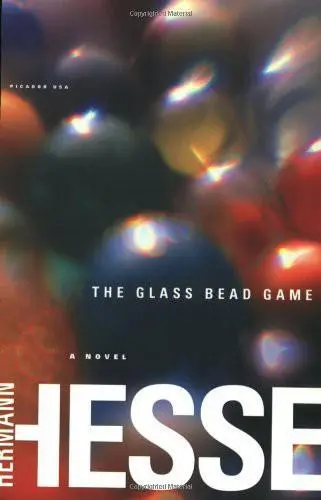
- Название:The Glass Bead Game
- Автор:
- Жанр:
- Год:1969
- ISBN:нет данных
- Рейтинг книги:4 / 5. Голосов: 2
-
Избранное:Добавить в избранное
- Отзывы:
-
Ваша оценка:
The Glass Bead Game: краткое содержание, описание и аннотация
Предлагаем к чтению аннотацию, описание, краткое содержание или предисловие (зависит от того, что написал сам автор книги «The Glass Bead Game»). Если вы не нашли необходимую информацию о книге — напишите в комментариях, мы постараемся отыскать её.
Something like chess but far more intricate, the game of Magister Ludi known as the Glass Bead Game is thought in its purest form, a synthesis through which philosophy, art, music and scientific law are appreciated simultaneously. The scholar-players are isolated within Castalia, an autonomous elite institution devoted wholly to the mind and the imagination…
The Glass Bead Game — читать онлайн бесплатно полную книгу (весь текст) целиком
Ниже представлен текст книги, разбитый по страницам. Система сохранения места последней прочитанной страницы, позволяет с удобством читать онлайн бесплатно книгу «The Glass Bead Game», без необходимости каждый раз заново искать на чём Вы остановились. Поставьте закладку, и сможете в любой момент перейти на страницу, на которой закончили чтение.
Интервал:
Закладка:
Such were Designori’s comments, and no doubt he had reason for his admiring gratitude. It may not be too difficult to teach boys and young men the lifestyle of the Order, with the aid of our tried and true methods. It was surely a difficult task in the case of a man who was already approaching his fiftieth year, even if this man were himself full of good will. Not that Designori ever became anything like a model Castalian. But Knecht succeeded fully in what he had set out to do: in lifting the bitter weight of unhappiness, in leading Designori’s touchy, vulnerable soul back to something like harmony and serenity, and in replacing a number of his bad habits by good ones. Naturally the Magister Ludi could not himself undertake all the detailed work that was involved. He enlisted the apparatus and energies of Waldzell and the Order in behalf of this honored guest. For a while he even dispatched a meditation master from Hirsland, the seat of the Order’s directorate, to stay a while with Designori and supervise his exercises. But the whole plan and direction of the cure remained in Knecht’s hand.
It was in his eighth year as Magister that he at last yielded to his friend’s repeated invitations and visited him at his home in the capital. With permission from the directorate of the Order, with whose President, Alexander, he had close and affectionate relations, he devoted a holiday to his visit. Although he expected a great deal of it, he had been putting it off for a whole year, partly because he first wished to be sure of his friend, partly, no doubt, out of a natural timidity. This was, after all, his first step into that world from which his friend Plinio had brought his stony sadness, the world which held so many important secrets for him.
He found the modern house which his friend had exchanged for the old Designori townhouse presided over by a stately, highly intelligent, and reserved lady. She, however, was dominated by her handsome, cheeky, and rather ill-behaved son who seemed to be the center of everything here and who had apparently taken over from his mother a supercilious and rather insulting attitude toward his father.
Initially rather cool and suspicious of everything Castalian, both mother and son soon came under the spell of the Magister, whose office gave him, in their eyes, an almost mythical aura of mystery and consecration. Nevertheless, the atmosphere during this first visit was stiff and forced. Knecht remained rather quiet, observing and awaiting events. The lady of the house received him with formal politeness and inner distaste, as if he were a high officer of some enemy army being quartered on her. Tito, the son, was the least constrained of the three; probably he had often enough looked on in amusement on similar situations. No doubt he had also profited by them. His father seemed to be only playing the part of master of the house. Between him and his wife the prevailing tone was one of gentle, cautious, rather anxious politeness, as if each of them were walking on tiptoe. This tone was maintained far more easily and naturally by the wife than by her husband. As for the son, Plinio was always making overtures of comradeship to the boy which were at times taken up for selfish reasons, at other times impudently rebuffed.
In short, the three lived together in a sultry atmosphere of effort, guiltiness, and sternly repressed impulses, filled with fear of friction and eruptions, in a state of perpetual tension. The style of behavior and speech, like the style of the whole house, was a little too careful and deliberate, as though a solid wall had to be built against eventual breaches and assaults. Knecht also noted that a great deal of Plinio’s regained serenity had vanished from his face again. Though in Waldzell or in the guest house of the Order in Hirsland he was by now almost free of gloom, in his own house he still stood in the shadows, and provoked as much criticism as pity.
The house was a fine one. It bespoke wealth and luxurious tastes. In each room the furnishings were of the right proportions for the space; each was tuned to a pleasant harmony of two or three colors, with here and there a valuable work of art. Knecht looked about him with pleasure; but in the end all these delights to the eye struck him as a shade too handsome, too perfect, and too well thought out. There was no sense of growth, of movement, of renewal. He sensed that this beauty of the house and its belongings was also meant as a land of spell, a defensive gesture, and that these rooms, pictures, vases, and flowers enclosed and accompanied a life of vain longing for harmony and beauty which could be attained only in the form of tending such well-co-ordinated surroundings.
It was in the period after this visit, with its somewhat unedifying impressions, that Knecht sent a meditation teacher to his friend’s home. After having spent a single day in the curiously taut and charged atmosphere of this house, the Magister understood much that he had not wished to know but needed to learn for his friend’s sake. Nor was this first visit the last. He came again, several times, and on some of these occasions the talk turned to education and the difficulties with young Tito. In these conversations Tito’s mother took a lively part. The Magister gradually won the confidence and liking of this highly intelligent and skeptical woman. Once, when he said half jokingly that it was a pity her boy had not been sent to Castalia early, while there was still time for him to be educated there, she took the remark seriously as if it were a reproof, and came to her own defense. She doubted, she said, whether Tito would have been admitted; he was gifted enough, certainly, but hard to handle, and she would never have wished to impose her own ideas on the boy. After all, a similar attempt in the case of his father had not worked out well. Besides, neither she nor her husband had ever thought to claim the old Designori family privilege for their son, since they had broken with Plinio’s father and the whole tradition of the ancient house. Finally, she added, with a painful smile, that in any case she would not have been able to part with her child, since he was all that made her life worth living.
Knecht gave a great deal of thought to this last remark, which obviously had been made without reflection. So her house, in which everything was so distinguished, elegant, and harmonious, so her husband, her politics, her party, the heritage of the father she had once adored — so all this was not enough to give meaning to her life. Only her child could make it worth living. And she would rather allow this child to grow up under the harmful conditions that prevailed in this house than be separated from him for his own good. For so sensible and seemingly so cool and intellectual a woman, this was an astonishing confession. Knecht could not help her as directly as he had her husband, nor did he have the slightest intention of trying. But as a result of his rare visits and of the fact that Plinio was under his influence, some moderation and a reminder of better ways were introduced into the warped and wrong-headed family situation. The Magister himself, however, as he gained increasing influence and authority in the Designori household with each succeeding visit, found himself more and more puzzled by the life of these worldly people. Unfortunately we know very little about his visits in the capital and the things he saw and experienced there, so that we must content ourselves with the matters we have already indicated.
Knecht had not hitherto approached the President of the Order in Hirsland any more closely than his official functions demanded. He probably saw him only at those plenary sessions of the Board of Educators which took place in Hirsland, and even then the President generally performed only the more formal and ornamental duties, the reception and congé of his colleagues, with the principal work of conducting the session being left to the Speaker. The previous President, who at the time of Knecht’s assuming office was already an old man, had been highly respected by the Magister Ludi, but had made not a single gesture toward lessening the distance between them. For Knecht he was scarcely a human being, no longer had any personality; he hovered, a high priest, a symbol of dignity and composure, silent summit and crowning glory, above the entire hierarchy. This venerable man had recently died, and the Order had elected Alexander its new President.
Читать дальшеИнтервал:
Закладка:
Похожие книги на «The Glass Bead Game»
Представляем Вашему вниманию похожие книги на «The Glass Bead Game» списком для выбора. Мы отобрали схожую по названию и смыслу литературу в надежде предоставить читателям больше вариантов отыскать новые, интересные, ещё непрочитанные произведения.










Обсуждение, отзывы о книге «The Glass Bead Game» и просто собственные мнения читателей. Оставьте ваши комментарии, напишите, что Вы думаете о произведении, его смысле или главных героях. Укажите что конкретно понравилось, а что нет, и почему Вы так считаете.