Hermann Hesse - The Glass Bead Game
Здесь есть возможность читать онлайн «Hermann Hesse - The Glass Bead Game» весь текст электронной книги совершенно бесплатно (целиком полную версию без сокращений). В некоторых случаях можно слушать аудио, скачать через торрент в формате fb2 и присутствует краткое содержание. Год выпуска: 1969, Жанр: Современная проза, Социально-психологическая фантастика, на английском языке. Описание произведения, (предисловие) а так же отзывы посетителей доступны на портале библиотеки ЛибКат.
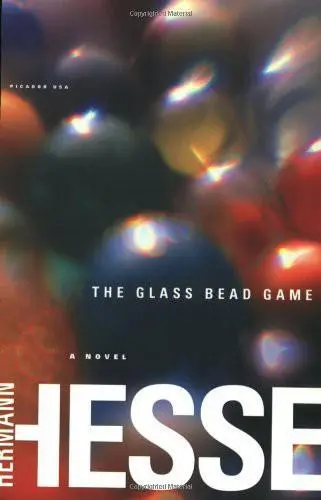
- Название:The Glass Bead Game
- Автор:
- Жанр:
- Год:1969
- ISBN:нет данных
- Рейтинг книги:4 / 5. Голосов: 2
-
Избранное:Добавить в избранное
- Отзывы:
-
Ваша оценка:
The Glass Bead Game: краткое содержание, описание и аннотация
Предлагаем к чтению аннотацию, описание, краткое содержание или предисловие (зависит от того, что написал сам автор книги «The Glass Bead Game»). Если вы не нашли необходимую информацию о книге — напишите в комментариях, мы постараемся отыскать её.
Something like chess but far more intricate, the game of Magister Ludi known as the Glass Bead Game is thought in its purest form, a synthesis through which philosophy, art, music and scientific law are appreciated simultaneously. The scholar-players are isolated within Castalia, an autonomous elite institution devoted wholly to the mind and the imagination…
The Glass Bead Game — читать онлайн бесплатно полную книгу (весь текст) целиком
Ниже представлен текст книги, разбитый по страницам. Система сохранения места последней прочитанной страницы, позволяет с удобством читать онлайн бесплатно книгу «The Glass Bead Game», без необходимости каждый раз заново искать на чём Вы остановились. Поставьте закладку, и сможете в любой момент перейти на страницу, на которой закончили чтение.
Интервал:
Закладка:
Alexander was the same Meditation Master whom the heads of the Order had assigned to our Joseph Knecht years ago, during the early period of his magistracy. Ever since, the Magister had retained an affectionate gratitude for this exemplary representative of the spirit of hierarchy. And Alexander himself, during the time he daily watched over the Magister Ludi and became virtually his father confessor, had seen enough of his personality and conduct to come to love him. Both grew aware of the hitherto latent friendship from the moment that Alexander became Knecht’s colleague and President of the Order. Henceforth they saw each other frequently and had work to do together. It was true that this friendship lacked a foundation in everyday, commonplace tasks, just as it lacked shared experiences in youth. It was rather the mutual sympathy of two colleagues at the summit of their respective vocations, who expressed their friendliness by a slightly greater warmth in greetings and leave-takings, by the deftness of their mutual comprehension, at most by a few minutes of chatting during brief breaks at a sitting of the Board.
Constitutionally, the President, who was also called Master of the Order, was in no way superior to his colleagues, the other Magisters. But he had acquired an indefinable superiority due to the tradition that the Master of the Order presided over the meetings of the Supreme Board. And as the Order had grown more meditative and monastic during the last several decades, his authority had increased — although only within the hierarchy and the Province, not outside it. Within the Board of Educators, the President of the Order and the Master of the Glass Bead Game had more and more become the twin exponents and representatives of the Castalian spirit. As against the ancient disciplines handed down from pre-Castalian eras — such as grammar, astronomy, mathematics, or music — the Glass Bead Game and discipline of the mind through meditation had become the truly characteristic values of Castalia. It was therefore of some significance that the two present leaders in these fields stood in a friendly relationship to each other. For each it was a vindication of his own worth, for each an extra dash of warmth and satisfaction in his life; for both it was an additional spur to the fulfillment of their task of embodying in their own persons the deepest values, the sacral energies of the Castalian world.
To Knecht, therefore, this meant one more tie, one more counterpoise to his growing urge to renounce everything and achieve a breakthrough into a new and different sphere of life. Nevertheless, this urge developed inexorably. Ever since he himself had become fully aware of it — that may have been in the sixth or seventh year of his magistracy — it had grown steadily stronger. Subscribing as he did to the idea of “awakening,” he had unfalteringly received it into his conscious life and thinking. We believe we may say that from that time on the thought of his coming departure from his office and from the Province was familiar to him. Sometimes it seemed like a prisoner’s belief in eventual freedom, sometimes like knowledge of impending death as it must appear to a man gravely ill.
During his first frank conversation with Plinio, he had for the first time expressed the thing in words. Perhaps he had done so only in order to win over his friend and persuade him to open his heart; but perhaps also he had intended, by this initial act of communication, to turn this new awakening of his, this new attitude toward life, in an outward direction. That is, by letting someone into his secret he was taking a first step toward making it a reality. In his further conversations with Designori, Knecht’s desire to shed his present mode of life sooner or later, to undertake the leap into a new life, assumed the status of a decision. Meanwhile, he carefully built on his friendship with Plinio, who by now was bound to him not only by his former admiration, but also by the gratitude of a cured patient. In that friendship Knecht now possessed a bridge to the outside world and to its life so laden with enigmas.
It need not surprise us that the Magister waited so long before allowing his friend Tegularius a glimpse of his secret and of his plan for breaking away. Although he had shaped each of his friendships with kindness and with regard for the good of the other, he had always managed to keep a clear, independent view of these relationships, and to direct their course. Now, with the re-entry of Plinio into his life, a rival to Fritz had appeared, a new-old friend with claims upon Knecht’s interest and emotions. Knecht could scarcely have been surprised that Tegularius reacted with signs of violent jealousy. For a while, until he had completely won over Designori, the Magister may well have found Fritz’s sulky withdrawal a welcome relief. But in the long run another consideration took a larger place in his thoughts. How could he reconcile a person like Tegularius to his desire to slip away from Waldzell and out of his magistracy? Once Knecht left Waldzell, he would be lost to this friend forever. To take Fritz along on the narrow and perilous path that lay before him was unthinkable, even if Fritz should unexpectedly manifest the desire and the courage for the enterprise.
Knecht waited, considered, and hesitated for a very long time before initiating Fritz into his plans. But he finally did so, after his decision to leave had long been settled. It would have been totally unlike him to keep his friend in the dark, and more or less behind his back prepare steps whose consequences would deeply affect him as well. If possible Knecht wanted to make him, like Plinio, not only an initiate, but also a real or imaginary aide, since activity makes every situation more bearable.
Knecht had, of course, long ago made his friend privy to his ideas about the doom threatening the Castalian organization, as far as he cared to communicate these ideas and Tegularius to receive them. After he resolved to tell Fritz of his intentions, the Magister used these ideas as his link. Contrary to his expectations, and to his great relief, Fritz did not take a tragic view of the plan.
Rather, the notion that a Magister might fling his post back at the Board, shake the dust of Castalia from his feet, and seek out a life that suited his tastes, seemed to please Fritz. The idea actually amused him. Individualist and enemy of all standardization that he was, Tegularius invariably sided with the individual against authority. If there were prospect of fighting, taunting, outwitting the powers of officialdom, he was always for it.
His reaction gave Knecht a valuable clue as to how to go on. With an easier conscience, and laughing inwardly, the Magister promptly entered into his friend’s attitude. He did not disabuse Fritz of his notion that the whole thing was a kind of coup de main against bureaucracy, and assigned him the part of an accomplice, collaborator, and conspirator. It would be necessary to work out a petition from the Magister to the Board, he said — an exposition of all the reasons that prompted him to resign his office. The preparation of this petition was to be chiefly Tegularius’s task. Above all he must assimilate Knecht’s historical view of the origins, development, and present state of Castalia, then gather historical materials with which Knecht’s desires and proposals could be documented. That this would lead him into a field he had hitherto rejected and scorned, the field of history, seemed not to disturb Tegularius at all, and Knecht quickly taught him the necessary procedures. Soon Tegularius had immersed himself in his new assignment with the eagerness and tenacity he always had for odd and solitary enterprises. This obstinate individualist took a fierce delight in these studies which would place him in a position to challenge the bigwigs and the hierarchy in general, and show them their shortcomings.
Читать дальшеИнтервал:
Закладка:
Похожие книги на «The Glass Bead Game»
Представляем Вашему вниманию похожие книги на «The Glass Bead Game» списком для выбора. Мы отобрали схожую по названию и смыслу литературу в надежде предоставить читателям больше вариантов отыскать новые, интересные, ещё непрочитанные произведения.









Обсуждение, отзывы о книге «The Glass Bead Game» и просто собственные мнения читателей. Оставьте ваши комментарии, напишите, что Вы думаете о произведении, его смысле или главных героях. Укажите что конкретно понравилось, а что нет, и почему Вы так считаете.