Hermann Hesse - The Glass Bead Game
Здесь есть возможность читать онлайн «Hermann Hesse - The Glass Bead Game» весь текст электронной книги совершенно бесплатно (целиком полную версию без сокращений). В некоторых случаях можно слушать аудио, скачать через торрент в формате fb2 и присутствует краткое содержание. Год выпуска: 1969, Жанр: Современная проза, Социально-психологическая фантастика, на английском языке. Описание произведения, (предисловие) а так же отзывы посетителей доступны на портале библиотеки ЛибКат.
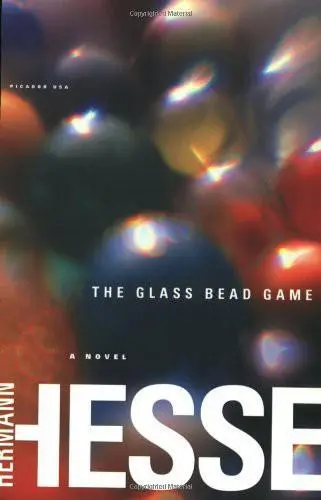
- Название:The Glass Bead Game
- Автор:
- Жанр:
- Год:1969
- ISBN:нет данных
- Рейтинг книги:4 / 5. Голосов: 2
-
Избранное:Добавить в избранное
- Отзывы:
-
Ваша оценка:
The Glass Bead Game: краткое содержание, описание и аннотация
Предлагаем к чтению аннотацию, описание, краткое содержание или предисловие (зависит от того, что написал сам автор книги «The Glass Bead Game»). Если вы не нашли необходимую информацию о книге — напишите в комментариях, мы постараемся отыскать её.
Something like chess but far more intricate, the game of Magister Ludi known as the Glass Bead Game is thought in its purest form, a synthesis through which philosophy, art, music and scientific law are appreciated simultaneously. The scholar-players are isolated within Castalia, an autonomous elite institution devoted wholly to the mind and the imagination…
The Glass Bead Game — читать онлайн бесплатно полную книгу (весь текст) целиком
Ниже представлен текст книги, разбитый по страницам. Система сохранения места последней прочитанной страницы, позволяет с удобством читать онлайн бесплатно книгу «The Glass Bead Game», без необходимости каждый раз заново искать на чём Вы остановились. Поставьте закладку, и сможете в любой момент перейти на страницу, на которой закончили чтение.
Интервал:
Закладка:
“I have been honored with a commission for you, my esteemed friend,” he said gaily in his amiably patronizing manner, and promptly dropped into the ironically teasing tone that had developed as an expression of the still unclarified amity between the religious and the Castalian Orders — the tone that was actually a creation of Father Jacobus. “Incidentally, my respects to your Magister Ludi. What letters he writes! The honorable gentleman has written to me in Latin, Heaven knows why. When you Castalians do something, one never knows whether you intend a courtesy or mockery, an honor or a rap on the knuckles. At any rate, the venerable dominus has written to me in the kind of Latin that no one in our whole Order could manage at this time, except possibly Father Jacobus. It’s a Latin that might have come directly out of the school of Cicero, but laced with a carefully measured dash of Church Latin — and of course it’s again impossible to tell whether that is intended naively as bait for us padres, or meant ironically, or simply springs from an irresistible impulse to playact, stylize, and embellish. At any rate, his honor writes that your esteemed authorities wish to see and embrace you once again, and also to determine to what extent your long stay among semi-barbarians like us has had a morally and stylistically corrupting effect upon you. In brief, if I have correctly interpreted the lengthy epistle, a leave has been granted you, and I have been requested to send my guest home to Waldzell for an indefinite term, but not forever; on the contrary, the authorities contemplate your returning by and by, if that seems agreeable to us. I must beg your pardon; I am scarcely capable of appreciating all the subtleties of the letter. Nor do I imagine that Magister Thomas expected me to. I have been asked to transmit to you this notice; and now go and consider whether and when you wish to depart. We shall miss you, my friend, and if you should stay away too long we shall not fail to demand your return.”
In the envelope the Abbot had given him Knecht found a terse notice from the Board informing him that a leave had been granted him both as a vacation and for consultation with his superiors, and that he was expected in Waldzell in the near future. He need not see the current Game course for beginners through to the end unless the Abbot specifically asked him to. The former Music Master sent his regards. As he read that line, Joseph started and grew pensive. How had the writer of the letter, the Magister Ludi, been asked to pass on this greeting, which in any case did not really fit the official tone of the letter? There must have been a conference of the entire Board, to which the former Music Master had been invited. Very well, the meetings and decisions of the Board of Educators did not concern him, but the tone of these greetings struck him as strange. The message sounded curiously as if it were directed to an equal. It did not matter what question had been discussed at the conference; the regards proved that the highest authorities had also talked about Joseph Knecht on that occasion. Was something new in the offing? Was he to be recalled? And would this be a promotion or a setback? But the letter spoke only of a leave. To be sure he was eager for this leave; he would have gladly left the next day. But at least he must say good-by to his pupils and leave instruction for them. Anton would be very saddened by his departure. And he also owed a farewell visit to some of the Fathers.
At this point he thought of Jacobus, and to his mild astonishment he felt a slight ache, an emotion which told him that his heart was more attached to Mariafels than he had realized. Here he lacked many of the things which he was used to, and which were dear to him; and in the course of the two years, distance and deprivation had made Castalia even more beautiful in his imagination. But at this moment he saw clearly that what Father Jacobus meant to him was irreplaceable, and that he would miss it in Castalia. At the same time he realized more clearly than ever how much he had learned in the monastery. Because of his experiences here, he looked forward with rejoicing and confidence to the journey to Waldzell, to reunions, to the Glass Bead Game, and his holiday. But his happiness would have been far less were it not for the prospect of returning.
Coming to an abrupt resolution, he called on Father Jacobus. He told him of his recall, and of his surprise to find underneath his pleasure at going home and seeing friends a joyful anticipation of returning. This joy, he said respectfully, was chiefly connected with Father Jacobus himself. Therefore he had summoned up his courage and was venturing to ask a great favor: when he returned, would Father Jacobus be his mentor, if only for an hour or two a week?
Father Jacobus gave a deprecating laugh, and once more came forth with elegantly sardonic compliments: a simple monk could only gape in mute admiration and shake his head in wonder at the surpassing range of Castalian culture. But Joseph could gather that the refusal was not meant seriously, and as they shook hands in parting Father Jacobus said amiably that he could rest easy about his request, he would gladly do what he could for him, and he bade Joseph good-by with heartfelt warmth.
Gladly, he set out for his vacation at home, already sure in his heart that his period in the monastery had not been profitless. At departure he felt like a boy, but he soon realized that he was no boy and no longer a youth either. He realized that by the feelings of embarrassment and inner resistance that flooded him as soon as he tried, by a gesture, a shout, some childish act, to give vent to the mood of release and of schoolboy happiness at vacation time. No doubt about it, the things that once had been natural and a relief, a jubilant cry to the birds in a tree, a marching song chanted aloud, swinging along the road in a light, rhythmical dance-step — these would not do any more. They would have come out stiff and forced, would have been foolish and childish. He felt that he was a man, young in feelings and youthful in strength, but no longer used to surrendering to the mood of the moment, no longer free, instead kept on his mettle, tied down and duty-bound — by what? By an official post? By the task of representing his country and his Order to the monks? No, rather it was the Order itself, the hierarchy. As he engaged in this sudden self-analysis, he realized that he had incomprehensibly grown into the hierarchy, become part of its structure. His constraint came from the responsibility, from belonging to the higher collectivity. This it was that made many young men old and many old men appear young, that held you, supported you, and at the same time deprived you of your freedom like the stake to which a sapling is tied. This it was that took away your innocence even while it demanded ever more limpid purity.
In Monteport he paid his respects to the former Music Master, who in his younger years had himself once been a guest at Mariafels and studied Benedictine music there. He plied Joseph with many questions about the place. Joseph found the old man somewhat more subdued and withdrawn, but stronger and gayer in appearance than he had been at their last meeting. The fatigue had departed from his face; it was not that he had grown younger since resigning his office, but he definitely looked handsomer and more spiritualized. Knecht was struck by the fact that though he inquired about the organ, the chests of music manuscripts, and the choral singing in Mariafels, and even wanted to hear whether the tree in the cloister garden was still standing, he seemed to have no curiosity about Knecht’s work there, the Glass Bead Game course, or the purpose of his present leave. Before he continued his journey, however, the old man gave him a valuable hint. “I have heard,” he said with seeming jocularity, “that you have become something of a diplomat. Not really a very nice occupation, but it seems our people are satisfied with you. Interpret that as you like. But if it doesn’t happen to be your ambition to stay in this occupation forever, then be on your guard, Joseph. I think they want to capture you for it. Defend yourself; you have the right to… No, ask me no questions; I shall not say a word more. You will see.”
Читать дальшеИнтервал:
Закладка:
Похожие книги на «The Glass Bead Game»
Представляем Вашему вниманию похожие книги на «The Glass Bead Game» списком для выбора. Мы отобрали схожую по названию и смыслу литературу в надежде предоставить читателям больше вариантов отыскать новые, интересные, ещё непрочитанные произведения.





Обсуждение, отзывы о книге «The Glass Bead Game» и просто собственные мнения читателей. Оставьте ваши комментарии, напишите, что Вы думаете о произведении, его смысле или главных героях. Укажите что конкретно понравилось, а что нет, и почему Вы так считаете.