Hermann Hesse - The Glass Bead Game
Здесь есть возможность читать онлайн «Hermann Hesse - The Glass Bead Game» весь текст электронной книги совершенно бесплатно (целиком полную версию без сокращений). В некоторых случаях можно слушать аудио, скачать через торрент в формате fb2 и присутствует краткое содержание. Год выпуска: 1969, Жанр: Современная проза, Социально-психологическая фантастика, на английском языке. Описание произведения, (предисловие) а так же отзывы посетителей доступны на портале библиотеки ЛибКат.
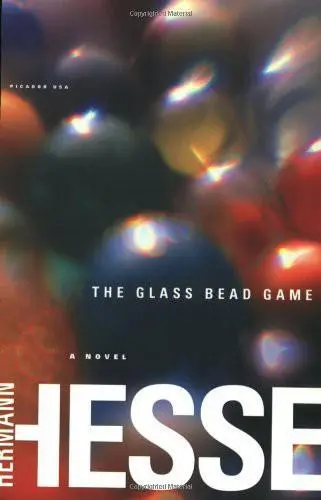
- Название:The Glass Bead Game
- Автор:
- Жанр:
- Год:1969
- ISBN:нет данных
- Рейтинг книги:4 / 5. Голосов: 2
-
Избранное:Добавить в избранное
- Отзывы:
-
Ваша оценка:
The Glass Bead Game: краткое содержание, описание и аннотация
Предлагаем к чтению аннотацию, описание, краткое содержание или предисловие (зависит от того, что написал сам автор книги «The Glass Bead Game»). Если вы не нашли необходимую информацию о книге — напишите в комментариях, мы постараемся отыскать её.
Something like chess but far more intricate, the game of Magister Ludi known as the Glass Bead Game is thought in its purest form, a synthesis through which philosophy, art, music and scientific law are appreciated simultaneously. The scholar-players are isolated within Castalia, an autonomous elite institution devoted wholly to the mind and the imagination…
The Glass Bead Game — читать онлайн бесплатно полную книгу (весь текст) целиком
Ниже представлен текст книги, разбитый по страницам. Система сохранения места последней прочитанной страницы, позволяет с удобством читать онлайн бесплатно книгу «The Glass Bead Game», без необходимости каждый раз заново искать на чём Вы остановились. Поставьте закладку, и сможете в любой момент перейти на страницу, на которой закончили чтение.
Интервал:
Закладка:
He paused as if to allow time for a question, but Joseph only signified by a courteous gesture of submission that he was all attention and was awaiting his orders.
“The assignment I have for you now,” the Magister went on, “is the following. We are planning, sooner or later, to establish a permanent embassy of our Order at the Vatican, if possible on a reciprocal basis. As the younger group, we are ready to adopt a highly deferential though of course not servile attitude toward Rome; we are quite willing to accept second place and allow Rome the first. Perhaps — I am no more sure of it than Dubois — the Pope would accept our offer straightaway. But we cannot risk a rebuff. As it happens, there is a man within our reach whose voice has the greatest influence in Rome: Father Jacobus. And your assignment is to return to the Benedictine monastery, live there as you have already done, engage in studies, give an inconsequential course in the Glass Bead Game, and devote all your attention and care to slowly winning Father Jacobus over to our side and seeing to it that he promises to support our plans in Rome. In other words, this time the goal of your mission is precisely defined. It does not matter much how long you take to achieve it; we imagine that it will require at least a year, but it might also be two or several years. You are by now acquainted with the Benedictine tempo and have learned to adjust to it. Under no circumstances must we give the impression of being impatient or overeager; the affair must ripen of its own accord, right? I hope you agree to this assignment, and that you will frankly express any objections you may have. You may have a few days to think it over if you like.”
Knecht, for whom the assignment was not such a surprise, thanks to some recent conversations, replied that he had no need to think it over. He obediently accepted, but added: “You know, sir, that missions of this kind are most successful when the emissary has no inner resistances and inhibitions to overcome. I have no reluctance about accepting; I understand the importance of the task and hope I can do justice to it. But I do feel a certain anxiety about my future. Be so kind, Magister, to hear me admit my entirely personal, egotistic concern. I am a Glass Bead Game player. As you know, due to my mission among the Benedictines I have omitted my studies of the Game for two full years. I have learned nothing new and have neglected my art. Now at least another year and probably more will be added. I should not like to fall still further behind during this time. Therefore I would like to be allowed frequent brief leaves to visit Waldzell and continual radio contact with the lectures and special exercises of your seminar for advanced players.”
“But of course,” the Master said. There was already a note of dismissal in his tone, but Knecht raised his voice and spoke of his other anxiety: that if his mission in Mariafels succeeded he might be sent to Rome or employed otherwise for diplomatic work. “Any such prospect,” he concluded, “would have a depressing effect upon me and hamper my efforts at the monastery. For I would not at all like to be permanently consigned to the diplomatic service.”
The Magister frowned and raised his finger chidingly. “You speak of being consigned. Really, the word is ill chosen. No one here ever thought of it as a consigning, but rather as a distinction, a promotion. I am not authorized to give you any information or make any promises in regard to the way we shall be employing you in the future. But by a stretch of the imagination I can understand your doubts, and probably I shall be able to help you if your fears really prove to be justified. And now listen to me: you have a certain gift for making yourself agreeable and well liked. An enemy might almost call you a charmer. Presumably this gift of yours prompted the Board to make this second assignment to the monastery. But do not use your gift too freely, Joseph, and set no immoderate value on your achievements. If you succeed with Father Jacobus, that will be the proper moment for you to address a personal request to the Board. Today it seems to me premature. Let me know when you are ready to leave.”
Joseph received these words in silence, laying more weight on the benevolence behind them than the patent reprimand. Soon thereafter he returned to Mariafels.
There he found the security of a precisely defined task a great benefaction. Moreover, this task was important and honorable, and in one respect it coincided with his own deepest desires: to come as close as possible to Father Jacobus and to win his full friendship. At the monastery he was evidently taken seriously as an envoy now, and was thought to have been raised in rank. The conduct of the dignitaries of the abbey, especially Abbot Gervasius himself, made that plain to him. They were as friendly as ever, but a discernible degree more respectful than before. They no longer treated Joseph as a young guest of no standing, toward whom they showed civility for the sake of his origins and out of benevolence toward him personally. He was now received as a high-ranking Castalian official, given the deference due to an ambassador plenipotentiary. No longer blind in these matters, Joseph drew his own conclusions.
Nevertheless, he could discover no change in Father Jacobus’s attitude toward him. The old scholar greeted him with friendliness and pleasure. Without waiting to be asked or reminded, he himself brought up the matter of their working together. Joseph was deeply touched. He rearranged his schedule; his daily routine was now very different from what it had been before his vacation. This time the Glass Bead Game course no longer formed the center of his work and duties. He gave up his studies in the music archives and his friendly collaboration with the organist. Now his chief concern was the instruction he received from Father Jacobus: lessons in several branches of historical science. The monk introduced his special pupil to the background and early history of the Benedictine Order and to the sources for the early Middle Ages. He set aside a special hour in which they would read together one of the old chroniclers in the original. Father Jacobus was not displeased when Knecht pleaded to have young Anton participate in the lessons; but he had little difficulty persuading Joseph that even the best-intentioned third party could prove a serious hindrance to this kind of intensely private instruction. In consequence, Anton, who knew nothing of Knecht’s efforts on his behalf, was invited to take part only in the readings of the chronicler, and was overjoyed. Undoubtedly these lessons constituted a distinction for the young monk, concerning whose life we have no further information. They must have been a supreme pleasure and stimulus, for he was being allowed to share in the work and intellectual exchange of two of the purest and most original minds of his age. Share, however, is perhaps an exaggeration; for the most part the young recruit merely listened.
Joseph repaid Father Jacobus by giving him an introduction to the history and structure of Castalia and the main ideas underlying the Glass Bead Game. This instruction followed immediately after his own lessons in epigraphy and source work, the pupil becoming the teacher and the honored teacher an attentive listener and often a captious critic and questioner. For a long while the reverend Father continued to hold the whole Castalian mentality in distrust. Because he saw no real religious attitude in it, he doubted its capacity to rear the kind of human being he could take seriously, despite the fact that Knecht himself represented so fine a product of Castalian education. Even long after he had undergone a kind of conversion, insofar as that was possible, through Knecht’s teaching and example, and was prepared to recommend the rapprochement of Castalia to Rome, this distrust never entirely died. Knecht’s notes are full of striking examples of it, jotted down at the moment. We shall quote from one of them:
Читать дальшеИнтервал:
Закладка:
Похожие книги на «The Glass Bead Game»
Представляем Вашему вниманию похожие книги на «The Glass Bead Game» списком для выбора. Мы отобрали схожую по названию и смыслу литературу в надежде предоставить читателям больше вариантов отыскать новые, интересные, ещё непрочитанные произведения.





Обсуждение, отзывы о книге «The Glass Bead Game» и просто собственные мнения читателей. Оставьте ваши комментарии, напишите, что Вы думаете о произведении, его смысле или главных героях. Укажите что конкретно понравилось, а что нет, и почему Вы так считаете.