Hermann Hesse - The Glass Bead Game
Здесь есть возможность читать онлайн «Hermann Hesse - The Glass Bead Game» весь текст электронной книги совершенно бесплатно (целиком полную версию без сокращений). В некоторых случаях можно слушать аудио, скачать через торрент в формате fb2 и присутствует краткое содержание. Год выпуска: 1969, Жанр: Современная проза, Социально-психологическая фантастика, на английском языке. Описание произведения, (предисловие) а так же отзывы посетителей доступны на портале библиотеки ЛибКат.
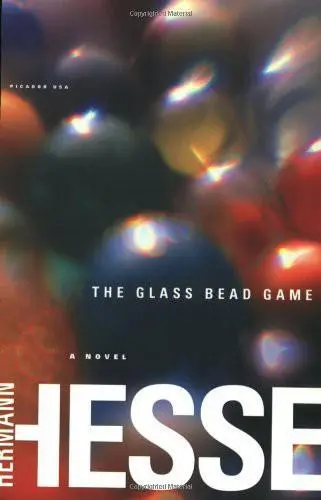
- Название:The Glass Bead Game
- Автор:
- Жанр:
- Год:1969
- ISBN:нет данных
- Рейтинг книги:4 / 5. Голосов: 2
-
Избранное:Добавить в избранное
- Отзывы:
-
Ваша оценка:
The Glass Bead Game: краткое содержание, описание и аннотация
Предлагаем к чтению аннотацию, описание, краткое содержание или предисловие (зависит от того, что написал сам автор книги «The Glass Bead Game»). Если вы не нашли необходимую информацию о книге — напишите в комментариях, мы постараемся отыскать её.
Something like chess but far more intricate, the game of Magister Ludi known as the Glass Bead Game is thought in its purest form, a synthesis through which philosophy, art, music and scientific law are appreciated simultaneously. The scholar-players are isolated within Castalia, an autonomous elite institution devoted wholly to the mind and the imagination…
The Glass Bead Game — читать онлайн бесплатно полную книгу (весь текст) целиком
Ниже представлен текст книги, разбитый по страницам. Система сохранения места последней прочитанной страницы, позволяет с удобством читать онлайн бесплатно книгу «The Glass Bead Game», без необходимости каждый раз заново искать на чём Вы остановились. Поставьте закладку, и сможете в любой момент перейти на страницу, на которой закончили чтение.
Интервал:
Закладка:
In spite of this warning, which he carried with him like a thorn in his flesh, Joseph felt something like rapture on returning to Waldzell. It was as if Waldzell were not only home and the most beautiful place in the world, but as if it had become even lovelier and more interesting in the meanwhile; or else he was returning with fresh and keener eyes. And this applied not only to the gates, towers, trees, and river, to the courtyards and halls and familiar faces. During this furlough he felt a heightened receptivity to the spirit of Waldzell, to the Order and the Glass Bead Game. It was the grateful understanding of the homecoming traveler now grown matured and wiser. “I feel,” he said to his friend Tegularius at the end of an enthusiastic eulogy on Waldzell and Castalia, “I feel as if I spent all my years here asleep, happy enough, to be sure, but unconscious. Now I feel awake and see everything sharply and clearly, indubitable reality. To think that two years abroad can so sharpen one’s vision.”
He enjoyed his vacation as if it were a prolonged festival. His greatest pleasure came from the games and discussions with his fellow members of the elite at the Vicus Lusorum, from seeing friends again, and from the genius loci of Waldzell. This soaring sense of happiness did not reach its peak, however, until after his first audience with the Glass Bead Game Master; up to then his joy had been mingled with trepidation.
The Magister Ludi asked fewer questions than Knecht had anticipated. He scarcely mentioned the Game course for beginners and Joseph’s studies in the music archives. On the other hand, he could not hear enough about Father Jacobus, referred back to him again and again, and was interested in every morsel Joseph could tell him about this man. From the Magister’s great friendliness Joseph concluded that they were satisfied with him and his mission among the Benedictines, very satisfied indeed. His conclusion was confirmed by the conduct of Monsieur Dubois, to whom he was promptly sent by Magister Thomas. “You’ve done a splendid job,” Dubois said. With a low laugh, he added: “My instinct was certainly at fault when I advised against your being sent to the monastery. Your winning over the great Father Jacobus in addition to the Abbot, and making him more favorable toward Castalia, is a great deal more than anyone dared to hope for.”
Two days later Magister Thomas invited Joseph, together with Dubois and the current head of the Waldzell elite school, Zbinden’s successor, to dinner. During the conversation hour after dinner the new Music Master unexpectedly turned up, as did the Archivist of the Order — two more members of the Supreme Board. One of them took Joseph along to the guest house for a lengthy talk. This invitation for the first time moved Knecht publicly into the most intimate circle of candidates for high office, and set up between himself and the average member of the Game elite a barrier which Knecht, now keenly alert to such matters, at once felt acutely.
For the present he was given a vacation of four weeks and the customary official’s pass to the guest houses of the Province. Although no duties were assigned to him, and he was not even asked to report, it was evident that he was under observation by his superiors. For when he went on a few visits and outings, once to Keuperheim, once to Hirsland, and once to the College of Far Eastern Studies, invitations from the high officials in these places were immediately forthcoming. Within those few weeks he actually became acquainted with the entire Board of the Order and with the majority of the Masters and directors of studies. Had it not been for these highly official invitations and encounters, these outings would have betokened a return to the freedom of his years of study. He began to cut back on the visits, chiefly out of consideration for Tegularius, who was painfully sensitive to these infringements on their time together, but also for the sake of the Glass Bead Game. For he was very eager to participate in the newest exercises and to test himself on the latest problems. For this, Tegularius proved to be of invaluable assistance to him.
His other close friend, Ferromonte, had joined the staff of the new Music Master, and Joseph was able to see him only twice during this period. He found him hard-working and happy in his work, engrossed in a major musicological task involving the persistence of Greek music in the dances and folksongs of the Balkan countries. Enthusiastically, Ferromonte told his friend about his latest discoveries. He had been exploring the era at the end of the eighteenth century, when baroque music was beginning to decline and was taking in new materials from Slavic folk music.
However, Knecht spent the greater part of these holidays in Waldzell occupied with the Glass Bead Game. With Fritz Tegularius he went over the notes Fritz had taken on a private seminar the Magister had given for advanced players during the past two semesters. After his two years of deprivation Knecht again plunged with all his energy into the noble world of the Game, whose magic seemed to him as inseparable from his life and as indispensable to it as music.
The last days of his vacation arrived before the Magister Ludi came around to mentioning Joseph’s mission in Mariafels, and his next task for the immediate future. He chatted casually at first, but soon changed to a more earnest and insistent tone as he told Joseph about a plan conceived by the Board which the majority of the Masters, as well as Monsieur Dubois, considered highly important: the plan to establish a permanent Castalian representative at the Holy See. The historic moment had come, Master Thomas explained in his engaging, urbane manner, or at any rate was drawing near, for bridging the ancient gulf between Rome and the Order. In future dangers, they would undoubtedly have common enemies, would share a common fate, and hence were natural allies. In the long run the present state of affairs was untenable and, properly speaking, undignified. It would not do for the two powers, whose historic task in the world was to preserve and foster the things of the spirit and the cause of peace, to go on existing side by side almost as strangers to each other. The Roman Church had survived the shocks of the last great epoch of wars, had lived through the crises despite severe losses, and had emerged renewed and purified, whereas the secular centers of the arts and sciences had gone under in the general decline of culture. It was out of their ruins that the Order and the Castalian ideal had arisen. For that very reason, and because of its venerable age, it was right and proper to grant the Church precedence. She was the older, more distinguished power, her worth tested in more and greater storms. For the present, the problem was to awaken the Roman Catholics to greater awareness of the kinship between the two powers, and their dependence upon each other in all future crises.
(At this point Knecht thought: “Oh, so they want to send me to Rome, possibly forever.” Mindful of the former Music Master’s warning, he inwardly put himself in a posture of defense.)
An important step forward, Master Thomas continued, had already been taken as a result of Knecht’s mission in Mariafels. In itself this mission had been only a polite gesture, imposing no obligations and undertaken without ulterior motives at the invitation of the others. Otherwise, of course, the Board would not have sent a politically innocent Glass Bead Game player, but some younger official from Dubois’s department. But as it turned out this experiment, this innocuous mission, had had astonishing results. A leading mind of contemporary Catholicism, Father Jacobus, had been made acquainted with the spirit of Castalia and had come to take a favorable view of that spirit, which he had hitherto flatly rejected. The authorities were grateful to Joseph Knecht for the part he had played. Here lay the significance of his mission. The further course of Knecht’s work must be regarded in the light of it, since all future efforts at rapprochement would be built upon this success. He had been granted a vacation — which could be somewhat extended if he wished — and most of the members of the higher authorities had met and talked with him. His superiors had expressed their confidence in Knecht and had now charged the Magister Ludi to send him on a special assignment and with broader powers back to Mariafels, where he was, happily, sure of a friendly reception.
Читать дальшеИнтервал:
Закладка:
Похожие книги на «The Glass Bead Game»
Представляем Вашему вниманию похожие книги на «The Glass Bead Game» списком для выбора. Мы отобрали схожую по названию и смыслу литературу в надежде предоставить читателям больше вариантов отыскать новые, интересные, ещё непрочитанные произведения.







Обсуждение, отзывы о книге «The Glass Bead Game» и просто собственные мнения читателей. Оставьте ваши комментарии, напишите, что Вы думаете о произведении, его смысле или главных героях. Укажите что конкретно понравилось, а что нет, и почему Вы так считаете.